The Hindu Rashtra Samanvay Samiti has submitted a memorandum requesting the cancellation of a proposed lecture by rationalist speaker Shyam Manav titled ‘Buva Tethe Baya’. The memorandum cites what it characterizes as a history of objectionable remarks about Hindu Dharma and revered Saints, urging the concerned authorities to review and, if necessary, withdraw permissions for the programme.
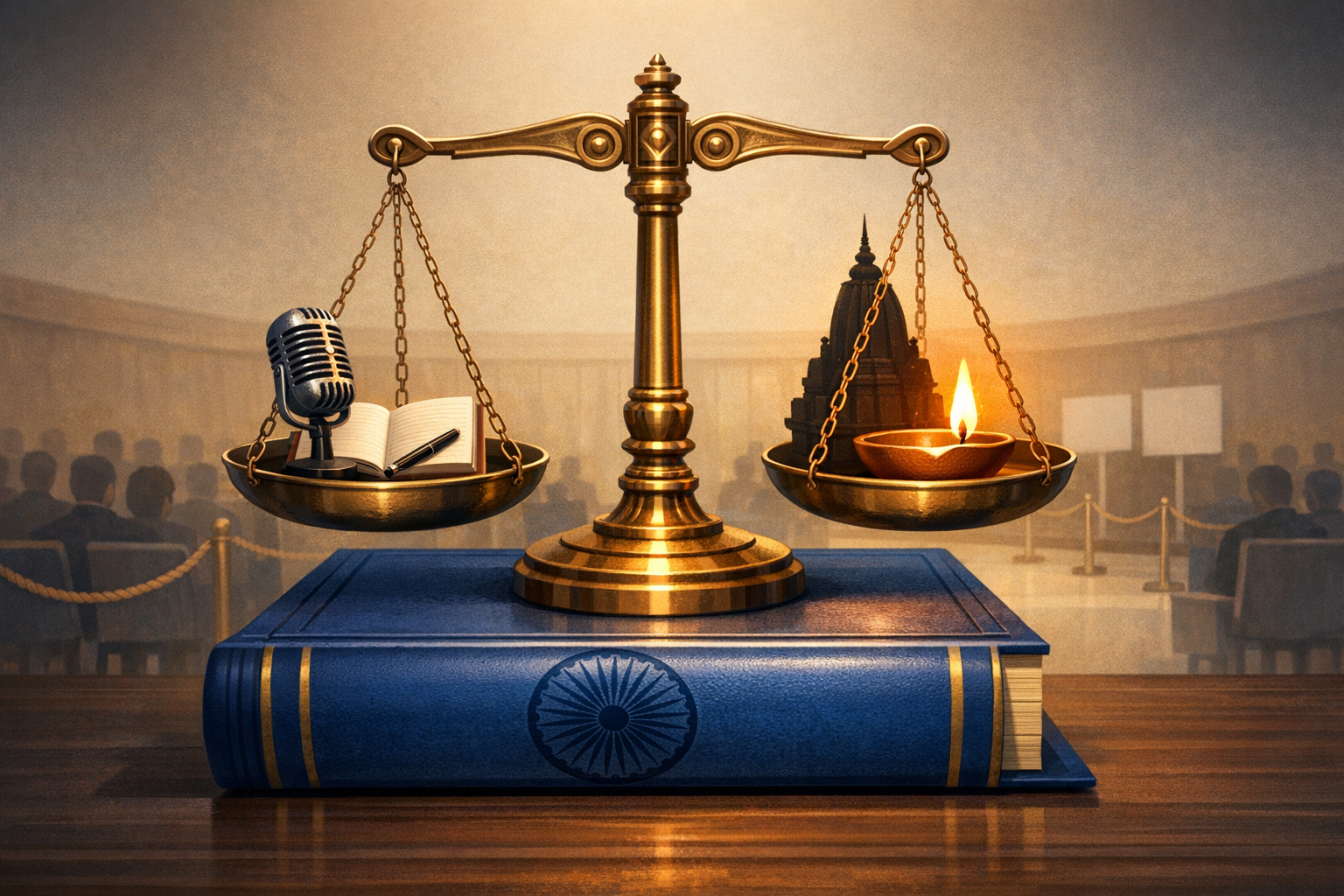
At stake is a recurring challenge in India’s public life: reconciling freedom of expression with protection of religious sentiments and the preservation of public order. The constitutional frameworkArticle 19(1)(a) safeguarding free speech and Article 19(2) permitting narrowly tailored restrictions for public order, decency, and moralityrequires decision-makers to calibrate responses with evidence rather than resorting to reflexive prohibitions.
Shyam Manav is widely known for anti-superstition advocacy and for scrutinizing claims he considers unscientific. Supporters regard such talks as part of legitimate public reasoning and civic education; detractors perceive some formulations as diminishing the sanctity of Hindu Dharma and Saints. The proposed programme ‘Buva Tethe Baya’ sits precisely on this sensitive frontier of critique, devotion, and civic harmony.
Judicial guidance has consistently emphasized that pre-emptive event bans demand concrete, demonstrable risks of imminent disorder; anticipated offense alone is insufficient. In practice, authorities generally weigh whether proportionate time–place–manner conditions, enhanced security, or structured dialogue might mitigate tensions without extinguishing a viewpointan approach aligned with constitutional law in India.
From a dharmic unity perspectiveencompassing Hinduism, Buddhism, Jainism, and Sikhismthe aim is not uniformity but a shared ethic of ahimsa, mutual respect, and thoughtful dialogue. Rigorous debate about ideas, practices, or empirical claims can coexist with reverence for temples, saints, and sacred texts. Protecting both devotion and open inquiry strengthens the social fabric and fosters religious tolerance in Hinduism’s plural public square.
Responsible event governance offers concrete tools for balance. Organizers and venues can adopt a code of respectful conduct, distinguishing critique of practices from insult to persons, deities, or Saints; open with context-setting remarks clarifying scope and limits; provide moderated Q&A; ensure equal-time responses from scholars of Hindu philosophy and ritual studies; and establish grievance redressal channels. These measures support both community dignity and free speech.
Public authorities, for their part, can employ viewpoint-neutral, evidence-based criteria for permissions: documented risk assessments; narrowly tailored conditions on venue size, timing, and security; facilitation of peaceful, designated protest spaces; and real-time compliance monitoring. Cancellation should remain a last resort, reserved for specific, credible indications of imminent and unmanageable threats to public order.
The memorandum’s core assertionan alleged pattern of objectionable remarkswarrants transparent review of primary materials, including full-context recordings and transcripts. A careful distinction between rhetorical flourish and targeted vilification, and the application of established thresholds for incitement and hate speech, can reduce arbitrariness and enhance public trust in Law and Society processes.
Shared civil norms can de-escalate conflicts before they harden into polarization. Language that critiques ideas without imputing malice to believers preserves dignity. Acknowledging the centrality of Hindu Dharma and Saints in the lives of millions fosters confidence and respect. Equally, affirming the right to examine claimswithout mockery or provocationupholds the constitutional promise of open inquiry.
These questions are not abstract. In homes, temples, and community centers, conversations often revolve around a practical challenge: how to disagree without disrespect. Many families seek assurance that devotion will be honored in public forums while their children learn to ask honest questions about received claims. Addressing both aspirationsreverence and inquiryadvances durable harmony.
Constructive alternatives to cancellation include: a companion panel featuring dharmic scholars and community representatives; publication of pre-event briefing notes clarifying topic boundaries; a moderated right-of-reply session immediately following the talk; and archiving proceedings for transparency and accountability. Such measures demonstrate that India’s public sphere is robust enough to accommodate both faith and critique.
Whatever determination is reached on ‘Buva Tethe Baya’, the guiding test should be twofold: protect the sanctity of faith and Saints, and protect the freedom to examine ideas and practices. A principled, transparent processgrounded in constitutional law, dharmic ethics of restraint, and professional event protocolscan uphold Hindu Rashtra concerns about dignity while preserving the democratic value of free speech.
In sum, the memorandum submitted by the Hindu Rashtra Samanvay Samiti raises weighty questions that deserve careful, evidence-based evaluation. A calibrated, rights-respecting approachcombining respectful language norms, proportionate safeguards, and avenues for counterspeechcan honor Hindu Dharma, reduce the risk of disorder, and reinforce unity across Hindu, Buddhist, Jain, and Sikh communities.
Inspired by this post on Hindu Jagruti Samiti.