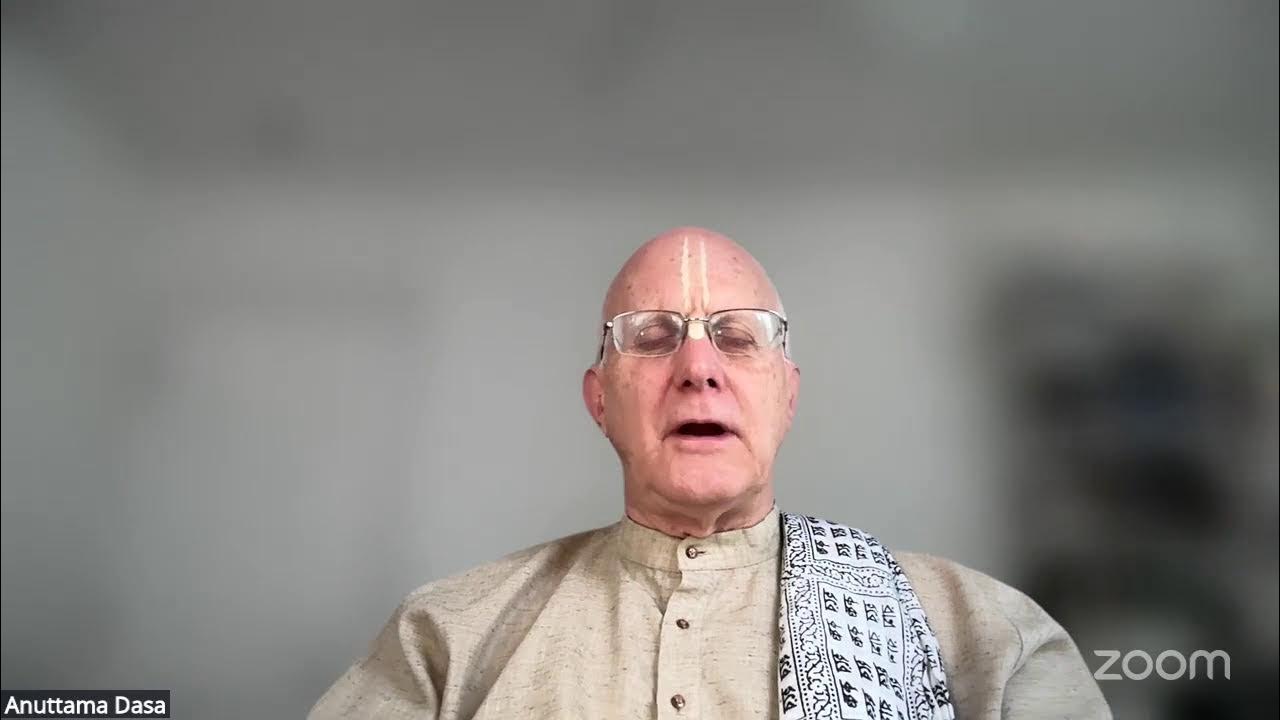
HG Anuttama Prabhu introduces the session with light-hearted remarks and kirtan, creating an atmosphere of attentiveness and reverence before turning to Srimad Bhagavatam 3.31.14. The selected verse presents the soul in the womb addressing the Lord with lucid awareness, recognizing separation from the Divine while encased within a material body formed by the five elements.
Srimad Bhagavatam 3.31.14 underscores a pivotal insight: the jiva is spiritual by nature yet experiences constraint in a body constituted of earth, water, fire, air, and ether. This embodied state is portrayed not merely as limitation but as a profound opportunity for remembrance and transformative devotion. Through a concise explanation, the talk clarifies how the soul’s prayer in the womb captures a universal moment of humility and awakening, where clarity arises from vulnerability.
The progression from kirtan to scriptural exegesis demonstrates a pedagogical arc often found in bhakti settings. Kirtan softens the heart and prepares the mind for reflection; the verse then directs that softened attention toward self-realization, outlining how awareness of one’s spiritual identity can emerge even in the most constrained conditions. In this way, the talk offers practical Vedic wisdom that is both devotional and deeply philosophical.
Listeners commonly relate to the verse through lived experience. The image of the womb evokes any circumstance that feels tight, opaque, or predetermined, whether due to societal pressures, emotional burdens, or the sensory pull of the material body. This recognition invites a compassionate stance toward oneself and others, seeing all beings as navigating their own enclosures while seeking meaning, relief, and remembrance.
Viewed through a broader dharmic lens, the themes resonate across traditions. Buddhism’s analysis of samsara and dukkha, Jainism’s account of the jiva bound by karma, and Sikhism’s emphasis on remembrance of Naam and divine grace all illuminate a shared soteriological horizon. Rather than division, such parallels endorse unity in ethical purpose and spiritual aspiration among Hinduism, Buddhism, Jainism, and Sikhism, fostering mutual respect and a common commitment to liberation-oriented living.
The talk also draws out practical implications. Mindful recitation, study of Hindu scriptures, and ethical conduct refine awareness so the material body functions as an instrument of seva rather than a prison of habit. From this standpoint, compassion naturally extends to all who remain in the wider womb of material nature, reinforcing dharmic unity and the cultivation of qualities that benefit individual and collective well-being.
In sum, the presentation offers a clear and accessible reading of Srimad Bhagavatam 3.31.14 while maintaining academic rigor and devotional sensitivity. By interweaving kirtan, textual analysis, and relatable reflection, the session by HG Anuttama Prabhu provides enduring guidance on the jiva’s journey from perceived separation to conscious remembrance, aligning personal transformation with the shared ethical vision of the broader dharmic family.
Inspired by this post on Dandavats.