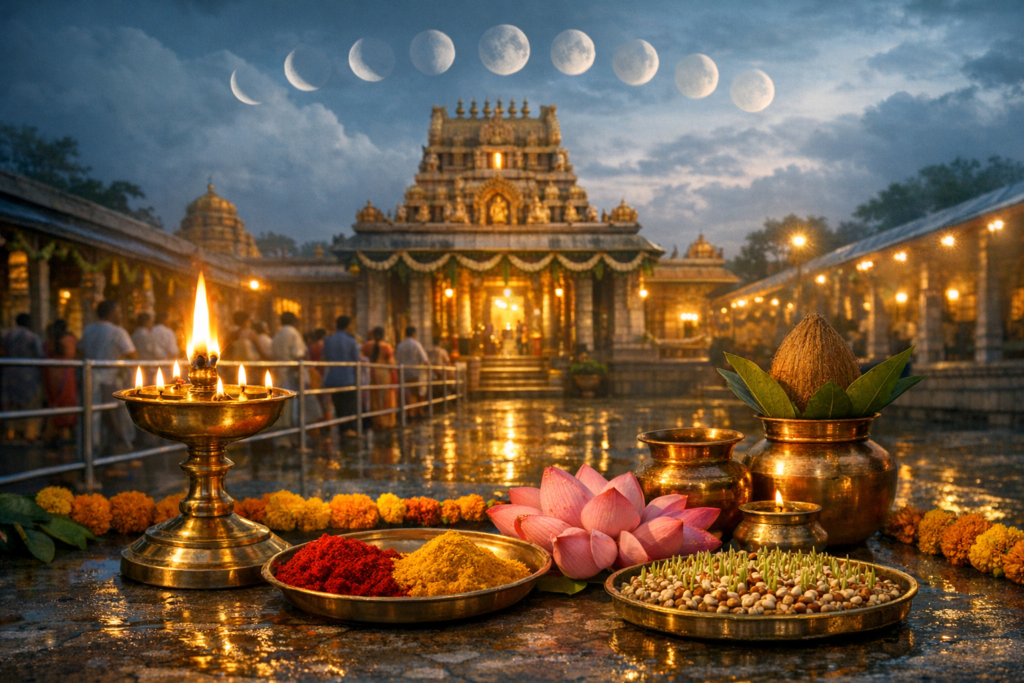
According to the Daily Hindu Calendar (Panchang), Sunday, November 16, 2025, spans the transition from Krishna Paksha Ekadashi to Krishna Paksha Dwadashi in most regions. Krishna Paksha Ekadashi tithi, the eleventh lunar day in the waning phase, lasts until 4:23 AM on November 16. From 4:23 AM onward, the day proceeds as Krishna Paksha Dwadashi tithi, the twelfth lunar day of the dark fortnight.
Ekadashi holds a special place in the Hindu calendar as a day often dedicated to upavasa, japa, and sattvic living, while Dwadashi traditionally accommodates parana (breaking of the Ekadashi fast) within prescribed windows. With Ekadashi ending at 4:23 AM, many observances will align parana on Dwadashi itself, following local Panchang guidance and sampradaya-specific rules. Practices can vary by region and tradition, so household rituals are best planned with attention to community norms and authoritative almanacs.
While the specifics of tithi observance are rooted in Hindu dharma, the reflective spirit resonates across dharmic traditions. Buddhist Uposatha, Jain upavāsa, and Sikh commitments to simran and seva echo shared values of restraint, contemplation, and compassion. This common ethos underscores unity in diversity, encouraging harmonious observance that honors different paths while upholding mutual respect.
Details such as Nakshatra, Rashi, and “Good Time” (auspicious muhurta) are location-specific and may differ by longitude, latitude, and local calculation methods. For accurate planning of puja, parana, and community activities, consulting a reliable regional Panchang or trusted temple advisory is recommended. This approach ensures that Nakshatra, Rashi, and muhurta selections reflect the precise sky positions for one’s locality.
For many households, the Krishna Paksha phase invites quiet reflection and inward steadiness, offering a rhythm that supports prayer, study, and service. Observed with sensitivity to tradition and an inclusive spirit, November 16, 2025, provides a clear, timely framework—Ekadashi until 4:23 AM, then Dwadashi—for meaningful, well-aligned practice within the broader tapestry of Indic spiritual life.
Inspired by this post on Hindu Blog.