Vaikuntha Chaturmurti is revered in Vaishnavism as a profound and powerful aspect of Lord Vishnu, especially venerated in the Vishnu temples of Kashmir. This exalted form, often regarded as a supreme manifestation, presents Vishnu with four heads, embodying multiple divine capacities within a single, unified presence. Its worship sustains living connections to Kashmir’s sacred art, temple tradition, and devotional memory.
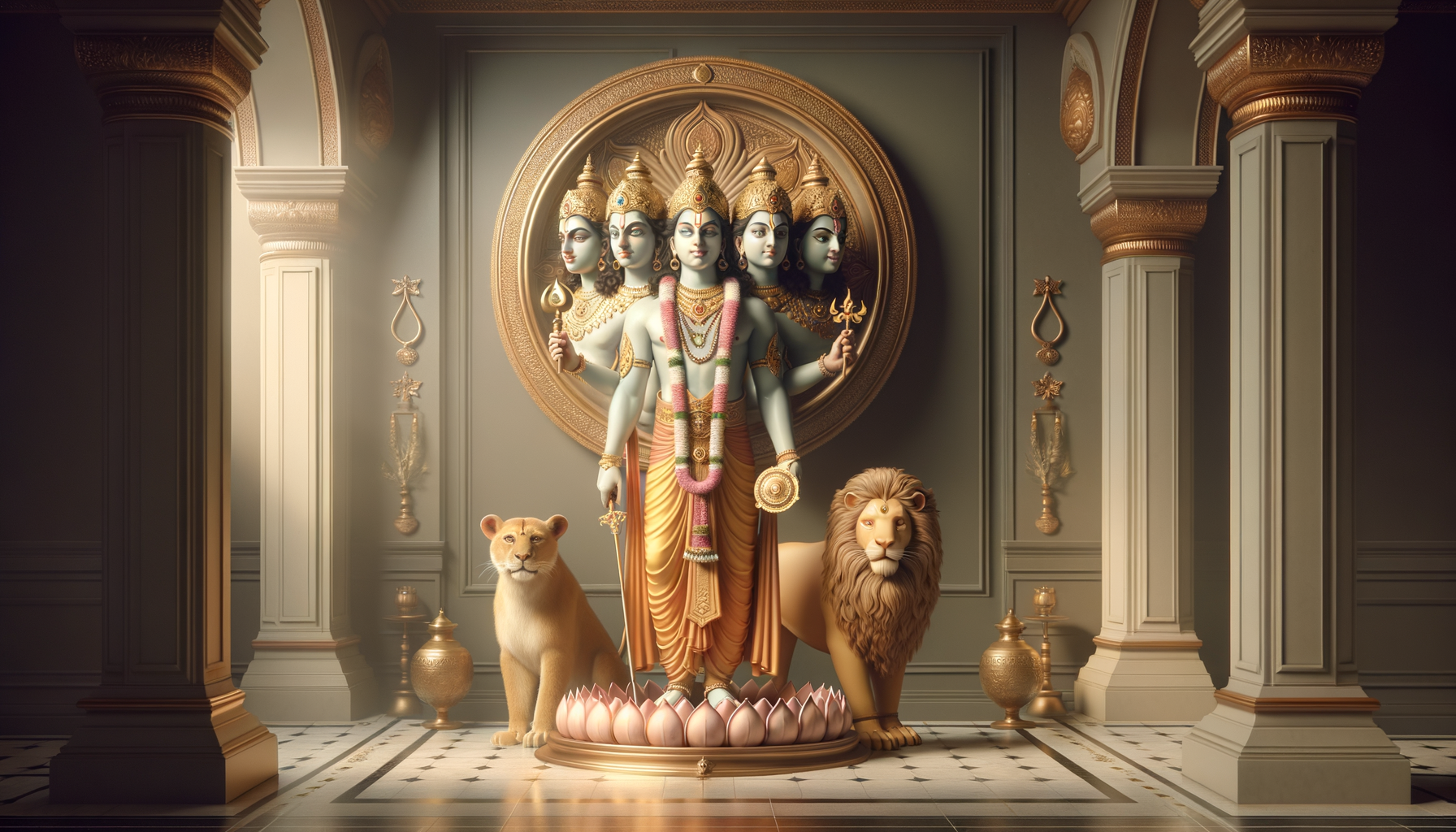
The iconography of Vaikuntha Chaturmurti is distinctive: a human face looks forward, a lion face (Narasimha) turns to one side, a boar face (Varaha) turns to the other, and a fierce visagetraditionally described as the Kapila or raudra aspectfaces the rear. The deity typically bears Vishnu’s emblems such as the chakra, shankha, gada, and padma, signifying sovereignty, protection, strength, and auspiciousness. This four-headed form encapsulates the unity of diverse avataric energies in a single, harmonious image.
Each head communicates an integral dimension of dharma. The human face conveys compassion, wisdom, and regal composure; Narasimha symbolizes fearless protection and the defense of righteousness; Varaha represents restoration and the Earth’s upliftment; the fierce aspect embodies the dissolution of ignorance and the power to repel negativity. Taken together, Vaikuntha Chaturmurti affirms that the preservation, protection, renewal, and purification of the cosmos are inseparable facets of Vishnu’s grace.
In the cultural landscape of Kashmir, this four-faced form stands as a hallmark of sacred iconography and temple heritage. Historical worship and artistic depictions in the region reflect a mature Vaishnava vision that integrates theology, aesthetics, and devotional practice. During observances that honor Vaikunthasuch as reflections around Vaikuntha Ekadashidevotees often contemplate this form to deepen understanding of Vishnu’s multifaceted guardianship.
Devotees frequently describe the darshan of Vaikuntha Chaturmurti as both elevating and reassuring. The serene human countenance invites inner calm, the lion’s courage inspires moral clarity, the boar’s strength fosters resilience in adversity, and the fierce aspect instills confidence that obstacles can be overcome. Families share stories of visiting Vishnu temples in Kashmir and beyond, noting how this four-headed form kindles a palpable sense of protection and spiritual continuity across generations.
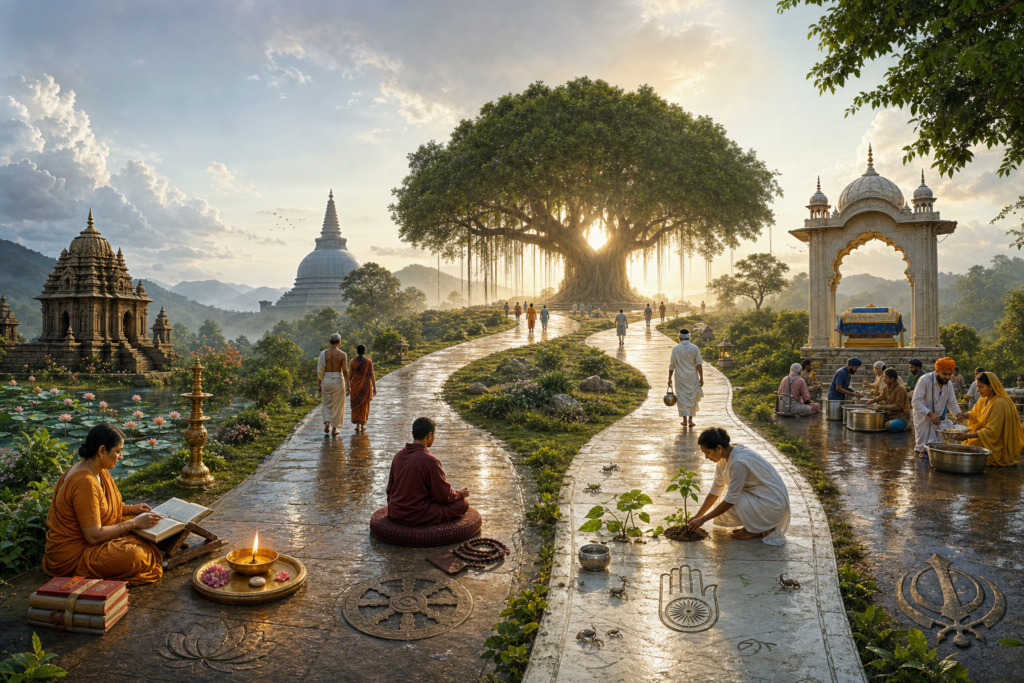
Aligned with the broader ethos of dharmic traditions, the symbolism of Vaikuntha Chaturmurti affirms pluralism and unity. While rooted in Hindu devotion to Lord Vishnu, its messagethat diverse qualities can converge in service of truth and compassionresonates with shared values cherished across Hinduism, Buddhism, Jainism, and Sikhism. The form thus becomes a contemplative bridge: one image, many meanings; one source, many paths.
For contemplative practice, many find it helpful to meditate sequentially on each face, integrating qualities such as compassion (human), courage (Narasimha), renewal (Varaha), and transformative resolve (fierce aspect). Common devotional acts include quietly reciting “Om Namo Narayanaya,” reflecting on the chakra and shankha as symbols of order and awakening, and offering flowers or a simple lamp as a gesture of gratitude. Such practices, approached with sincerity, support steadiness of mind and a deeper appreciation for Vishnu’s protective presence.
Vaikuntha Chaturmurti ultimately invites a clear insight: the divine embraces and harmonizes multiple strengths for the welfare of all beings. As a sacred icon of Kashmir and a luminous expression of Vaishnavism, it guides devotees toward a balanced spiritual lifeone that honors protection, renewal, wisdom, and compassion as inseparable dimensions of Lord Vishnu’s enduring care.
Inspired by this post on Hindu Pad.