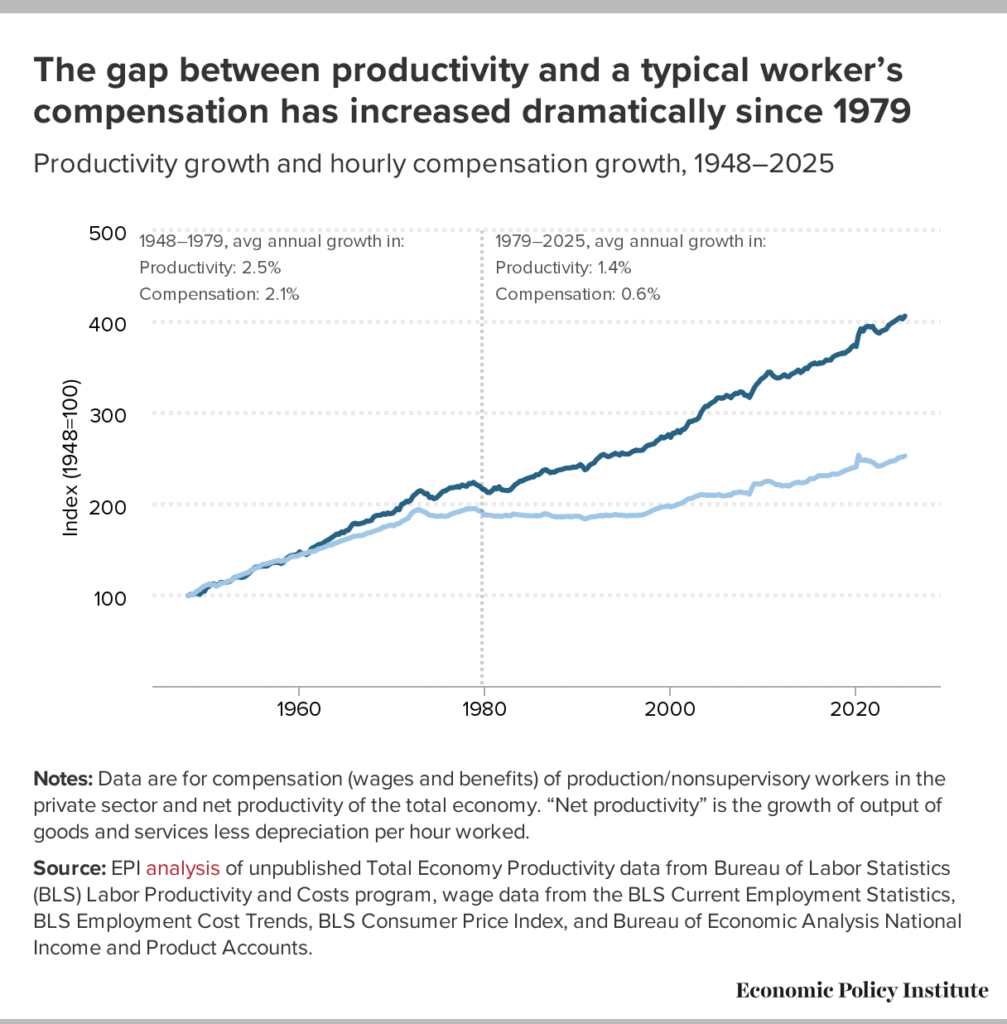
I recently came across a fascinating update from the Economic Policy Institute that highlights a growing gap between productivity and wages. Their Productivity-Pay Tracker reveals a trend that many of us have felt but perhaps not fully understood: while productivity continues to rise, wages are not following suit.
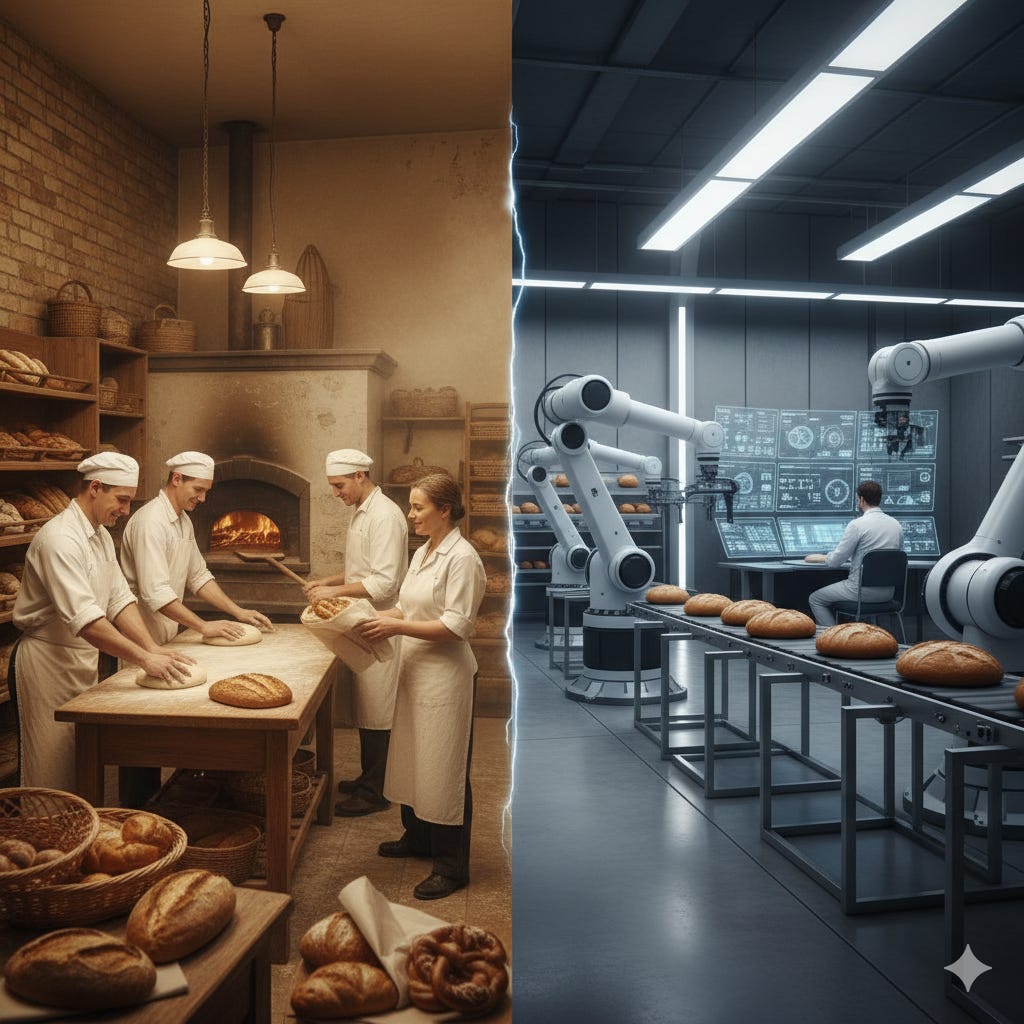
Imagine for a moment a simple bread bakery. In this bakery, skilled bakers and support staff work together to produce delightful loaves of bread. Now, picture this bakery investing in an automated bread-making machine. Suddenly, the need for skilled bakers diminishes, and a low-cost attendant can operate the machine instead. This scenario exemplifies how technological advancements can increase productivity without necessarily increasing wages.
In this new setup, the bakery’s production becomes more efficient, but the employment landscape shifts. The machine requires maintenance, which creates new jobs elsewhere, yet the bakery itself employs fewer people. Those who remain may earn more individually, but collectively, they receive a smaller share of the bakery’s sales. This scenario showcases a higher-order economy of scale, where specialized knowledge and expertise become highly valuable.
As a result, we witness a structural shift from an effort-based society to a knowledge-based society. Those with unique skills and knowledge, like the consulting baker at the bread machine factory, command higher returns. Conversely, jobs requiring physical effort see reduced pay, leading to stagnant wages for many.
To truly grasp these changes, we need new metrics like the ‘wage content of a job’ and the ‘job content of a wage.’ These concepts could help us better understand the economic shifts at play, ensuring that a country’s job and knowledge profiles align with its income profile. This alignment indicates that capitalism is functioning correctly, where specialized skills are rewarded appropriately.
Reflecting on these insights, I explore these concepts further in my book “Subverting Capitalism and Democracy.” It’s a deep dive into how these economic dynamics impact our society and what we can do to navigate them effectively.