
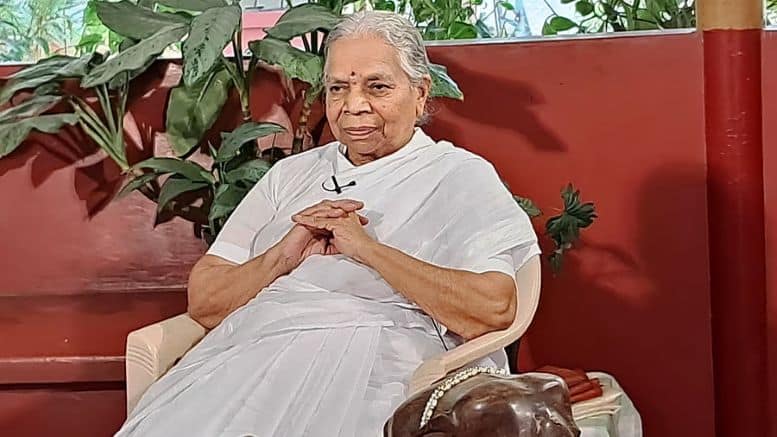
Dr. S. G. Susheelamma and the Meaning of Grassroots Seva
Dr. S. G. Susheelamma, the Karnataka-based social worker honoured with the Padma Shri in 2026 for Social Work, represents a model of public service that is quiet, disciplined, and deeply rooted in community life. Her recognition is significant not merely because it adds one more name to the list of Padma awardees, but because it draws national attention to decades of work among children, women, Vanvasi communities, senior citizens, and economically weaker sections of society. In an era when social change is often measured through policy documents and institutional metrics, her life demonstrates the enduring power of direct human contact, patient institution-building, and sustained seva.
The Padma Shri, India’s fourth-highest civilian honour, is awarded for distinguished service across fields including art, education, medicine, science, public affairs, sports, literature, and social work. In Dr. Susheelamma’s case, the award acknowledges a lifetime of service that developed from modest beginnings into a broad social welfare ecosystem. Her work has been associated with child welfare, women’s empowerment, education, healthcare, tribal development, livelihood support, and environmental conservation. These areas may appear separate on paper, yet in real communities they are closely connected; poverty, ill health, educational exclusion, and social vulnerability often reinforce one another.
Dr. Susheelamma’s public life is most closely linked with Sumangali Seva Ashrama, the institution she founded in 1975. Based in Cholanayakanahalli, Bengaluru, the Ashrama grew under her leadership into a centre of community service guided by Gandhian values and practical compassion. Its work has included shelter, education, healthcare, vocational training, support for distressed women, child welfare programmes, and outreach among rural and Vanvasi communities. The institutional journey is important because durable social transformation rarely comes from a single intervention; it emerges through reliable structures that vulnerable people can return to in times of need.
Early Inspiration and the Formation of a Social Vision
Accounts of Dr. Susheelamma’s early motivation trace her impulse to serve back to her school days, when she reportedly distributed textbooks to children who lacked access to basic educational resources. This detail is small but revealing. It suggests that her social vision did not begin as an abstract theory of reform, but as a concrete response to a visible gap: a child without books, a learner without support, a family without the means to continue education. Such moments often become the moral foundation of lifelong service when they are joined with discipline and responsibility.
Her later work retained that same practical orientation. Rather than approaching social welfare as charity alone, she treated it as a process of restoring dignity, confidence, and agency. This distinction matters. Charity may relieve immediate distress, but empowerment seeks to reduce dependency by strengthening a person’s capacity to participate in family, community, and economic life. Dr. Susheelamma’s work reflects this broader understanding of human development, where education, health, livelihood, and emotional security all become part of the same moral project.
In the Indian civilisational context, seva has never been limited to a single religious or institutional form. Across Hindu, Buddhist, Jain, and Sikh traditions, the ethical value of service is expressed through compassion, non-violence, dana, karuna, langar, community care, and responsibility toward the vulnerable. Dr. Susheelamma’s work belongs to this larger dharmic continuum of social responsibility. It shows how spiritual and ethical values can be translated into schools, shelters, clinics, training programmes, environmental action, and everyday acts of human care.
Sumangali Seva Ashrama as a Model of Integrated Community Development
Sumangali Seva Ashrama stands at the centre of Dr. Susheelamma’s legacy because it illustrates the importance of integrated development. Many welfare institutions focus on one sector, such as education or healthcare. The Ashrama’s significance lies in its wider approach: it has addressed social vulnerability through multiple channels, including shelter, schooling, livelihood training, community outreach, health awareness, and support for women and children. This model recognizes that the problems faced by disadvantaged families are rarely isolated.
A child who lacks educational support may also face nutritional insecurity, emotional distress, unstable housing, or family-level economic hardship. A woman seeking livelihood may also need social confidence, mobility, childcare support, legal awareness, and access to health services. A rural or Vanvasi community may require literacy, preventive health knowledge, income opportunities, and locally relevant development initiatives. By linking these needs, Dr. Susheelamma’s work reflects a sophisticated understanding of social welfare, even when expressed through simple and accessible programmes.
The Ashrama’s evolution also demonstrates why grassroots institutions are essential to nation-building. Government schemes can provide scale, but community organizations often provide trust, continuity, cultural familiarity, and last-mile sensitivity. Social workers who remain embedded in a locality understand how families make decisions, what barriers prevent participation, and which interventions are likely to be accepted. Dr. Susheelamma’s decades of work show the importance of this relationship-based approach to development.
Education as a Pathway Out of Exclusion
Education has been one of the strongest pillars of Dr. Susheelamma’s service. Her work with children from underprivileged backgrounds rests on a widely validated principle of social development: education is among the most effective instruments for breaking intergenerational poverty. Yet education is not only the delivery of lessons. For vulnerable children, it also means safety, routine, nutrition, mentoring, emotional stability, and the belief that their lives can move beyond inherited deprivation.
Through educational support systems associated with Sumangali Seva Ashrama, children from disadvantaged families received opportunities that may otherwise have remained inaccessible. The deeper value of such work lies in the creation of confidence. A child who is treated with dignity begins to imagine a different future. A young learner who receives books, guidance, and encouragement begins to see education not as a distant privilege but as a real path. Dr. Susheelamma’s commitment to child welfare therefore has both academic and psychological significance.
The long-term social impact of education is also intergenerational. Children who receive stable support often become better equipped to earn livelihoods, care for families, participate in civic life, and contribute to their communities. This is why education-oriented seva is not merely a compassionate activity; it is a structural intervention in the future of society. Dr. Susheelamma’s work affirms that inclusive growth begins when the most vulnerable children are not left outside the classroom, outside the institution, or outside the nation’s imagination.
Women’s Empowerment Through Skills, Livelihood, and Dignity
Women’s empowerment has been another central dimension of Dr. Susheelamma’s work. In many rural and economically weaker communities, women face layered barriers involving education, income, mobility, healthcare, safety, social expectations, and limited access to institutional support. Addressing these challenges requires more than symbolic encouragement. It requires practical pathways through which women can build financial independence and social confidence.
Her initiatives have included skill-development programmes, livelihood support, self-help-oriented activity, and economic empowerment efforts. Reports on her work note that Sumangali Seva Ashrama has supported women in livelihood-building activities, including training linked to auto-rickshaw driving. Such initiatives are socially important because they challenge restrictive assumptions about women’s work and mobility. When a woman gains an income-generating skill, the benefit extends beyond personal earnings; it can reshape household decisions, improve children’s welfare, and strengthen community resilience.
WomenEmpowerment, when understood in this practical sense, is not a slogan but a measurable transformation in agency. It is visible when women can access training, participate in economic life, make informed decisions, seek healthcare, educate their children, and live with greater dignity. Dr. Susheelamma’s service demonstrates that empowerment is most effective when it is grounded in local realities and built through trust.
Service Among Vanvasi and Rural Communities
Dr. Susheelamma’s contribution to Vanvasi and rural communities forms a vital part of her legacy. Reports identify her work with Magadi tribal communities as one of the notable areas of her social outreach. Communities living in remote or economically neglected regions often face reduced access to quality education, healthcare, market linkages, and public services. Development work in such contexts must be culturally sensitive, patient, and participatory.
Her approach appears to have emphasized proximity: working with communities, understanding their needs, and building relevant support systems rather than imposing distant models. This is particularly important in tribal development, where sustainable progress depends on respecting community knowledge, local social structures, and ecological relationships. Meaningful development does not erase identity; it expands opportunity while preserving dignity.
The inclusion of Vanvasi communities within her wider social welfare work reflects a broader principle of national integration. Bharat’s social strength depends on ensuring that communities at the margins are not treated as afterthoughts. Education, healthcare, livelihood, and social respect must reach the last household. Dr. Susheelamma’s work affirms that inclusive development is most credible when it is visible in the lives of those who have historically had the least access to opportunity.
Healthcare, Prevention, and Community Well-Being
Healthcare has also been central to Dr. Susheelamma’s social service. In underserved communities, illness is not only a medical issue but an economic and social crisis. A preventable disease can push a family deeper into poverty. Lack of maternal care can affect both mother and child. Poor nutrition can weaken educational outcomes. Absence of health awareness can turn manageable conditions into long-term hardship. For these reasons, community healthcare is inseparable from social welfare.
Through clinics, health camps, awareness programmes, and outreach activities, her work has contributed to improved access to basic medical care and preventive health knowledge. Preventive healthcare is especially valuable because it reduces suffering before it becomes severe. Maternal welfare, child nutrition, public health awareness, and basic medical guidance create the foundation for stronger families and more resilient communities.
This aspect of her legacy is technically significant because it shows an understanding of social determinants of health. Health outcomes are shaped not only by hospitals and doctors, but also by education, income, sanitation, nutrition, gender equity, and community awareness. Dr. Susheelamma’s integrated model addressed these overlapping factors through accessible local interventions.
Vrikshamahadasoha and the Ethics of Environmental Stewardship
Beyond conventional social welfare, Dr. Susheelamma has also been associated with environmental conservation through the Vrikshamahadasoha movement. The initiative is reported to have helped plant more than forty lakh saplings across Karnataka. This work expands the meaning of seva from service to human beings alone to responsibility toward the ecological systems that sustain human life.
Environmental conservation is often discussed through global frameworks such as climate resilience, biodiversity protection, and sustainable development. At the grassroots level, however, it is experienced through shade, soil, water, air, local agriculture, and community health. Tree plantation drives, when combined with awareness and follow-up care, can become a form of ecological education. They remind communities that social progress and environmental responsibility cannot be separated.
The Vrikshamahadasoha initiative also resonates with dharmic ideas of reverence for nature. Across Indian traditions, trees, rivers, land, animals, and food systems have been treated not merely as resources but as part of a moral universe. Dr. Susheelamma’s environmental work reflects this cultural continuity in a modern developmental context. It demonstrates that sustainability is not an imported idea for Bharat; it is also rooted in inherited civilisational ethics.
Awards, Recognition, and the Padma Shri 2026
Dr. Susheelamma has received several honours over the course of her public life, including recognition associated with social justice and community welfare such as the Dr. Babasaheb Ambedkar National Award. Yet the Padma Shri 2026 stands out because it places her work within the national roll of distinguished service. The recognition also highlights the importance of social workers who may not always occupy public platforms but whose institutions quietly transform thousands of lives.
Her response to recognition has been described as collective rather than self-centred, with emphasis on the joy shared by people and organizations connected to her work. This attitude is consistent with the nature of grassroots service. Social welfare is rarely the achievement of one individual alone; it is sustained by teams, volunteers, donors, community members, teachers, health workers, and beneficiaries who later become contributors. Still, certain individuals provide the moral centre around which such institutions grow. Dr. Susheelamma has served as one such centre.
The Padma Shri awarded to her is therefore not only a personal honour. It is also an affirmation of community service, social welfare, education, WomenEmpowerment, tribal development, healthcare, and environmental stewardship as essential parts of national development. It reminds Bharat that nation-building is not confined to infrastructure, markets, or state policy; it is also built in classrooms, shelter homes, health camps, training centres, rural outreach programmes, and sapling drives.
Why Dr. Susheelamma’s Legacy Matters Today
Dr. S. G. Susheelamma’s life matters because it offers a working model of compassionate development. Her service did not treat the vulnerable as passive recipients of help. It sought to create conditions in which children could study, women could earn, communities could access health support, senior citizens could receive care, and rural families could move toward dignity and self-reliance. This is the difference between temporary relief and transformative social work.
Her work also challenges narrow definitions of progress. A society cannot call itself developed if its children remain unsupported, its women remain economically constrained, its tribal communities remain neglected, its elderly remain abandoned, or its environment remains degraded. Economic growth must be accompanied by social responsibility and ethical development. Dr. Susheelamma’s life makes this principle visible through decades of action.
For younger generations, her journey offers a demanding but necessary lesson. Social responsibility does not always begin with large resources. It can begin with a textbook given to a child, a training programme for a woman, a health camp in an underserved locality, or a sapling planted with care. What gives such acts historical significance is continuity. Dr. Susheelamma’s achievement lies in converting compassion into institution, institution into service, and service into a legacy that continues to benefit society.
The story of Dr. S. G. Susheelamma, Padma Shri awardee from Karnataka, is ultimately a story of seva joined with discipline. It belongs to the broader tradition of Bharat Positive narratives that recognize lives devoted to human dignity, social harmony, and inclusive development. Her work affirms that the strength of a nation is measured not only by what it builds for the powerful, but by how faithfully it serves those who stand at the margins. In that sense, her Padma Shri is both a tribute and a reminder: the most enduring public service is often performed quietly, consistently, and close to the people.
Inspired by this post on Hindu Post.





Leave a Reply
You must be logged in to post a comment.