
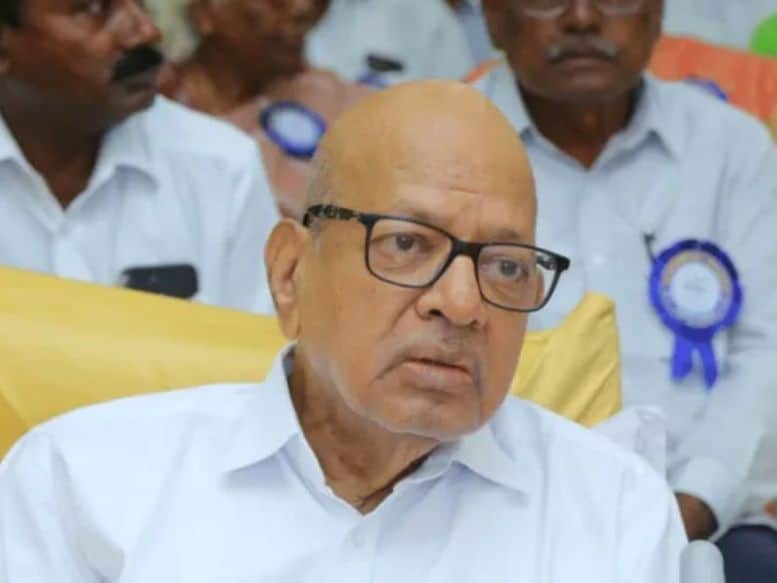
Rama Reddy Mamidi occupies a significant place in the history of cooperative development, rural empowerment, and animal husbandry in Bharat. The posthumous conferment of the Padma Shri in 2026 recognized a life spent strengthening institutions that were owned, governed, and sustained by rural communities themselves. His public contribution was not built around personal visibility; it was built around the patient formation of democratic cooperatives, thrift groups, dairy institutions, and legal frameworks that protected local self-management.
His story matters because rural development is often discussed through schemes, budgets, and administrative targets, while the institutional life of villages receives less attention. Rama Reddy Mamidi placed the institution at the center of development. In his view, a community could not be genuinely empowered if it remained dependent on distant agencies for decisions, finance, management, and market access. Development had to become a lived practice of collective responsibility.
Born in Shamshabad village in the Rajendranagar region of present-day Telangana, Rama Reddy came from a well-established family. His father, Bhoj Reddy, was known as a landowner who also supported educational institutions and welfare initiatives under the Indira Seva Sadan umbrella. This background gave Rama Reddy access to privilege, but his life took a markedly public direction. Rather than treating rural society as a field for patronage, he approached it as a field for self-governance, discipline, and shared economic action.
The foundations of his cooperative thought were shaped in the 1970s. During this period, he studied the functioning of successful rural cooperatives, especially the Mulukanoor cooperative model near Hanumakonda. At the time, he was associated with local public life as President of the Panchayat Samiti in Rajendranagar. What he observed in Mulukanoor convinced him that primary agricultural cooperatives could become more than credit channels. They could become multi-service institutions serving farmers through credit, input supply, agricultural extension, produce marketing, consumer goods, and welfare support.
This was a technically important shift. Conventional rural credit structures often treated farmers as borrowers and administrators as supervisors. Rama Reddy saw farmers as members, owners, managers, and decision-makers. The difference was not merely semantic. A borrower receives services; a member governs the institution that provides them. That distinction became central to his understanding of cooperative democracy.
His work later took organizational shape through the Co-operative Development Foundation, widely known as CDF. The CDF promoted community-owned and community-managed organizations, especially in Telangana and undivided Andhra Pradesh. It worked with primary agricultural cooperatives, thrift groups, paddy collectives, and dairy cooperatives. Its guiding assumption was clear: rural people already possessed knowledge, capacity, and discipline, but they needed appropriate institutional architecture to convert those strengths into sustainable development.
The cooperative principles that guided this work were not treated as decorative language. They shaped operational decisions. Democratic member control, member economic participation, autonomy, education, cooperation among cooperatives, and concern for community were embedded into training, governance, accounts, elections, and dispute resolution. In later international cooperative vocabulary, these values correspond closely with the Seven Co-operative Principles adopted by the International Co-operative Alliance in 1995.
Rama Reddy’s approach was decentralist in a precise institutional sense. He did not believe that every commodity or livelihood activity required a large centralized structure. In the case of agriculture, particularly paddy, the CDF explored how primary cooperatives could undertake local storage, milling, and value addition while a lean federation handled coordination, information, levy obligations, and regulatory requirements. This model recognized the economic limits of rice as a commodity while preserving local ownership over the core process.
The Sriram Sagar command area development phase illustrates this method. As irrigation prospects changed cropping patterns in parts of Karimnagar and Warangal, the CDF worked with cooperatives to prepare them for the economic changes that would follow. Training emphasized member thrift, governance, financial discipline, accounting transparency, and management capability. This was rural development understood not as a one-time intervention, but as a gradual building of institutional competence.
A major turning point came in the early 1980s when state intervention in cooperatives challenged the democratic foundation of the movement. When cooperative boards were suspended and administrators were appointed, the CDF faced a strategic choice. It could continue developmental work within controlled institutions, or it could defend the principle that cooperatives must remain democratic and member-governed. Rama Reddy and his colleagues chose the latter course, even though it slowed field activity and required litigation, public advocacy, and institutional resistance.
This episode reveals the depth of his thinking. For him, a cooperative without autonomy was not simply an imperfect cooperative; it was an institution whose moral and functional basis had been weakened. The cooperative form required elections, accountability, member participation, and freedom from excessive state control. Without these, the institution could become another administrative arm rather than a vehicle of rural self-reliance.
The long struggle contributed to the enactment of the Andhra Pradesh Mutually Aided Co-operative Societies Act, 1995. This legislation created space for autonomous cooperatives that did not depend on government funding. It became a landmark in cooperative law because it recognized that self-help institutions require legal protection from political and bureaucratic capture. The influence of this framework extended beyond Andhra Pradesh, as several other states later adopted similar legal approaches.
Rama Reddy’s technical strength lay not only in organization-building but also in his careful reading of law. Though not formally trained as a lawyer, he developed a deep command of cooperative legislation, constitutional principles, and policy drafting. His work with the Co-operative Initiatives Panel, the Brahm Prakash Committee process, and later reform discussions showed how grassroots experience could inform serious legal design. He understood that laws are not abstract instruments; they can either protect or suffocate people’s institutions.
One of the most consequential legal interventions concerned dairy cooperatives. When dairy cooperatives were excluded from the scope of the Mutually Aided Co-operative Societies framework through a later amendment, the CDF challenged the exclusion. The case involved principles of equality under Article 14 and freedom to form associations under Article 19(1)(c) of the Constitution. The favorable judicial outcome, later upheld at the Supreme Court level, strengthened the constitutional standing of autonomous cooperative institutions.
The significance of this legal tradition became even clearer after the Constitution (Ninety-Seventh Amendment) Act, 2011, which gave constitutional recognition to the right to form cooperative societies. Rama Reddy’s work cannot be reduced to one case or one statute, but it contributed to a larger national understanding: cooperatives are not merely development instruments; they are associational institutions tied to democratic freedom, equality, and self-organization.
Animal husbandry formed another crucial dimension of his contribution. In rural households, livestock is not just an economic asset. It is linked to nutrition, savings, resilience, manure, daily cash flow, and women’s participation in household income. Rama Reddy recognized that dairy cooperatives could convert scattered household production into reliable collective strength. By improving procurement, marketing, record-keeping, and member ownership, such cooperatives could create a more stable income base for families with small landholdings or limited agricultural security.
His work with women’s thrift groups and women’s dairy cooperatives was especially important. Many rural women had long contributed to livestock care, household management, and informal savings, but their economic agency was often invisible in formal institutional structures. The CDF’s thrift model encouraged women to build savings, observe financial discipline, and create their own collective stake before expanding into larger economic activities. This approach treated women not as passive beneficiaries, but as institution-builders.
The Mulukanoor women’s dairy cooperative became a powerful example of this progression. Thrift created confidence and capital. Dairy activity created market linkage and regular income. Cooperative governance created public leadership. The result was not merely improved milk marketing; it was the emergence of women as economic actors capable of managing accounts, participating in meetings, making decisions, and shaping community priorities.
Such work also explains why Rama Reddy’s legacy belongs within the broader civilizational ethic of seva, lokasangraha, and community responsibility. His method was secular in its institutional language and deeply rooted in rural realities, yet its moral structure resonated with long-standing Bharatiya ideas of collective welfare. It emphasized self-discipline over dependency, duty over display, and shared prosperity over individual patronage. This makes his life relevant not only to policy students but also to anyone concerned with social harmony and dharmic public conduct.
Colleagues often remembered him as stern, principled, intellectually clear, and uninterested in publicity. He preferred facilitation over control. This leadership style is easy to underestimate because it does not create dramatic public imagery. Yet facilitative leadership is often the reason an institution survives after its founder or mentor is gone. When communities own decisions, they also own consequences, corrections, and continuity.
His participation in policy forums was selective. He generally remained in the background while others represented cooperative reform in public spaces. One notable exception was his association with the Vaidyanathan Committee of 2003-04, which examined reforms in rural cooperative credit institutions. Even there, his emphasis remained consistent: reform had to include a legal framework that protected the future autonomy and democratic character of cooperatives.
The Padma Shri awarded to Rama Reddy Mamidi in 2026 is therefore more than a personal honor. It is a national acknowledgment of cooperative development as a serious instrument of inclusive growth. It also draws attention to the many unsung institution-builders whose contributions are not always visible in electoral politics, corporate philanthropy, or media narratives. Bharat’s development history contains many such quiet architects, and Rama Reddy stands among the most instructive of them.
His legacy offers practical lessons for contemporary rural policy. First, cooperative institutions must be democratic in practice, not merely registered as cooperatives in law. Second, member thrift and financial stake are essential for ownership. Third, women-led rural enterprise must be supported through durable institutions rather than temporary mobilization. Fourth, animal husbandry and dairy development can become major pillars of rural resilience when linked to transparent collective marketing. Fifth, legal autonomy is not a technical detail; it is the foundation of self-reliance.
Rama Reddy Mamidi’s life demonstrates that sustainable development is created when people are trusted with responsibility. His work joined economic empowerment with democratic culture, and rural livelihoods with legal reform. The result was a model of development that did not depend on spectacle. It worked through meetings, savings, accounts, elections, training, litigation, and patient community dialogue. That is precisely why it endured.
As Bharat continues to pursue rural development, inclusive growth, and community-centered economics, Rama Reddy Mamidi’s example remains deeply relevant. His vision of self-reliant communities, autonomous cooperatives, women’s economic leadership, and decentralized rural institutions offers a disciplined framework for the future. The Padma Shri serves as a fitting tribute to a man who strengthened the foundations of rural Bharat by helping ordinary people govern their own collective destiny.
Inspired by this post on Hindu Post.








Leave a Reply
You must be logged in to post a comment.