
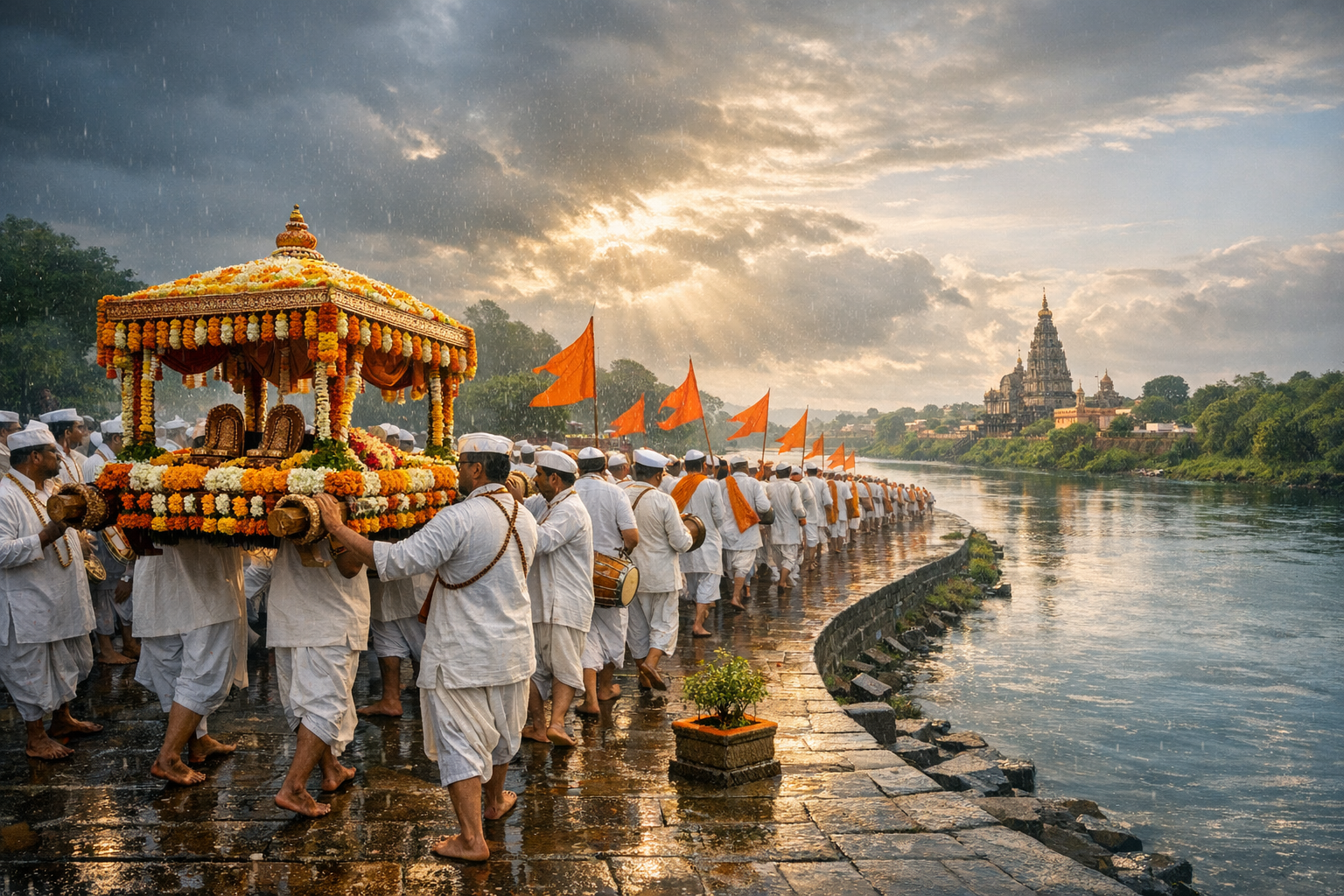
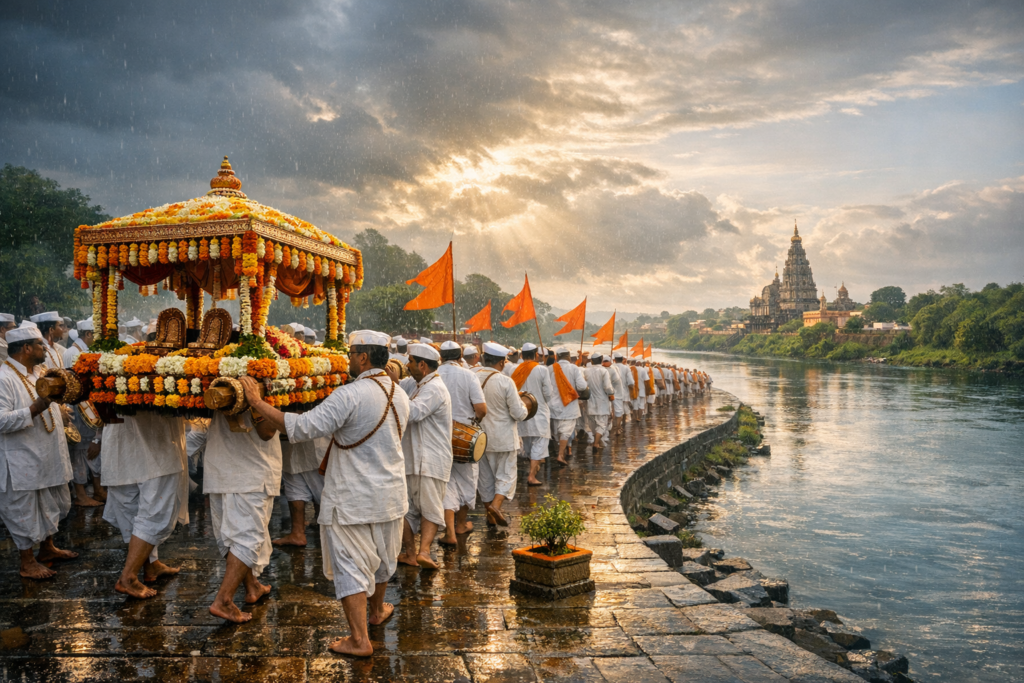
Pandharpur Palki Yatra 2026—also known as the Pandharpur Ashadhi Ekadashi Waari—remains one of South Asia’s largest living pilgrimages, converging on the Shri Vitthal-Rukmini Mandir in Pandharpur, Solapur district, Maharashtra. In 2026, Ashadhi Ekadashi falls on 25 July, and the Waari culminates on this date after a 21-day padayatra that begins around 4 July. This guide assembles dates, context, routes, rituals, travel logistics, and safety insights to support a meaningful and responsible yatra experience.
The pilgrimage is variously referenced as Pandharpur Yatra, Pandharpur Palki Yatra, and Pandharpur Ashadi Ekadasi Waari Yatra. The orthography Ashadhi/Ashadi and Ekadashi/Ekadasi reflects regional Marathi and Sanskrit transliterations; the underlying observance and its devotional content remain the same.
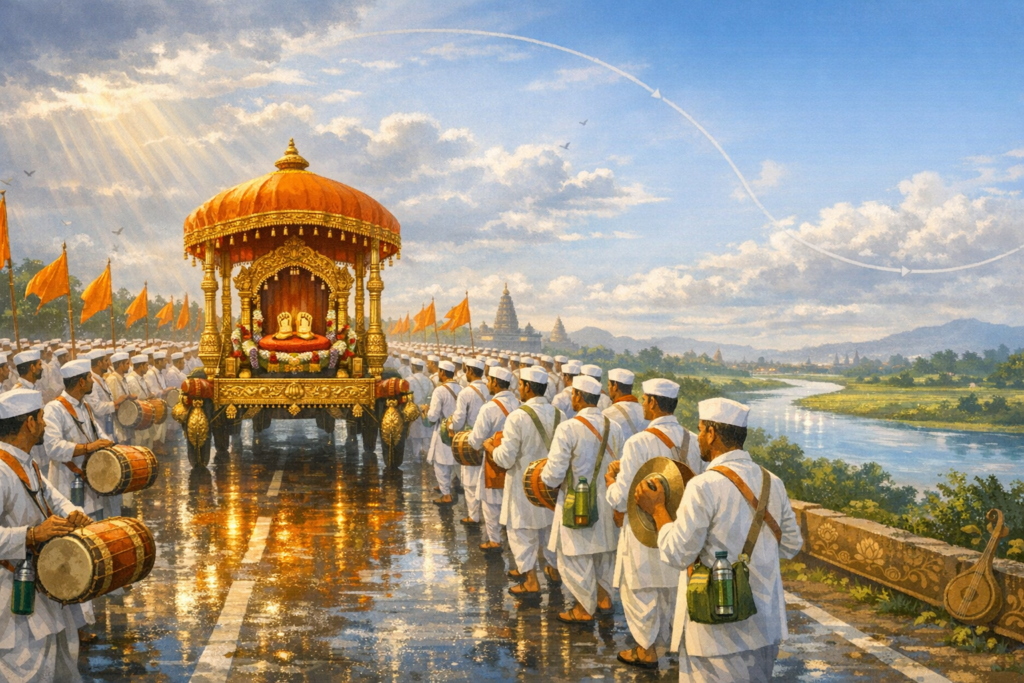
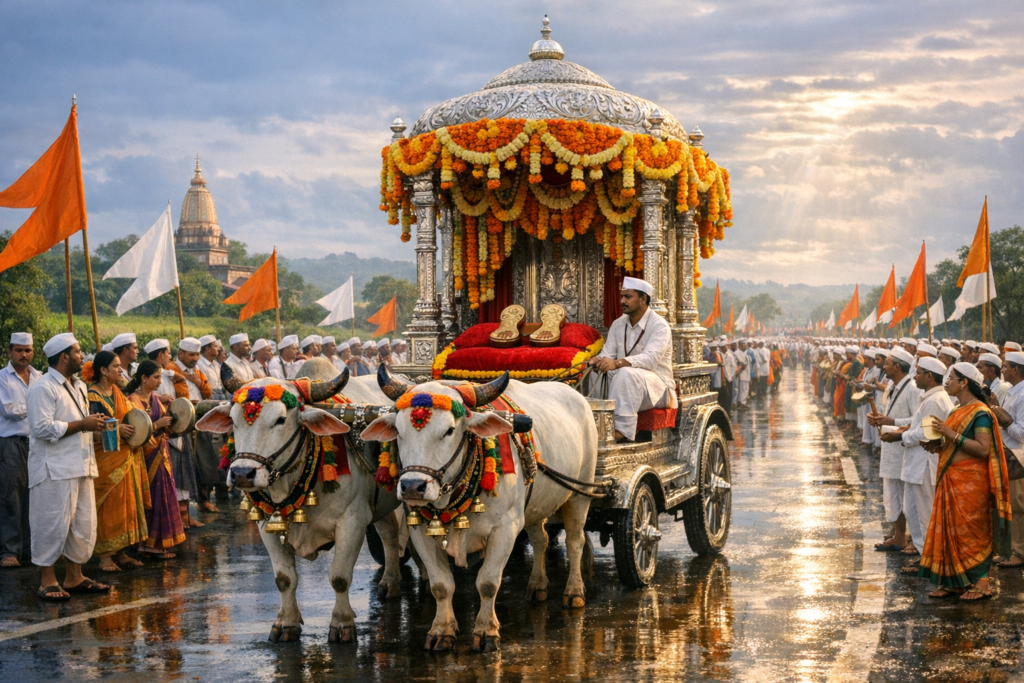
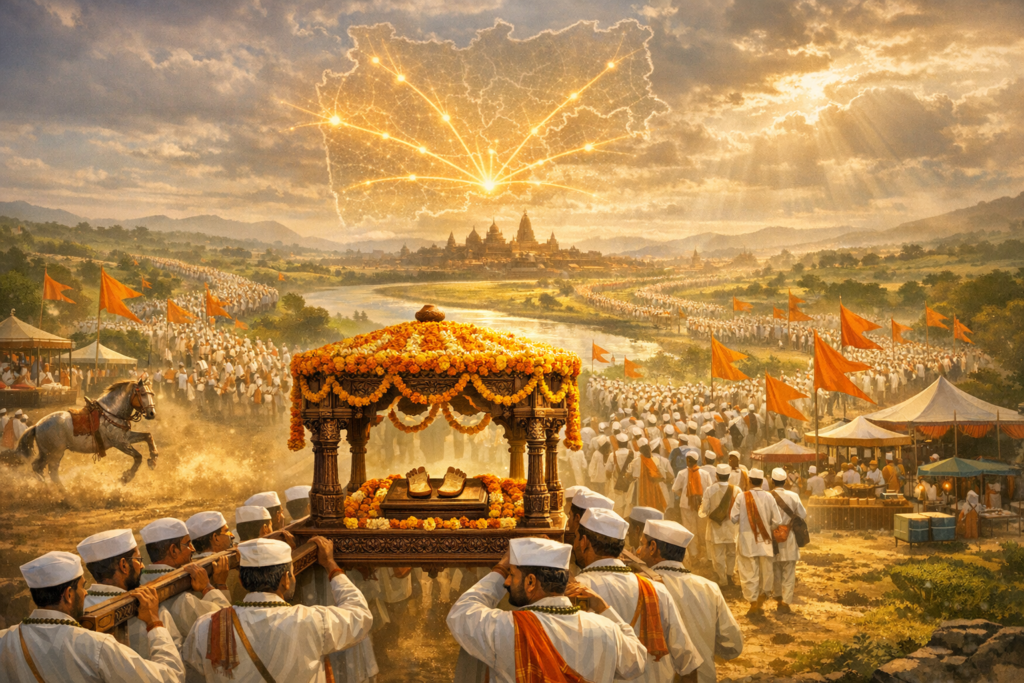
Waari (also spelled Wari) denotes the annual vow of Varkari devotees to journey to Lord Vithoba (Vitthal), a form of Vishnu/Krishna, on Ashadha Shukla Ekadashi. The term Palki refers to the palanquin carrying the paduka (sacred sandals) of the revered bhakti saints, most prominently Sant Dnyaneshwar Maharaj of Alandi and Sant Tukaram Maharaj of Dehu. Together, the Pandharpur Palki Yatra and its countless dindis (disciplined devotional troupes) form a mobile, month-long sangha that advances with nama-sankirtana, abhangas, seva, and codified discipline across rural and urban Maharashtra.
Calendarically, Ashadhi Ekadashi corresponds to the eleventh lunar day of the bright fortnight of the month of Ashadha. In 2026, the tithi aligns with Saturday, 25 July. The traditional Maharashtra practice organizes the Palkhi Sohala to start 21 days prior, so the core Dehu and Alandi departures occur in the first week of July, with progressive halts en route to Pandharpur. The dindis maintain an austere rhythm—early-morning departures, kirtan-filled marches, midday rest, and evening satsanga—until they reach the Chandrabhaga (Bhima) river bend at Pandharpur for the climactic darshan.
Historically, the Varkari Sampradaya crystallized between the thirteenth and seventeenth centuries through saints such as Sant Dnyaneshwar, Sant Namdev, Sant Eknath, and Sant Tukaram. The Palkhi tradition, in which the saints’ paduka are ceremonially borne in processions, was gradually systematized in later centuries and took its recognizably organized form by the nineteenth century. Its core ethos—egalitarian devotion, communal service, non-sectarian bhakti, and ethical discipline—continues to shape Maharashtra’s cultural memory and social cohesion.
Pandharpur stands on the crescent-shaped meander of the Chandrabhaga River, a sacred topography that has attracted devotees for over a millennium. The Shri Vitthal-Rukmini temple enshrines the dark-stone murti of Vithoba standing with hands on hips, a posture associated with patient, embodied compassion toward devotees. On Ashadhi Ekadashi, lakhs of Varkaris circumambulate, sing abhangas, and undertake darshan in elaborate, well-regulated queues, often after the ceremonial dip (snana) in the Chandrabhaga.
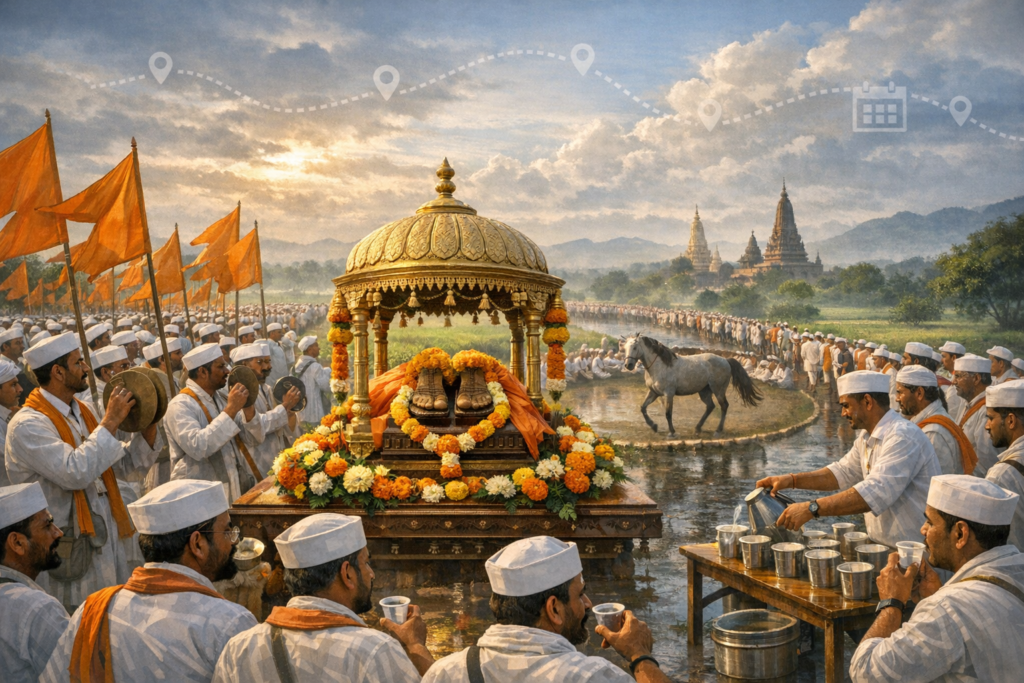
Two principal Palkhis define the modern Waari: the Sant Tukaram Maharaj Palkhi from Dehu and the Sant Dnyaneshwar Maharaj Palkhi from Alandi. Each follows a time-tested set of halts coordinated with local administrations and host communities. While exact waypoints may vary slightly year to year, both processions traverse approximately 225–270 kilometers over three weeks. En route, the Palkhi halts at large towns for the ringan ceremony, where the sacred horse circles a devotional track amid rhythmic tal, mridanga, and veena, and at smaller villages where households host the dindis with annadan and resting spaces.
Dindis function as disciplined devotional units with appointed leads, kirtankars, and seva-coordinators. Dress often includes simple white khadi, tulsi malas, and the saffron bhagwa flag; many carry tulsi planters as moving shrines. The daily routine interleaves nama-sankirtana, scriptural exposition, collective cooking, and first-aid seva. Cultural signatures include spontaneous abhangas dedicated to Vithoba-Rakhumai and call-and-response chants such as “Gnyanoba-Tukaram” and “Pundalik Varade Hari Vitthal.”
On Ashadhi Ekadashi day, pilgrims traditionally rise well before dawn for Chandrabhaga snana, proceed toward the Shri Vitthal-Rukmini temple through designated corridors, and offer prayers, coconuts, tulsi leaves, and simple naivedya. Temple rituals include abhisheka and alankara of Shri Vithoba and Rakhumai, with continuous kirtan. The arrival of the Palkhis is greeted with profound emotion; the sight of the paduka being brought to the temple precincts encapsulates the Waari’s spiritual arc from vow to fulfillment.
Ekadashi vrata observance varies by tradition and personal capacity—from nirjala fasting to phalahara and satvik meals without grains and certain pulses. The scriptural rule emphasizes mindfulness, ahimsa, and japa throughout the tithi. Parana (fast-breaking) customarily takes place on Dwadashi after sunrise once the Ekadashi tithi has ended; local panchang guidance should be followed for precise timings in 2026.
For 2026, those planning a full or partial padayatra may align with either the Dehu or Alandi processions around 4–6 July and join for selected stages. Those intending to receive darshan primarily on Ekadashi, 25 July, should plan arrival in Pandharpur or nearby Wakhari at least 24–48 hours earlier due to peak footfall. Witnessing the Palkhi’s penultimate halts, the ringan, and the final riverfront convergence often provides a more immersive Waari experience than a same-day arrival.
Pandharpur is connected by road to Solapur, Pune, and Kolhapur, with regular state-transport and private buses during the Waari season. Pandharpur railway station handles special trains around Ashadhi Ekadashi; Solapur Junction functions as a major railhead with onward road links. Pune International Airport (PNQ) offers the widest flight connectivity; road travel from Pune typically ranges between 5 and 7 hours in monsoon conditions. Accommodation includes dharmashalas, ashrams, community halls, and budget hotels; advance booking is essential, and staying in satellite towns such as Sangola or Mangalvedha can ease congestion.
July is peak monsoon in Maharashtra. Light, quick-dry clothing, reliable rain protection, and anti-slip footwear are essential. Blister care, hydration salts, and simple first-aid supplies are highly recommended. Mobile networks can become congested; offline rendezvous points within the group reduce separation anxiety. The administration typically enforces traffic diversions; carrying government ID, keeping valuables minimal, and respecting barricade lines ensures smoother movement and safety for all.
The Waari relies on shared discipline. Devotees avoid intoxicants, maintain satvik food practices, and keep kirtan spaces clean. Single-use plastic reduction, proper waste segregation, and cooperation with sanitation volunteers minimize the pilgrimage’s ecological footprint along rural corridors and riverbanks. Contributing to annadan and medical camps strengthens the pilgrimage’s social welfare dimension.
Beyond personal devotion, the Pandharpur Palki Yatra operates as a moving commons that gently dissolves social barriers. The Varkari ethos foregrounds humility, equality, and seva; participation by women, senior citizens, and youth is visibly robust. The abhangas of Sant Tukaram and Sant Dnyaneshwar continue to shape ethical imagination in Marathi society, reinforcing non-sectarian bhakti as a mode of social harmony.
While the Pandharpur Ashadhi Ekadashi Waari is a distinct Vaishnava pilgrimage, its values resonate across the dharmic family. Shared practices such as community singing, service, and padayatra echo in Sikh Nagar Kirtans, Jain tirtha-yatras, and Buddhist sangha pilgrimages. Recognizing these common threads—compassion, discipline, and collective remembrance—strengthens mutual respect among Hindu, Buddhist, Jain, and Sikh communities and advances the broader aim of unity in diversity.
Photography is generally welcomed in public spaces but must never impede processional movement or invade private devotional moments. Drone usage, if any, should only occur within local regulations. Inside or near sanctum areas, follow temple directives on cameras and phones. Maintaining quietude during arati and kirtan, yielding space for elders, and assisting first-time visitors embody the Varkari spirit more than any image can capture.
Key 2026 markers include the expected Palkhi departures in the first week of July, the 21-day Waari rhythm through Maharashtra’s villages and towns, and Ashadhi Ekadashi on Saturday, 25 July, when the Waari culminates in Pandharpur. Dwadashi parana observance falls on 26 July, subject to panchang timings. Specific dindi registrations, daily halts, and crowd arrangements are typically finalized closer to the season by local committees and the district administration; pilgrims are advised to consult official notices for last-mile details.
For countless Varkaris, the moment of beholding Shri Vithoba—hands on hips, awaiting each devotee with steady compassion—justifies weeks of rain, mud, and blistered feet. In 2026, aligning intent with preparation will allow the Pandharpur Palki Yatra to be both safe and transformative. The Waari’s cadence of abhang, seva, and shared food offers an enduring lesson: collective devotion can move mountains—or at least carry a community, step by steady step, toward the sanctum of grace.
Inspired by this post on Hindu Pad.





Leave a Reply
You must be logged in to post a comment.