On Monday, March 2, 2026, the Panchang notes Shukla Paksha Chaturdashi (the fourteenth lunar day of the waxing phase) prevailing until 17:18 (5:18 PM) in most regions that follow the standard Hindu calendar. From that point onward, Purnima tithi (the full moon day) begins and continues until 04:33; in many locations this end-time falls on the next civil date (i.e., the early hours of March 3). As with all tithi timings, slight variations occur by locality due to longitude, latitude, and time-zone adjustments.
In the lunisolar framework of the Hindu calendar (Panchang), Shukla Paksha Chaturdashi marks the culmination of the bright fortnight, immediately preceding the fullness of the Moon. The transition into Purnima on the evening of March 2 ushers in the complete lunar disc, associated in many traditions with clarity, completeness, and the ripening of intentions set earlier in the fortnight. The sequenceChaturdashi to Purnimathus forms a natural arc of preparation followed by fulfillment.
Tithi is a precise astronomical interval defined by the Sun–Moon angular separation increasing in steps of 12°. Because this measurement is independent of civil midnights and depends on local sky geometry, tithis often begin and end at unconventional hours. The published timings above (Chaturdashi until 17:18; Purnima until 04:33) reflect commonly referenced Indian Panchang computations and should be locally verified for city-specific observance.
Purnima is widely revered across the Dharmic traditions. Within Hindu practice, Purnima is auspicious for Satya Narayana Puja, snana (sacred bathing), japa (mantra recitation), and daana (charity). In Buddhism, the full moon synchronizes with Uposatha, a renewal day for ethical observance and meditation. In Jain traditions, full moon days are observed by many as favorable for svadhyaya (scriptural reading), vrata, and contemplation. Sikh practice today primarily follows the Nanakshahi solar calendar, yet the historical memory of Kartik Purnima (Gurpurab of Guru Nanak) highlights how lunar phases have long woven communities together. The shared reverence for the full moon underlines the unity of purposeinner refinement, compassion, and serviceacross these traditions.
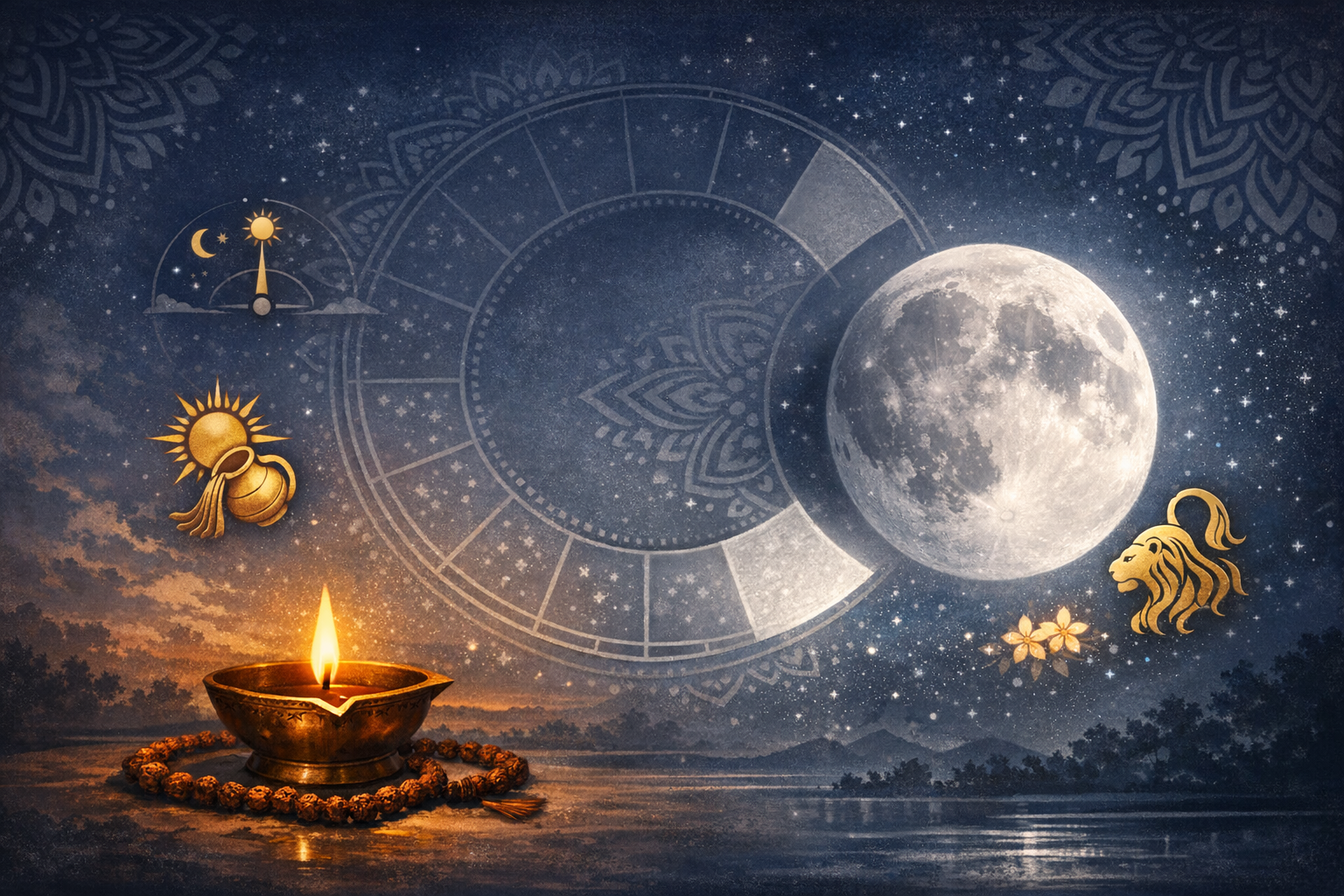
Regarding Nakshatra and Rashi around this full moon: when the sidereal Sun is in Kumbha (Aquarius) in early March, the opposing full Moon typically falls in Simha (Leo) Rashi. Consequently, the Purnima near this period frequently occurs in Purva Phalguni or Uttara Phalguni Nakshatra, though the exact boundary timings are location-dependent. Observers planning precise rituals are advised to reference a city-specific Panchang to confirm the active Nakshatra at their chosen muhurta.
Good Time (Auspicious Windows) on any date is best identified by combining tithi with time-tested muhurta principles. Two broadly accessible anchors are: (1) Brahma Muhurtaapproximately 1 hour 36 minutes to 48 minutes before local sunriseideal for japa, pranayama, and dhyana; and (2) Abhijit Muhurtacentered on local solar noon (about 24 minutes on either side), traditionally favorable for decisive actions, sankalpa, and quiet worship when other options are constrained.
Conversely, care is often taken to avoid Rahu Kalam, Yamaganda, and Gulikai. These segments divide the daylight span into eight equal parts with day-specific assignments. For illustration, assuming a 12-hour day from 06:00 to 18:00: Monday’s indicative windows would be Rahu Kalam ≈ 07:30–09:00, Yamaganda ≈ 10:30–12:00, and Gulikai ≈ 13:30–15:00. Actual windows vary seasonally with sunrise and sunset, so practitioners should recompute for their location by dividing the day into eight equal portions and applying the standard weekday sequence.
When scheduling observances that straddle the tithi boundary on March 2, the intention of the vrata typically guides timing. Those honoring the preparatory spirit of Shukla Paksha Chaturdashi may complete sadhana before 17:18. Those observing Purnima vows may initiate puja after 17:18 on March 2 or during the Purnima period that continues into the early hours of March 3 (until 04:33 as per the noted Panchang), following their lineage’s instruction on whether evening presence or sunrise presence of Purnima is preferred.
Practically, many households find that simple, sincere steps bring depth to the day: lighting a deepa at dusk, silent japa of one’s chosen mantra, reading a passage from the Upanishads, Dhammapada, Jain Agamas, or Gurbani, and concluding with a small act of kindness. Such rhythms allow the lunar transition from Chaturdashi to Purnima to be felt not just as a calendar fact but as a lived experience of steadiness and refinement.
From an astronomical perspective, tithis are sidereal-lunar constructs and therefore do not align neatly with civil dates. A single Gregorian date may host a tithi change; likewise, a single tithi can span portions of two civil days. The Rashi (sidereal zodiac sign) is computed against fixed-star references, distinct from the tropical (season-based) zodiac; this is why sidereal Sun in Kumbha around early March remains stable year to year with only minor ayanamsa adjustments in standard Panchang tradition.
The shared lunar cadence across Hinduism, Buddhism, Jainism, and Sikhism, especially on full moon days, underscores a common aspiration: to cultivate clarity, compassion, and self-mastery. Observed with mutual respect, these practices strengthen cultural bridges and remind communities that diverse methods of worship can harmonize around a singular pursuit of truth and well-being.
Summary for March 2, 2026 (most regions): Shukla Paksha Chaturdashi until 17:18; thereafter Purnima until 04:33 (local end-time frequently falls on March 3). Plan auspicious activity in Brahma Muhurta or Abhijit Muhurta when possible; avoid day’s Rahu Kalam, Yamaganda, and Gulikai based on locally computed daylight segments. For precise Nakshatra and Rashi at a given hour, consult a city-specific Panchang; near this season, the full Moon generally resides in Simha and often in Purva Phalguni or Uttara Phalguni. Let the transition from preparation (Chaturdashi) to completion (Purnima) guide intention and practice.
Inspired by this post on Hindu Blog.