For decades, Easter IslandRapa Nui in the islanders’ own namehas been cited as a cautionary tale of “ecocide,” a society said to have destroyed itself by razing forests to move its monumental moai statues. Newer evidence, however, paints a markedly different picture: a resilient Polynesian culture whose decline followed European contact, with disease, slavery, and missionization driving demographic collapse and cultural disintegration.
Rapa Nui’s achievements remain extraordinary. Communities quarried volcanic stone to carve moai and engineered coastal platforms to raise them, reflecting sophisticated artistry, logistics, and social organization. Early popular narratives, including a 2003 BBC program, framed this grandeur as a prelude to self-inflicted ruin. The familiar storyline held that deforestation to transport moai destabilized the island’s ecology, triggering famine, warfare, and social collapse. That framing shaped public imagination and environmental discourse, but it oversimplified a complex, human-centered history.
Contemporary assessments re-interpret the timing and consequences of deforestation, which likely began centuries before European landfall. Crucially, when the Dutch explorer Jacob Roggeveen arrived in 1722, he encountered a people who were well nourished, cultivating yams, sweet potatoes, and sugarcane. Despite extensive tree loss, indicators of civil war or societal breakdown were not evident. This aligns with archaeological insights that Rapa Nui communities adapted creatively, including cultivating in caves and leveraging abundant marine resources.
The rupture came with contact. As elsewhere in Polynesia and the Americas, European ships introduced pathogens to which islanders had no immunity. By the time Captain Cook visited decades later, visible signs of disruption had emerged: disease, malnourishment, and toppled statues. Subsequent visits by Spanish ships, whalers, and merchants compounded exposure and stress, mirroring broader colonial-era epidemiological shocks.
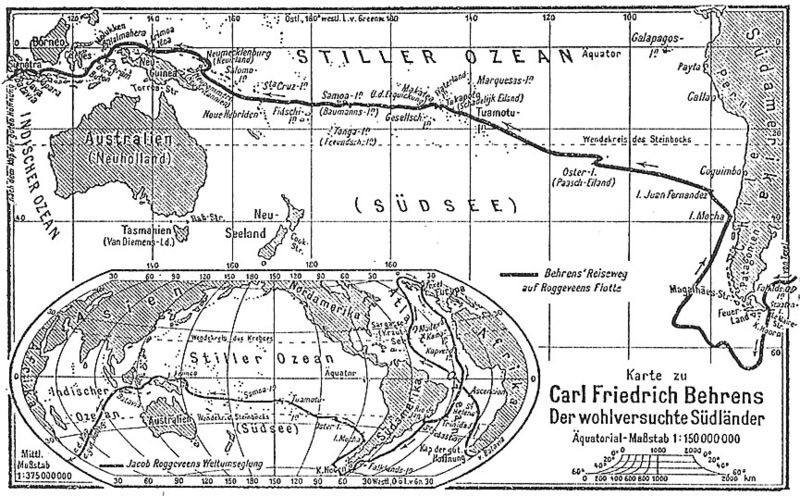
Violence against the islanders intensified in the nineteenth century. In 1805, the American ship Nancy seized Rapa Nui people. During 1862–1863, Peruvian slavers abducted roughly 1,500 more for mines and plantations, a devastating blow to a small population. Missionary campaigns followed, suppressing indigenous traditions such as the Birdman (tangata manu) ritualtoday marked by St. Peter placed atop earlier iconography. By 1877, only 111 people remained on the island. Within a century and a half of European arrival, Rapa Nui’s population had been shattered. It was not ecocide, but genocideprimarily through introduced disease, forced labor, and cultural suppression.
Archaeology likewise challenges sensational claims often repeated in secondary literature. Evidence for widespread internecine warfare is minimal, and recurring assertions of cannibalism stem largely from European narratives rather than secure material proof. One moai long cited as a famine emblemits ribs sharply definedhas been re-dated, revealing that its form reflects iconography rather than crisis. Even the question of statue transport has evolved: experimental archaeology suggests that moai could have been “walked” upright using ropes and their engineered centers of gravity, reducing the need for massive timber rollers.
Seen through this lens, Rapa Nui emerges not as an environmental morality play, but as a study in resilience undermined by colonial incursions. Deforestation had begun by the thirteenth century, yet innovative agriculture and rich fisheries sustained robust communities into the eighteenth centuryexactly what Roggeveen’s crew observed. The precipitous decline tracks with well-documented patterns of contact-era catastrophe across the Pacific and beyond.

This pattern parallels other histories: Spanish conquest in the Americasoften summarized as “Guns, Germs, and Steel”devastated native polities; the ideology of Manifest Destiny dispossessed Indigenous nations in North America; in Hawai‘i, missionaries and later commercial interests reconfigured sovereignty and culture. Rapa Nui’s annexation by Chile on 9 September 1888 further formalized an already transformed political landscape. Each case underscores a recurring dynamic: exogenous power imposing disease, extraction, and cultural erasure on thriving societies.
There is an ethical dimension to getting this story right. Reiterating the ecocide myth inadvertently blames victims for calamities precipitated by external forces. A more humane, evidence-based account recognizes Rapa Nui ingenuity, honors cultural continuity, and focuses critique where it belongson the structural violence of colonization. For readers, this reframing is not only historically accurate; it is emotionally clarifying, replacing fatalism with respect for indigenous resilience.
These insights also resonate with the shared ethos of dharmic traditionsHinduism, Buddhism, Jainism, and Sikhismwhich value truth-seeking, non-harm, stewardship, and cultural continuity. Solidarity across dharmic communities strengthens a broader commitment to protect living heritages worldwide from reductive storytelling and external domination. In this spirit, the history of Easter Island calls for careful scholarship, ethical remembrance, and a unified resolve to safeguard cultural dignity wherever it is threatened.
Inspired by this post on Varnam.