-
Escape and Evasion: Riveting Lessons in Resilience, Dharma, and Inner Strength Under Fire

This analysis presents a survival narrative as a disciplined study in Resilience, dharma, and ethical clarity. It demonstrates how Mindfulness stabilizes decision-making under threat and how restraint aligned with Ahimsa reduces harm. Readers gain practical toolscalm-start breathing, multi-route planning, discreet coordination, and de-escalationthat improve outcomes without compromising integrity. The account highlights social trust and community…
-
Mahanamni Explained: Sacred Sama Veda Sakvari Verses Shaping Ahina Rituals and Unity

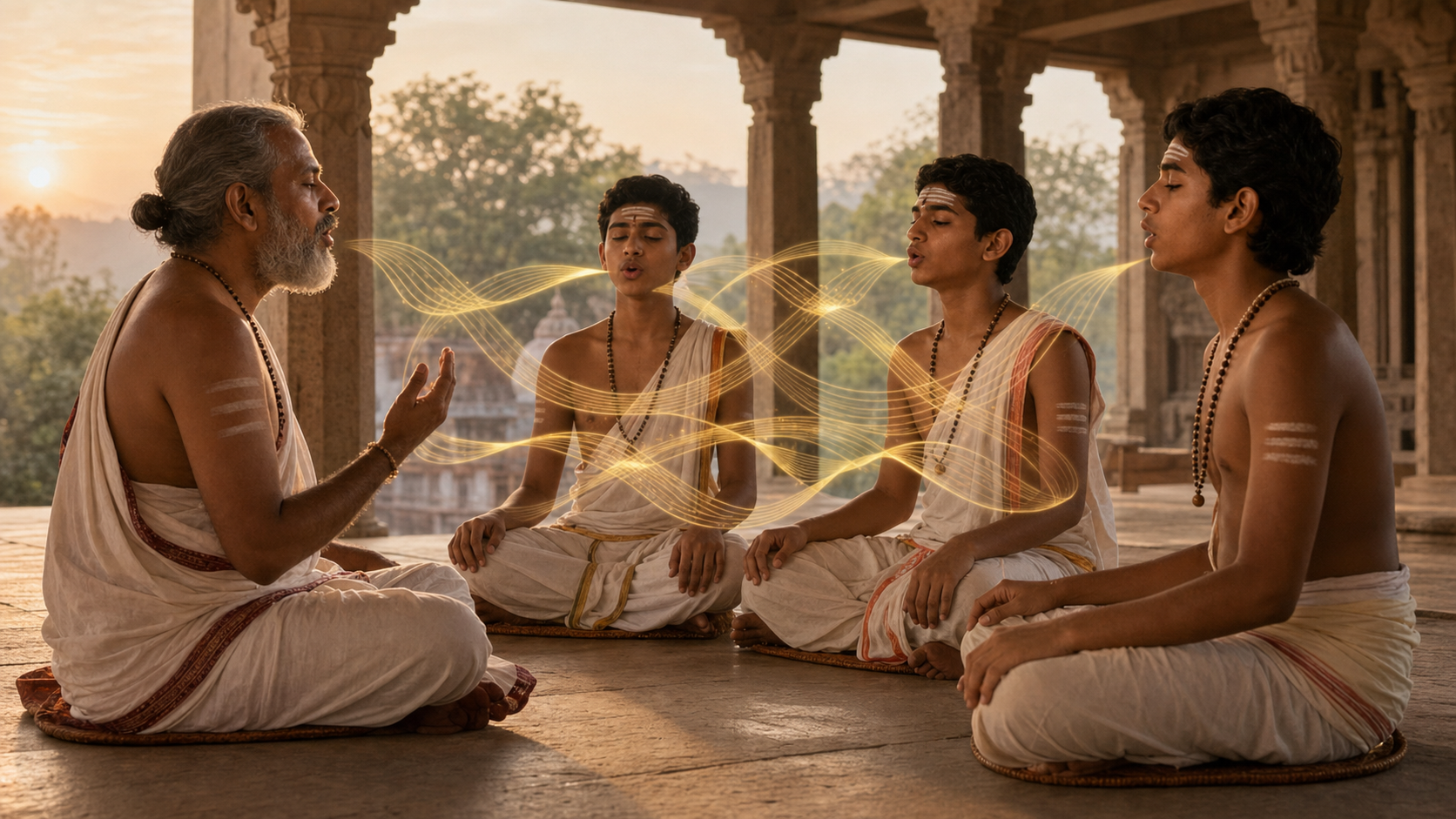
The Mahanamni, a set of nine Sama Veda verses in Jaiminiya Samhita 2.7, begins with the words “vida maghavan” and is also known as the Sakvari verses. These chants hold enduring ritual significance, especially within the focused framework of Ahina sacrifices. Their careful phonetics and measured melodic patterns ensure that intention, meter, and meaning align…
-
From Trickster to Kingmaker: Maricha to Shakuni and the Karmic Echoes Across the Yugas

This piece examines the thematic linkage between Maricha in the Ramayana and Shakuni in the Mahabharata as a teaching device about karma, samsara, and moral causality across the yugas. It clarifies that core texts do not attest a direct rebirth but shows how the comparison illuminates the evolution of deception from personal illusion to systemic…
-
Transform Material Cravings into God-Centered Bhakti: A Dharmic Guide to Lasting Peace

This essay explains the shift from a life centered on the mind and senses to a God-centered life of bhakti in Hindu spirituality. It clarifies how material attachments create instability while devotion to Krishna offers ethical clarity and inner peace. The discussion highlights practical ways to re-center daily choices, including contemplation, japa, meditation, and seva.…
-
Free Will and Maya: Dharmic Wisdom for Choosing Well Amid Life’s Illusions

The Bhagavad Gita affirms human agency“Deliberate on this fully and then do what you wish to do” (Gita 18.63)while dharmic traditions explain how avidya, moha, and maya condition choice. This piece reconciles freedom and conditioning, showing how responsibility and compassion can coexist. Practical guidance highlights viveka, meditation, breathwork, bhakti, seva, and ethical vows as tools…
-
NHRC Notice to Railways: Mandate Clear Halal/Jhatka Labels to Safeguard Choice and Harmony

The National Human Rights Commission (NHRC) has notified Indian Railways on the need for transparent food labeling in railway meals. It has directed the Ministry of Culture to ensure all food outlets and agencies prominently display whether meat served is halal or jhatka. This approach strengthens consumer rights, informed consent, and religious sensitivity across a…
-
Bengaluru arrest of Rashtra Rakshan Dal leader sparks debate on border security, harmony

Bengaluru police arrested Puneet Kerehalli, leader of the ‘Rashtra Rakshan Dal,’ after the group launched drives to trace alleged undocumented migrants from Bangladesh. The incident has intensified debate on border security, due process, and citizen activism. This analysis outlines why enforcement must remain with authorized agencies and how community engagement can remain lawful and responsible.…
-
Karmashaya Demystified: Uncovering the Hidden Storehouse of Karma in Patanjali’s Yoga

KarmashayaPatanjali’s term for the subtle storehouse of karmaexplains how actions leave impressions (samskaras) that condition future experience. Grounded in the Yoga Sutras (2.12), it links klesha-driven actions to both present and unforeseen outcomes, clarifying the mechanics of reactive patterns. Read together with the threefold classification of karma (sanchita, prarabdha, agami), karmashaya functions as a dynamic…
-
Lakshmi and Chicomecoatl: Powerful Cross-Cultural Echoes of Prosperity and Nourishment

A striking visual parallel links Hinduism’s Goddess Lakshmi with Chicomecoatl, the Aztec corn goddess, through shared symbols of flowers and grain. This comparison clarifies how agrarian civilizations independently envisioned prosperity, abundance, and ethical well-being. Readers gain an accessible, evidence-based perspective on cross-cultural symbolism without overstating historical contact. The discussion highlights values central to dharmic traditionscompassion,…
-
Escape Catastrophic Thinking: The Hope Discipline That Calms the Nervous System

Catastrophic thinking often masquerades as responsibility, especially in high-pressure work that rewards risk anticipation. A simple hope practiceasking what good might happen, acknowledging protective fear, and choosing presencehelps shift the nervous system from panic to calm response. This disciplined approach does not deny uncertainty; it reframes it through awareness and mindfulness. Small, repeatable prompts embed…
-
Why Everything Happens for a Reason: Hinduism’s Profound Lens on Karma, Dharma, and Cosmic Play

This essay explains how Hindu philosophy gives depth to the idea that everything happens for a reason by integrating karma (ethical causality), dharma (righteous duty), and lila (divine play). It shows how these concepts preserve agency without fatalism, balancing responsibility and openness to mystery. Readers gain practical ways to apply this frameworkdiscernment, svadharma, seva, meditation,…
-
From Survival to Sanctity: How Bhakti Transformed Vegetarianism into Sacred Purity

The evolution of food ethics in the subcontinent moved from survival to sanctity. Early Vedic practices treated food as a ritual and ecological necessity, while later philosophies linked diet to inner purity and ahimsa. The Bhagavad Gita’s sattvic ideal helped shape vegetarianism as a practical path for clarity and devotion. During the Bhakti tradition, temple…
-
Brotherhood in the Ramayana: Sacred Bonds of Duty, Sacrifice, and Enduring Unity

Brotherhood in the Ramayana is portrayed as a disciplined ethic of love, respect, sacrifice, and dharma that stabilizes families and strengthens kingdoms. Rama and Lakshman exemplify vigilant companionship in adversity, while Bharata’s renunciation models humility in leadership. Shatrughna’s quiet service shows how consistent responsibility sustains the common good. In contrast, Ravana’s rejection of counsel and…
-
February 3, 2026 Panchang: Krishna Paksha Dwitiya Tithi, Shubh Muhurat, Nakshatra & Rashi Guide

February 3, 2026 features a tithi transition in the Hindu Panchang: Krishna Paksha Pratipada continues until 2:32 AM, after which Krishna Paksha Dwitiya prevails across most regions. Because Dwitiya begins before sunrise, daily observances typically align with Dwitiya for this date. Shubh Muhurat depends on local calculations that integrate Tithi, Nakshatra, Yoga, and Karana; avoiding…
-
Falgun Purnima 2026 (Holika Purnima): March 3 Date, Holika Dahan, Rituals, and Meaning

Falgun Purnima 2026, also called Holika Purnima, falls on March 3 and is dedicated to Lord Krishna and Goddess Lakshmi while honoring the wider Phalguna month’s reverence for Shiva and Parvati. The evening bonfire of Holika Dahan symbolizes the triumph of dharma, with Holi (Rangotsav) celebrated on March 4. Observances include snana, vrata, Krishna Puja,…
-
Sri Govindarajaswamy Temple, Tirupati: Sacred February 2026 FestivalsAn Insightful Guide

Sri Govindaraja Swamy Temple in Tirupati, consecrated by Śrī Ramanujacharya in 1130 CE, presents a tranquil and structured festival rhythm in February 2026. Aligning with Magha Masam (and possibly the onset of Phalguna), the month typically includes Ekadashi and Dwadashi vratas, Pournami alankarams, and preparations that may approach Teppotsavams if the lunar calendar aligns. The…
-
Sankashti Chaturthi February 2026: Complete Guide to Date, Regional Months, Vrat and Puja

Sankashti Chaturthi in February 2026 falls on 5 February, observed on Krishna Paksha Chaturthi across traditions. It aligns with Falgun in North Indian Hindi calendars and Magha Month in Marathi, Gujarati, Telugu, and Kannada reckoning, reflecting regional diversity on a shared tithi. The vrat is kept from sunrise to moonrise, concluding after Chandrodaya with Ganesha…
-
TTD Festivals in February 2026: A Comprehensive Guide to Sacred Tirumala Utsavams

February 2026 at TTD aligns with Magh Maas – Falgun Maas, bringing a spiritually charged calendar anchored in daily Nitya Kainkaryams and select utsavams at the Tirumala Venkateshwara Temple. Devotees benefit from early planning, official schedule checks, and adherence to temple decorum for a dignified darshan. The serene pre-dawn Suprabhatam, the fragrance of tulasi, and…