
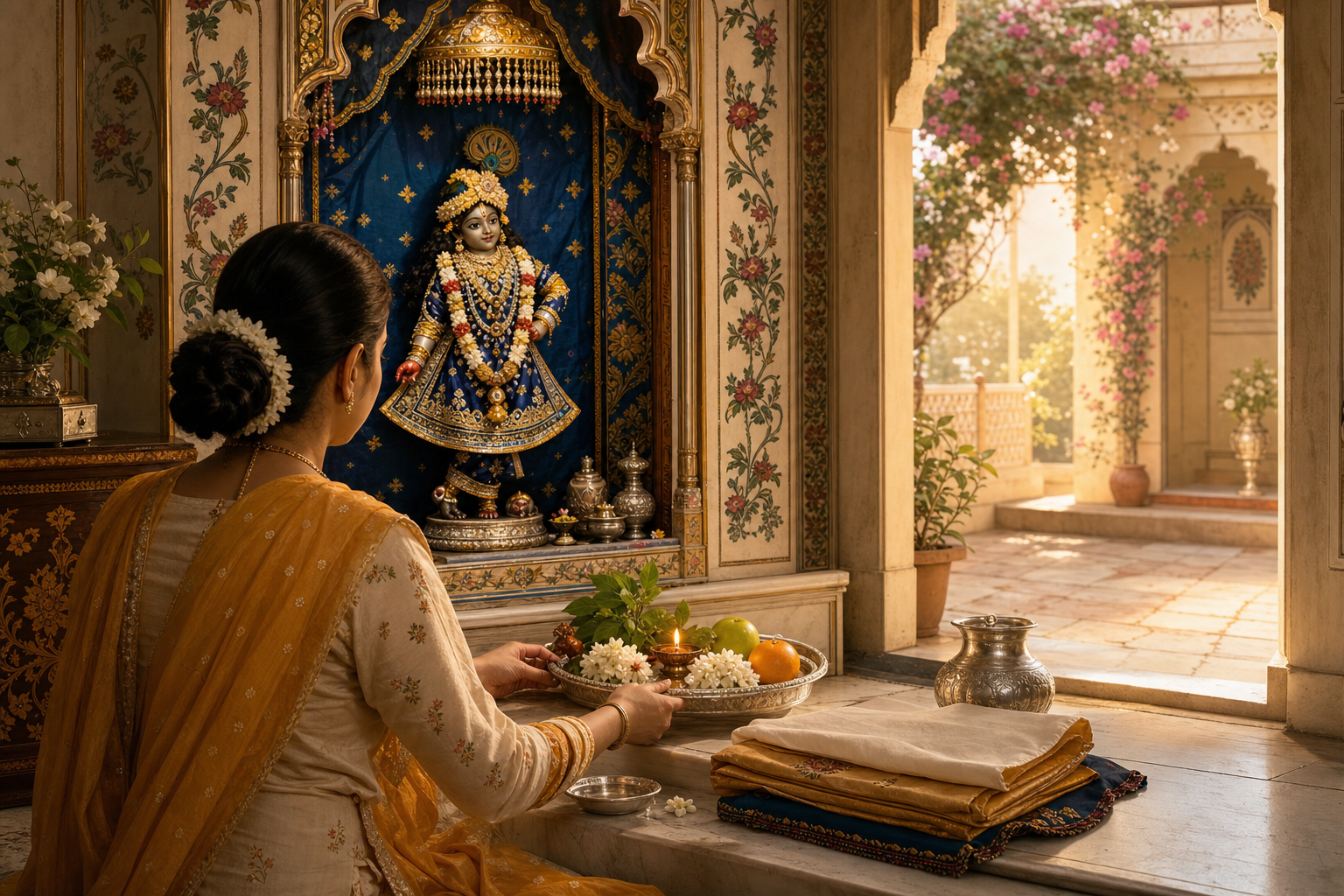
If the language of grace has left you wondering what spiritual practice is actually for, you have reached one of Pushtimarg’s central questions. You cannot purchase Shri Krishna’s favour through effort. Yet simply waiting for grace would empty devotion of seva, remembrance, and loving attention.
The workable answer is to stop treating practice as a way to force a divine result. You shape your ordinary life as an offering, receive whatever Krishna gives, and let that gift deepen your capacity to serve. This is how Nityalila becomes relevant before any extraordinary spiritual experience occurs.
Nityalila is a relationship, not a spiritual spectacle
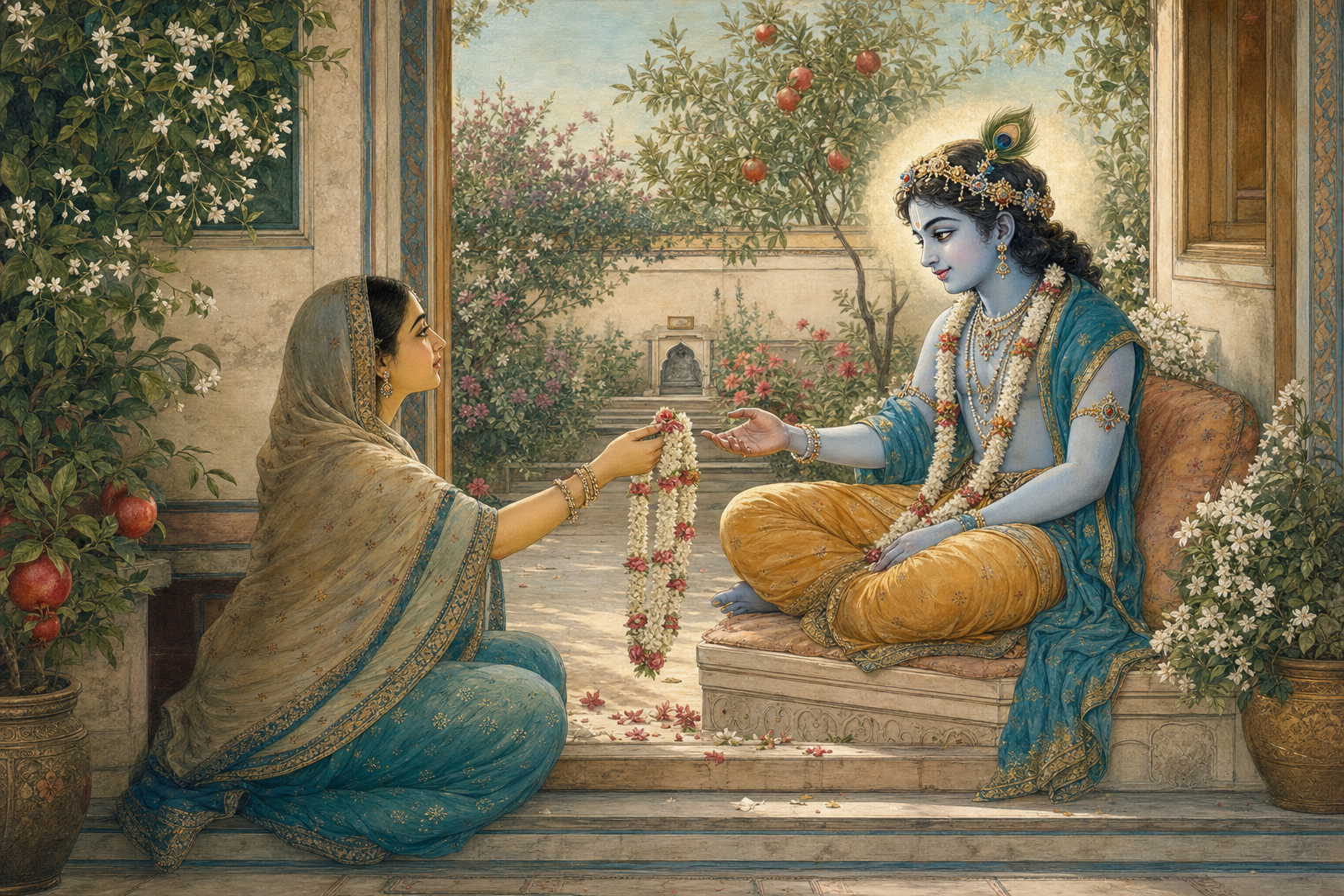
In Vallabhacharya’s vision, Nityalila is the timeless and ever-fresh divine play of Shri Krishna. It is not merely an event remembered from the sacred past. Nor is it only a reward waiting at the end of spiritual life. It is a living divine reality that may be intimated in the devotee’s heart and is fulfilled in Goloka through intimate service and loving union.
“Eternal” therefore does not mean static. Lila is living relationship: Krishna is loved, remembered, served, beheld, and enjoyed in ever-renewed sweetness. The devotee does not stand outside that reality as a spectator studying it. The goal is participation.
This distinction protects you from two common errors. The first is postponing all contact with divine play to some remote future. The second is calling every powerful emotion an experience of Nityalila. Pushtimarg leaves room for genuine intimations of divine intimacy, but a glimpse is not the same as complete participation in the eternal lila.
A quiet absorption during kirtan, warmth while preparing or receiving prasada, or unusual intimacy during darshan may be received as a gentle glimpse. You do not need to exaggerate it, advertise it, or build a spiritual identity around it. Receive the moment gratefully and return to seva. Its most trustworthy fruit is not a dramatic story but renewed loving attention.
Grace changes the purpose of practice

The word pushti points to the Lord’s grace. A Pushti soul is oriented toward intimate devotion because Shri Krishna has graced that soul. Nityalila is therefore not a prize awarded after the devotee accumulates enough ritual merit, scriptural knowledge, or emotional intensity.
That does not make discipline, knowledge, or ethical conduct dispensable. It changes what they are for. They prepare attention, steady conduct, and protect devotion from carelessness. They do not place Krishna under an obligation to provide a particular experience.
Think of the difference as one between bargaining and offering. Bargaining says, “I performed this act, so I should receive that result.” Offering says, “This already belongs to Shri Krishna; let it be used in his service.” The outward act may look similar, but its inner direction is different.
You can test that direction with three questions:
- Am I serving Shri Krishna, or trying to control what he gives me?
- If no special feeling appears, does the offering still seem worth making?
- Is remembrance affecting how I prepare food, speak to people, fulfil duties, and receive prasada?
If practice becomes a demand for spiritual sensation, return to the act of offering. If it becomes mechanical, restore attention to the relationship expressed by the act. Grace is not passivity, and seva is not leverage. Grace initiates and sustains the relationship; seva is the devotee’s loving response within it.
Pravaha, Maryada, and Pushti are not a status ladder
Vallabhacharya’s framework broadly distinguishes Pravaha, Maryada, and Pushti souls by their orientation and destination. These are theological categories, not casual personality labels. They should not be used to declare yourself spiritually superior or to rank another person’s devotion.
| Orientation | Primary horizon | Characteristic spiritual movement |
|---|---|---|
| Pravaha | The worldly stream of samsara, material desire, ordinary duty, pleasure, and sorrow | Awakening may develop gradually through satsang, kirtan, and recollection of the divine names |
| Maryada | Dharma, scriptural injunction, disciplined conduct, and sacred order | Ethical living, study, and prescribed practice cultivate purity and reverence |
| Pushti | Grace-given intimacy with Shri Krishna | Seva, nama-smarana, darshan, and devotional rasa nourish loving participation |
Each orientation calls your attention to something different. Pravaha exposes how thoroughly worldly movement can absorb the mind. Maryada shows the formative value of order, restraint, and scripturally guided conduct. Pushti places grace and loving service at the centre.
The distinction matters because rule-following and intimate devotion are not identical. A devotee can honour dharma without imagining that flawless observance earns possession of Krishna. Equally, a claim to intimacy does not excuse disorder, selfishness, or indifference to others. In Pushtimarg, knowledge and conduct find their proper direction when they support loving remembrance.
If you currently feel carried along by work, appetite, anxiety, and changing circumstances, begin with recollection rather than self-condemnation. If you naturally rely on rules and study, let that order serve devotion rather than become a substitute for it. If loving seva already draws your heart, protect it from entitlement: intimacy remains grace, not personal achievement.
Build a daily rhythm that leaves room for grace
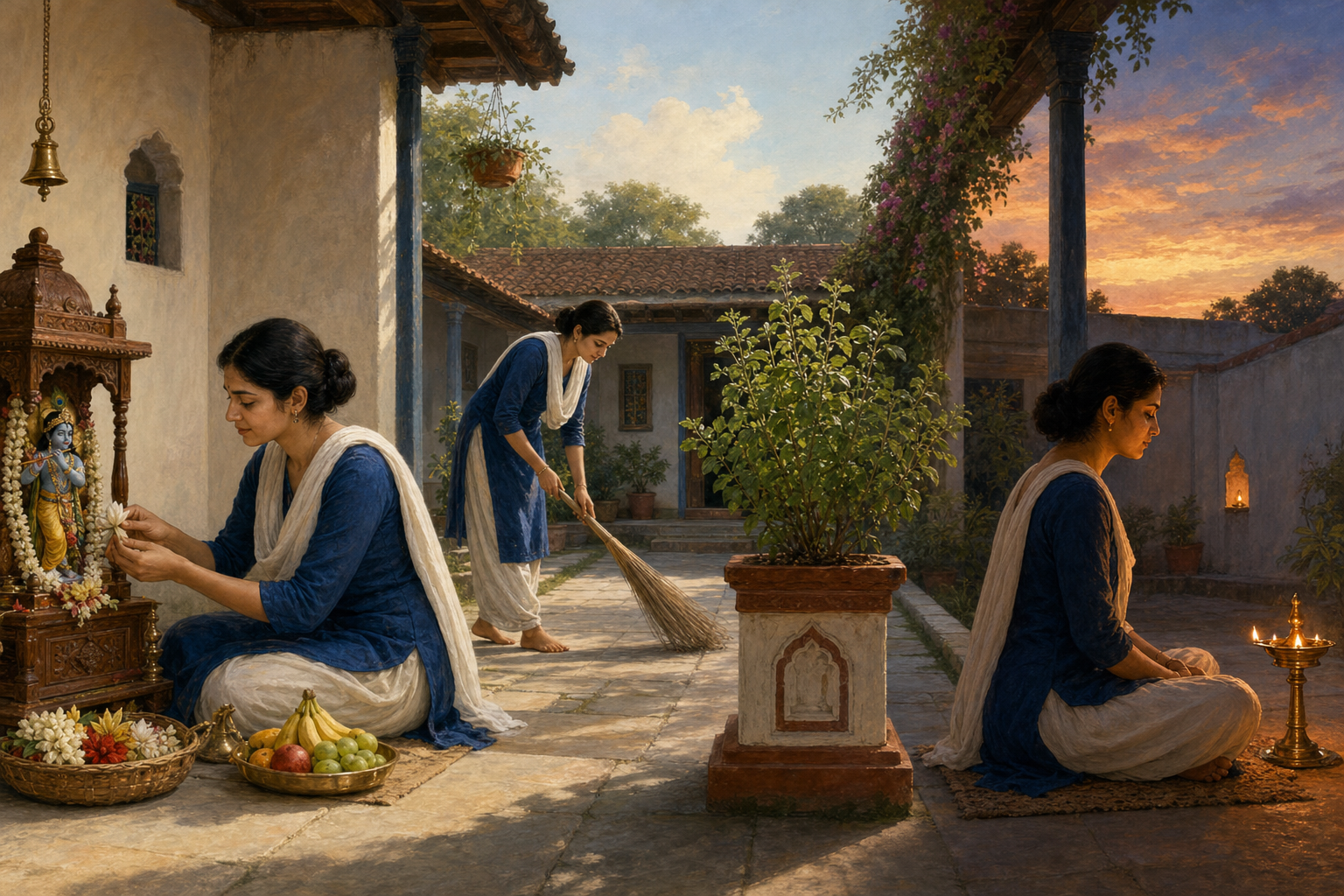
Pushtimarg makes a large theological claim practical through small acts. Food, song, remembrance, darshan, and care for others can become places where your attention is turned toward Shri Krishna. The point is not to crowd the day with religious activity. It is to stop dividing life into a sacred compartment and everything else.
Brahma-sambandha gives this belonging a formal place in Pushtimarg by consecrating the devotee’s life to Shri Krishna. It should not be reduced to a decorative label or a private claim to spiritual status. Its practical logic is comprehensive: what has been consecrated is no longer treated as spiritually unrelated to the Lord.
Whether you are living within that formal relationship or still learning about the tradition, the following pattern clarifies what grace-responsive practice looks like:
- Begin with belonging. Before the day’s momentum takes over, remember that your time, ability, food, and duties can be directed toward Shri Krishna. Do not begin by asking for an experience.
- Choose one concrete act of seva. Prepare or offer food attentively, care for the form of the Lord entrusted to your service, or support an existing act of worship. Let the quality of attention matter more than display.
- Attach remembrance to a stable point in the day. Use nama-smarana, kirtan, or darshan where it can become regular. A repeatable place in your actual routine is more useful than an elaborate plan that survives only on unusually quiet days.
- Carry devotion into conduct. Notice whether remembrance changes your speech, patience, honesty, and care for others. Compassion is not an unrelated social virtue; it is one way ordinary life stops contradicting the offering made in worship.
- End without scoring the day. Do not grade devotion solely by emotional intensity. Notice where remembrance was present, where self-interest took over, and which ordinary act can be offered more attentively next time.
When devotion feels dry
On a quiet day, rely on visible acts: prepare the offering, remember the name, attend darshan, sing, and fulfil the duty in front of you with care. Do not manufacture emotion to prove that grace is present. The absence of a striking feeling does not make sincere seva worthless.
This is precisely where a relational understanding helps. You are not performing for an inner audience that demands continuous inspiration. You are serving. Attention may be bright or faint, but the next act can still be offered honestly.
When a moment feels unusually intimate
Do not immediately convert a tender moment into a conclusion about your spiritual attainment. Honour it, remain grateful, and observe its fruit. Does it return you to seva? Does it strengthen nama-smarana? Does it make conduct more compassionate and attentive? These are safer questions than asking whether you have acquired a special rank.
Rasa is relished sweetness, not a possession. Darshan is encounter, not performance. Prasada is received, not claimed. Each of these forms trains the same posture: the Lord gives, and the devotee responds with love.
Key takeaways
- Nityalila is Shri Krishna’s timeless, ever-renewed divine play, encountered inwardly and fulfilled through intimate service in Goloka.
- Grace does not cancel practice. It prevents you from mistaking practice for a transaction that compels Krishna.
- Seva, nama-smarana, kirtan, darshan, and prasada orient ordinary life toward loving participation.
- Pravaha, Maryada, and Pushti describe different orientations; they are not labels for boasting about yourself or dismissing another person.
- Ethics and discipline remain important, but they serve loving remembrance rather than replace it.
- A spiritual moment is best received by returning to seva, not by turning the experience into a claim of attainment.
Choose one ordinary act tomorrow: preparing food, remembering Krishna’s name, attending darshan, singing kirtan, or caring for someone who depends on you. Offer that act without demanding a feeling in return. Done consistently, this gives grace a practical answer: not anxious striving and not passive waiting, but a life becoming available for seva.
References
