
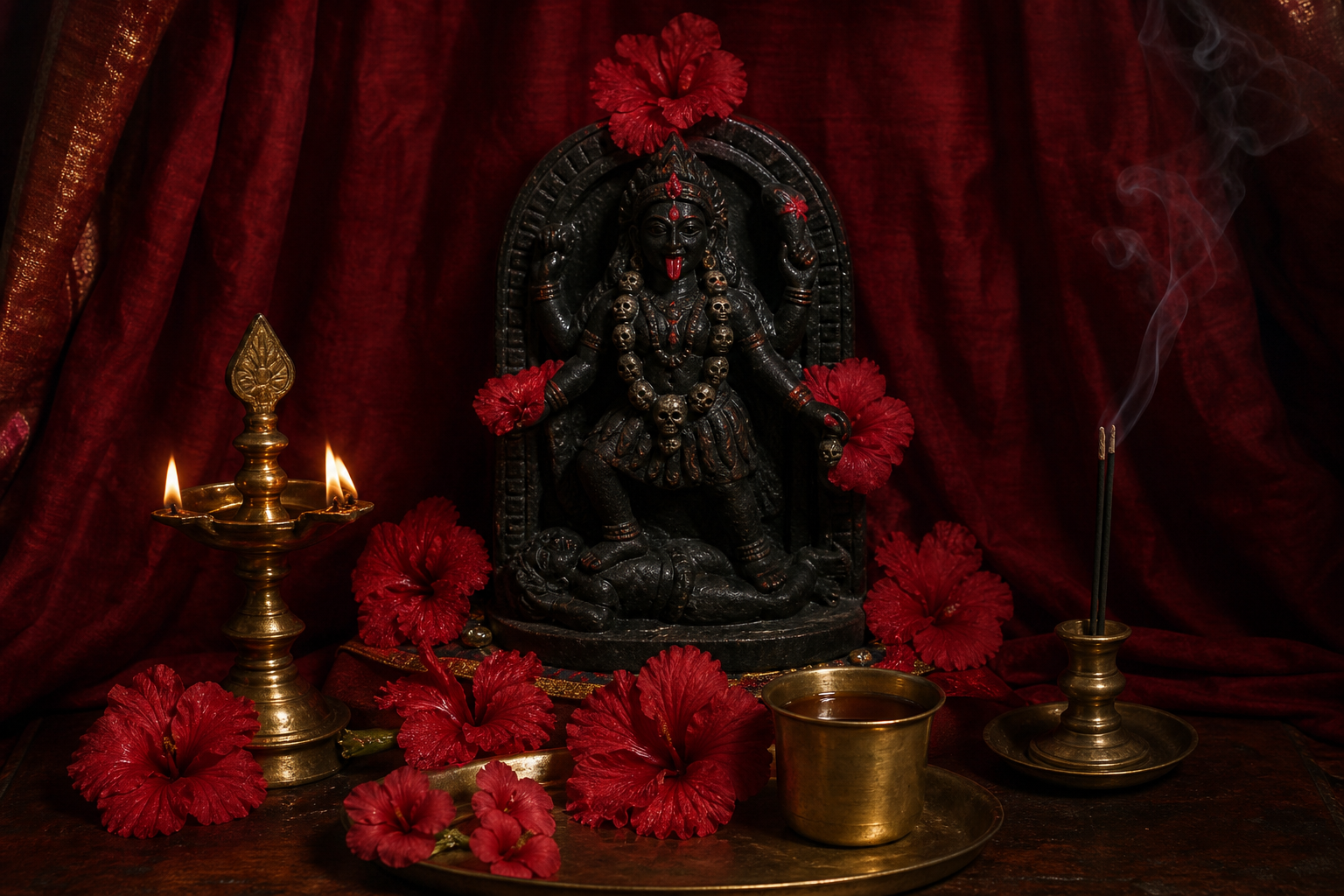
You may have seen a bottle or cup placed before Goddess Kali and wondered what you were looking at. Is alcohol really being offered to the Divine? Is every Kali devotee expected to do this? Should you reproduce it at home?
The short answer is that liquor has a legitimate place in some Tantric Shakta lineages, but it is neither a universal requirement nor permission for casual drinking. If a practice has not come to you through a lineage with clear instructions, you should not imitate its most visible element and assume you have understood the rite.
What madya is meant to accomplish
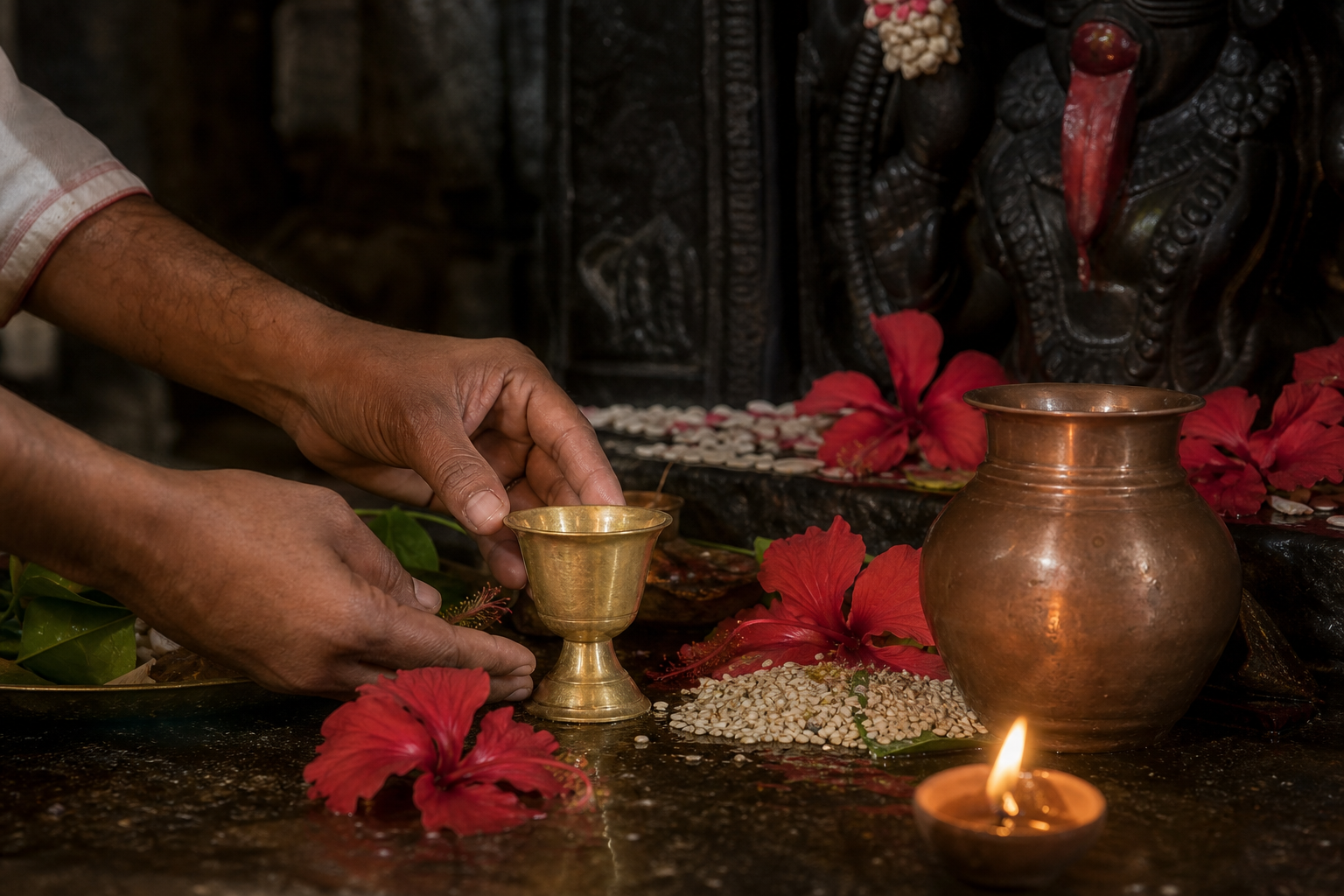
Within certain esoteric forms of Shakti worship, madya belongs to the pañcamakāra: madya or wine, mamsa or meat, matsya or fish, mudra understood as gesture or grain, and maithuna or union. These are often called the five M’s because their Sanskrit names begin with that sound.
The first distinction to make is one of scope. Pañcamakāra is a framework within particular Tantric disciplines. It is not a rule for every Hindu, every Shakta, every Kali temple, or every household shrine. A ritual element can be authentic within one lineage and entirely absent from another without either community ceasing to honor Kali.
The use of a socially restricted substance is deliberate. Ordinary consciousness is pulled in two directions: it grasps what it desires and pushes away what it fears or dislikes. A disciplined Tantric rite exposes both reactions. The practitioner is not meant simply to enjoy the forbidden thing, nor to congratulate himself for breaking a convention. He is meant to notice attachment and aversion without allowing either to rule him.
Madya can therefore signify the surrender of rigid control and the dissolving of ahankara, the ego that insists on separating the acceptable from the unacceptable on its own terms. The substance is placed within ritual boundaries so that it points beyond itself. If it merely strengthens appetite, vanity, or intoxication, its intended direction has been reversed.
This symbolism becomes especially sharp in the smashana, the cremation ground associated with intense forms of Kali sadhana. The setting confronts the practitioner with mortality, impermanence, and the collapse of social identities. Shakta practice in Bengal has included both household observances and more demanding cremation-ground rites, but their shared imagery does not make their ritual rules interchangeable.
A literal offering is not a license to indulge
An object does not become a Tantric instrument merely because it has been placed near an image of Kali. In lineages that use liquor literally, the offering belongs to a regulated sequence involving mantra, mudra, discipline, and prescribed observance. Removing the bottle from that sequence while retaining the language of Tantra leaves the appearance of the rite without its governing structure.
Three distinctions will keep you from the most common misunderstanding. An offering is not automatically an instruction to drink. Ritual transgression is not freedom from restraint. Non-duality does not mean that conduct, consequences, and dharma no longer matter. The stated purpose is transmutation rather than the recreation of worldly craving.
This is why lineage guidance matters. A competent tradition determines whether the substance is used, what it signifies, who is authorized to participate, and which disciplines surround the act. Personal curiosity cannot supply those rules. If you have received no instruction for madya, the safe conclusion is not that the instructions are optional. It is that madya is not part of your present practice.
Alcohol also carries ordinary safety consequences outside ritual symbolism. If keeping or handling it threatens your sobriety, creates danger in your household, or becomes a reason to return to compulsive behavior, do not use it. A sacred setting does not make intoxication harmless. Choose a non-intoxicating form of worship, and seek appropriate professional support if refusing alcohol has become difficult. Spiritual practice should never be positioned as a substitute for addiction treatment.
When coconut water or fruit juice is the faithful choice
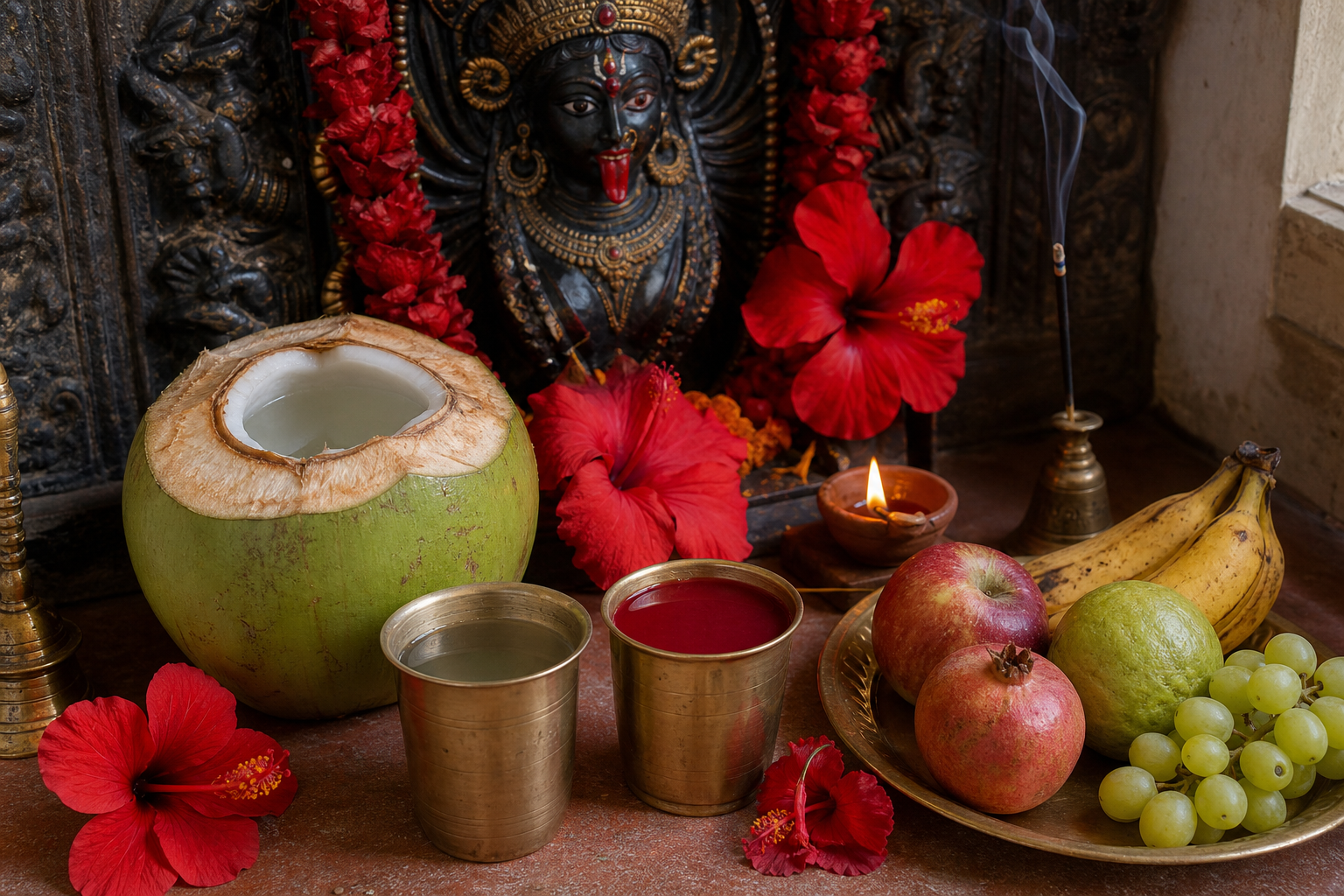
Literal alcohol is not the only way Tantric meaning has been preserved. Some communities use coconut water or fruit juice as a symbolic substitute, retaining the act of offering while excluding the intoxicant. In that setting, substitution is not necessarily an embarrassed concession or a lesser imitation. It is a deliberate adaptation to lineage, household, and ethical context.
The contrast is sometimes described through Vama and Dakshina orientations. Vama methods may work directly with inversion, taboo, and the forces of aversion. Dakshina methods tend to sublimate the same inner work through sattvic and symbolic forms. These are not two recipes that a beginner should combine by preference. They are different ritual orientations, each with its own logic and discipline.
If your family or temple tradition excludes alcohol, introducing it does not make the worship more ancient, courageous, or authentically Tantric. It may simply violate the form of dharma you have actually undertaken. A non-intoxicating offering is the sensible choice when it accords with the tradition guiding your puja, especially where purity, restraint, and ahimsa shape household worship.
Dharmic unity should not be confused with ritual sameness. Vajrayana Buddhism can interpret ritual substances through non-dual wisdom and skillful means, while Jain traditions emphasize abstention and rigorous non-harm, and Sikh teachings emphasize sobriety, devotion, and ethical clarity. Their practices differ while directing attention toward freedom from inner bondage. Respecting those differences is a stronger form of unity than pretending every Dharmic path authorizes the same rite.
How to respond when you encounter the offering
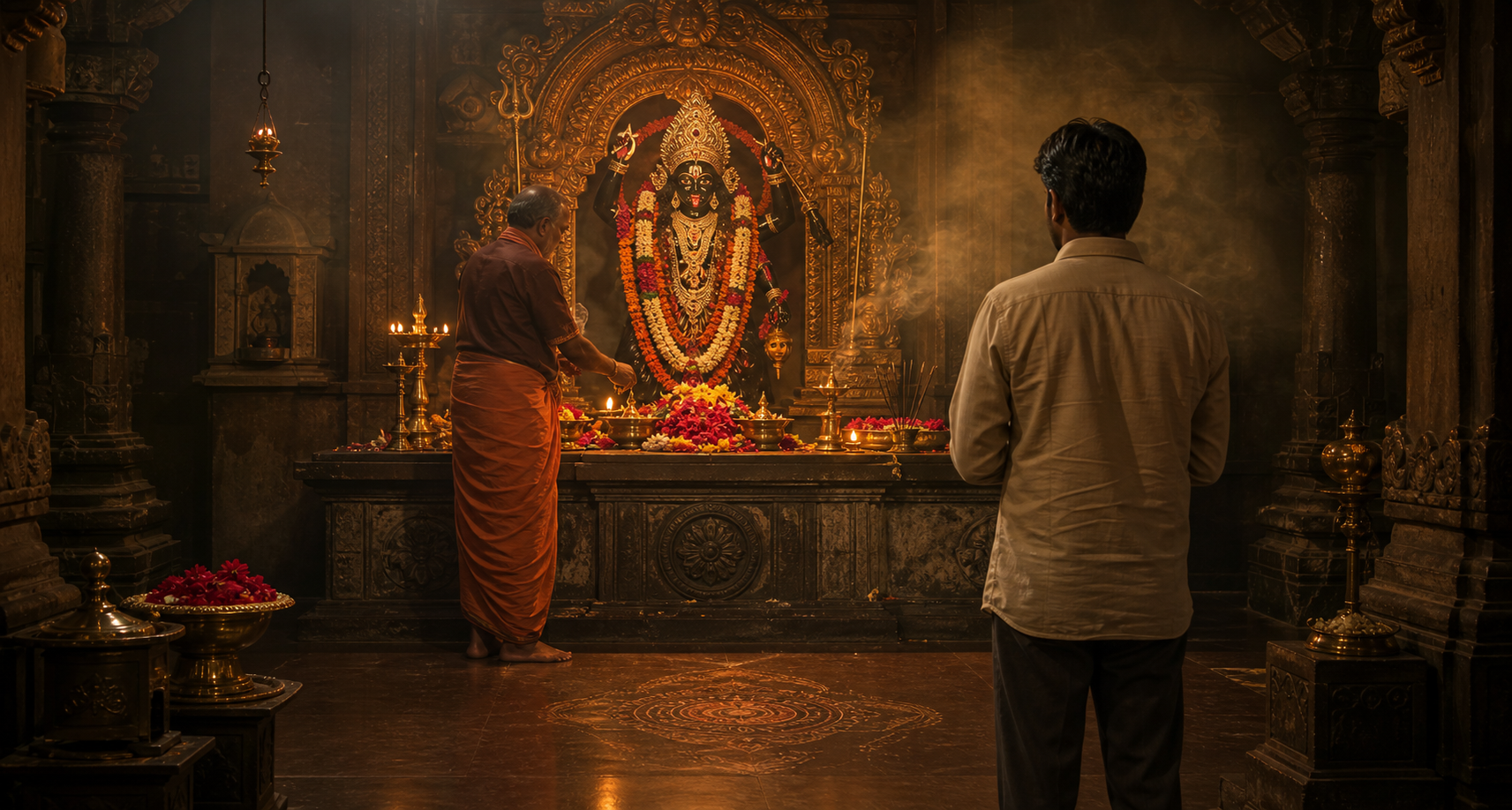
Your best response depends on where you meet the practice. Use the following decisions rather than applying one rule everywhere.
- At another family’s puja: Observe respectfully and do not infer the whole ritual from one object on the altar. If you need to understand it, ask the host after the worship whether the offering is literal, symbolic, or customary within that family.
- At a temple or lineage ceremony: Follow the officiant’s stated boundaries. Do not handle, consume, condemn, or photograph a ritual substance merely on the basis of assumptions about what Tantra permits.
- At your own shrine: Do not add liquor simply because you saw it used elsewhere. Continue with the form of Kali puja you have actually received. Where your tradition permits symbolic madya, use its authorized non-intoxicating substitute rather than inventing a private version of an esoteric rite.
- When someone pressures you to drink: You may decline. The existence of liquor offerings in some Kali traditions does not create a general religious duty to consume alcohol. Ask for the lineage rule and consult a trusted teacher before participating in anything you do not understand.
- When an image circulates online: Ask what is missing from the frame: the lineage, ritual sequence, regional context, household custom, and rules of participation. A photograph can show that liquor is present; it cannot establish what that presence means.
This approach avoids two equal errors. One is to dismiss every liquor offering as corruption or superstition. The other is to romanticize every use of alcohol as profound Tantra. Context, authorization, discipline, and the effect on the practitioner’s attachments are what separate a rite from an excuse.
Key takeaways
- Madya is a recognized element of pañcamakāra in certain Tantric Shakta disciplines, not a requirement of all Kali worship.
- Its purpose is to confront attachment, aversion, fear, and ego within ritual boundaries—not to sanctify ordinary intoxication.
- Literal use requires lineage guidance, mantra, discipline, and ethical grounding; copying the visible substance is not equivalent to performing the rite.
- Coconut water and fruit juice can serve as authorized symbolic substitutes in traditions that exclude intoxicants.
- If alcohol threatens sobriety or household safety, use a non-intoxicating form of worship and do not let ritual language override the risk.
- Different Hindu and Dharmic traditions can pursue inner transformation through different ritual and ethical forms.
Before changing your next Kali puja, ask one concrete question: “Is this offering prescribed by the tradition that actually guides my worship?” If you cannot obtain a clear answer, keep the practice non-intoxicating and within the devotional form you already know. Reverence for Tantra begins with respecting its boundaries.
References
