

You finish an urgent reply, reach for your tea, and discover that it has gone cold without one remembered sip. Your attention was active, but you were absent from your own morning. When this becomes normal, stress is no longer just responding to difficult moments; it is organizing how you move through the day.
If every pause now feels irresponsible, don’t begin by looking for an empty hour. Use the small gaps your day already contains. Three conscious breaths, a released jaw, one noticed sound, or a two-minute pause before replying can restore the margin in which a deliberate choice becomes possible.
Key takeaways
- Begin with three ordinary breaths. The first task is to notice them, not control them.
- Attach each practice to a visible transition, such as opening your laptop, entering a meeting, eating, or reaching for your phone.
- Name stress without turning it into a verdict about your competence or character.
- Use the body and senses to return from imagined conversations and future problems to what is happening now.
- Let presence improve your next decision. Do not use mindfulness merely to tolerate conditions that need to change.
- Treat these practices as supports, not as substitutes for medical or mental-health care when symptoms are severe, persistent, or disruptive.
Six micro-practices you can use without rearranging your day
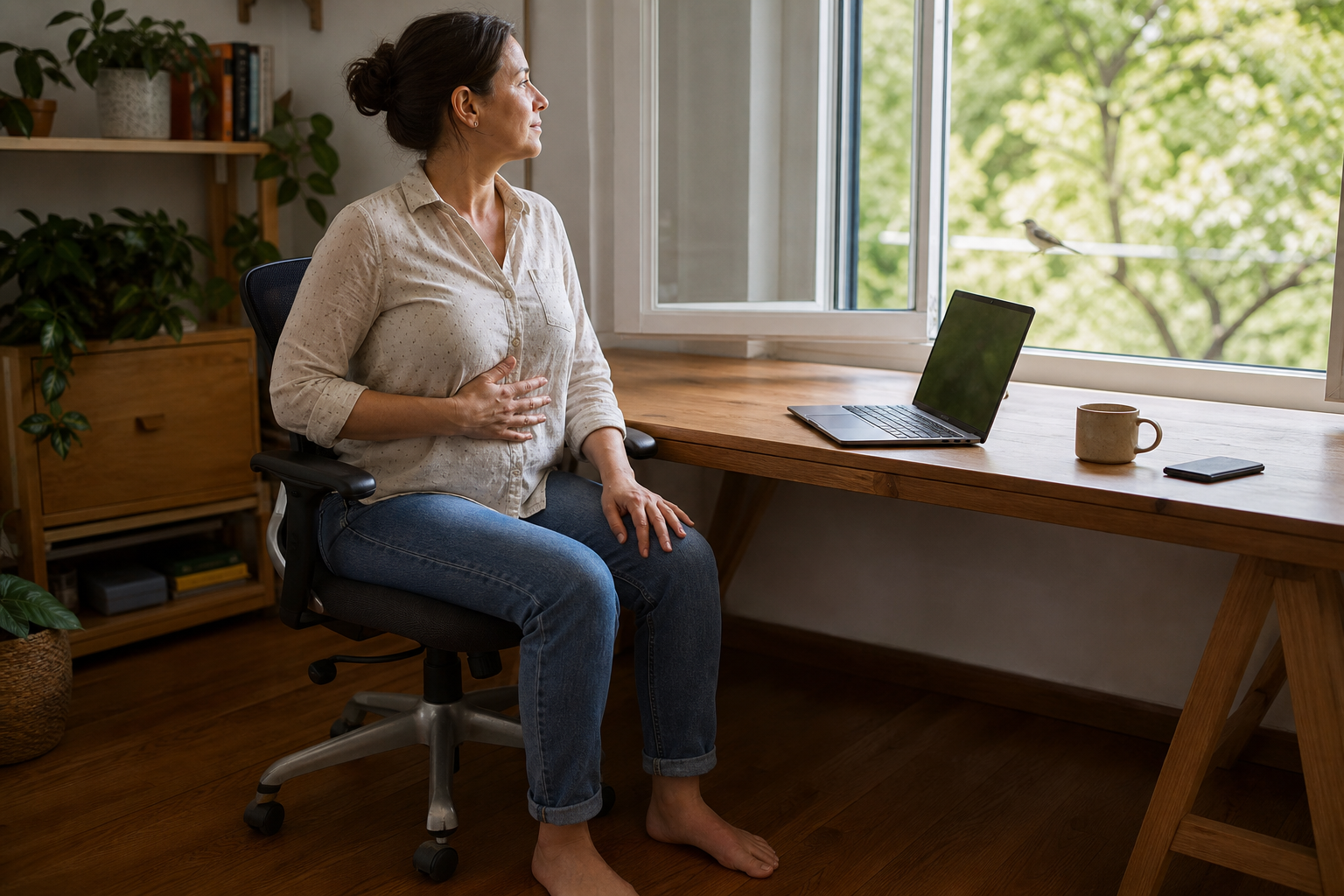
The useful unit of practice is not the longest session you can force into a quiet weekend. It is the smallest action you can remember while pressure is actually rising. Short, repeatable moments of attention can reveal tension, automatic thinking, and the beliefs hidden beneath constant activity.
- Notice three breaths. Stop at a natural break and feel the physical movement of breathing for three cycles. Notice air entering and leaving, or the movement of the chest and abdomen. There is no target pace and no need to manufacture a special state. If attention wanders, noticing that wandering is part of the practice.
- Create one presence anchor. Choose an event that already happens: touching the laptop, sitting in the car, entering a meeting, standing in a queue, or lifting the first bite of a meal. Let that event cue one deliberate breath. A concrete cue is easier to remember than the vague intention to be mindful when life becomes stressful.
- Name what is present. When agitation appears, say inwardly, Stress is present. This wording matters. It identifies an experience without turning it into an identity. You are noticing stress; you are not declaring that you are weak, incapable, or permanently trapped in it.
- Read the body’s signals. Briefly check the jaw, shoulders, hands, forehead, and breath. Notice what is clenched before trying to change it. Then release whatever can soften without force. The aim is not to produce perfect relaxation. It is to stop ignoring the information your body has already been giving you.
- Name one sensory fact. Identify a color in front of you, a sound in the room, the temperature on your skin, or the taste of your food. Keep the description plain: Rain against the window, warm cup in my hand, or tightness in my shoulders. A sensory fact gives attention somewhere real to stand when the mind is rehearsing the future or retrying the past.
- Permit a two-minute pause. Before sending a tense message or accepting another request, step away for two minutes. Breathe, feel your feet, and reread the situation after the first surge has passed. The pause does not guarantee that you will say yes, say no, or avoid a difficult conversation. It gives you a better chance of choosing the response instead of merely discharging pressure.
These practices are alternatives, not a checklist you must complete perfectly. On a demanding day, one remembered breath is more useful than an elaborate routine that exists only as another unmet obligation.
Turn ordinary transitions into a routine you can remember

Chronic stress trains attention to jump directly from trigger to reaction: notification to reply, request to agreement, meeting to mental replay. A transition practice inserts a small space into that sequence. It works best when the cue is specific enough that you can recognize it without having to debate whether you are stressed enough to use it.
- Before checking your phone: notice three breaths, then decide why you are opening it.
- While the computer starts: check the jaw, shoulders, and hands instead of reaching immediately for another screen.
- Before entering a meeting: feel your feet and name one sound. Then identify the matter that actually requires your attention.
- Before eating: notice the appearance, temperature, or first taste of the food. Let the meal become a meal rather than a background surface for tomorrow’s problems.
- Before sending a pressured reply: ask whether an immediate response is truly required. If it is not, use the two-minute pause.
- While waiting: choose one sensory detail instead of automatically filling the gap with messages or mental rehearsal.
Start with one anchor. Add another only when the first no longer requires much negotiation. Trying to monitor every breath and transition can turn presence into another performance target, which recreates the pressure you were trying to understand.
At the end of the day, don’t ask whether you remained calm. Ask where you noticed stress sooner, what your body was doing, and whether the pause changed a decision. Success is not the disappearance of discomfort. It is earlier recognition and a less automatic next step.
This distinction also protects you from mistaking tension for productivity. Midnight replies, missed meals, and constant availability may look like dedication, but busyness is not proof of importance. Presence does not mean abandoning meaningful work. It means giving the work your actual attention instead of spending that attention on several imagined moments at once.
Give the technique a Dharmic direction
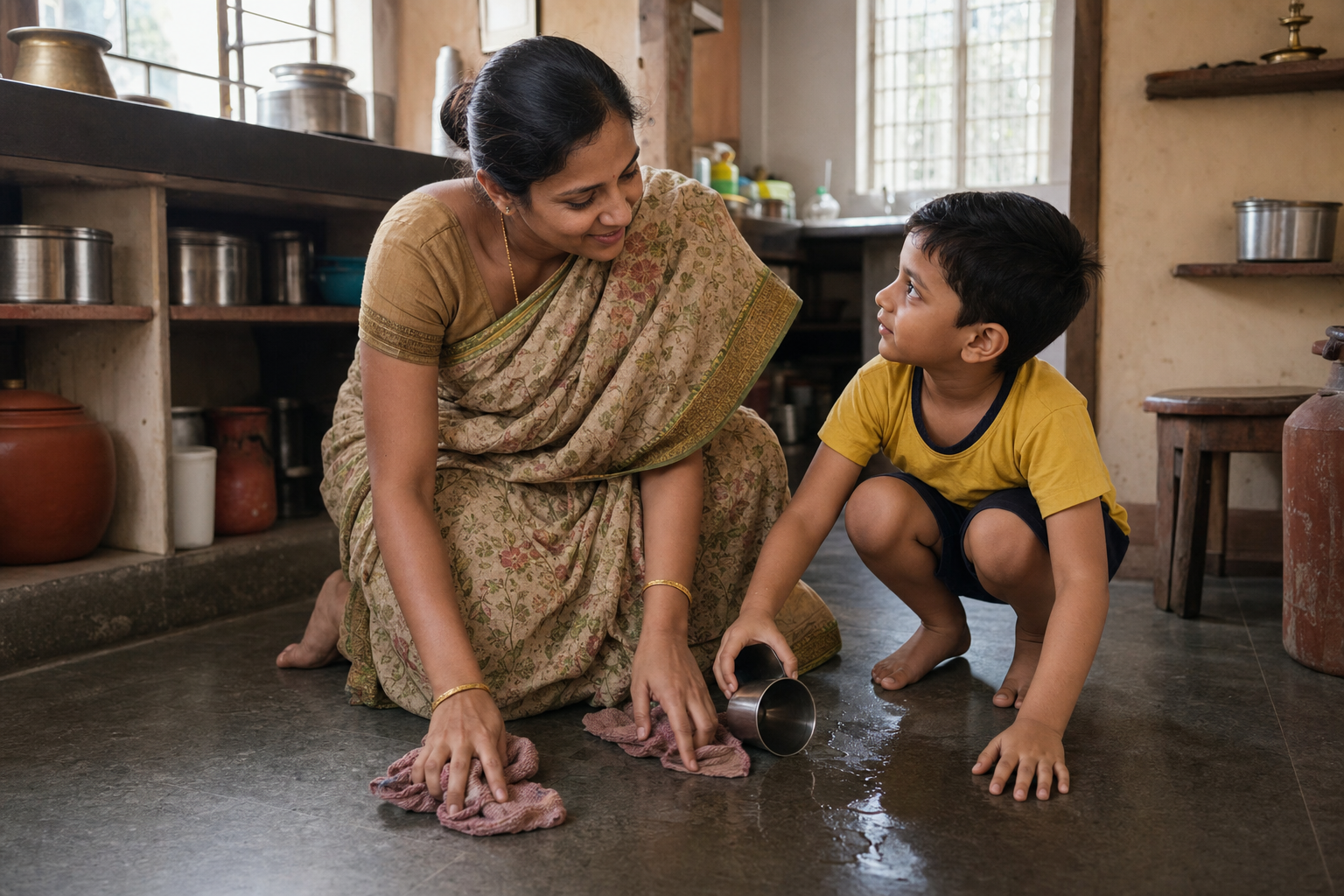
Hindu dhyana, Buddhist sati, Jain samayik, and Sikh simran are distinct disciplines with their own contexts and purposes. They should not be flattened into interchangeable labels for stress reduction. Yet each offers a way to understand the disciplined return of scattered attention and its connection to clearer conduct.
A brief breathing pause does not become a complete spiritual discipline merely because it feels peaceful. It can, however, become a doorway. Once you have interrupted the automatic reaction, ask what the moment requires of you: What is actually happening? What is your duty here? Can you respond truthfully and without unnecessary harm? Are you serving the task, or only defending an image of yourself as indispensable?
This is where a micro-practice becomes more than self-soothing. A loosened jaw may help you hear a colleague before answering. A sensory anchor may show that your family has been speaking while your mind remained at work. A pause before accepting a request may expose the fear that makes every boundary feel selfish. Awareness creates the space; dharmic discernment guides what you do with it.
Presence also need not be passive. The appropriate next action may be to finish the duty before you, apologize, decline a demand, ask for help, or change a harmful pattern. Inner steadiness earns its value in the quality of action that follows.
Know when a micro-practice is not enough

Breath awareness can change how you meet a stressful moment, but it cannot remove an impossible workload, repair an unsafe environment, or diagnose a health condition. If clearer attention shows that the same conditions are repeatedly causing harm, use that clarity to seek support, establish boundaries, or change what can be changed. Do not turn mindfulness into a method for enduring everything more efficiently.
Physical symptoms should not automatically be attributed to stress. If you have chest pain, marked difficulty breathing, or symptoms that feel like a medical emergency, seek urgent medical care. If recurring stress is interfering with your ability to function, consult a qualified medical or mental-health professional. Micro-practices can accompany appropriate care; they do not replace it.
If concentrating on the breath increases distress, stop forcing that anchor. Try an external detail instead: the floor beneath your feet, a visible object, or a sound in the room. A practice that consistently makes distress worse is a reason to seek professional guidance, not a test of whether you can push through.
At your next ordinary transition, take three unforced breaths before moving on. Notice one thing in the body and one thing around you. Then choose the next action on purpose. That small return is enough for the practice to begin.
References
