-
Expectations, Ego, and Liberation: Dharmic Wisdom for Healing Relationships and Joy

Dharmic traditions agree that unmet expectations and ego-driven desires fuel relational suffering. Hinduism’s Karma Yoga reframes action through detachment from outcomes, while Buddhism’s mindfulness softens craving and reactivity. Jain principles of ahimsa and aparigraha reduce harm and possessiveness, and Sikh seva dissolves ego into compassionate service. Together, these teachings cultivate empathy, patience, and a lived…
-
When Anger Blinds Truth: Dharmic Wisdom and Practical Tools to Restore Clarity

Anger, according to the Bhagavad Gita (2.63), initiates a precise cognitive and ethical decline—delusion, memory confusion, loss of discernment—ending in poor choices. Dharmic traditions converge on this insight: Hinduism, Buddhism, Jainism, and Sikhism each identify anger as a primary obstacle to wisdom and compassion. This analysis offers practical tools—breath awareness, mindfulness, loving-kindness, patience, and seva—to…
-
Nari Semari Temple, Mathura: Timeless Devi Peeth Where Krishna Revealed His Narayan Form to Radha

Nari Semari Temple near Chhata in Mathura, Uttar Pradesh, is a revered Devi Peeth dedicated to Brij Rakshika Mata and regarded as the Kuldevi shrine for many families across Mathura and Agra. Temple lore holds that Sri Krishna revealed His Narayan form to Radha here, deepening the site’s devotional resonance within Braj. The sanctum features…
-
Doshams Decoded: Navagraha, Pitru, and Sarpa—Causes, Signs, Remedies for Karmic Harmony

Doshams are viewed as indicators of karmic imbalance rather than fixed fate, pointing toward ethical refinement and compassionate remedies. This guide clarifies the three major types—Navagraha Dosham, Pitru Dosham, and Sarpa Dosham—and outlines how they relate to planetary harmony, ancestral obligations, and ecological reverence. It highlights practical responses such as Navagraha Shanti, Pitru Tarpana, Naga…
-
Child Born on No-Moon (Amavasya) Day: Cultural Meanings, Life Paths, and Hopeful Remedies

Birth on Amavasya (Amavasai) is traditionally associated with contemplation, renewal, and inner strength rather than inauspiciousness. Positioned as the fifteenth tithi in Krishna Paksha (Vad Paksha – Bahula Paksha – dark fortnight), it symbolizes closure and a fresh start in the Hindu calendar. A complete horoscope, not the tithi alone, informs any assessment of career,…
-
Sri Parasara Bhattar: Grace-Filled Lineage and Bhakti Legacy in Vaishnavism

Sri Parasara Bhattar is honored in Vaishnavism as a luminary of the bhakti tradition, remembered for devotion, humility, and clarity of thought. Born through the grace of Sri Ranganatha and named with affection by Sri Ramanuja, his life exemplifies the strength of lineage and the guru-disciple tradition in Hindu spiritual practice. The account of his…
-
Ganesh Jayanti Vrat Katha: Timeless Maghi Ganesh Chauth Wisdom for Blessings and Unity

Ganesh Jayanti (Maghi Ganesh Chauth) falls on Shukla Paksha Chaturthi in Magh Month as per the Hindu calendar and centers on devotion to Ganesha for wisdom, clarity, and auspicious beginnings. The associated vrat katha of a righteous King and his wise queen Ratnavali underscores ethical governance, compassion, and steadfast faith. Families observe the day with…
-
Why Hindus Shave Heads in Temples: Surrender, Samskara, Vows, and the Meaning of Mourning

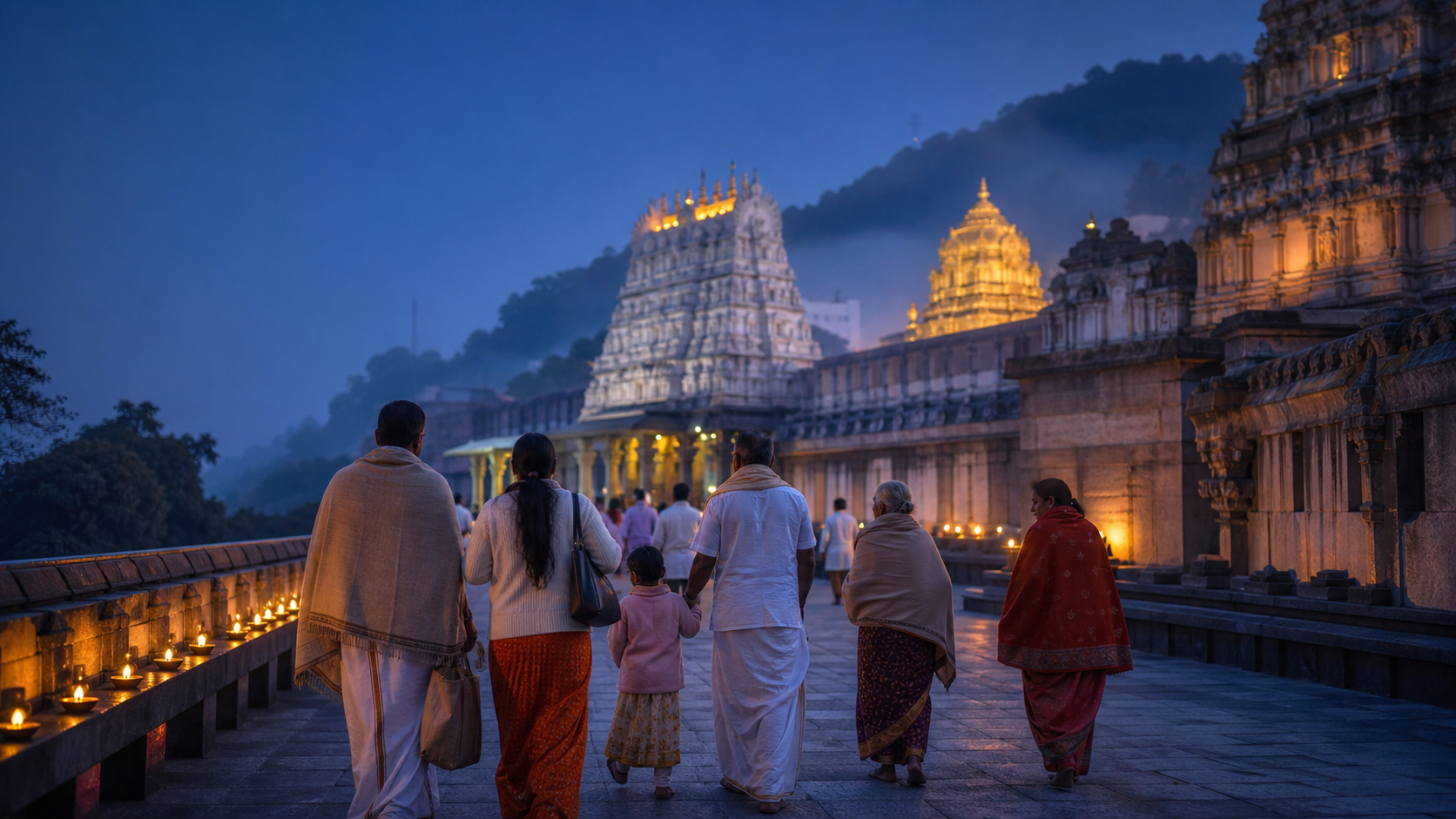
Head shaving at temples such as Tirumala (Tirupati) is a devotional act rooted in samskara, personal vows, and humility. The practice symbolizes letting go of ego and past impressions to begin anew in alignment with dharma. In mourning, tonsure expresses impermanence and solidarity with the departed, varying by region and custom. Practical benefits—ease of ritual…
-
Seven Daily Practices to Cultivate Wismad for Calm, Clarity, and Dharmic Unity

This guide presents seven daily practices to cultivate Wismad—an awe-filled awareness recognized across Hinduism, Buddhism, Jainism, and Sikhism. It begins with simple breathwork to calm the nervous system and prepare the mind for ethical action. Short, contemplative study fosters humility and integrative understanding through Anekantavada. Compassion-in-action turns mindfulness into service, while mindful speech and listening…
-
Somnath 1026: Mahmud of Ghazni’s ruthless raid and a lasting wound to India’s heritage

Somnath’s fall in 1026 CE under Mahmud of Ghazni is retold here with academic clarity, historical sources, and a focus on cultural heritage. The narrative traces the desert march, the sieges across Kathiawar, the breach at Somanatha, and the temple’s destruction as recorded by Al-Biruni and Firishta. It contextualizes Bhima I’s withdrawal, the resistance at…
-
January 23, 2026 Panchang: Shukla Paksha Panchami, Shubh Times, Nakshatra & Rashi Guide

Friday, January 23, 2026 transitions from Shukla Paksha Chaturthi (until 1:17 AM) to Shukla Paksha Panchami in most regions, according to the Hindu Panchang. This waxing-phase shift supports disciplined effort giving way to gentle progress, making it a thoughtful day for study, puja, and seva. Shubh Muhurat, Nakshatra, and Rashi are best confirmed via a…
-
ज्योतिष, रोग और उपाय: ग्रहों के प्रभाव से सामान्य बीमारियों की व्यावहारिक समझ और समाधान

This piece frames health through a traditional Jyotisha perspective while remaining practical and inclusive. It focuses on common ailments—stress, low energy, inflammation, and metabolic imbalance—rather than exhaustive disease lists. Readers gain an integrative view that complements Ayurveda, Yoga, and modern medicine for safer, balanced choices. Remedies emphasize breathwork, meditation, sattvic routines, mantra, seva, and ethical…
-
योग साधना द्वारा जीवन विकास: Transform Daily Life with Practical Yoga, Calm, and Clarity

Yoga is often misunderstood as an ascetic pursuit, yet it serves as a practical method for everyday life development. Rooted in shared dharmic values, it unites Hindu, Buddhist, Jain, and Sikh perspectives through ethics, breath awareness, and meditation. A simple, consistent routine—brief asana, breathing techniques, and reflective practice—builds emotional resilience and steady focus. Ethical principles…
-
हाथ की पांच उंगलिया: Powerful finger-reflex methods for natural pain relief and balance

यह लेख हाथ की पांच उंगलिया को शरीर-मन संतुलन की परंपरागत दृष्टि से समझाता है. आयुर्वेद, योग और मर्म-ज्ञान के संदर्भ में उंगलियों से जुड़े सरल finger-reflex अभ्यास बताए गए हैं. पाठक सीखेंगे कि हल्के दबाव और धीमी, दीर्घ श्वास-प्रश्वास से हल्की असुविधा में natural pain relief का अनुभव कैसे संभव है. अंगूठा, तर्जनी, मध्यमा,…
-
Destiny vs. Free Will: How Karma and Choices Shape Our Future Across Dharmic Traditions

Is the future predetermined, or do choices genuinely shape outcomes? Drawing on Hinduism, Buddhism, Jainism, and Sikhism, this piece clarifies how karma names conditions from the past while puruṣārtha preserves present agency. The Bhagavad Gita’s Karma Yoga, Buddhism’s emphasis on intention, Jainism’s ethical discipline, and Sikhism’s balance of Hukam and effort converge on responsible freedom.…
-
Tragic Feni Killing: 28-year-old Hindu driver murdered amid rising attacks on minorities in Bangladesh

A 28-year-old Hindu auto-rickshaw driver, Samir Kumar Das, was murdered in Bangladesh’s Feni district, intensifying concerns over rising attacks on minorities. The case highlights urgent gaps in preventive policing and accountability while underscoring the human cost for families dependent on informal livelihoods. The article outlines concrete measures—community policing, early-warning systems, better hate-crime data, and independent…
-
From Scars to Strength: How Brokenness Reveals Worth and Fuels Post‑Traumatic Growth

A life-altering loss initiated a fifteen-year healing journey through grief, PTSD, and the steady reconstruction of inner safety. The experience demonstrated that knowledge alone cannot resolve trauma; embodied practices such as somatic breathwork, yoga, and Ayurvedic restorative care are essential for regulation and resilience. Over time, vulnerability became a bridge to connection, reframing imperfections not…
-
Jivo Brahmaiva Naparah: Unveiling Advaita’s Transformative Non‑Dual Truth for Daily Life

“Jivo Brahmaiva Naparah” expresses the Advaita Vedanta insight that the individual self is not separate from Brahman. Grounded in the Upanishads and the Bhagavad Gita, the teaching distinguishes empirical experience from absolute truth and guides seekers to Moksha through disciplined self-knowledge. It cultivates ethical clarity, compassion, and steadiness in daily life without denying personal responsibilities.…
-
Beyond the Witness: How True Meditation Dissolves the Experiencer into Non-Dual Awareness

True meditation in Hindu philosophy reaches its culmination when the experiencer, the act of observing, and the observed no longer stand apart. This non-dual insight, often described as moving “beyond the witness,” dissolves the subtle identity of a separate meditator without denying the vividness of life. The Upanishads, Advaita Vedanta, and Yoga philosophy converge on…