
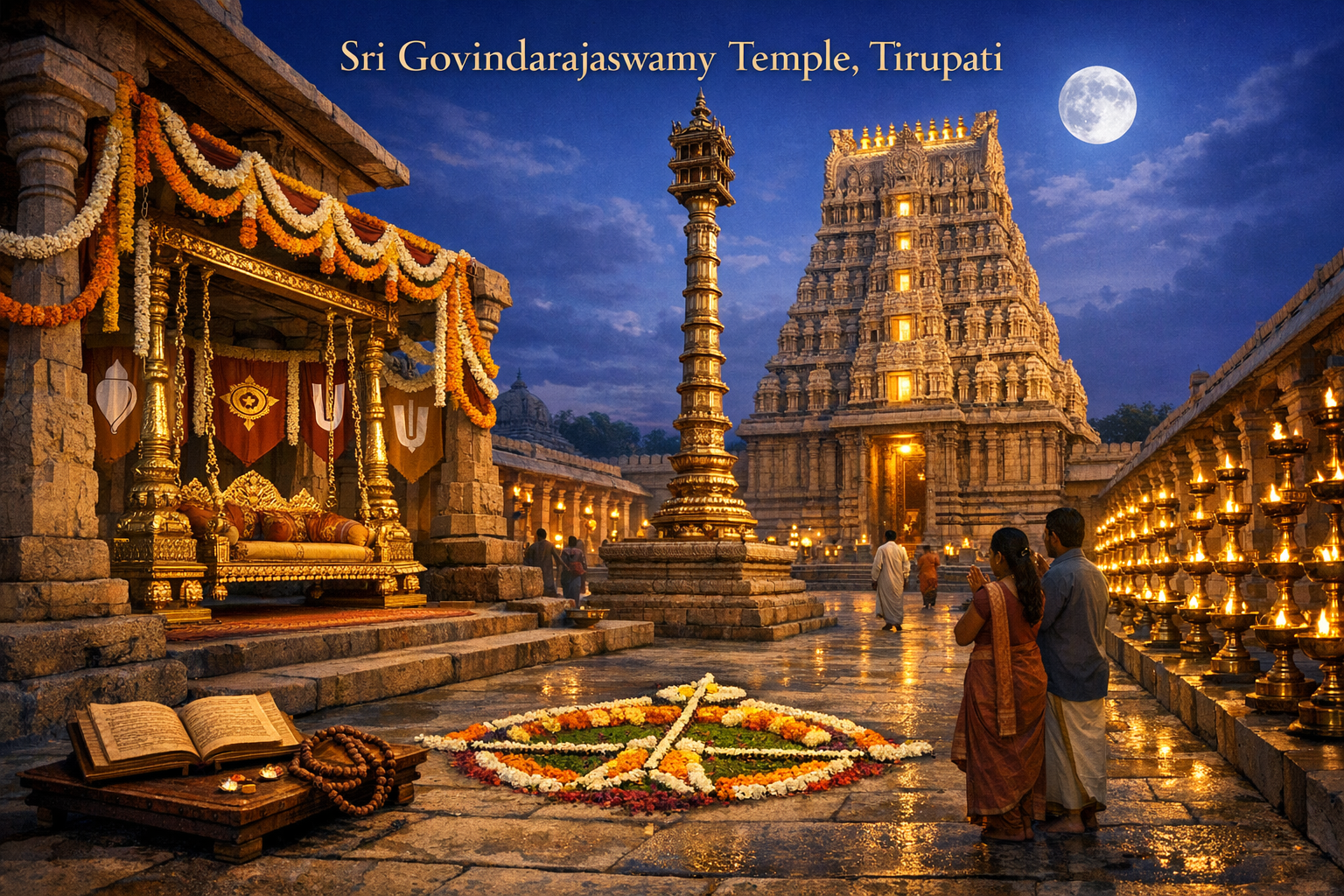
Sri Govindarajaswamy Temple in Tirupati enters March 2026 with a spiritually charged calendar aligned to the Phalguna–Chaitra cycle, drawing devotees for landmark observances such as Phalguna Purnima (Holi/Dola Yatra), Ekadashi vratams, Amavasya tarpanam, and Sri Rama Navami special pujas. Set within the Tirumala Tirupati Devasthanam (TTD) ecosystem, the temple’s liturgical rhythm in this period highlights classical Vaishnava worship, precise Panchangam-based timing, and a deeply participatory devotional culture that many pilgrims describe as both elevating and grounding.
Historically associated with the 12th century and enriched under later South Indian dynasties, Sri Govindaraja Swamy’s shrine exemplifies Dravidian temple architecture and living ritual heritage in Andhra Pradesh. The presiding deity, Sri Govindaraja (Vishnu), venerated with Sridevi and Bhudevi, anchors a complex that typically includes shrines to Alwars and other Vaishnava icons. The towering gopuram, dhwajasthambha, and prakara corridors collectively frame a sacred precinct known for systematic aradhana, melodic Veda-parayanam, and orderly processions (utsava murti purappadu) on select days.
Festival scheduling at this temple follows the Venkatachala Panchangam (IST), with observances keyed to the prevailing tithi and nakshatra at sunrise or as per established Vaishnava sampradaya norms. For devotees planning March visits, it is important to note that the mandala of major dates can shift slightly due to lunar transitions. Accordingly, TTD’s daily roster, temple notice boards, and the official almanac remain the final authorities for timings of abhishekam, archana, processions, and special sevas.
Key March 2026 highlights are as follows, subject to confirmation via TTD’s schedule: Phalguna Purnima on 3 March 2026 (IST) with Pournami mahapuja and Dola Yatra/Dolotsavam-style Unjal Seva within Vaishnava convention, observed in cultural resonance with Holi; Papamochani Ekadashi expected in mid-March, focusing on Vishnu Sahasranamarchana, nama-parayanam, and day-long vrata; monthly Amavasya rites in the latter half of the month supporting ancestral remembrance (tarpanam) and introspective worship; and Sri Rama Navami likely falling in the final week of March, with Sri Rama parayana and special alankaras, often culminating in Seetharama Kalyanam or vishesha archana as per temple practice. Devotees commonly pair these visits with darshan at other TTD temples in Tirupati, but each observance at Sri Govindarajaswamy Temple stands on its own theological and ritual depth.
Pournami observances traditionally emphasize illumination (deepalankara), extended darshan, and communal hymnody, lending the temple a luminous atmosphere that devotees frequently describe as serene and harmonizing. When Dola Yatra/Dolotsavam is conducted, the Unjal (swing) evokes lila imagery central to Vaishnava aesthetics. Within the sanctum precincts, decorum is paramount; while Holi’s cultural mood pervades the city, the temple preserves ritual dignity, focusing on mantra, archana, and sacred music rather than color smearing.
Ekadashi in Vaishnava theology is a vrata of sattvic restraint and remembrance, classically observed through upavasa, japa, Vishnu Sahasranama recitation, and satsang. At Sri Govindarajaswamy Temple, this translates into heightened devotional cadence: steady parayana, disciplined queues for darshan, and a contemplative ambience that many pilgrims find quietly transformative. Papamochani Ekadashi in particular bears the spiritual tenor of purification, guiding devotees toward shraddha (faith), viveka (discernment), and inner composure.
Sri Rama Navami, anticipated in late March 2026, is marked by Ramayana parayana, Sri Rama alankaram, and, when scheduled, Seetharama Kalyanam in a manner resonant with the temple’s Vaishnava lineage. The celebration underscores dharma, maryada, and compassionvirtues cherished across dharmic traditionsmaking the day a convergence of devotion and ethical reflection. Many attendees report that the measured recitation and ritual symbolism instill a sense of moral clarity and shared cultural belonging.
Beyond festival peaks, the temple sustains a disciplined daily cycle: pre-dawn suprabhatam, alankara and archana sequences, naivedya and harati offerings, evening sandeepana, and concluding sayana rituals. March typically sees higher footfall around Pournami and festival dates, yet the queue systems and volunteer support remain well-practiced. The steady presence of Veda-goshti, Divya Prabandham recitation, and music in the mandapas maintain a reflective tone, even during crowded hours.
Visitor guidance for March 2026 includes practical considerations. Weather in Tirupati trends warm to hot by mid-day; early morning and late evening darshan can be more comfortable. Modest attire, adherence to queue protocols, and cooperation with temple staff enhance both personal experience and collective flow. Families, elders, and children often find that pacing the visitpunctuated by hydration breaks and shaded resthelps preserve energy for longer parayanam and key aradhana windows.
To reconcile personal plans with precise muhurta, the recommended steps are: verify dates and times through TTD’s official channels (onsite boards and published Panchangam); account for tithi transitions that may shift observances from evening to the following day (or vice versa); and, where needed, consult the temple information counters regarding tokened sevas or special-darshan advisories that may be announced near festival days. This Panchangam literacy ensures devotees align intent, fasting, and arrival with the temple’s authoritative schedule.
Sri Govindarajaswamy Temple’s festival culture also models a broader dharmic unity that welcomes pilgrims from Hindu, Buddhist, Jain, and Sikh communities in a spirit of mutual respect and shared ethical valuesahimsa, seva, and satya. The atmosphere in March, with its emphasis on purification (Ekadashi), illumination (Pournami), and righteous conduct (Sri Rama Navami), naturally fosters intertradition empathy. The result is a devotional commons that strengthens social harmony without diluting distinct lineages.
Orientation for first-time visitors is straightforward. The temple lies within the Tirupati urban core with ready access from the railway station and major bus stands. Footwear counters, prasadam distribution points, and security checks are clearly demarcated. Photography inside sacred zones is regulated; following signage and staff instructions preserves sanctity and expedites movement. Many pilgrims complement their visit with brief stops at nearby TTD temples, shaping a holistic circuit of darshan anchored by Sri Govindarajaswamy.
Etiquette reinforces experience: arrive with adequate lead time before the targeted seva, deposit phones where mandated, refrain from loud conversation near sanctum areas, and accept prasadam mindfully. These practicessimple yet profoundmagnify the devotional tenor during crowded festival hours. Pilgrims frequently observe that such collective discipline transforms even a short darshan into a lasting, contemplative memory.
In sum, March 2026 at Sri Govindarajaswamy Temple offers a concentrated arc of sacred opportunities: the radiance of Pournami on 3 March, the cleansing stillness of Papamochani Ekadashi, the ethical resonance of Sri Rama Navami, and steady daily aradhana throughout. With Panchangam-aware planning, considerate participation, and an openness to the temple’s Vaishnava aesthetics, devotees can experience Tirupati’s living heritage as a wellsprings of unity, wisdom, and joy.
Inspired by this post on Hindu Pad.







