Sarhulwidely regarded as the foremost tribal spring festival of eastern Indiawill be observed across Odisha and Bihar in 2026 as a collective homage to the sal tree (Shorea robusta) and the renewal of life in Vasant rithu. Community bodies in several districts have announced 21 March 2026 as the Sarhul festival date, with local observance occasionally shifting a day to align with the lunar calendar and the first bloom of sal flowers. Anchored in reverence for nature and gratitude for seasonal abundance, Sarhul has become both a cultural anchor and a living ecological ethic for Munda, Oraon (also spelled Orans), and Santhal communities.
Known as the “festival of flowers,” Sarhul marks the intimate bond between forest and village, season and sustenance. While Jharkhand is often identified as the cultural heartland of Sarhul, the festival holds deep resonance in contiguous landscapes of southern and western Odisha and in tribal belts of Bihar. The mood is celebratory and reflective: village elders speak of ancestral vows and agricultural rhythms; youth groups prepare dance, music, and processions; and families come together to honor deities associated with hills, groves, and waters.
Calendar practice varies by region. Many villages time Sarhul to the early bright fortnight of Chaitra (around late March to April), often close to Chaitra Shukla Tritiya, yet the decisive cue remains the sal flower’s emergence. For 2026, numerous community committees in Bihar and Odisha have set 21 March as the principal date, while acknowledging that certain hamlets may shift slightly based on local lunar reckoning (panchang) and phenological signs. Parallel to Sarhul, the Santhal community observes the spring flower rite as Baha (Baha Parab), typically in Phalgun–Chaitra; in 2026, several Santhal villages are expected to celebrate Baha earlier, including dates in February, depending on local bloom cycles.
Sarhul is intimately tied to Sarna dharam (also described as a distinct nature-centered dharmic path among many Adivasi groups). Among Munda and Oraon communities, a ritual specialistPahan (Munda) or Dehuri (Oraon)leads the proceedings at the sacred grove (Sarna sthal). For Santhals, the analogous sacred space is the Jaher than, officiated by the Naeke. Though terminology varies, the cosmology is coherent: a supreme sky- or sun-associated divinity (often called Singbonga or Dharmes) and protective village/forest deities preside over land, water, flora, fauna, and community health.
Ethnographic explanations commonly relate the name “Sarhul” to sal (sar) and festive worship (hul/celebration). Ecology is not incidental: the sal tree is a keystone species in the Chota Nagpur plateau and adjoining forest tracts of Odisha and Bihar, supporting biodiversity, livelihoods (including non-timber forest products), and traditional architecture and crafts. The first sal flowers symbolize purity, renewal, and interdependence; they also serve as a seasonal signal guiding sowing decisions and social calendars.
Ritual sequences typically include purification of the Sarna sthal or Jaher than, offerings of sal flowers, grains, and water, and village-wide prayers for timely rainfall, soil fertility, human well-being, and animal health. A striking Sarhul feature is the placement of three earthen pots filled with water near the sacred tree or post. Community custodians monitor the water level and the formation of surface cracks as traditional indicators for forecasting monsoon patternsan ancestral method that blends observation, memory, and agrarian pragmatism.
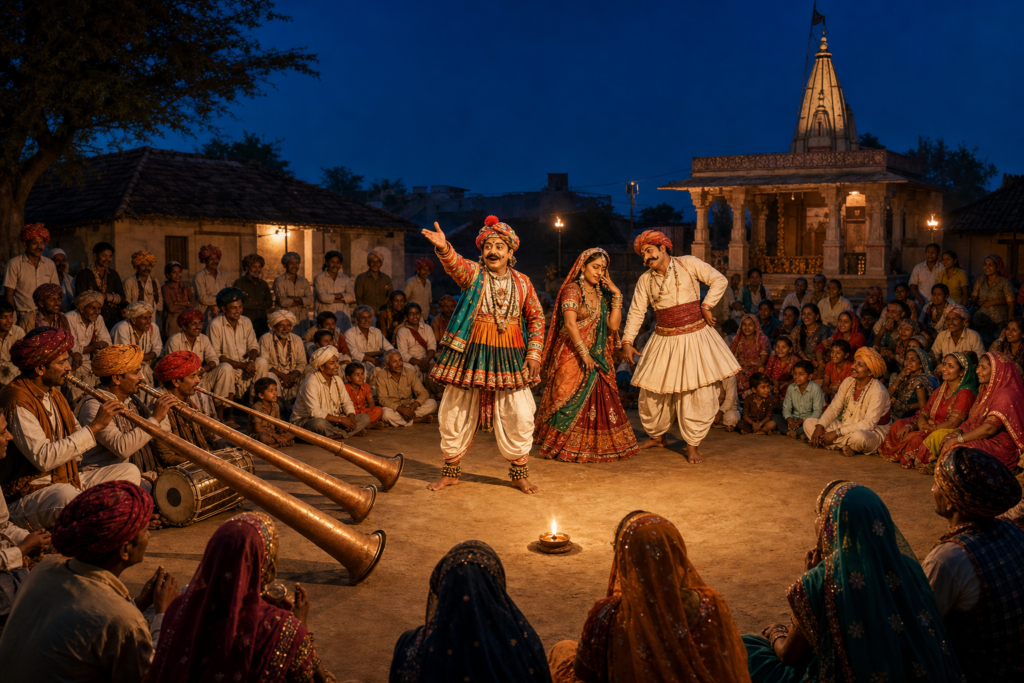
Offerings are communal and unpretentious: seasonal produce, forest flowers, and locally brewed hadia (rice beer) are shared with deities and then with villagers. The aesthetic ethos is one of dignified simplicitywhite or light-hued attire with red borders is common, adorned with floral garlands. Drums such as mandar and nagara set the rhythm for circle dances and processions, while songs recall origin myths, clan lineages, and lessons about moderation, reciprocity, and gratitude to Mother Earth.
Across Bihar and Odisha, Sarhul unfolds as both village rite and public celebration. In Bihar’s tribal pockets and urban centers with Adivasi associations, processions often carry sal branches and floral emblems through neighborhood streets, accompanied by jhumar-style dance and call-and-response songs. In Odisha, districts such as Sundargarh, Keonjhar, and Mayurbhanj host Sarhul and Baha observances reflecting local linguistic and musical traditions; in towns like Rourkela, cultural troupes blend village forms with stage presentations, helping younger generations reconnect with ancestral arts while inviting respectful participation from the broader public.
For Santhal communities, Baha Parab mirrors Sarhul in spirit and symbolism but follows distinct ritual grammar. The Naeke leads invocations at the Jaher than, sal and other spring flowers are ritually installed, and youth groups visit homes with blessings in exchange for small gifts, sweets, or grains. Traditional instruments such as tamak and tumdak amplify the festive ambiance. In 2026, many Santhal villages anticipate Baha observance in February or early March, contingent on local ecology and customary calendars. While Sarhul and Baha are not identical across every group, they converge around core themes: reverence for the sal bloom, renewal of social bonds, and invocations for a balanced monsoon and a just harvest.
The eco-spiritual grammar of Sarhul resonates organically with the larger dharmic family. Gratitude to rivers, trees, and land reflects Hindu prakriti-upasana and panchabhuta harmony; the ethic of restraint and care for all living beings aligns with Jain ahimsa; mindful presence in seasonal cycles echoes Buddhist interdependence; and the communitarian spirit of seva and sarbat da bhala cherished in Sikh tradition finds expression in collective work and sharing. Framed in this spirit, Sarhul contributes to unity across dharmic traditions by emphasizing valuesreverence, responsibility, and reciprocitythat are shared rather than sectarian.
Safeguarding Sarhul as living heritage entails community-led stewardship. Elders emphasize that true preservation is participatory: protect sacred groves from encroachment, ensure sustainable harvesting of sal flowers, and transmit oral histories and songs without commodifying ritual knowledge. Cultural organizations in Bihar and Odisha increasingly collaborate on documentation, training for young drummers and dancers, and eco-education that links forest health with food security. Such efforts align with broader conversations on intangible cultural heritage, environmental ethics, and rights-based forest governance.
Visitors and well-wishers can support respectfully. Participation is typically welcomed when guided by local custodians: seek permission before entering the Sarna sthal or Jaher than; avoid intrusive photography during invocations; dress modestly; and honor instructions about offerings and procession routes. Purchasing local crafts at fair prices, learning greetings such as “Johar,” and acknowledging the intellectual and spiritual labor of ritual specialists strengthens cultural continuity while discouraging extractive tourism.
Practical planning for 2026 centers on the announced date of 21 March for many Sarhul observances in Bihar and Odisha, with scope for minor local variation. Processions and dances often peak from mid-morning to late afternoon, while village-level rites may begin earlier under the guidance of the Pahan/Dehuri or Naeke. March weather can be warm across both states; carrying water, respecting community queues, and following volunteer marshals helps processions run smoothly. Those seeking deeper engagement may reach out to recognized Adivasi cultural associations in district headquarters well in advance.
At its heart, Sarhul is a covenant between people and place: a promise to honor forests that sustain life, to share bounty fairly, and to remember that ecological well-being and social harmony rise together. In 2026, as Bihar and Odisha gather under sal blossoms and drumbeats, Sarhul and Baha will once again renew a time-tested ethicone that binds human aspiration to the rhythms of nature and, in doing so, weaves unity across India’s dharmic tapestry.
Inspired by this post on Hindu Pad.