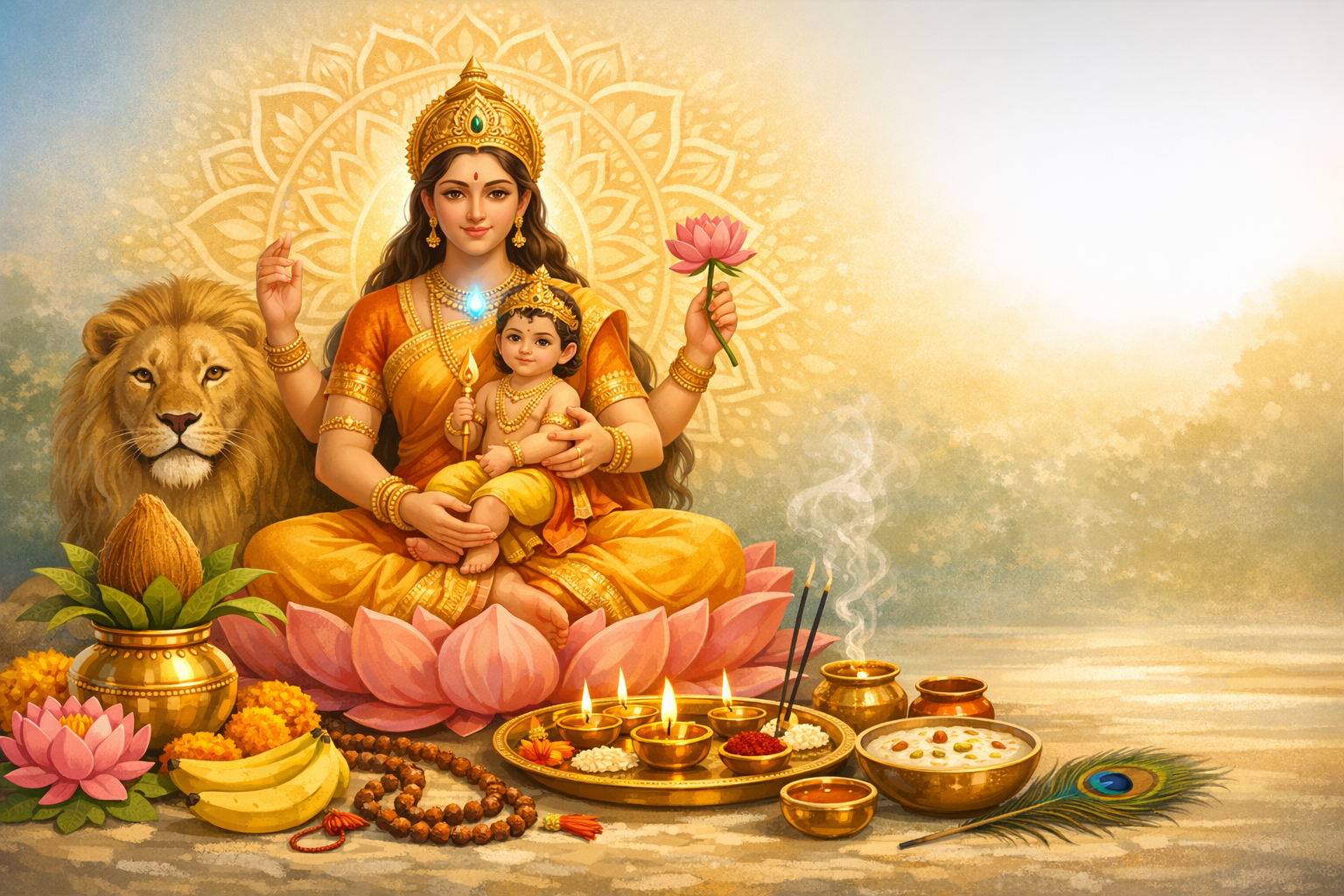
The fifth day of Chaitra Navratri (Panchami), observed on Monday, 23 March 2026, venerates Goddess Skandamatathe compassionate, protective form of Devi who holds infant Skanda (Kartikeya) and rides a lion. This day of the Navaratri sadhana emphasizes maternal grace blended with kshatra (protective courage), aligning devotion with peace, prosperity, and inner steadiness that culminates in the pursuit of moksha. Devotees approach Skandamata for serenity in the home, clarity of purpose, and fearless action anchored in dharma.
Skandamata’s iconographyfour arms, lotus-seat (padmasana), lion-vahana, and the child-god Skanda resting on the lapencodes a rich spiritual grammar. The lotus denotes purity amidst worldly complexity; the lion signifies the fearless protection of all beings; the presence of Skanda embodies latent valor and disciplined energy available to every seeker. In living traditions shaped by texts such as the Devi Mahatmya and the Skanda Purana, worship of Skandamata harmonizes devotion (bhakti), self-restraint, and protective compassion, values cherished across dharmic pathways of Hinduism, Buddhism, Jainism, and Sikhism.
As a practical anchor, Panchami tithi is associated with disciplined speech and aligned resolve; many lineages correlate Day 5 with refinement of the Vishuddha (throat) center, cultivating truthfulness and compassionate communication. The traditional color chosen for Skandamata is often yellow or golden-saffron, symbolizing purity and vitality. A simple, time-honored bhog includes bananas along with light, sattvic preparations such as kheer (jaggery-sweetened milk rice), emphasizing nourishment and simplicity. Devotees may perform puja during Brahma Muhurta (pre-dawn), during the morning after sunrise, or in the Abhijit Muhurta around midday; exact muhurta should be taken from the local panchang, as tithi and timing can vary by location.
The following structured, research-based list details ten practical actions to deepen Navratri Day 5 observance. These steps integrate Skandamata puja vidhi, mantra japa, vrat discipline, mindful seva, and contemplative practices, aligning household worship with the wider ethos of dharmic unity.
1) Prepare a clean, sacred altar for Skandamata: Purify the space, light a lamp, and place an image or murti of Skandamatapreferably seated on a lotus with infant Skanda on the lap and the lion-vahana nearby. A peacock feather may be added in reverence to Skanda/Subrahmanya’s peacock symbolism (transmuting negativity into beauty). Keep the altar uncluttered; arrange kalasha, water, flowers, incense, and a small diya in readiness for Panchopachara or Shodashopachara puja.
2) Take a thoughtful sankalpa (vow) for the vrat: State name, family lineage (if customary), date, location, and the intention to observe the Navratri vrata with ahimsa, satya, and inner purity. The sankalpa can also include a pledge to support mother-and-child wellbeing in societyan ethical extension of Skandamata’s maternal grace that resonates with compassion-centered ideals across Hindu, Buddhist, Jain, and Sikh traditions.
3) Perform Skandamata Puja Vidhi with care: Begin with achamana and pranayama for steadiness. Conduct dhyana and avahana (invocation), offer asana, padya, arghya, and achamana. Proceed with gandha (fragrant paste), akshata (uncooked rice), pushpa (flowers), dhoop, deepa, and naivedya (the bhog). If capacity allows, perform Shodashopachara; otherwise, Panchopachara is sufficient. Conclude with pushpanjali and pranam, maintaining attention to each upachara as an act of mindful offering.
4) Chant the core mantra with japa mala: The seed invocation for Day 5 is the Skandamata namavali”ॐ देवी स्कन्दमातायै नमः” (Om Devi Skandamatayai Namah). Complete at least one mala (108 repetitions), synchronizing breath and awareness. Many devotees also include a brief recitation from the Durga Saptashati/Devi Mahatmya; lineage-specific selections vary, and any one chapter chanted with attention is meritorious.
5) Offer traditional bhog and share prasad: Bananas are considered especially dear to Skandamata; complement with simple kheer and honey when possible. After naivedya, distribute prasad to family, neighbors, and guests. In the spirit of karuna (compassion), set aside fruit or grains for birds and animals, honoring the principle of universal care (sarvabhuta-hita).
6) Observe the vrat with sattvic discipline: Follow a light, nutritious fasting regimen (fruits, milk, or regional vrat foods such as kuttu/singhada flour), staying hydrated and attentive to health needs. Those with medical conditions should adapt responsibly. Break the fast after evening worship with prasad, keeping the diet simple and mindful to support clarity for the remaining Navratri days.
7) Engage scripture and sacred music: Alongside the mantra, recite passages from the Devi Mahatmya, Lalita Sahasranama, or Subrahmanya hymns as family tradition suggests. The birth and valor of Skanda featured in puranic narratives (e.g., episodes reminiscent of Kumarasambhava) contextualize Skandamata’s protective nurture. Bhajans and kirtans oriented to Devi and Murugan create a calming, unifying sonic atmosphere.
8) Practice seva and dana reflective of maternal care: Donate bananas, milk, or grains to community kitchens or child-nutrition drives; support maternal health initiatives when available. This action translates Skandamata’s blessing into tangible social welfare, affirming shared dharmic values of compassion, non-harm, and service across communities.
9) Meditate with breath awareness and gentle pranayama: Simple practices such as Anulom-Vilom and Bhramari stabilize attention. Visualize a soft golden light at the throat center (as per certain traditions correlating Day 5 with Vishuddha), cultivating truthful, kind speech and the courage to protect what is right. Close with a quiet contemplation on fearlessness guided by compassion.
10) Invoke protection and family well-being: Offer a brief raksha-prarthana for children, elders, and the wider community, symbolically tying a raksha-sutra on the right wrist (men) or left wrist (women) if customary. Those addressing courage or discipline may include select verses from Subrahmanya stotras (e.g., Skanda Shashti Kavacham per family practice). Conclude with a gratitude prayer for peace in all directions (sarvato-bhadram).
Mindful observances for Navratri Day 5 include keeping speech gentle (a practical expression of Vishuddha refinement), using eco-friendly flowers and lamps, maintaining cleanliness, and prioritizing sattva in media consumption and interactions. Avoid waste, harsh words, and impulsive actions; the Day 5 vrata is equally an ethical and ecological commitment.
Regional practice enriches this day: In South India, devotees connected with Subrahmanya/Murugan may visit or remotely join pujas at temples such as Palani or Tiruchendur; in North and East India, households emphasize Skandamata worship within the Navaratri framework. These paths complement one another, demonstrating unity-in-diversity at the heart of dharmic culture.
Traditional remedial worship sometimes associates Skanda with the disciplined, valorous qualities of Mars (Kuja). Seekers focusing on courage, right action, or perseverance may incorporate Subrahmanya hymns with Skandamata puja, aligning devotion with ethical strength. Remedies are best understood as supports for character formation and service to society, not as substitutes for responsibility or sound judgment.
In essence, the fifth day of Navratri invites a balanced synthesis of maternal tenderness and protective resolve. By honoring Skandamata with accurate puja vidhi, attentive mantra japa, sattvic vrat, and compassionate seva, devotees cultivate peace at home and harmony in societyan aspiration shared across Hinduism, Buddhism, Jainism, and Sikhism. May the blessings of Skandamata guide the remainder of Navratri with clarity, courage, and grace.
Inspired by this post on Hindu Pad.