On 19 March 2026, Chaitra Navratri (also called Vasant Navratri) begins, inaugurating nine sacred nights of worship, self-discipline, and renewal across Hindu communities worldwide. In 2026, the observance spans from 19 March (Chaitra Shukla Pratipada) through 27 March (Navami), aligning with the spring season and culminating in the celebration of Sri Rama Navami. The festival centers on Shaktidivine energyhonored through daily puja, vrata (fasting), and collective devotion that strengthen families, communities, and a shared dharmic ethos.
According to the Hindu calendar (Panchang), Chaitra Navratri commences on Shukla Paksha Pratipada, the first lunar tithi of the waxing fortnight in the month of Chaitra. A tithi is defined astronomically by a 12-degree elongation between the Moon and the Sun; as such, observance follows lunar time rather than civil dates. For 2026, the Shukla Paksha Pratipada tithi at local sunrise anchors 19 March as the opening day, with the cycle concluding on 27 March, when Chaitra Shukla Navami is observed as Sri Rama Navami in many regions.
Kalasha Sthapana (Ghatasthapana) marks the formal beginning of Navratri and is traditionally performed during the first one-third of the day while Pratipada prevails after sunrise. Widely consulted dharma texts and regional almanacs advise avoiding certain combinations such as Vaidhriti or Vyatipata yoga if those occur; when a suitable early-day window is not available, Abhijit Muhurta is commonly taken as an alternative. Because these rules are applied with regional nuance, families are encouraged to align with their parampara (lineage) and a locally authoritative Panchang.
The ritual symbolism of Kalasha Sthapana is rich and precise. A sanctified vessel is prepared with clean water (often infused with auspicious substances), wrapped or inscribed with a swastika, and adorned with mango leaves. A coconut, sometimes wrapped in a red cloth, is placed atop the kalasha to signify the presence of Devi. Many households prepare a seedbed (often barley or wheat) to be sprouted during the nine days, representing fertility, prosperity, and the seasonal renewal integral to Vasant (spring). An akhand jyot (unbroken lamp) is kindled, embodying steadfast focus and the illumined mind that sadhana seeks to cultivate.
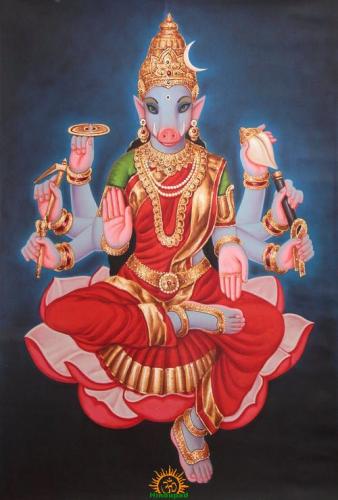
Each day of Chaitra Navratri celebrates a distinct manifestation of the Goddess, mapping a progressive spiritual ascent: Shailaputri, Brahmacharini, Chandraghanta, Kushmanda, Skandamata, Katyayani, Kalaratri, Mahagauri, and Siddhidatri. Devotees often recite the Durga Saptashati (Devi Mahatmyam) or select chapters daily, perform morning and evening aarti, and undertake japa of the Navarna mantra (Om Aim Hreem Kleem Chamundayai Vicche) according to their tradition. This liturgical rhythm structures the festival as a disciplined path from inertia to clarity and strength.
Vrata during Navratri emphasizes a sattvika regimensimplicity, moderation, and mindfulness. Regional practices vary, but many observe phalahar (fruit-based) or restricted-grain fasting, typically avoiding onion, garlic, and heavy foods. Common fasting staples include kuttu (buckwheat), sabudana, singhara, milk, and seasonal produce, complemented by ample hydration. While vrata is a revered discipline, health considerations remain paramount; elders, children, those who are unwell, or those with medical needs generally adopt moderated observances advised by family and tradition.
Ashtami and Navami are widely associated with special pujas, including kanya pujan (worship of young girls symbolizing the nine shaktis), homa/havan, and collective distribution of prasada. The festival’s conclusion on 27 March 2026 coincides with Sri Rama Navami in many calendars, uniting Shakta and Vaishnava currents in a shared culmination of devotion. Families frequently read the Ramayana, offer special naivedya, and perform Sri Rama Navami puja alongside the concluding Navratri rites, reflecting an integrated reverence for both Devi and Maryada Purushottama.
Chaitra Navratri also aligns with regional New Year traditions that arise on Chaitra Shukla Pratipada. In parts of India, Ugadi (Andhra Pradesh, Telangana, Karnataka), Gudi Padwa (Maharashtra, Goa), and Navreh (Kashmir) symbolize cultural renewal and civic gratitude as homes and public spaces are decorated, new almanacs are consulted, and ethical intentions (sankalpa) are set for the year ahead. These practices underscore the unity of timekeeping, agrarian cycles, and spiritual duty within the Hindu calendar.
The festival’s values resonate across the broader dharmic familyHinduism, Buddhism, Jainism, and Sikhismthrough shared commitments to self-restraint, compassion, truthfulness, and service (seva). Spring observances across these traditions emphasize inner clarity, meditation, charitable giving, and community well-being. By foregrounding universal virtues and respecting diverse practices, Chaitra Navratri becomes a locus of harmony that strengthens interrelated dharmic identities and shared civic life.
Because Navratri observance follows tithi and sunrise-based calculations, local dates or selected muhurta can shift by region and time zone. Households outside South Asia should consult a reliable local Panchang or temple for city-specific guidance, ensuring that Ghatasthapana, Ashtami/Navami pujas, and Sri Rama Navami are aligned with local sunrise and tithi transitions. This attention to calendrical precision honors both the letter and spirit of the tradition.
For practical planning in 2026, many calendars align the nine-day sequence as follows: 19 March (Day 1: Shailaputri), 20 March (Day 2: Brahmacharini), 21 March (Day 3: Chandraghanta), 22 March (Day 4: Kushmanda), 23 March (Day 5: Skandamata), 24 March (Day 6: Katyayani), 25 March (Day 7: Kalaratri), 26 March (Day 8: Mahagauri/Ashtami in many regions), and 27 March (Day 9: Siddhidatri/Navami, observed as Sri Rama Navami in many regions). Where tithi overlaps occur, some communities may perform special pujas on Ashtami or Navami accordingly; local guidance takes precedence.
Beyond the home altar, Chaitra Navratri activates vibrant community life: bhajan and kirtan gatherings, educational talks on Devi Mahatmyam, garba and dandiya in certain regions, and collaborative seva initiatives for the needy. Eco-conscious choicessuch as oil or ghee lamps, minimal plastic, and locally sourced flowers and offeringsexpress reverence for Mother Earth and align the festival with sustainable living.
Chaitra Navratri 2026 thus offers a comprehensive framework for inner and outer renewal: clear calendrical anchors (19–27 March), precise ritual entry through Ghatasthapana, disciplined daily sadhana, and an integrative culmination with Sri Rama Navami. By honoring the nine forms of the Goddess and the values they embody, households and communities cultivate resilience, ethical clarity, and a shared dharmic unity that extends well beyond the nine nights.
Inspired by this post on Hindu Pad.