-
Are the Puranas Just Fiction? A Rigorous, Heart-Centered Guide to Finding God and Trusting Truth

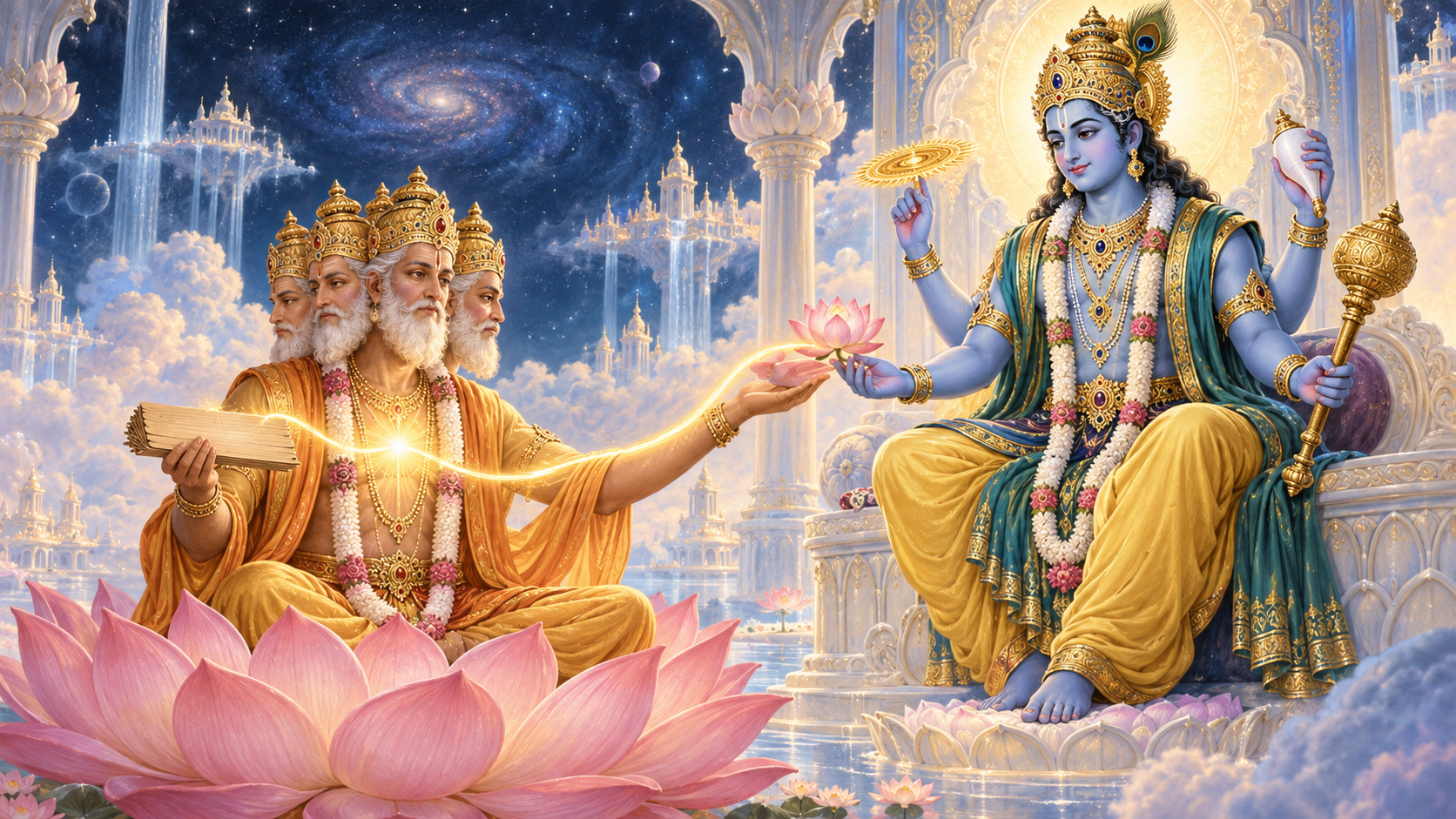
Are the Puranas fiction or a reservoir of living wisdom? This analysis explains how Puranic narratives operate beyond a literal-versus-fable dichotomy by integrating mythic memory, ethics, ritual rationale, and contemplative instruction. Drawing on Indian epistemology (pramāṇa), it clarifies how śabda (trustworthy testimony), anumāna (inference), and yogic pratyakṣa (direct insight) jointly ground a rational, testable faith.…
-
Kumbhakarna’s Six-Month Slumber: A Tragic Shield, Strategic Weakness, and Dharma in the Ramayana

Kumbhakarna’s six-month sleep in the Ramayana is both armor and Achilles’ heel, a boon that restrains destructive potential while creating a fatal strategic gap when broken. Drawing on Valmiki’s account and later retellings, this analysis clarifies how a slight, divinely guided shift from indrāsana to nidrāsana reconfigures cosmic balance. It explores the symbolism of nidra…
-
Sita’s Return to the Earth: An Evidence-Based Reading of Ramayana Symbolism, Not Suicide

The question of whether Sita’s return to the Earth in the Valmiki Ramayana constitutes suicide dissolves under a careful textual and cultural reading. Composed as epic poetry, the Ramayana deploys layered symbolism: Sita, born of a furrow, returns to Bhoomi Devi in a divinely sanctioned homecoming rather than an act of self-harm. Dharmaśāstra condemns ātma-hatyā,…
-
Unraveling Prahasta: Lanka’s Grand Strategist and Dharma-Yuddha in Ramayana & Ramcharitmanas

Prahasta—Lanka’s commander-in-chief in the Ramayana and acknowledged in the Ramcharitmanas—embodies the intersection of high strategy and Dharma-Yuddha. Valmiki’s narrative details his role in intelligence, deployment, and direct command, culminating in his fall to the Vanara general Nila, a turning point in the war. Ramcharitmanas compresses battlefield specifics but preserves his stature as a formidable rākṣasa…
-
Bilva Tree and Goddess Lakshmi: Timeless Symbolism, Prosperity Rituals, and Sacred Ecology

The Bilva tree (Aegle marmelos) is venerated in Hinduism not only as dear to Shiva but also as a sacred abode of Goddess Lakshmi, embodying durable, dharmic prosperity. This long-form exploration synthesizes scripture, ritual practice, Ayurveda, and temple ecology to show how Bilva bridges Śaiva and Vaiṣṇava devotion while nurturing household well-being. It explains the…
-
Sita’s Agni Pravesha and Exile: Understanding Sri Rama’s Dharma, Duty, and Moral Dilemma

This in-depth analysis clarifies why Sri Rama sent Devi Sita to exile despite knowing her purity by separating two often-confused episodes: Sita’s Agni Pravesha in the Yuddha Kanda and her later exile in the Uttara Kanda. It explains Agni Pravesha as a theological attestation within Vedic ritual logic and highlights puranic teachings (such as the…
-
Indratva vs Nidratva: Kumbhakarna’s Boon, Ambition, and the Lost Science of Balance

Kumbhakarna’s story in the Ramayana, often reduced to a trope of excess, encodes a precise philosophy of balance through the dialectic of Indratva (unbounded agency) and Nidratva (overpowering inertia). Read across Valmiki and later retellings, the episode becomes a systems lesson in regulating rajas and tamas under sattva’s guidance. The analysis connects dharmic psychology with…
-
Janeyu (Yagnopaveetham) Decoded: Sacred Thread Meaning, Ritual Science, and Daily Dharma Practice

This comprehensive guide decodes Janeyu (Yagnopaveetham) as a living samskara—its Vedic foundations, ritual science, and daily discipline. Drawing on Gṛhya Sūtras and Dharmaśāstra, it explains construction, symbolism, and the functional grammar of wearing styles (upavīti, prācīnāvīti, nivīti). Readers learn how the sacred thread supports sandhyā, svādhyāya, and ethical vows, and how annual upākarma renews study.…
-
Dharma Confronts Fury: Rama and Ravana’s First Face-Off on Day Three of the Ramayana War

This article examines the first battlefield encounter between Rama and Ravana—framed in several Ramayana traditions as occurring on day three of the Lanka war—as a study in dharma confronting adharma. It situates the episode within the Yuddha Kanda’s broader chronology and notes textual variations across Valmiki, Kamba, and devotional retellings. Readers gain a technical overview…
-
Ramayana in Brief: A Powerful, Immersive Summary of Lord Rama’s Epic, Dharma, and Legacy

This academically grounded Ramayana in Brief presents a lucid, kāṇḍa-by-kāṇḍa Summary of Ramayana, highlighting Lord Rama’s ethical leadership, Sita’s steadfastness, Hanuman’s service, and the triumph of dharma. It carefully situates the Valmiki Ramayana within its seven-part structure, notes key textual traditions, and clarifies how themes like maryada, rajadharma, and dharma-yuddha shape the story. Readers gain…
-
Sita’s Agni Pravesha and Exile: The Contested Ethics of Rajadharma and Public Trust

Sita’s Agni Pravesha and exile remain the Ramayana’s most debated ethical crucible. Read closely, the episodes test the alignment of substantive truth with public trust, contrasting private duty and rajadharma under intense social scrutiny. Valmiki’s narrative presents Agni as the supreme witness, while later traditions (such as the Maya Sita motif) further safeguard Sita’s inviolability.…
-
Sita Devi and Vedic Mothers: Powerful Lessons in Dharma, Resilience, and Nurturing Leadership

Vedic literature and the epics present mothers as ethical anchors who transmit dharma, cultivate resilience, and preserve cultural memory. Centering on Sita Devi—who chose forest exile and raised Lava and Kusha in Valmiki’s āśrama—the essay examines how maternal agency becomes moral leadership. It extends the analysis to Kunti and Gandhari in the Mahabharata, and to…
-
Decoding Kumbhakarna’s Sleep: Valmiki Ramayana vs Folklore on Duration, Boons, and Symbolism

This analysis clarifies what the Valmiki Ramayana actually states about Kumbhakarna’s sleep and why folk Ramayanas frequently specify a six‑month cycle. It explains how later boons-and-curse narratives—especially the Sarasvatī speech motif—emerged to teach ethics of intention and speech. Drawing on cosmology (Uttarāyaṇa/Dakṣiṇāyana and ṣaḍṛtu), it shows why “six months” became a memorable mnemonic in oral…
-
Inside Ravana’s Swabhava: Pride, Passion, and the Tragic Integrity of the Asura Emperor

This essay reframes Ravana in the Ramayana as a philosophical study of swabhava—inner nature—rather than a mere antagonist. It explores how pride and passion, empowered by learning and tapas, evolve into adharma when unrestrained by counsel and maryada. Drawing on Hindu philosophy, Jain Anekantavada, Buddhist analysis of the kleshas, and Sikh reflections on haumai and…
-
Grounded by Jatayu, Ravana Took to the Skies: Sita’s Abduction and the Power of Dharma

This long-form analysis examines the Jaṭāyu–Rāvaṇa confrontation during Sītā’s abduction, clarifying how South Indian retellings and the Vālmīki Rāmāyaṇa portray the shift from an aerial chariot to Rāvaṇa’s own ākāśa-gamana (flight) after the vehicle is disabled. It explains the semantics of ratha and vimāna, the narrative status of the Pushpaka Vimāna, and why regional traditions…
-
Beyond the Bodily Concept: SB 10.4.20 on ātmā, family ties, and fearless devotion

This analysis of Śrīmad-Bhāgavatam 10.4.20, as presented in a morning class by HG Bhurijana Prabhu, explains how mistaking the body for the ātmā intensifies attachment and vulnerability to the pains of union and separation within family, society, and nation. It offers a precise Vedic framework (tri-śarīra and pañca-kośa) to clarify identity and reduce suffering. Practical…
-
Ravana’s Deadly Obsession: Why He Hunted Vibhishana on Day Three of the Ramayana War

The third day of the Ramayana war is a turning point where Ravana shifts focus from Rama to a high-value insider: Vibhishana. Anchored in the early Yuddha Kanda sequence that follows Prahasta’s fall, the episode shows how a ruler’s fear can reframe an entire campaign. The analysis explains why Vibhishana’s defection mattered—ethically, strategically, and psychologically—and…
-
Garuda in the Vishnudharmottara Purana: Iconography, Weapons, and Living Symbolism

This in-depth study presents Garuda as codified in the Vishnudharmottara Purana, clarifying how precise iconography communicates theology in Hindu scriptures. Readers will learn the canonical features of Garuda’s form, the logic of his attributes and weapons, and why serpent-subjugation is central to his protective meaning. The essay situates Garuda within Vedic antecedents and Puranic narratives,…
-
Unveiling Shiva’s Samharamurtis: Fierce, Compassionate Forms of Cosmic Transformation

This in-depth exploration clarifies why Shiva’s Samharamurtis are not emblems of destruction but precise instruments of compassionate transformation. Grounded in the Panchakritya doctrine and classical sources like the Puranas and Agamas, it decodes how Kamantakamurti, Gajasura Samhara Murti, and Kalari Murti model the sublimation of desire, the mastery of force, and the transcendence of fear…