-
Forgotten Freedoms in the Ramayana: Widowhood, Remarriage, and Dharma in Lanka and Ayodhya

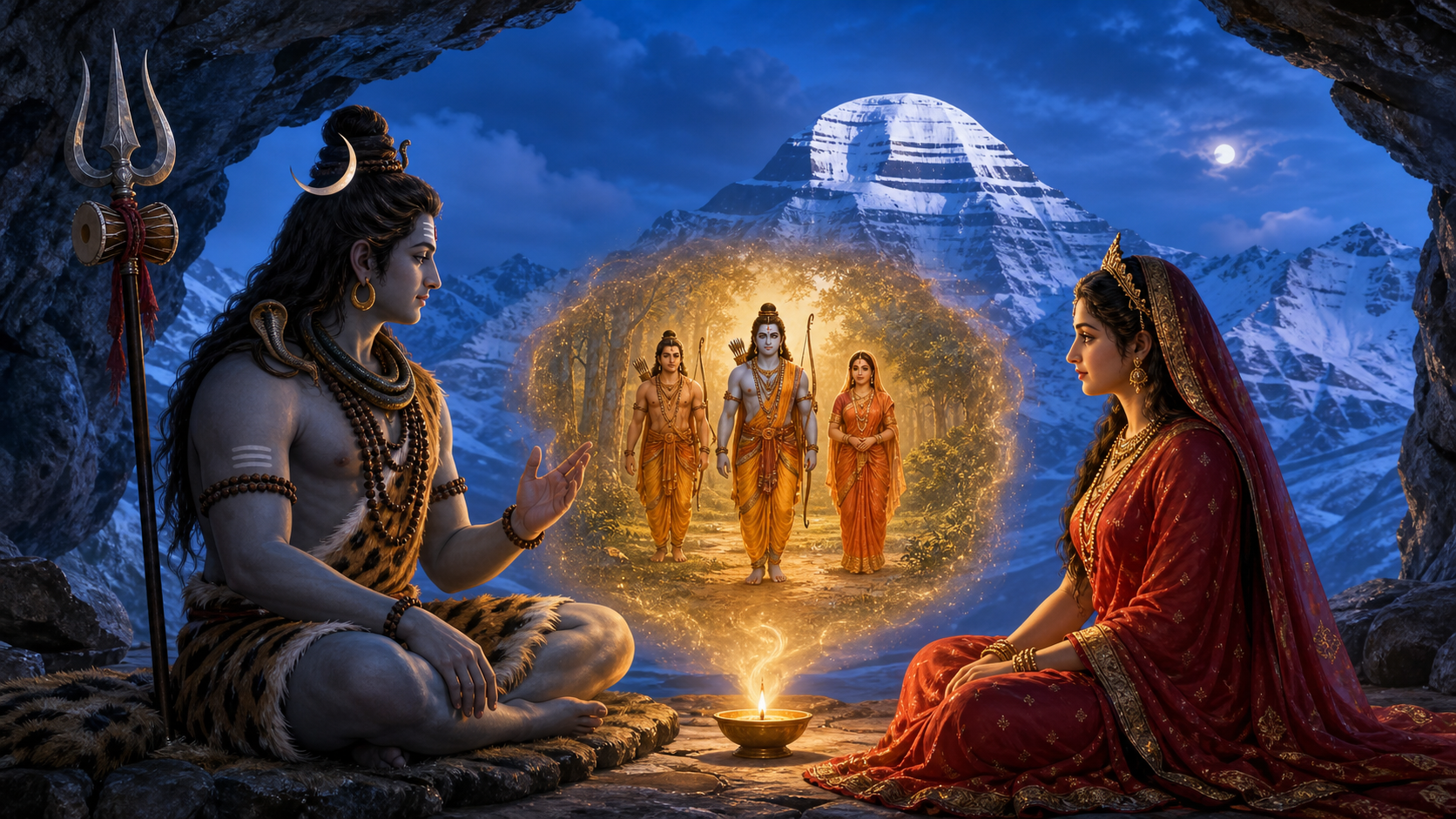
This essay re-reads the Ramayana’s portrayals of Ayodhya and Lanka through the wider lens of Dharmashastra and statecraft. It explains why the Valmiki text does not codify widowhood or remarriage for either society, while later retellings sometimes present Mandodari’s union with Vibhishana as a stabilizing, compassionate choice. It surveys Nārada Smṛti, Parāśara Smṛti, and the…
-
Why Material Success Fails: Bhagavatam 11.3.19–20 on Lasting Joy, Fear, and Liberation

Śrīmad Bhāgavatam 11.3.19–20 teaches that wealth, family prestige, status, and even heavenly pleasures cannot provide lasting happiness because all material results are temporary and fuel anxiety, competition, and fear. Drawing on the Eleventh Canto’s context and consonant Bhagavad-Gita insights, this analysis explains why even pious ascent to higher planets ends in loss. It then outlines…
-
Divine Humility and Seva in SB 3.16.7: H.H. Radhanath Swami at ISKCON Chowpatty, Mumbai

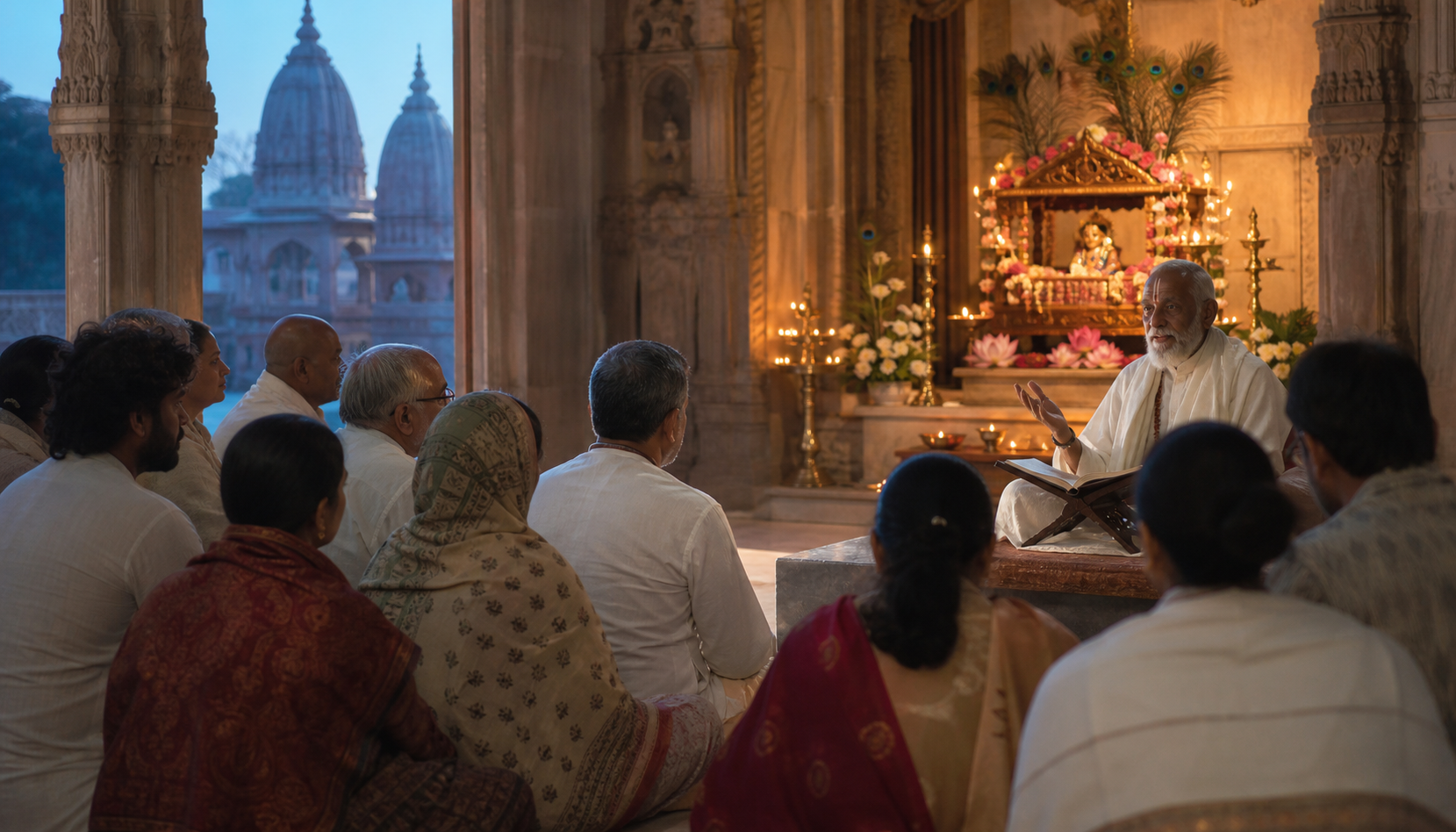
Delivered on 12th Apr. ’26 at ISKCON Chowpatty Mumbai, this analysis of S.B. 3.16.7 by H.H. Radhanath Swami explores how divine humility, purification at the lotus feet, and Lakshmi’s steadfast grace form the theological spine of bhakti. It clarifies why the Supreme Being models service to devotees as the highest expression of love and leadership.…
-
BG 18.75 Unveiled: Vyāsa’s Grace, Kṛṣṇa’s Living Voice, and the Timeless Science of Yoga

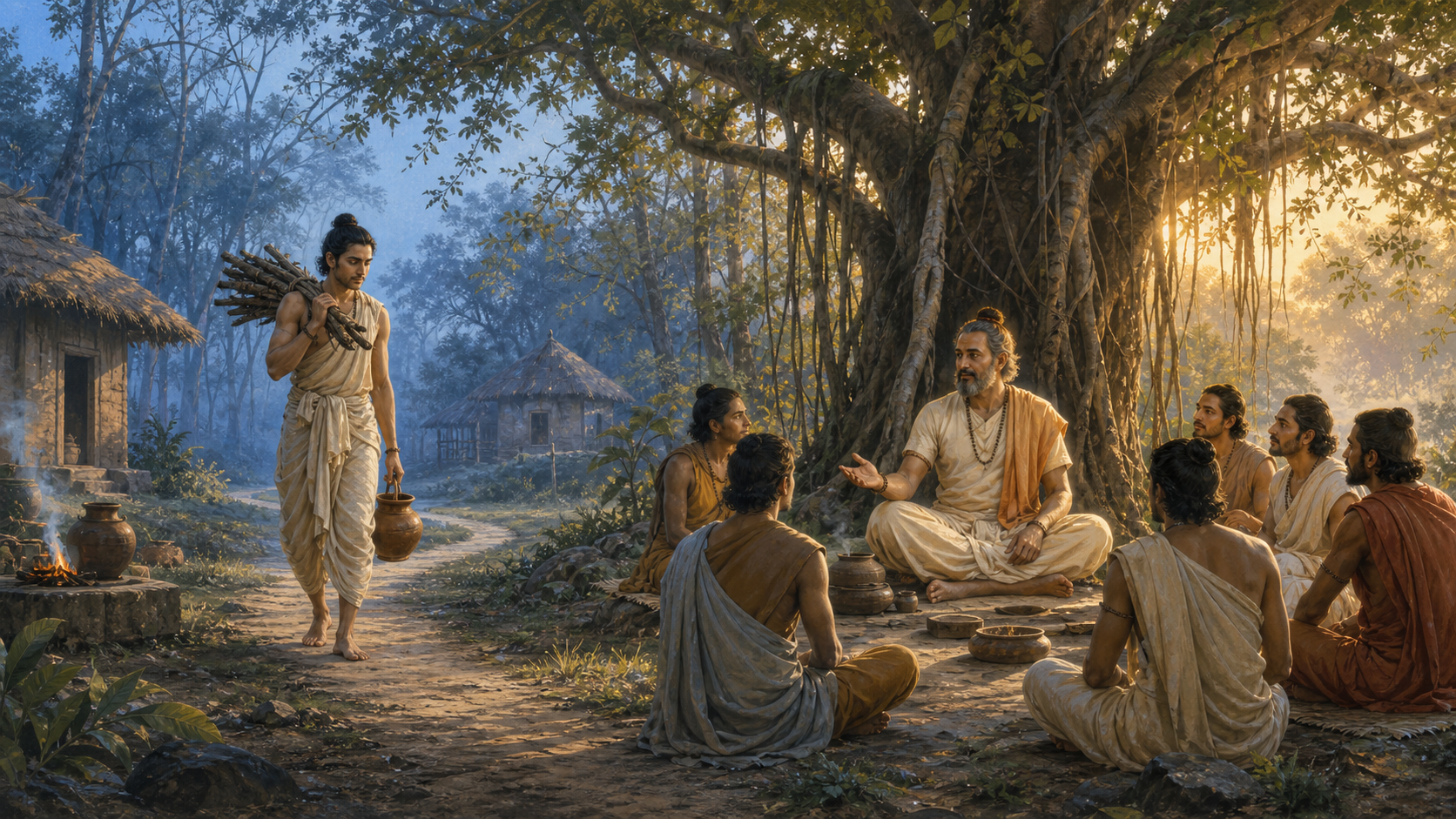
Bhagavad-gītā 18.75 crystallizes how liberating wisdom is known: by Vyāsa’s grace, Sañjaya directly hears Kṛṣṇa guiding Arjuna, modeling lineage-based transmission and receptive practice. The verse illuminates Vedic epistemology—śabda-pramāṇa, paramparā, and divya-dṛṣṭi—while clarifying that “most confidential” teaching is inward profundity, not exclusion. By presenting Kṛṣṇa as Yogeśvara, it frames yoga as an integrated science of action,…
-
Ekadasha Parayana of Vishnu Sahasranama: Transformative Benefits, How-To, and Daily Discipline

Ekadasha Parayana is an eleven-day observance in which the Vishnu Sahasranama is recited eleven times daily, uniting devotion, attention training, and ethical living. Rooted in the Mahabharata and the Vaishnava bhakti tradition, the practice is accessible to householders and monastics and adaptable to individual contexts. Practitioners commonly report cognitive clarity, emotional balance, and a deepening…
-
Drupada of Panchala in the Kurukshetra War: Dharma, Betrayal, Destiny, and Fatal Valor

Drupada of Panchala stands at the crossroads of Dharma, strategy, and tragic inevitability in the Mahabharata’s Kurukshetra War. His youthful friendship with Drona, later ruptured by humiliation, set in motion a cycle of vows, rituals, and alliances that reshaped the subcontinent’s political map. The births of Dhrishtadyumna and Draupadi through yajña translated personal injury into…
-
Decoding the Four Yugas: Shastric Evidence, Deva-Year Calculations, and Our Place Today

Misunderstandings about the four yugas persist because many readers treat shastric deva years as ordinary human years. This article consolidates the Mahabharata (Shanti Parva), Vishnu Purana, Bhagavata Purana, and Surya Siddhanta to present a precise, reproducible method for calculating yuga durations. It explains the deva-year ratio (1 deva year = 360 human years), the role…
-
When Dharma Bows Before Battle: Yudhishthira’s Sacred Humility and the Ethics of Kurukshetra

Before the first arrow flies at Kurukshetra, the Mahabharata pauses for an indelible act of humility: Yudhishthira lays down his arms and seeks blessings from elders on both sides. This ethical rite aligns rajadharma and kshatra-dharma, signaling that even warfare must be governed by Dharma-Yuddha. The gesture affirms the guru–shishya tradition, anchors strength in reverence,…
-
Vikarna’s Tragic Fall at Kurukshetra: Bhima’s Uncommon Reverence and the Paradox of Dharma

Vikarna’s death at Kurukshetra, and Bhima’s rare public respect for him, reveal the Mahabharata’s refusal to reduce war to simple binaries. The episode traces Vikarna’s lonely protest during Draupadi’s humiliation, his later loyalty under kṣātra-dharma, and Bhima’s empathetic yet resolute response in battle. Read through the lens of Dharma-Yuddha, it becomes a case study in…
-
Rameshwaram’s Sacred Paradox: Ananda Ramayana on Rama Consecrating Shiva’s Jyotirlinga

Rameshwaram—Rāmeśvara, “Shiva, the Lord of Rama”—embodies the Ramayana’s sacred paradox: the vanquisher of adharma kneels in devotion. Drawing on the Ananda Ramayana and the Skanda Purana’s Setu-mahātmya, this long-form analysis traces how Rama’s consecration of the Ramanathaswamy liṅga shaped South Indian pilgrimage, temple architecture, and living ritual. It explains the paired sancta of Rāmalīṅga and…
-
Balarāma’s Poised Silence: Unpacking Śrīmad-Bhāgavatam 10.16 and Kṛṣṇa’s Saving Power

Śrīmad-Bhāgavatam 10.16.1–16 frames the Kāliya episode through Balarāma’s calm smile and eloquent silence, signaling realized trust in Kṛṣṇa’s saving power. The narrative contrasts the Vrajavāsīs’ anxiety with Balarāma’s stabilizing presence, revealing guru-tattva and the supportive role of Saṅkarṣaṇa. Read alongside Gauḍīya Vaiṣṇava commentaries, the passage shows how silence can be genuine instruction (māuna-upadeśa), cultivating communal…
-
Born of Sacred Fire: Draupadi’s Yajna Origins and the Mahabharata’s Destiny Symbolism

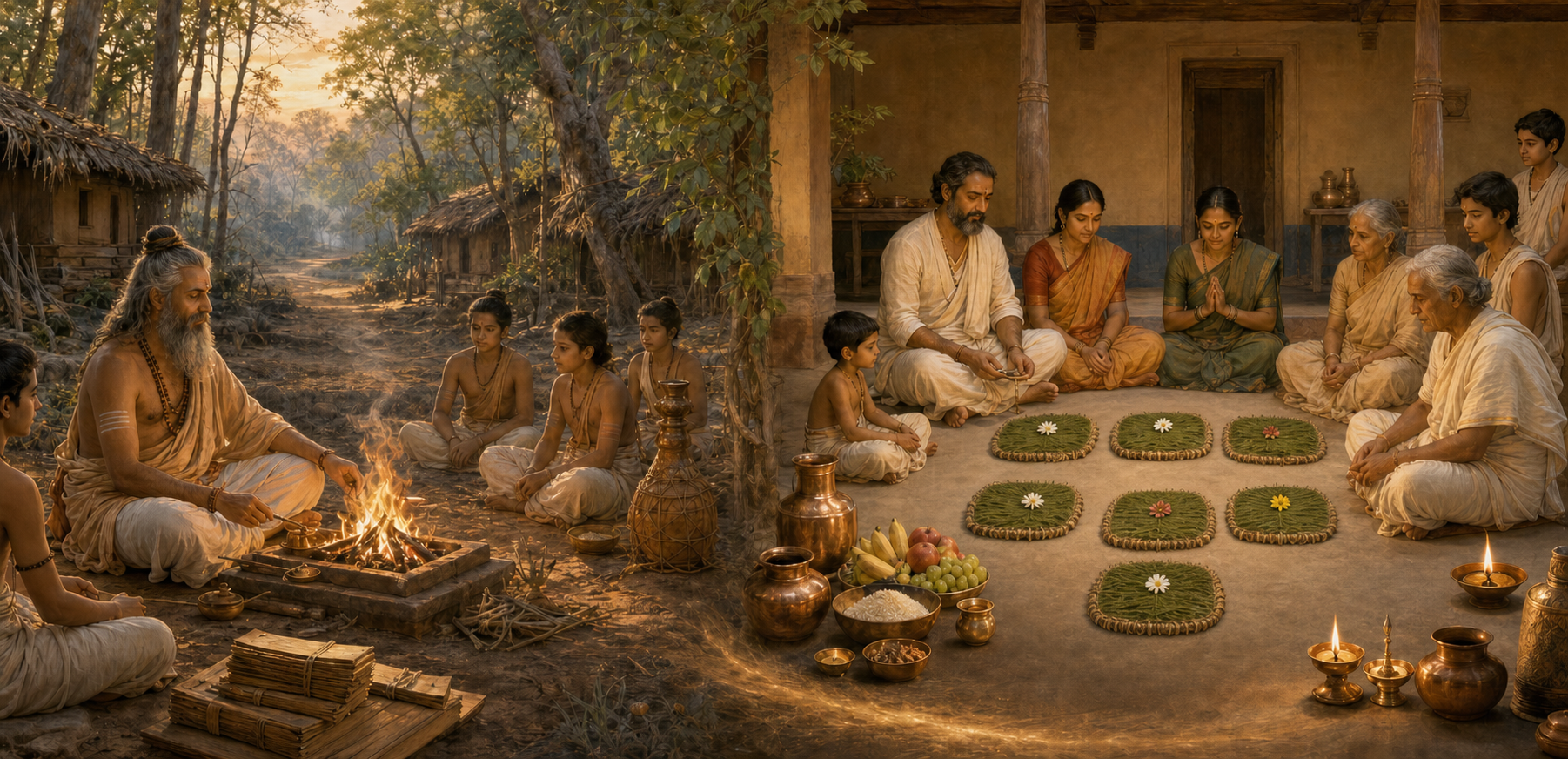
Draupadi’s birth from the yajna fire is more than a miracle; it is the Mahabharata’s masterclass in how ritual, intention, and cosmic order interact. The narrative explains why Agni, as Vedic mediator and witness, signifies both purification and moral accountability. It clarifies how Drupada’s rājasic aim meets a higher corrective, yielding Dhṛṣṭadyumna and Draupadi as…
-
Yearning for Vṛndāvana, Choosing Wisdom: Caitanya-caritāmṛta Madhya 16.220–237 Unpacked

Caitanya-caritāmṛta, Madhya-līlā 16.220–237 presents a nuanced portrait of devotional longing guided by prudent counsel. Drawing on Śrīla Bhaktivinoda Ṭhākura’s Amṛta-pravāha-bhāṣya, the passage shows how Rāmānanda Rāya and Sārvabhauma Bhaṭṭācārya safeguarded Śrī Caitanya Mahāprabhu’s journey to Vṛndāvana by aligning desire with timing and public welfare. The narrative also notes the third annual pilgrimage of Bengali devotees…
-
Bhima vs. the Elephant Legion: Epic Power, Strategy, and Dharma in the Kurukshetra War

This study examines Bhima’s encounters with the Kaurava elephant corps in the Mahabharata’s Kurukshetra War, integrating military history, scriptural exegesis, and symbolism. Readers gain a precise view of how a gaja-vyuha functioned, why elephants were both decisive and dangerous, and how Bhima’s gada-work exemplified targeted counters to heavy shock units. The ethically fraught Ashvatthama episode…
-
Myth-Busting the ‘Traitor’ Label: Vibhishana’s Dharma-First Loyalty in the Ramayana

This analysis challenges the popular notion of Vibhishana as a betrayer and demonstrates, with reference to Ramayana ethics, that his alignment with dharma over family partisanship constitutes exemplary loyalty. It explains how Rajadharma and Sharanagati frame his choice as morally necessary rather than opportunistic. By contrasting Vibhishana with Kumbhakarna and drawing on Dharmashastra principles, it…
-
Srimad Bhagavatam 11.3.13: Detachment, Sacred Stewardship, and Seva for Lasting Peace

Delivered at ISKCON Juhu, Mumbai on 7 April 2026, H.H Guru Prasad Swami’s exposition on Srimad Bhagavatam 11.3.13 frames detachment as sacred stewardship rather than denial. The lecture explains how body, speech, and mind can be harmonized in seva to Krishna, turning temporary possessions into vehicles of lasting purpose. A technical scaffold—sambandha, abhidheya, prayojana—shows why…
-
Queen Kunti’s Prayers (SB 1.8.23–27): From Calamity to Devotion, to Krishna’s Lotus Feet

This in-depth analysis of Srimad Bhagavatham 1.8.23–27 (Queen Kunti’s Prayers) clarifies how to meet calamity with lucid devotion, what to pray for when outcomes are uncertain, and how humility (akiñcanya) opens access to Krishna’s lotus feet. It explains why adversity, reframed through remembrance, can catalyze liberation (vipadaḥ santu tāḥ śaśvat). It explores the four privileges—birth,…
-
SB 10.4.8 on Power and Protection: Kamsa’s Rage, Devi’s Deliverance, and Living Dharma Today

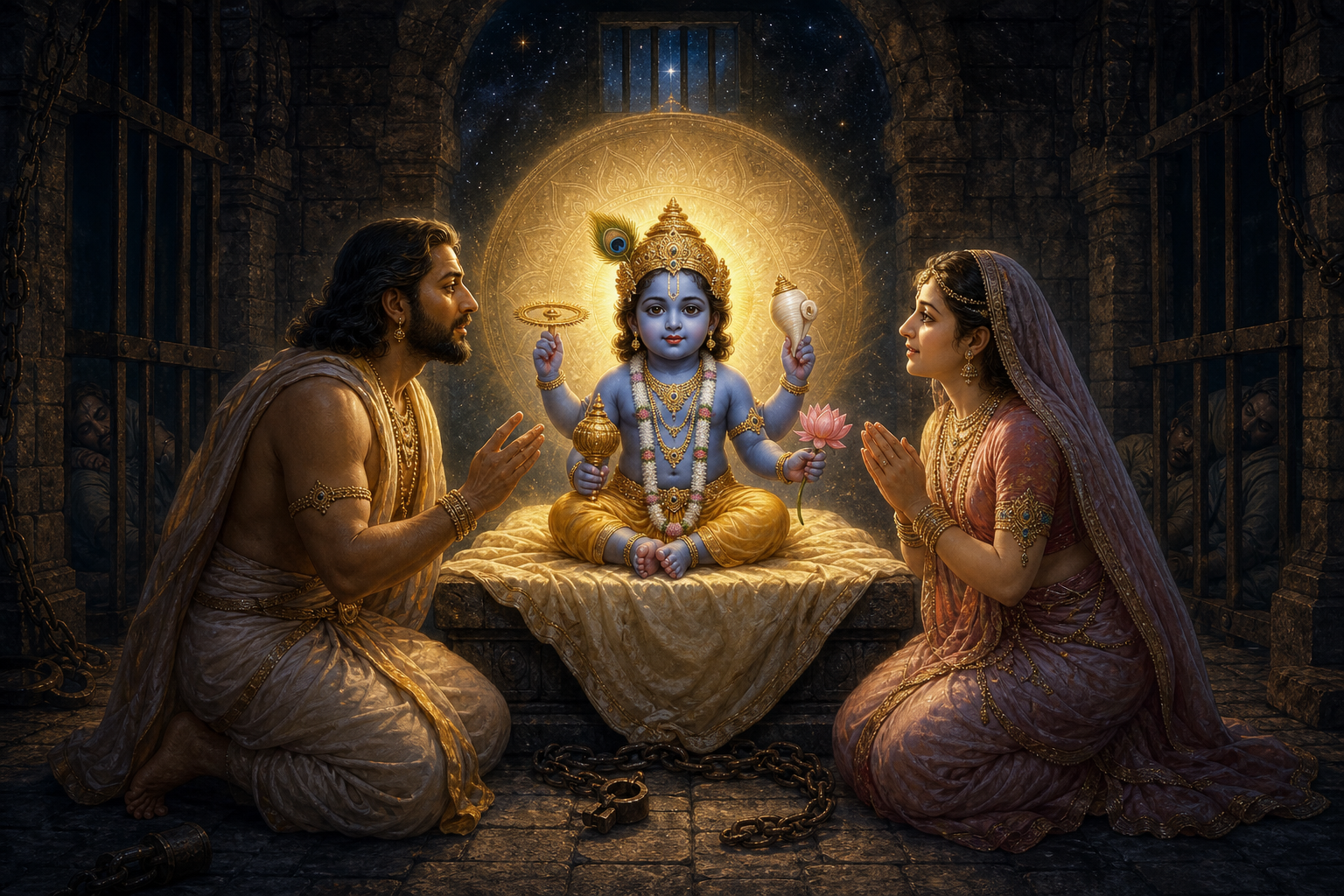
This long-form analysis of Srimad-Bhagavatam (SB) 10.4.8 explores Kaṁsa’s attempt to kill a newborn and Devi’s decisive deliverance as a powerful study in dharma versus adharma. It situates the verse within the Bhagavata Purana’s narrative, unpacks its ethical, theological, and symbolic layers, and highlights its convergence with Buddhist, Jain, and Sikh principles of compassion and…
-
Shabda Pramana in Mimamsa: The Timeless Power of Vedic Testimony for Truth and Dharma

Shabda—verbal testimony—holds a privileged place in Mimamsa Darshana, where it functions as a rigorous means of valid knowledge for matters of dharma beyond the reach of perception and inference. By affirming the Vedas as apauruṣeya (authorless), Mimamsa secures scriptural authority through a detailed theory of semantics, sentence meaning, and hermeneutic indicators. The Bhāṭṭa and Prābhākara…