-
Kumbhakarna vs Karna: Loyalty’s Tragic Valor and Vibhishana’s Dharma in the Ramayana

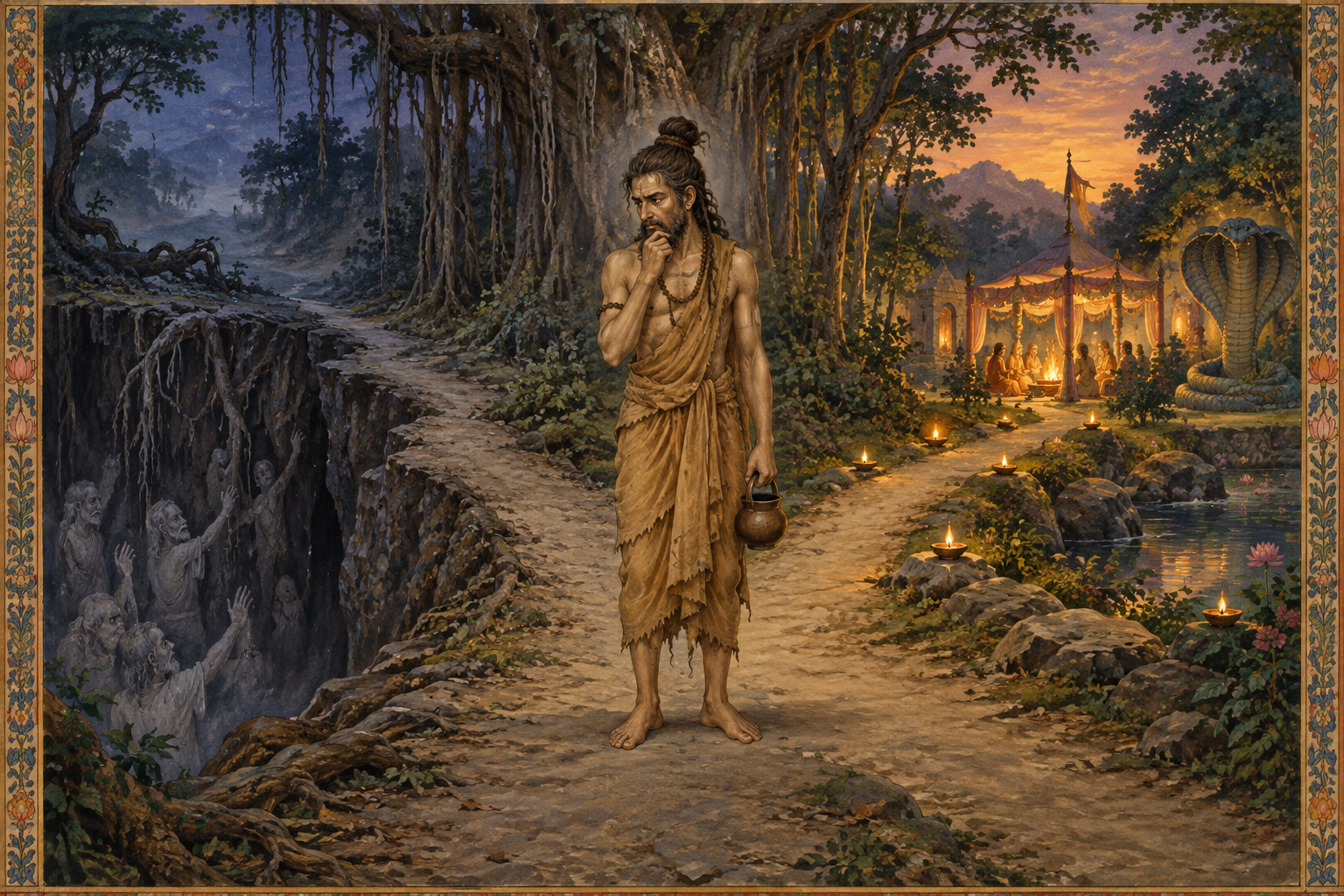
The crisis in Lanka dramatizes a timeless ethical conflict: should loyalty to kin outrank allegiance to universal righteousness? Through Vibhishana’s principled dissent and Kumbhakarna’s tragic loyalty, the Ramayana clarifies how Dharma-Yuddha prioritizes justice over faction. A comparative glance at the Mahabharata’s Karna sharpens this lesson, showing that valor cannot redeem complicity in adharma. Read alongside…
-
From Valmiki to Tulsidas: Rama’s Journey from Human Ideal to Supreme Divine—Explained

This scholarly comparison explains how Valmiki’s Sanskrit Ramayana and Tulsidas’ Awadhi Ramcharitmanas offer complementary visions of Rama—one as Maryada Purushottama, the ethical human exemplar, and the other as the Supreme Divine of the Bhakti Tradition. It situates both texts in their historical and linguistic contexts, clarifying why Sanskrit itihasa and vernacular kirtan-poetics produce different emphases.…
-
Why Atharva Veda Appears Monkey-Faced: Unveiling Sacred Simian Symbolism in Temples

Hindu temple art often personifies the four Vedas as living presences, and in some regional traditions Atharva Veda appears with a monkey-like face. This simian marker is not caricature but a sophisticated code for healing, protection, breath-centered efficacy, and agile, disciplined intelligence—qualities deeply associated with Atharvan rites. The discussion situates the motif within flexible Śilpaśāstra…
-
Karna’s Elephant-Chain Banner: Fate, Dharma, and the Unyielding Spirit of Kurukshetra

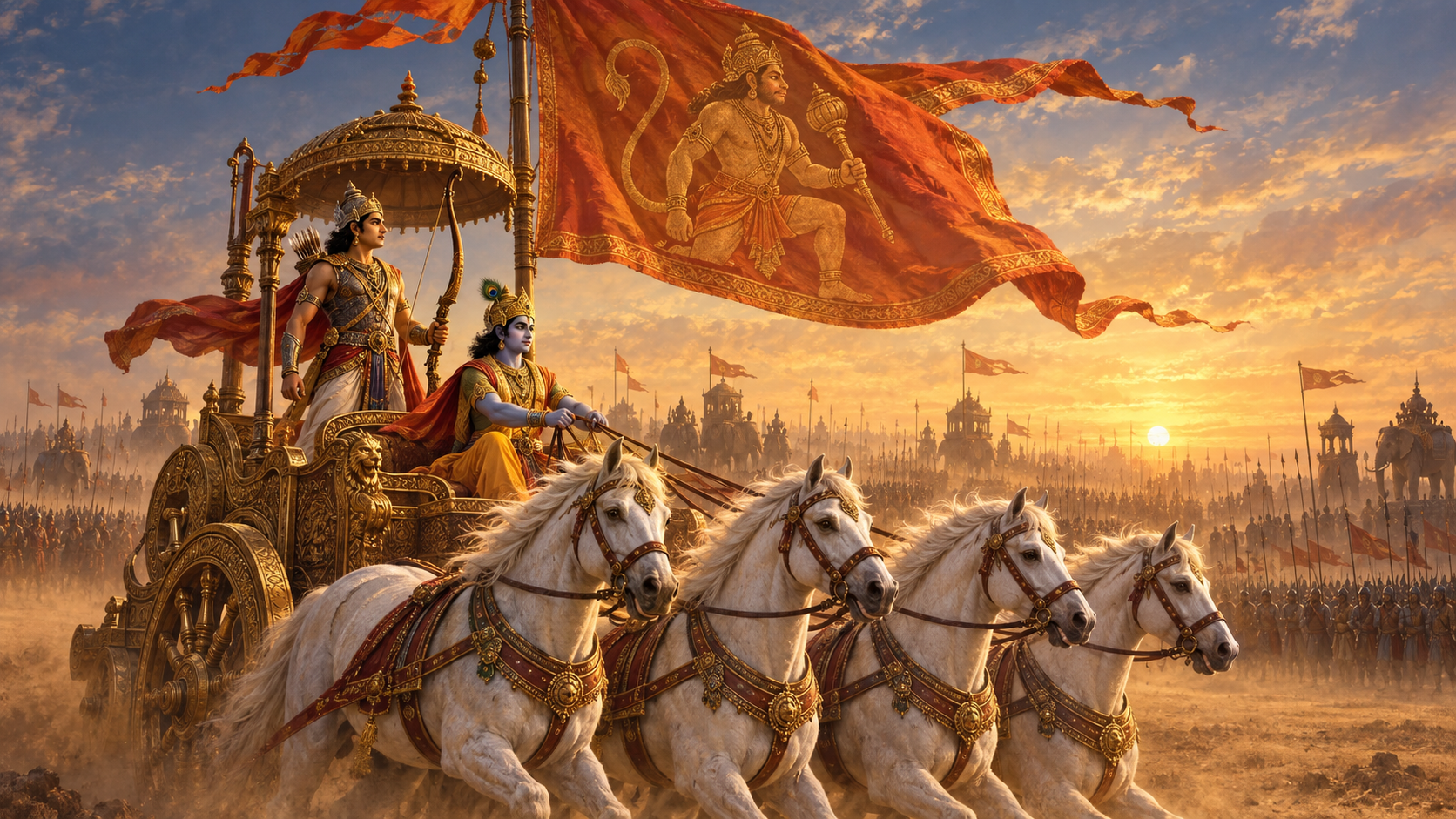
The Mahabharata’s standards were a battlefield lexicon, distilling each warrior’s identity and philosophy into potent symbols. Within this system, tradition associates Karna with an elephant-chain emblem, a motif that fuses material realism—control of war elephants—with moral allegory—power managed by duty. While not uniformly attested across all recensions, the emblem appears in parts of the textual…
-
Decoding ‘Om krato smara kritam smara’: karma, memory, and the art of conscious dying

“Om krato smara kritam smara” from the Īśāvāsya Upaniṣad condenses the Upanishadic path into one imperative: let the sovereign will remember what has been done. The mantra sits at a pivotal moment in the text (Vājasaneyi Saṁhitā 40.17), pairing ethical clarity with the acknowledgement of impermanence. A brief philological reading clarifies ‘krato’ (will/intellect), ‘smara’ (remember),…
-
Basava Purana Unveiled: Palkuriki Somanatha’s Epic of Basaveshwara, Devotion and Equality

Basava Purana, composed in Telugu by Palkuriki Somanatha in the 13th century, is a seminal hagiographic epic on Basaveshwara (Basavanna Deva) that unites narrative, doctrine, and ethics. Sacred to the Lingayat community yet influential far beyond, it advances kayaka (work as worship), dasoha (sharing), and ishtalinga (direct devotion) as practical pathways to inner realization and…
-
Earth-born Sita Devi: A Scholarly, Soul-Stirring Portrait of Dharma in the Valmiki Ramayana

Sita Devi’s Earth-born manifestation, celebrated in Valmiki’s “Sita-ayah Charitam Mahat,” anchors the Ramayana’s ethical vision around truth, compassion, and the Sacred Feminine. Drawing on King Janaka’s testimony, the narrative affirms Sita as āyonijā—discovered in a furrow while preparing a yajna—thereby linking her to Bhumi Devi and an ecological ethic of reverence for the Earth. Her…
-
Decoding the Horse-Faced Sama Veda: Iconography, Sacred Sound, and Hayagriva

In Hindu iconography, the Vedas appear as living Veda Purushas; in select programs the Sama Veda is rendered horse-faced, signaling a fusion of sacred sound and Hayagriva theology. The article explains how this equine imagery coheres with the Sama Veda’s musicological core—udgītha, svara, and sāman structures—while linking it to Hayagriva, Viṣṇu’s horse-headed form who rescues…
-
Om krato smara kritam smara: Ishavasya Upanishad’s urgent call to remember, reckon, and transcend

The Ishavasya Upanishad’s injunction, “Om krato smara kritam smara,” is a precise ethical and contemplative tool that unites Vedic ritual language with Upanishadic interiority. Addressing kratu (will, intention), the mantra urges a lucid remembrance of deeds (kritam), not for guilt but for clarity and freedom. Placed in cremation rites and used in daily reflection, it…
-
Unveiling Yajur Veda’s Goat-Faced Icon: Sacred Symbolism in Hindu Temple Art

Hindu temple art often personifies the Vedas as living, intentional presences called veda-purushas, and the Yajur Veda is sometimes shown with a goat-faced form. This article explains why: it links ritual practice (yajna), philology (aja as both “goat” and “unborn”), and the Adhvaryu’s tools to a coherent iconographic language. It also clarifies common confusions with…
-
Eighteen Parvas of the Mahabharata: Sacred Architecture, Dharma, and Timeless Symbolism

The Mahabharata’s division into eighteen Parvas is a sacred architecture that encodes as much meaning as the verses themselves. Eighteen recurs across the tradition—Parvas, war days, akshauhinis, and the Gita’s chapters—signaling a deliberate design that integrates nature and human faculties under dharma. Organized in arcs from origins and diplomacy (Udyoga Parva) to war (Bhishma to…
-
Atharva Veda Unveiled: The Fourth Veda That Bridges Ritual, Healing, and Daily Life

The Atharva Veda distinguishes itself from the Rig, Sama, and Yajur Vedas by extending Vedic wisdom into healing, household life, and public welfare while sustaining rigorous ritual and philosophical depth. It preserves two major recensions (Śaunaka and Paippalāda), the Gopatha Brāhmaṇa, and Atharvanic Upanishads like Muṇḍaka, Māṇḍūkya, and Praśna. Signature hymns—such as the Bhūmi Sūkta,…
-
Nyāyakusumāñjali: Udayana’s Timeless Fusion of Logic and Bhakti for Dharmic Harmony

Nyāyakusumāñjali, composed by Udayana in the tenth century CE, revitalizes the Nyāya–Vaiśeṣika tradition by integrating uncompromising logic with the devotional power of bhakti. Framed as a poetic offering of proofs, the work advances multiple, mutually reinforcing arguments for Īśvara drawn from causation, atomic combination, linguistic convention, trustworthy testimony, and the moral order of karma. Its…
-
Decoding the Donkey-Faced Rig Veda: Esoteric Agamic Iconography, Sound, and Sacred Memory

This article decodes a rare Agamic iconographic motif that personifies the Rig Veda as a donkey-faced sage, showing how Hindu sculptures render living śruti in pedagogical form. It explains why the donkey-face signifies raw sound, ascetic endurance, and hermeneutic humility—all central to Vedic study and temple practice. Readers learn how mūrti-lakṣaṇa principles translate doctrine into…
-
Kumbhakarna’s Counsel to Ravana: Timeless Dharma, Restraint, and Leadership Beyond Passion

Kumbhakarna’s counsel to Ravana in the Ramayana distills a core dharmic principle: restraint must govern power. The episode situates kāma (unchecked passion) as the chief contaminant of judgment and urges restitution—returning Sita—as both moral necessity and strategic prudence. Read through niti and rajadharma, the advice anticipates classical statecraft: choose conciliation before force and align policy…
-
Nyayamrita of Vyasatirtha: A Dvaita Masterpiece of Logic, Metaphysics, and Pluralist Dialogue

Nyayamrita by Vyasatirtha is a landmark of Dvaita Vedanta that combines rigorous logic, careful scriptural exegesis, and a living devotional ethos. Composed in the Vijayanagara milieu, it clarifies Madhvacharya’s realism—affirming the fivefold difference and the integrity of bhakti—while engaging Advaita Vedanta with analytical precision. The work challenges the anirvachaniya status of the world, probes the…
-
The Power of One Book: How a Bhagavad-gita Sparked Lifelong Devotion and Dharmic Unity

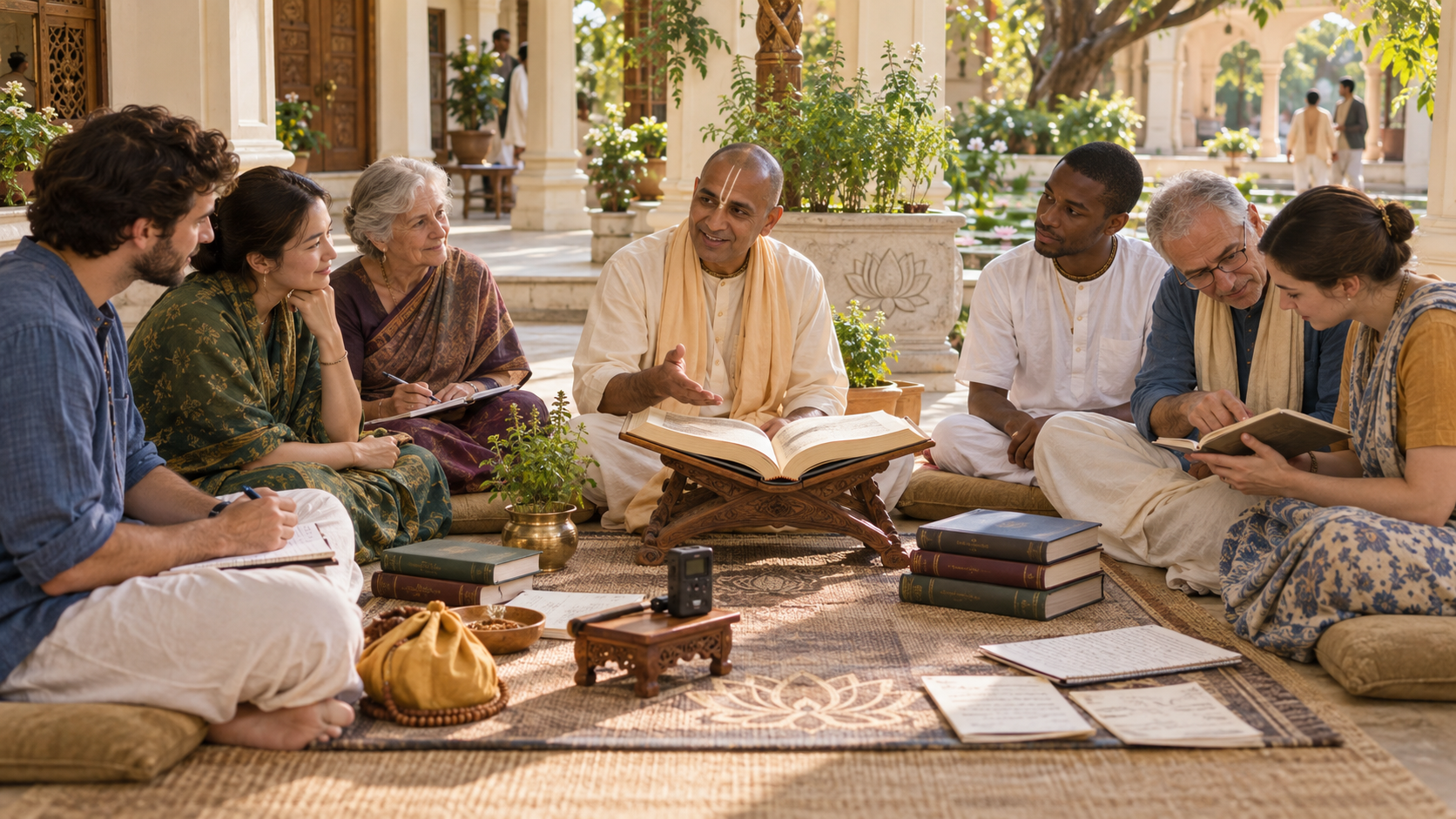
A single sacred text can catalyze lifelong practice and broad social uplift. Kadamba Kanana Swami’s testimony — that a Bhagavad-gita passed from a friend reshaped his life and then vanished from view — illustrates how books “find people,” a process he linked to grace: “Krsna is also part of it.” Social-science models of diffusion explain…
-
Prasadam’s Transformative Grace: Gaudiya Insights on CC Madhya 14.36 for Daily Life and Unity

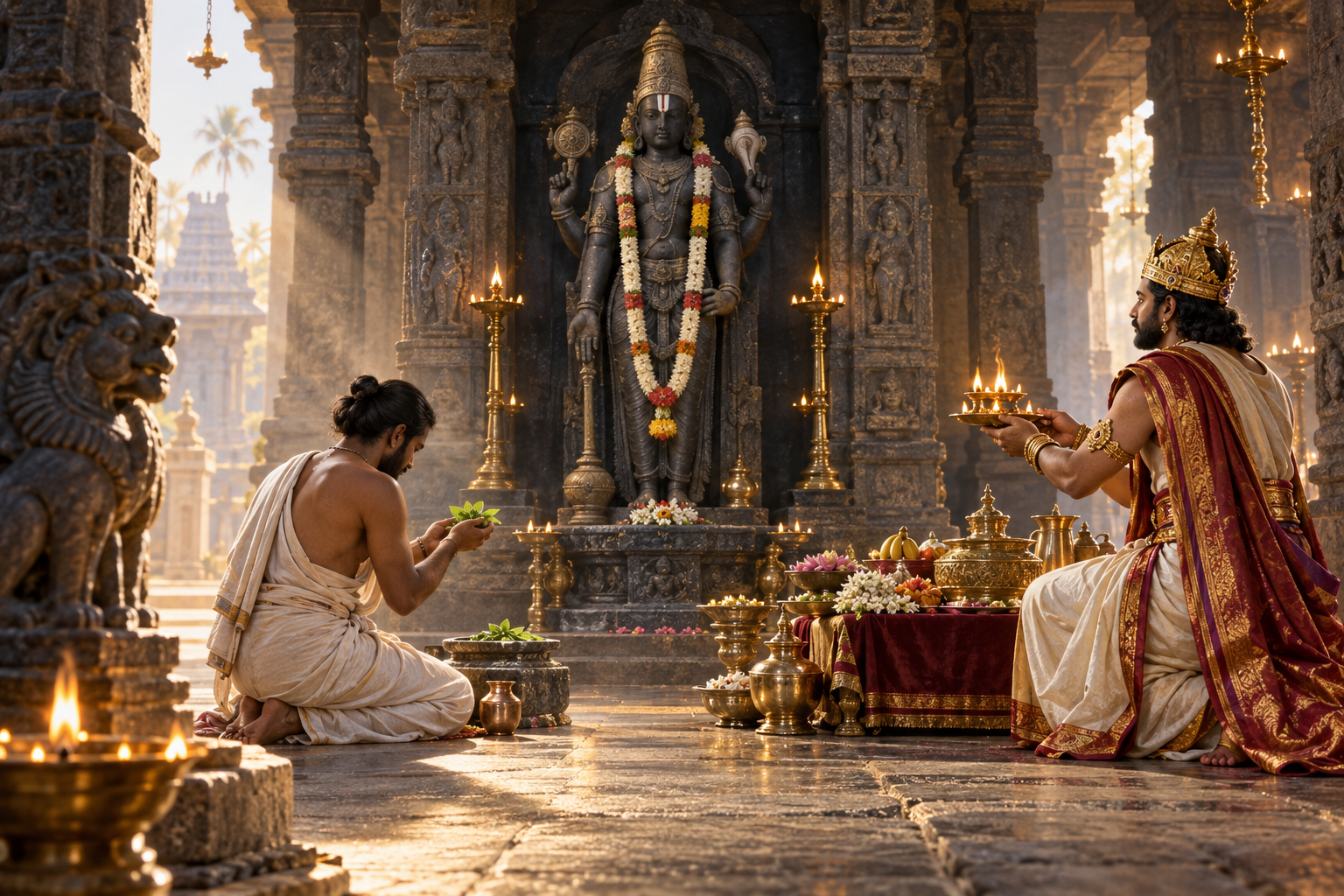
This in-depth exploration of prasadam situates sanctified food within Gaudiya Vaishnava theology, anchored in CC Madhya 14.36 and the example of King Prataparudra. Readers gain a clear understanding of how offering transforms nourishment into a daily practice of grace, supported by Bhagavad Gita principles and Gaudiya ritual steps. The piece outlines a practical five-step home…
-
Mahāpātakas in Hinduism: Decoding Heinous Sins, Dharma, and Their Urgent Modern Relevance

Mahāpātakas, the “heinous sins” in Hindu ethics, delineate acts that rupture the very fabric of dharma by attacking life, trust, truth, and sound judgment. Grounded in the Dharmashastras, these categories are interpreted here through a principle-first lens that fits modern life—workplaces, digital spaces, and public institutions. The analysis explains how intention, participation, and reparability shape…
-
Timeless Gautama Maharshi: Rig Veda Seer, Dharmasutra Sage, and a Unifying Dharmic Beacon

Gautama Maharshi emerges as a multidimensional sage whose legacy spans the Rig Veda, the early Dharmasutra tradition, classical Indian logic, and the living sacred geography of the Godavari. This article clarifies how the shared name “Gautama” applies to multiple luminaries—Vedic seers, the Dharmasutra authority, Akṣapāda Gautama of the Nyāya-sūtra, and revered figures in Jain and…