Category: Scriptures

  • Unveiling Shiva’s Samharamurtis: Fierce, Compassionate Forms of Cosmic Transformation

    Unveiling Shiva’s Samharamurtis: Fierce, Compassionate Forms of Cosmic Transformation

    This in-depth exploration clarifies why Shiva’s Samharamurtis are not emblems of destruction but precise instruments of compassionate transformation. Grounded in the Panchakritya doctrine and classical sources like the Puranas and Agamas, it decodes how Kamantakamurti, Gajasura Samhara Murti, and Kalari Murti model the sublimation of desire, the mastery of force, and the transcendence of fear…

  • Why All Rivers of Bhakti Flow to Gokula: Insights on Brihad Bhagavatamrita 1.2.37–49

    Why All Rivers of Bhakti Flow to Gokula: Insights on Brihad Bhagavatamrita 1.2.37–49

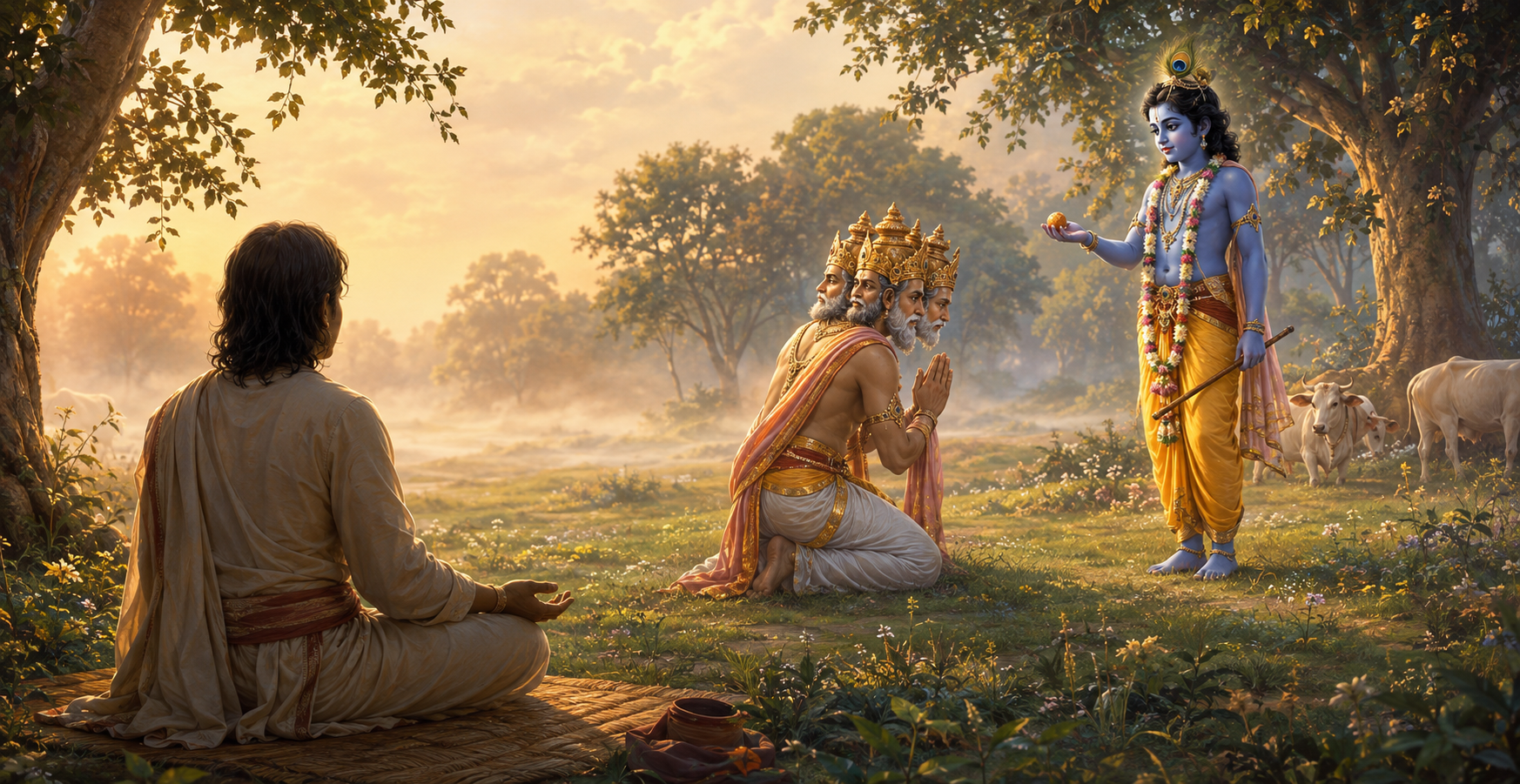
    This study distills HH Niranjana Swami’s 2026 Lithuania exposition of Brihad Bhagavatamrita 1.2.37–49, showing how praise of Brahma, Indra, and other luminaries functions as a pedagogic ladder guiding readers toward the intimate devotion of Gokula and Goloka. It defines Gokula and Goloka with precision, contrasts aisvarya (majesty) and madhurya (sweetness), and explains why the text…

  • Gadādhara Paṇḍita as Hlādinī-Śakti: Unveiling CC Ādi 10.15 and Gaura-gaṇoddeśa-dīpikā

    Gadādhara Paṇḍita as Hlādinī-Śakti: Unveiling CC Ādi 10.15 and Gaura-gaṇoddeśa-dīpikā

    CC Ādi 10.15 and Gaura-gaṇoddeśa-dīpikā present Gadādhara Paṇḍita as the embodiment of hlādinī-śakti, the bliss-bestowing potency of Śrī Kṛṣṇa. This analysis clarifies key Gaudiya Vaishnavism concepts—śakti-tattva, acintya-bhedābheda, and bhakti-rasa—while situating Gadādhara’s historical service in Jagannātha Purī. Readers gain a precise, accessible framework for why Gadādhara is honored among Vaishnava Saints and how “No one, therefore,…

  • Sita’s Agni Pravesha and Exile: The Contested Ethics of Rajadharma and Public Trust

    Sita’s Agni Pravesha and Exile: The Contested Ethics of Rajadharma and Public Trust

    Sita’s Agni Pravesha and exile remain the Ramayana’s most debated ethical crucible. Read closely, the episodes test the alignment of substantive truth with public trust, contrasting private duty and rajadharma under intense social scrutiny. Valmiki’s narrative presents Agni as the supreme witness, while later traditions (such as the Maya Sita motif) further safeguard Sita’s inviolability.…

  • Indrajit’s Invisible Fury: Astras, Ethics, and Strategy on Day Two of the Lanka War

    Indrajit’s Invisible Fury: Astras, Ethics, and Strategy on Day Two of the Lanka War

    Day two of the Lanka war showcases Indrajit’s mastery of maya-yuddha and astras, culminating in the Naga-pasha binding of Rama and Lakshmana. The narrative explains how divine weapons operate within a rigorous ethical code, illustrating the Ramayana’s union of strategy, spirituality, and restraint. Garuda’s arrival provides the precise counter to serpent energies, reaffirming dharma’s corrective…

  • Beejabhidhana in Tantrism: Decoding Sacred Seed Syllables for Transformative Mantra Yoga

    Beejabhidhana in Tantrism: Decoding Sacred Seed Syllables for Transformative Mantra Yoga

    Beejabhidhana in Tantrism offers a rigorous map of sacred sound, explaining how seed syllables (bījākṣaras) encode cosmology, deity-function, and method in a single phonemic unit. It clarifies the technical relation between letters, elements, chakras, nyāsa, and japa, enabling precise, lineage-aligned practice. The framework is academically rich yet experientially grounded, integrating phonetics, grammar, and ritual design…

  • Upashruti: The Luminous Goddess of Night, Oracular Wisdom, and Vedic Revelation

    Upashruti: The Luminous Goddess of Night, Oracular Wisdom, and Vedic Revelation

    Upashruti is presented as a nuanced personification of sacred listening — the contemplative capacity to ‘hear’ wisdom in the stillness of night. Grounded in Vedic philosophy, Puranas, and the logic of śabda-pramāṇa, the essay situates her alongside Rātri, Vāk, and Yoganidrā. It outlines practical, night-centered sādhanā (mauna, japa, nādānusandhāna) and explains how disciplined listening refines…

  • Balarama’s Wrath and Wisdom at Naimisharanya: Dharma, Humility, and Romaharshana’s End

    Balarama’s Wrath and Wisdom at Naimisharanya: Dharma, Humility, and Romaharshana’s End

    At Naimisharanya, Balarama’s startling decision to end Romaharshana’s life with a blade of kuśa grass becomes a profound lesson in dharma, humility, and institutional accountability. Set within the Bhagavata Purana’s sacred milieu, the episode weighs an assembly’s vow against the demands of ethical conduct in public religious life. By empowering Ugraśrava Sauti to complete the…

  • Shanmukha Unveiled: The Sacred Six Faces of Murugan—Names, Symbolism, and Practice

    Shanmukha Unveiled: The Sacred Six Faces of Murugan—Names, Symbolism, and Practice

    This comprehensive exploration of Shanmukha (Shanmugam) clarifies how traditions name and understand the six sacred faces of Lord Murugan. It presents the most common devotional mapping—Skanda, Subrahmanya, Kārtikeya, Kumāra, Guha, and Saravana—while explaining why no single, universal list prevails across all lineages. Readers learn how the six syllables Sa-Ra-Va-Na-Bha-Va and frameworks like the six directions,…

  • Ramayana in Brief: A Powerful, Immersive Summary of Lord Rama’s Epic, Dharma, and Legacy

    Ramayana in Brief: A Powerful, Immersive Summary of Lord Rama’s Epic, Dharma, and Legacy

    This academically grounded Ramayana in Brief presents a lucid, kāṇḍa-by-kāṇḍa Summary of Ramayana, highlighting Lord Rama’s ethical leadership, Sita’s steadfastness, Hanuman’s service, and the triumph of dharma. It carefully situates the Valmiki Ramayana within its seven-part structure, notes key textual traditions, and clarifies how themes like maryada, rajadharma, and dharma-yuddha shape the story. Readers gain…

  • From Gourd to Glory: King Sagara’s 60,000 Sons, Kapila’s Curse, and the Descent of Ganga

    From Gourd to Glory: King Sagara’s 60,000 Sons, Kapila’s Curse, and the Descent of Ganga

    This essay recounts the sacred narrative of King Sagara of the Ikshvaku dynasty: a childless sovereign who, through tapas and grace, fathered sixty thousand sons in an extraordinary birth motif remembered as “from pumpkin to princes.” It traces the aśvamedha episode, Indra’s theft of the horse, the princes’ confrontation with Kapila Muni, and their cremation…

  • The Day-One Blunder Ravana Signed: A Proud Pact That Crippled Lanka’s Ramayana War Strategy

    The Day-One Blunder Ravana Signed: A Proud Pact That Crippled Lanka’s Ramayana War Strategy

    This analysis examines the opening day of the Ramayana’s Lanka campaign and the strategic pact that shaped it. By consenting to daylight, rules-based fighting and initial restraint on deception, Ravana muted Lanka’s natural advantages in night warfare and illusion. The study situates this decision within dharma-yuddha norms, Arthashastra categories of open versus concealed war, and…

  • Purochana in the Mahabharata: Lac Palace Conspiracy, Fatal Loyalty, and Dharmic Lessons

    Purochana in the Mahabharata: Lac Palace Conspiracy, Fatal Loyalty, and Dharmic Lessons

    This analysis unpacks Purochana’s role in the Mahabharata’s Lakshagraha conspiracy as a study in ruthless loyalty, covert statecraft, and ethical failure. It situates the plot in the Adi Parva and explains how a luxurious lac palace was engineered as a flammable death trap through lākṣā, ghṛta, and taila. Vidura’s quiet counter-intelligence and tunnel strategy illustrate…

  • From One Morsel of Mercy to Love of God: SB 1.5.25, Prasadam, and the Science of Bhakti

    From One Morsel of Mercy to Love of God: SB 1.5.25, Prasadam, and the Science of Bhakti

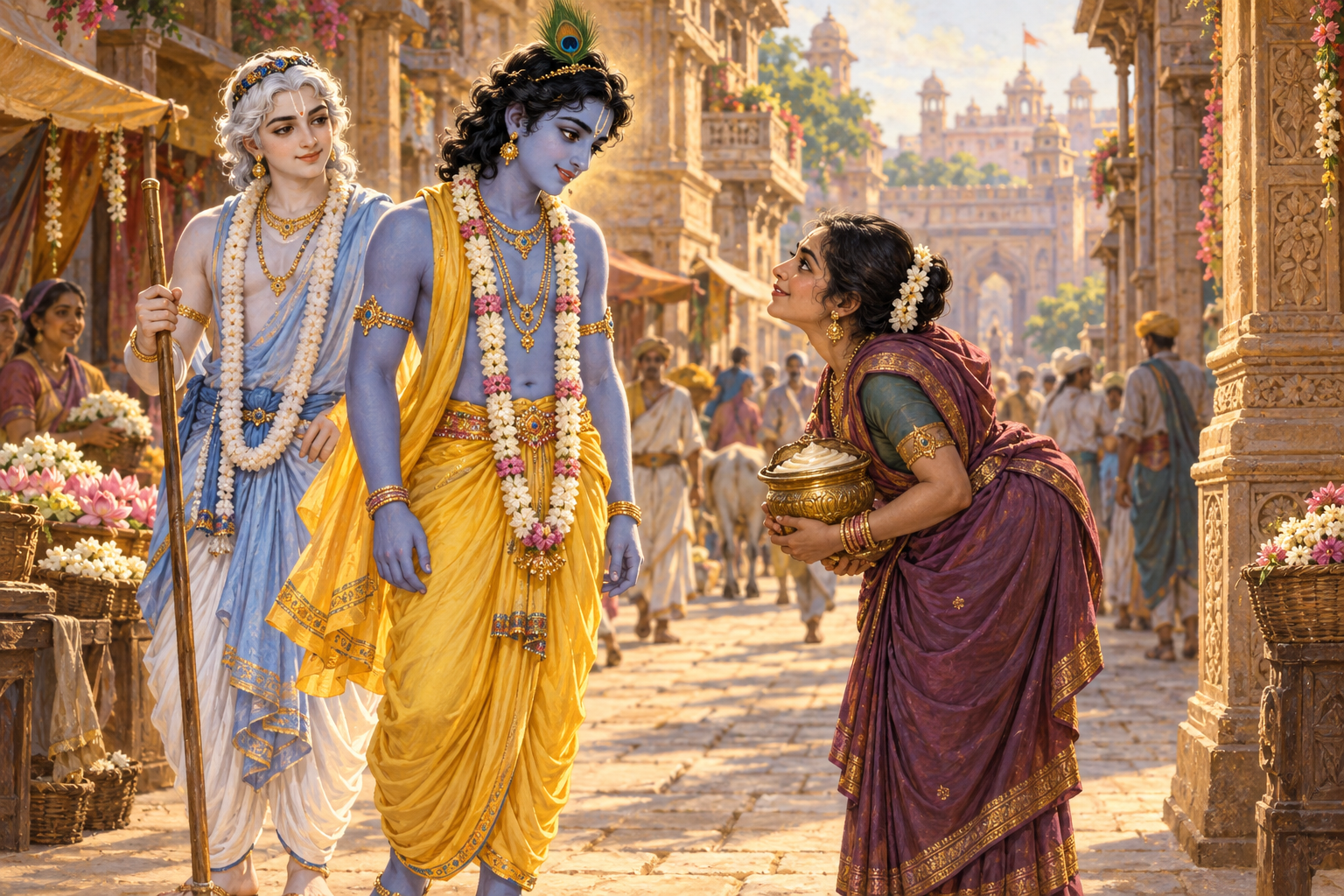
    The discourse on SB 1.5.25 by HG Srutakirti Prabhu at ISKCON France presents a precise, practice-centered account of how honoring prasadam from pure devotees initiates purification and awakens spiritual attraction. Rooted in the Bhagavata Purana and the Bhakti Tradition, the talk maps a concrete act—receiving sanctified food with gratitude—to the classic stages of devotional growth…

  • Nyāyasudhā of Jayatirtha: The Masterwork that Fortified Dvaita Vedānta and Vedic Realism

    Nyāyasudhā of Jayatirtha: The Masterwork that Fortified Dvaita Vedānta and Vedic Realism

    Nyāyasudhā, Jayatirtha’s classic commentary on Madhvacharya’s Anuvyākhyāna, is a cornerstone of Dvaita Vedānta and Vedic realism. It integrates scriptural testimony, disciplined reason, and experience to defend a plural, theistic ontology centered on Viṣṇu-sarvottama. The work clarifies pañcabheda, reinterprets nirguṇa in a theologically coherent way, and presents mokṣa as everlasting personal bliss grounded in bhakti and…

  • From Crisis to Command: Sugriva’s Recklessness and Angada’s Rise in the Ramayana War

    From Crisis to Command: Sugriva’s Recklessness and Angada’s Rise in the Ramayana War

    At the height of the Lanka campaign in the Ramayana, a reckless duel by Sugriva exposed a grave command risk and precipitated Angada’s rise to operational leadership. The episode illustrates how dharmic statecraft balances courage with restraint, preserving continuity of command in a just war (Dharma-Yuddha). Readers will discover how Angada’s diplomacy, battlefield composure, and…

  • Ishwara in Mimamsa: A Rigorous, Compassionate Guide to God, Karma, and Vedic Ritual

    Ishwara in Mimamsa: A Rigorous, Compassionate Guide to God, Karma, and Vedic Ritual

    Mimamsa offers a precise, text-first account of dharma that clarifies how Vedic ritual, karma, and Ishwara interrelate without requiring a creator-God to ground moral order. By treating the Veda as apaurusheya and elevating shabda as an independent pramana, it shows why divine authorship is unnecessary for scriptural authority. Its law-like explanation of apurva/adrishta preserves ritual…

  • When Agastya Drank the Ocean: The Cosmic Reset Behind Bhagiratha’s Ganga Avatara

    When Agastya Drank the Ocean: The Cosmic Reset Behind Bhagiratha’s Ganga Avatara

    This long-form exploration situates the startling image of Sage Agastya drinking the ocean within the Vedic–Puranic principle of rta (cosmic order) and reads it as the hidden prologue to Bhagiratha’s Ganga avatara. Drawing on references across the Ramayana, the Mahabharata, and Puranas such as the Skanda Purana, it explains how yogic containment (Agastya) and compassionate…

  • Why Dushasana’s Savage End in the Mahabharata Became Dharma’s and Karma’s Verdict

    Why Dushasana’s Savage End in the Mahabharata Became Dharma’s and Karma’s Verdict

    Dushasana’s death in the Mahabharata is not gratuitous violence but a juridical and karmic reckoning anchored in dharma. The Sabha Parva’s humiliation of Draupadi creates an ethical debt that battlefield dharma later settles when institutions fail. Bhima’s vow and its fulfillment on the sixteenth day fit the epic’s vow-driven architecture of justice, illustrating apad-dharma under…

  • Forgotten Freedoms in the Ramayana: Widowhood, Remarriage, and Dharma in Lanka and Ayodhya

    Forgotten Freedoms in the Ramayana: Widowhood, Remarriage, and Dharma in Lanka and Ayodhya

    This essay re-reads the Ramayana’s portrayals of Ayodhya and Lanka through the wider lens of Dharmashastra and statecraft. It explains why the Valmiki text does not codify widowhood or remarriage for either society, while later retellings sometimes present Mandodari’s union with Vibhishana as a stabilizing, compassionate choice. It surveys Nārada Smṛti, Parāśara Smṛti, and the…