Category: Scriptures

  • Bhairava Unveiled: Symbolism, Meaning, Kala-Time Mastery, and Fearless Liberation

    Bhairava Unveiled: Symbolism, Meaning, Kala-Time Mastery, and Fearless Liberation

    Bhairava Roopaya—named first in the Bhairava Sahasranama—presents Bhairava as the omnipresent intelligence of Shiva that creates, sustains, dissolves, conceals, and liberates. This long-form exploration decodes the name’s etymology (bhaya + rava and Bha–Ra–Va), connects it to the Shaiva pañcakṛtya, and situates it within Kashmir Shaivism’s non-dual vision and Vijnana Bhairava Tantra’s contemplative methods. Readers gain…

  • Manidweepa Unveiled: Inside the Jeweled Island of the Mother Goddess and Cosmic Consciousness

    Manidweepa Unveiled: Inside the Jeweled Island of the Mother Goddess and Cosmic Consciousness

    Manidweepa (Mañidvīpa) is portrayed in the Devi Bhagavatam Purana as the jeweled island of the Mother Goddess, a sacred geography beyond the fourteen worlds and the Ocean of Nectar. This analysis explains how Śrī Nagara, the Chintāmaṇi gṛha, and the Pañcabrāhmāsana encode Hindu cosmology and Śrīvidyā practice. It maps Manidweepa to the nine āvaraṇas of…

  • Rohita in the Atharva Veda: The Crimson Sun-Fire as Supreme Principle of Creation and Order

    Rohita in the Atharva Veda: The Crimson Sun-Fire as Supreme Principle of Creation and Order

    Rohita in the Atharva Veda is presented as a crimson, world-sustaining principle that unites fire (Agni), the sun (Sūrya), and cosmic order (Ṛta). The Book 13 hymns of the Śaunaka recension elevate Rohita beyond any single deity by identifying this power with Prajāpati, Skambha, and Prāṇa, offering a unifying metaphysical vision. Color symbolism (rohita/lohita) reveals…

  • Why Karthikeya Has Six Heads: Puranic Origins, Iconographic Meaning, and Dharmic Unity

    Why Karthikeya Has Six Heads: Puranic Origins, Iconographic Meaning, and Dharmic Unity

    Karthikeya’s six heads—Shanmukha—are not an artistic flourish but a layered pedagogy rooted in scripture, philosophy, yoga, and living festival practice. Puranic narratives explain the six-faced form through the Krittikas and Parvati’s embrace, while martial symbolism emphasizes omnidirectional awareness for a divine commander. Liturgical traditions map the six faces to the Saravana-bhava mantra; philosophers read them…

  • ‘Gavyapataye’ Bhairava: Tantric Guardian of Cows, Compassion, and Sacred Ecology

    ‘Gavyapataye’ Bhairava: Tantric Guardian of Cows, Compassion, and Sacred Ecology

    Gavyapataye Bhairava reveals Bhairava’s Tantric role as guardian of cattle, food purity, and sacred ecology. The epithet’s Sanskrit morphology (gavya + pati) ties devotion directly to agrarian life and ritual substrates like pañcagavya. Set within Bhairava-sahasranāma practice, it unites vigilant protection with compassionate stewardship. Textual, iconographic, and ethnographic threads—spanning Skanda Purāṇa references, temple sub-shrines, and…

  • Shakhas of the Vedas: How Living Lineages Preserved Sacred Knowledge Across Millennia

    Shakhas of the Vedas: How Living Lineages Preserved Sacred Knowledge Across Millennia

    The Vedas endured across millennia through shakhas—living lineages that safeguarded sound, meaning, and ritual with extraordinary precision. This article explains how each shakha integrates Samhita, Brahmana, Aranyaka, and Upanishad texts, supported by Vedangas, Pratisakhyas, and Sutras to ensure error-free oral transmission. It surveys the surviving recensions of the Rigveda, Samaveda, Yajurveda (Shukla and Krishna), and…

  • Rgvidhana of Śaunaka: Unlocking Rigvedic Mantras for Healing, Prosperity, and Dharma

    Rgvidhana of Śaunaka: Unlocking Rigvedic Mantras for Healing, Prosperity, and Dharma

    The Rgvidhana of Śaunaka is a seminal Hindu scripture that adapts Rigvedic mantras for everyday healing, protection, prosperity, and inner steadiness. Often dated to the late Vedic period, it exemplifies how sacred sound moved from public sacrifice into household and civic life. The manual’s method is exacting—clear intention, careful pronunciation, appropriate timing, and ethical restraint—yet…

  • Unveiling Nigada: The Hidden Vedic Mantras Orchestrating Yajña with Sacred Precision

    Unveiling Nigada: The Hidden Vedic Mantras Orchestrating Yajña with Sacred Precision

    Nigada designates a specialized class of Vedic utterances that coordinate action, timing, and intention within yajña. Set apart from rik, yajus, and saman, nigada acts like a subtle conductor—softly voiced cues that synchronize priests, offerings, and chants. The piece clarifies how nigada differs from related forms like nivid and praīṣa, and why śikṣā (phonetics) and…

  • Atikaya’s Tragic Valor: Reclaiming Ramayana’s Forgotten Warrior and His Quest for Belonging

    Atikaya’s Tragic Valor: Reclaiming Ramayana’s Forgotten Warrior and His Quest for Belonging

    Atikaya emerges in the Ramayana as a formidable yet under-remembered warrior whose courage is matched by a poignant quest for recognition in Ravana’s court. Drawing on Yuddha Kanda and regional retellings, this analysis situates his duel with Lakshmana within the ethics of dharma-yuddha, highlighting the disciplined use of astras and the decisive counsel of Vibhishana.…

  • Rishi in Hinduism: Unveiling the Vedic Seer’s Meaning, Power, and Living Relevance

    Rishi in Hinduism: Unveiling the Vedic Seer’s Meaning, Power, and Living Relevance

    This article clarifies what “rishi” means in Hinduism and why the term remains central to Vedic and Upanishadic thought. It explains the rishi as a mantradraṣṭā—seer of the mantra—within the apauruṣeya doctrine of the Vedas, and shows how the rishi–devatā–chandas triad anchors ritual practice. Readers gain a structured understanding of classical classifications (Brahmarṣi, Devarṣi, Rājarṣi,…

  • Śrīmad Bhāgavatam 3.22.28 and Nṛsiṁha Caturdaśī: Timeless Dharma, Protective Grace, and Bhakti Power

    Śrīmad Bhāgavatam 3.22.28 and Nṛsiṁha Caturdaśī: Timeless Dharma, Protective Grace, and Bhakti Power

    Śrīmad Bhāgavatam 3.22.28 situates household vows within a God-centered ethic, showing how domestic life becomes a disciplined path of bhakti-yoga. Read alongside the devotional mood of Nṛsiṁha Caturdaśī, the verse underscores a unified principle: sincere vows invite protective grace. The Prahlāda–Nṛsiṁha narrative exemplifies devotion under trial and the Lord’s compassionate precision in safeguarding truth. Practical…

  • Kumbhakarna’s Vision of Oneness: Ramayana’s Battlefield as a Revelation of Non-Dual Truth

    Kumbhakarna’s Vision of Oneness: Ramayana’s Battlefield as a Revelation of Non-Dual Truth

    Kumbhakarna’s encounter with Rama in the Ramayana is more than a dramatic duel; it is a philosophical disclosure that reframes war as a revelation of oneness. Grounded in Yuddha Kanda and illuminated by Vaishnava doctrine on Jaya–Vijaya, the episode supports a Vedantic reading in which multiplicity is undergirded by a single reality. Advaita, Vishishtadvaita, and…

  • Shivling Beyond Form: Debunking Phallic Myths with Scriptural and Iconographic Evidence

    Shivling Beyond Form: Debunking Phallic Myths with Scriptural and Iconographic Evidence

    The Shivling is widely mischaracterized as a purely phallic symbol, yet Sanskrit philology, Purāṇic and Āgamic theology, Shilpa Shastra geometry, and the archaeological record point to a more expansive meaning: liṅga as a sign, axis, and cosmogram of the formless. This analysis explains how Lingodbhava and Jyotirliṅga narratives foreground an infinite column of light rather…

  • Toxic Counsel and Fallen Crowns: Leadership Lessons from Shakuni–Duryodhana in the Mahabharata

    Toxic Counsel and Fallen Crowns: Leadership Lessons from Shakuni–Duryodhana in the Mahabharata

    The Mahabharata’s Shakuni–Duryodhana alliance is a precise study of toxic counsel, ego-driven decision-making, and the predictable collapse that follows when dharma yields to manipulation. By tracing key episodes—from the rigged dice game in Sabha Parva to the failed peace in Udyoga Parva and ethical breaches during the Kurukshetra War—the analysis shows how short-term spectacle corrodes…

  • Many Paths, One Dharma: How the Ramayana Maps Righteous Action Across Conflicting Duties

    Many Paths, One Dharma: How the Ramayana Maps Righteous Action Across Conflicting Duties

    This long-form, scholarly exploration reads the Ramayana as a rigorous map of dharma where competing duties are weighed rather than simplified. It clarifies crucial categories—sādhāraṇa-dharma, svadharma, āpad-dharma, maryādā, and rājadharma—and shows how they animate choices made by Rāma, Sītā, Bharata, Lakṣmaṇa, Hanumān, Vibhīṣaṇa, and others. Multiple retellings (Valmiki, Kamban, Tulsidas, Adhyatma Ramayana, Jain Paumachariya) are…

  • Pancharatra Demystified: Vishnu’s Chaturvyuha and the Four Divine Manifestations Explained

    Pancharatra Demystified: Vishnu’s Chaturvyuha and the Four Divine Manifestations Explained

    The Pancharatra–Bhagavata tradition presents a clear fourfold framework for how Vishnu–Narayana manifests: Para (transcendent Supreme), Vyuha (emanational expansions), Vibhava (incarnations), and Antaryāmin (indwelling presence). Within Vyuha, the famed Chaturvyuha—Vāsudeva, Saṅkarṣaṇa, Pradyumna, and Aniruddha—organizes divine functions, qualities, and cosmology with remarkable precision. This guide explains how the six perfections (jñāna, aiśvarya, śakti, bala, vīrya, tejas) are…

  • Ravana, Ganesha, and Shiva’s Atmalinga: Decoding the Gokarna Legend, Symbolism, and Dharma

    Ravana, Ganesha, and Shiva’s Atmalinga: Decoding the Gokarna Legend, Symbolism, and Dharma

    The legend of Shiva’s Atmalinga and Ravana—central to the Gokarna Mahabaleshwar Temple tradition—explains how Ganesha redirected immense power to uphold dharma without violating Shiva’s boon. It frames the Atmalinga as Shiva’s undivided essence and shows that vows ethically constrain even divinely granted power. Ravana’s devotion is honored, yet the narrative cautions against concentrating absolute power…

  • Facing Life’s Final Examination: Gita 8.6 on Consciousness at Death — ISKCON Insights

    Facing Life’s Final Examination: Gita 8.6 on Consciousness at Death — ISKCON Insights

    This in-depth analysis distills HH Guru Prasad Swami’s “final examination” metaphor for Bhagavad-gita 8.6, showing how consciousness at death reflects a lifetime of formation, not a last-minute tactic. It explains key Sanskrit terms and situates the verse within Gita 8.5–8.14 to emphasize abhyāsa (practice) integrated with bhakti (devotion). Practical guidance translates classical Hindu philosophy into…

  • Dakshinagni Unveiled: The Southern Vedic Fire of Ancestors, Ritual Mastery, and Dharma

    Dakshinagni Unveiled: The Southern Vedic Fire of Ancestors, Ritual Mastery, and Dharma

    Dakshinagni is the southern member of the Vedic triad of fires, maintained by an ahitagni and widely identified with the anvāhāryapacana, the hearth used for ritual cooking. Placed to the south within the sacrificial area, it complements garhapatya (west) and āhavanīya (east) to complete a precise ritual ecology. Its role is both pragmatic—preparing ritual foods…

  • Maharshi Shukadeva (Shuka Muni): The Fearless Sage Who Voiced the Bhagavata Purana

    Maharshi Shukadeva (Shuka Muni): The Fearless Sage Who Voiced the Bhagavata Purana

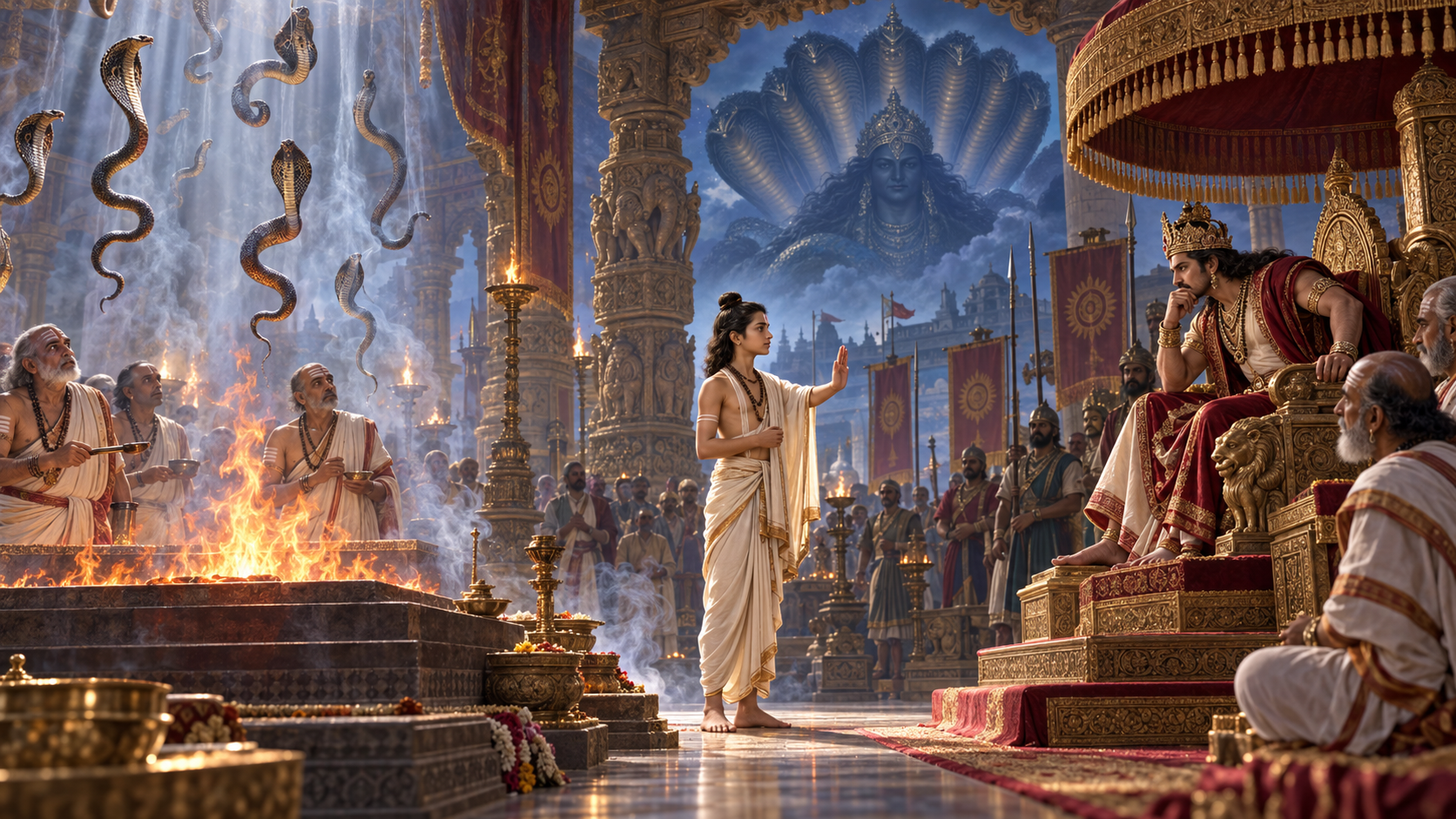
    Sage Śuka—known as Maharshi Shukadeva, Shuka Muni, and Shuka Brahma—is celebrated as the realized narrator of the Bhagavata Purana and the son of Veda Vyasa. Classical sources, including the Mahabharata and Puranas, portray him as the archetypal paramahamsa who unites jñāna, bhakti, and vairāgya. His seven-day discourse (saptāha) to King Parikshit distills creation, avatāra theology,…