Somvati Amavasya, the new-moon tithi that falls on a Monday, is revered across Hindu traditions as a time for silence, remembrance, and renewed discipline. Within this observance, food choices carry ritual as well as physiological significance. Two patterns of vrata are common: the rigorous Nirjala Vrat (complete abstinence from both food and water for a defined window) and the gentler Phalahari Vrat (fruit- and dairy-forward fasting without regular grains and legumes). The following evidence-informed guide consolidates customary vrat rules, regional practice, and Ayurvedic reasoning to clarify what to eat, what to avoid, and how to fast safely while preserving the sanctity of Somvati Amavasya.
Across lineages, the food code on Somvati Amavasya typically shifts from grain-centric meals to a sāttvika, easily digestible selection. Under Phalahari Vrat, one refrains from cereals and pulses and relies on fruits, root vegetables, dairy prepared fresh that day, vrat-approved flours, and rock salt (sendha namak). Under Nirjala Vrat, one observes a time-bound abstinence from both food and water; this path is traditionally recommended only for healthy adults who have prepared adequately and who can rest while fasting.
The shared rationale across dharmic traditions is clear: simplicity supports clarity. A sāttvika vrat diet reduces heaviness (guru) and agitation (rajas), avoids tamasic items, minimizes sensory load, and is aligned with ahimsa. In parallel, Buddhism’s Uposatha, Jain upavāsa and poshad traditions, and Sikh teachings on mindful restraint emphasize inner purification and compassion over mere ritualism. Somvati Amavasya fasting can thus be understood as a unifying, contemplative practice that prioritizes ethical living and inner steadiness across the dharmic spectrum.
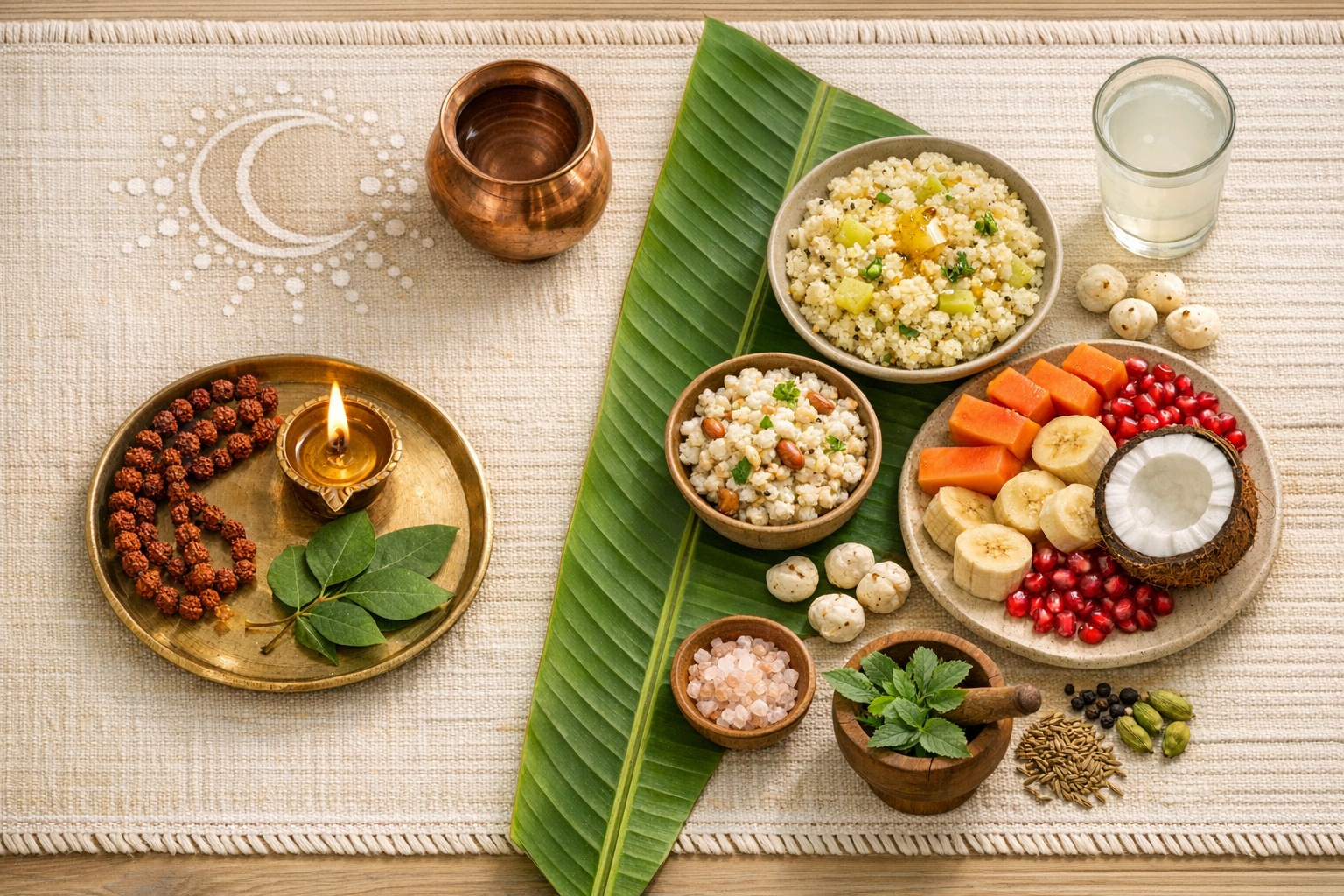
Vrat-friendly staples commonly permitted (check family paramparā): kuttu (buckwheat) flour; singhara (water chestnut) flour; rajgira/amaranth (flour or popped); sama/samak (barnyard millet, often called vrat ke chawal); sabudana (tapioca pearls); and makhana (fox nuts/lotus seeds). These substitutes allow for rotis, pooris, khichdi-style dishes, kheer, or snack preparations without using regular grains.
Fruits and vegetables typically allowed: bananas, apples, guava, papaya, pomegranate, sweet lime, oranges, grapes, coconut (flesh and water), dates (where the local custom permits), and seasonally available berries. Among vegetables, potatoes, sweet potatoes, arbi (taro), pumpkin, bottle gourd (lauki), cucumber, and ash gourd are widely accepted. Regionally, some households also include mild gourds and limited green chilies to enhance palatability without compromising sattva.
Dairy and fats: fresh milk, homemade curd (dahi), fresh paneer (prepared the same day), and ghee are widely used in Phalahari Vrat. Oils are minimized; when used, many families prefer ghee or peanut oil in small amounts. Seasoning norms prioritize sendha namak, cumin (jeera), black pepper (kali mirch), green cardamom, cloves, and lemon juice. Turmeric, coriander powder, and commercial spice blends with additives are often avoided. Asafoetida (hing) is generally omitted on vrat days, especially because many commercial varieties contain wheat carriers.
Beverages for non-Nirjala observance: coconut water, warm milk, lightly sweetened lassi with mishri, and herbal infusions (e.g., cumin or tulsi water) are customary. Many prefer to avoid strong tea and coffee to reduce diuretic stress and preserve steadiness; where taken, they are consumed weak and without processed sweeteners. Electrolyte balance is best maintained with coconut water, diluted lemon water with sendha namak, or thin buttermilk (where tradition allows).
Commonly avoided items on Somvati Amavasya include all regular grains (wheat, rice, oats, maize), legumes and pulses (chana, moong, masoor, rajma), common iodized/table salt (replaced by sendha namak), onion, garlic, mushrooms, vinegar and fermented condiments, packaged masalas, bakery goods, and processed foods with emulsifiers, artificial colors, or stabilizers. Meat, eggs, and alcohol are excluded. Many families also refrain from turmeric and red chili powder during vrat; practices vary, so household tradition takes precedence.
Gray zones by region and family custom: sama/samak (barnyard millet) is permitted in most vrat traditions, yet occasionally omitted. Dates and jaggery are accepted in some communities and restricted in others. Ginger, green chilies, and lemon are generally allowed but not universal. The practical rule is consistent: follow the family’s paramparā or the guidance of a trusted guru, and when in doubt, choose the simpler alternative.
An Ayurvedic lens helps explain why the Phalahari vrat is perceived as light and clarifying. Fruits and water-rich vegetables support jatharāgni without burdening digestion; ghee, makhana, and nuts offer steady energy with fewer digestive residues. Rock salt (sendha namak) is favored for its milder effect on water balance compared to common salt. Those with dominant vāta may do well with cooked, warm vrat foods (e.g., sama khichdi with ghee, aloo-dahi) instead of raw salads; pitta-prone individuals may emphasize cooling items such as coconut water, cucumber, lauki, and sweet fruits; kapha-dominant practitioners can keep portions light, prefer warm preparations, and moderate sabudana-heavy dishes.
From a nutrition and physiology standpoint, the vrat window reduces glycemic variability when planned thoughtfully. Phalahari choices with fiber (e.g., guava, pomegranate arils), moderate protein (paneer, nuts), and quality fats (ghee, coconut) can maintain satiety without provoking lethargy. Sabudana is traditional and acceptable but largely starch; pairing it with peanuts, cumin, and ghee makes it more balanced. For those choosing Nirjala, pre-fast hydration and electrolyte loading the evening before, combined with restful activity, reduce undue strain.
Safety first: Nirjala Vrat is not advised for children, adolescents in growth spurts, older adults with frailty, those who are pregnant or lactating, individuals with diabetes on medication or insulin, chronic kidney disease, peptic disorders, or those performing strenuous physical labor. Where health conditions exist, a supervised Phalahari Vrat or a simple sāttvika upavāsa may be the wiser spiritual choice. Gentle breathwork, mantra-japa, and reduced screen time align better with the contemplative aim of Somvati Amavasya than exertional activity.
Preparation (previous evening): choose an early, simple sāttvika dinner; reduce salt and stimulants; hydrate well with coconut water or thin buttermilk and plain water; assemble vrat staples to avoid last-minute improvisation; and retire early to honor the inner quietude that the tithi invites.
Nirjala specifics: this vrata traditionally spans sunrise to sunset. To reduce orthostatic symptoms, keep the body cool, minimize speaking and movement, and observe mental mauna where possible. When breaking the fast, begin with a few sips of cool water or charanamrita/Panchamrita, then take coconut water or thin lemon water with a pinch of sendha namak. After 15–20 minutes, introduce soft foods such as banana or a small bowl of lauki soup before any heavier vrat dish. Avoid sudden large meals to prevent digestive distress.
Phalahari Vrat sample day (customize to tradition): begin with coconut water and a short period of quiet japa. Late morning, take a fruit plate with banana, papaya, and pomegranate; a handful of soaked almonds or makhana lightly pan-toasted in ghee adds satiety. Midday, choose one cooked vrat item such as sama khichdi with cumin, ghee, and sendha namak, accompanied by thin lassi. In the evening, sip warm milk with a pinch of cardamom; if needed, a small bowl of sabudana khichdi or roasted peanuts can complete the window.
Simple vrat-friendly preparations: sabudana khichdi (pre-soaked sabudana with cumin, green chilies, peanuts, ghee, and sendha namak); sama khichdi (barnyard millet simmered with diced pumpkin or lauki, tempered with cumin and ghee); kuttu or rajgira rotis brushed with ghee and served with freshly made aloo-dahi; singhara flour kadhi (curd whisked with water chestnut flour, tempered mildly); makhana kheer (fox nuts simmered in milk, finished with a little mishri). All seasonings should comply with local vrat norms.
Pantry and shopping checklist for Somvati Amavasya: sendha namak; kuttu, singhara, and rajgira flours; sama/samak; sabudana; makhana; fresh milk and curd; a modest selection of fruits; potatoes and lauki; peanuts and almonds; ghee; cumin and black pepper. When purchasing packaged items, check labels for added starches, regular salt, or anti-caking agents; avoid commercial hing with wheat carriers. Buckwheat is unrelated to wheat botanically, but cross-contact is possible in processing facilitieschoose clearly labeled vrat-grade products when available.
Food ethics and unity across dharmic paths: the core of Somvati Amavasya fasting is inner refinement and compassionate living. As Buddhism, Jainism, Hinduism, and Sikhism all emphasize ethical conduct, non-violence, truthfulness, and humility, vrat meals are an opportunity to choose cruelty-free, seasonal, and minimally processed foods, to share with those in need, and to cultivate empathy beyond the ritual boundary. In this way, dietary discipline serves the greater purpose of unity in diversity across dharmic traditions.
Breaking the fast gently: begin with water or Panchamrita, then coconut water or thin buttermilk, followed by a small portion of fruit. If taking a cooked meal thereafter, a light sama khichdi or lauki soup is preferable to deep-fried options. Heavier disheskuttu pooris, fried snacks, dense sweetscan wait until the digestive fire has settled. The evening after a Nirjala or Phalahari Vrat is best kept sāttvika, calm, and grateful.
Frequently asked points: (a) Saltsendha namak only; avoid iodized salt. (b) Proteinpaneer, peanuts, nuts, and amaranth provide moderate protein within vrat norms. (c) Sabudanaacceptable and traditional, but pair with peanuts/ghee for balance. (d) Tea/coffeeideally minimal; if taken, prepare weak and avoid processed creamers. (e) Travel dayscarry vrat staples such as roasted makhana, nuts, and a small jar of sendha namak. (f) Medical conditionschoose a non-Nirjala, sāttvika upavāsa or consult a qualified practitioner before fasting.
Somvati Amavasya thus becomes more than a list of permitted foods; it is a thoughtfully framed sādhana that aligns the body, breath, and mind with restraint and remembrance. Whether observed through Nirjala Vrat or Phalahari Vrat, the central guidance is steady: prefer pure, simple, and fresh meals; honor one’s family tradition; prioritize health and compassion; and allow the silence of Amavasya to illuminate daily conduct long after the tithi has passed.
Inspired by this post on Hindu Pad.