

Sant Tukaram Maharaj Palkhi 2026 schedule aligns the living heritage of the Varkari movement with the sacred calendar of Ashadhi Ekadashi. The Sant Tukaram Palkhi commences from Dehu on 7 July 2026 and is scheduled to reach Pandharpur on 24 July 2026, coinciding with Ashadi/Ashadhi Ekadashi (Devshayani Ekadashi). This timeline anchors the collective journey of bhakti toward Shri Vithoba and Rukmini Mata, uniting lakhs of devotees who walk, sing abhangs, and serve in dindis across Maharashtra’s cultural heartland.
The Pandharpur Waari Yatra is not merely a procession; it is a centuries-old spiritual practice that integrates devotion, discipline, and social harmony. Sant Tukaram Maharaj, through the abhang tradition, democratized access to devotion, making the Palkhi a mobile gurukul of kirtan, seva, and shared ethics. The yatra exemplifies core dharmic values—ahimsa, compassion, and community service—that are equally cherished across Hinduism, Buddhism, Jainism, and Sikhism. This inclusive ethos sustains the Waari as a symbol of unity, resilience, and sacred fellowship.
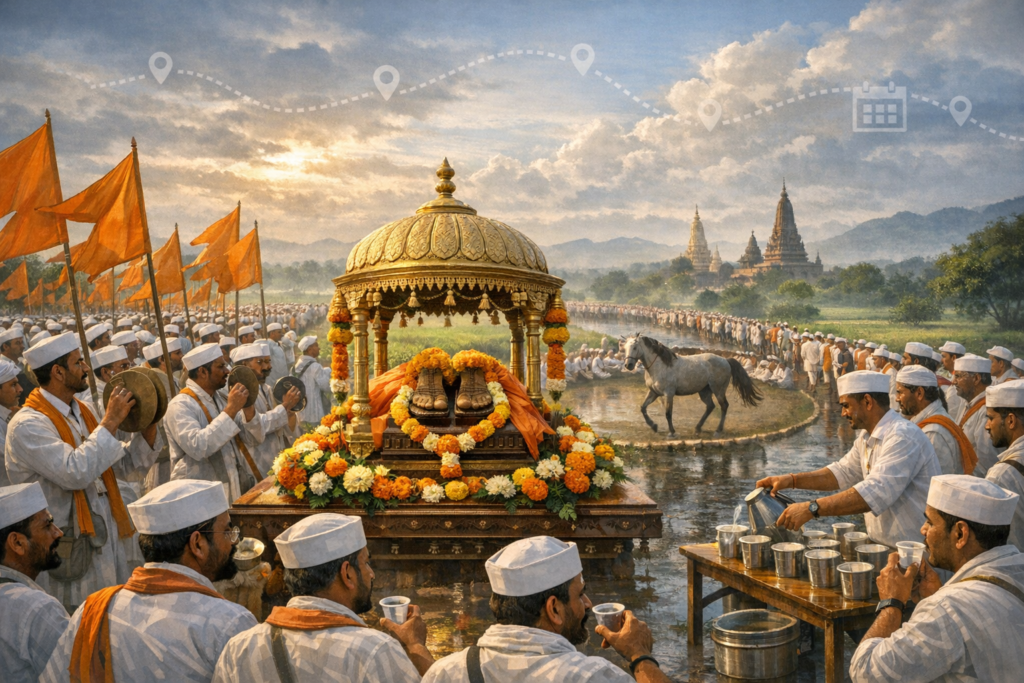
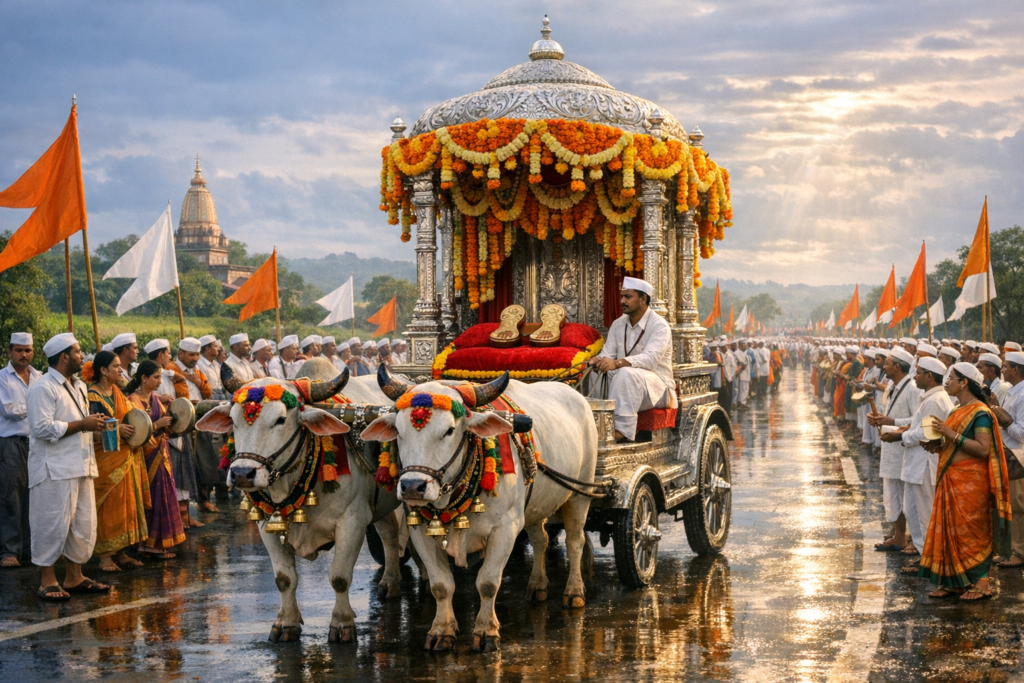
For 2026, the essential dates are clear and widely observed in the Varkari calendar: flag-off from Dehu on 7 July 2026 and culmination at Pandharpur on 24 July 2026 for Ashadhi Ekadashi. The Palkhi carries the paduka of Sant Tukaram Maharaj, with dindis maintaining a disciplined cadence of walking at dawn, halting midday for rest and prasad, and gathering at dusk for kirtan and pravachan. The approach is contemplative yet well-organized, balancing spiritual intensity with logistical care through coordinated support by local administrations, health teams, and volunteer groups along the route.
The traditional corridor from Dehu toward Pandharpur typically passes through the Pimpri–Chinchwad and Pune regions before moving across the ghats into Satara district and onward into Solapur district, with the penultimate camp at Wakhari. The first overnight halt often occurs within the Pimpri–Chinchwad municipal area, while the second is commonly within Pune city—historically associated with the Nivdunga Vithoba Mandir precinct in Nana Peth. Subsequent stages usually include Saswad and Jejuri before traversing the plateau toward Lonand and onward to the Solapur region. Exact halt locations, staging grounds, and temple venues are finalized each year by the Shree Sant Tukaram Maharaj Sansthan (Dehu), local district administrations, and police authorities; official notifications are generally issued closer to departure.
Daily progress on the yatra customarily ranges around 15–20 kilometers, adjusted for terrain, monsoon conditions, and safety advisories. Early starts help pilgrims avoid midday heat and allow time for rest, medical attention where required, and evening satsang. Dindis observe strict discipline—maintaining formation, singing abhangs, practicing namsmaran, and upholding the Varkari code that emphasizes humility, sobriety, frugality, and mutual aid. This slow, steady rhythm transforms the route into a moving temple that welcomes all who approach with reverence.
Participation in the Sant Tukaram Maharaj Palkhi benefits from thoughtful preparation. The Varkari maryada prescribes sattvic food, restraint in speech and conduct, and unwavering respect for elders, women, and children. Many yatris testify that the Waari offers a powerful experience of inner quietude amid devotional singing—a living commentary on abhangs where equality before Vithoba is not an abstraction but a felt reality. In this shared spirit, the Waari’s dharmic kinship resonates naturally with the service (seva) of Sikh traditions, the ahimsa and discipline central to Jain practice, and the mindful compassion valorized in Buddhist teachings.
Logistics require attention to access, accommodation, and health. Access to Dehu is typically via Pune by road or rail, with local transport options to the pilgrimage start point. Accommodation en route is usually arranged through community halls, schools, temple premises, and temporary camps; many dindis manage their own tents and kitchens. Independent pilgrims are encouraged to coordinate with recognized dindis or local organizers for safety, water points, and sanitation access. Essential items include sturdy footwear, a light rain poncho, a compact medical kit, reusable water bottles, and personal identification.
Safety and crowd management are centrally coordinated by district police, civic bodies, and health departments. Pilgrims are advised to follow route marshals, maintain lane discipline, and avoid overtaking or crowding narrow passages. First-aid posts, ambulances, and mobile medical units are commonly deployed along the corridor, with dedicated zones for rest and hydration. In dense segments—especially on entry to major towns and at river crossings—patience and adherence to instructions significantly enhance overall safety.
Monsoon preparedness is vital during the July window. The Palkhi proceeds irrespective of rainfall, and pathways can become slippery. Waterproof covers for bags, quick-dry clothing, anti-chafing measures, and protection for electronic devices are practical safeguards. Given variable temperatures and high humidity, hydration, electrolyte balance, and sun-rain protection (caps, light shawls) are recommended. For families, planning shorter walking stretches and pre-selecting rendezvous points reduces stress.
Environmental dharma is foundational to the Waari. The Palkhi’s ethic increasingly emphasizes zero or low-waste practices: carrying personal utensils, avoiding single-use plastics, minimizing litter, and cooperating with waste segregation teams. Water-refill points often support reduced plastic usage, while collective cooking and prasad distribution help optimize resources. Such measures reinforce the Varkari view that devotion to Vithoba is inseparable from care for the land and rivers, notably the sacred Chandrabhaga stretch near Pandharpur.
Distinctive Palkhi rituals mark the journey. The “palkhi sohāla” with paduka pujan, the formation of dindis with tal and mridanga, and the spirited “ringan” at select halts reflect the yatra’s living symbolism of surrender and grace. Many pilgrims recount that the discipline of walking in unison—interspersed with abhangs and silent jap—deepens concentration (ekagrata) and fosters a direct, experiential understanding of the Varkari insight that the divine dwells equally in all.
Arrival protocols in Pandharpur typically include a final camp at Wakhari before entering the town for darshan. Pilgrims may perform snan in the Chandrabhaga (Bhima) river subject to safety advisories. Given peak footfall on Ashadhi Ekadashi, devotees should expect extended queues and follow temple board instructions for movement and darshan timing. Modest attire, respectful behavior, and careful stewardship of shared spaces reflect the Waari ethic and safeguard the sanctity of Shri Vitthal Rukmini Mandir.
While annual patterns are stable, exact halt venues and intra-day timings may vary with weather, public works, and traffic diversions. In most years, the Palkhi enters Satara district around the mid-journey phase and reaches Solapur district in the days leading to Ekadashi, with the penultimate day usually spent at Wakhari. Official advisories issued by district administrations and police units provide authoritative details on staging grounds, restricted zones, medical posts, and traffic arrangements.
For first-time yatris, a simple mental checklist can help: register with or at least align to a known dindi or local organizing group; carry essentials in light, waterproof packs; plan hydration and nutrition with sattvic, easily digestible foods; respect lanes, signage, and rest schedules; and cultivate the Varkari spirit—equal regard for all, readiness to serve, and constant remembrance of the divine name. Those walking with elders or children can consider shorter stages, daytime rest breaks, and early starts to minimize heat and congestion.
In 2026, the Sant Tukaram Maharaj Palkhi once again weaves Dehu and Pandharpur into a single devotional fabric—beginning 7 July 2026 and culminating in darshan on 24 July 2026, Ashadi/Ashadhi Ekadashi. The Waari remains a living university of dharma, where humility, perseverance, and joy in service are learned by walking together. In honoring Sant Tukaram’s legacy, the yatra invites everyone to participate in a spirit of unity that resonates across Hinduism, Buddhism, Jainism, and Sikhism—affirming that devotion, ethical conduct, and compassion are shared pathways to the highest good.
Note on verification: Exact halt locations, intra-day timings, and facility maps are announced by the Shree Sant Tukaram Maharaj Sansthan (Dehu), district administrations of Pune–Satara–Solapur, and law-enforcement agencies shortly before departure. Pilgrims are advised to confirm final details through official advisories released during June–July 2026.
Inspired by this post on Hindu Pad.









Leave a Reply
You must be logged in to post a comment.