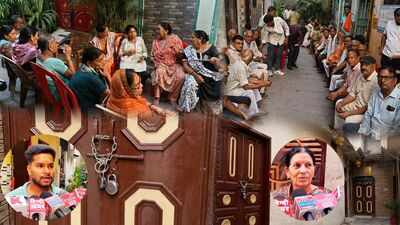
Singer Sunny Sante issued a public apology after a performance at a local haldi ceremony in which a devotional song associated with Shri Ekvira Devi was mocked. The apology followed strong, organized protests from members of the Hindu community who viewed the act as disrespectful to a sacred bhajan and to the sentiments of devotees. The incident underscores the centrality of cultural sensitivity in public performance and the enduring expectation that religious music be treated with reverence in community spaces.
Across Hindu traditions, songs dedicated to the Divine Mother function as living prayers, communal memory, and shared identity. For many families, a familiar bhajan at a life-cycle ritual evokes lineage, blessing, and belonging; to deride such a song is often experienced not merely as bad taste, but as a wound to collective dignity. This helps to explain the intensity of the protests and the insistence that accountability be immediate and unambiguous.
Shri Ekvira Devi is venerated as a manifestation of the Divine Mother by numerous communities, especially in western India. Devotional songs in Her praise serve as vehicles of gratitude, protection, and ethical orientation, and they mark thresholds in domestic and public ritual life. In such settings, reverence is not ornamental; it is constitutive of the rite itself.
The haldi ceremony, a pre-wedding rite in which turmeric paste is applied to the bride or groom, carries associations of purification, protection, and auspiciousness. In many regions, this rite unfolds amid bhajan, aarti, and kirtan that create a devotional soundscape guiding mood and meaning for participants. Within this frame, humor that targets a sacred song can cross a line between festive levity and perceived sacrilege.
Public responses reflected that boundary. Community members protested the derisive portrayal and sought recognition of harm, whereupon Sunny Sante offered an apology. As an ethical baseline, a sincere apology names the action, acknowledges impact, and indicates corrective steps. Within a dharmic lens, such gestures align with kshama (forbearance), satya (truthfulness in admitting error), and prayaschitta (atonement) as pathways to restore social harmony.
In modern India, the balance between freedom of expression and protection of religious sentiment is shaped by constitutional guarantees and reasonable restrictions. While creative expression is vital, legal frameworks also prohibit deliberate and malicious acts intended to outrage religious feelings, particularly when they threaten public order. Artists and organizers therefore navigate a dual responsibility: to innovate and entertain, and to exercise informed restraint where sacred symbols, deities, and rituals are concerned.
Insights from ethnomusicology and performance studies clarify why devotional repertoires invite special care. Bhajan and related forms are not merely songs to be consumed; they are sound-rituals that organize emotion, space, and time for a congregation, drawing participants into collective devotion. Altering the lyrical content to produce mockery reconfigures the affective contract of the gathering and predictably provokes grievance from those for whom the music mediates the sacred.
In the digital age, episodes like this one are rapidly amplified through short video clips that detach acts from context and timeline. Outrage travels more quickly than remediation, meaning that apologies and clarifications often arrive to an audience already primed by indignation. Responsible sharing practices, including verifying context, resisting sensational edits, and foregrounding corrective actions, can help communities uphold dignity while avoiding unnecessary escalation.
The core principle at stake resonates across the Dharmic traditions of Hinduism, Buddhism, Jainism, and Sikhism, where sacred chant, gatha, stotra, and shabad kirtan are central to spiritual life. Mutual recognition that each tradition’s music is a living bridge to the sacred fosters solidarity; disrespect toward one community’s devotional art can chill trust for all, whereas a forthright apology becomes a practical seed for inter-community harmony. Building this shared ethic strengthens unity without diluting the distinctiveness of any path.
Restorative practice after such an incident is possible and constructive. Direct engagement with concerned devotees, facilitated dialogues with local cultural bodies or mandirs, and support for arts education initiatives communicate learning rather than mere damage control. These measures neither excuse the lapse nor replace accountability; they demonstrate a commitment to better norms.
Preventive guardrails are within reach of any event team. Before performances at rituals, organizers can conduct a brief cultural-sensitivity orientation, review setlists to eliminate satirical treatment of sacred content, and designate a community liaison with real-time authority to pause programming if concerns arise. If a lapse occurs, a same-day apology that is specific, unqualified, and coupled with concrete next steps is often the most effective route to repair.
Community education complements these steps. Workshops that explore the meaning of ritual arts, sessions that map constitutional civility and the boundaries of protected speech, and collaborative concerts that feature bhajan alongside shabad kirtan and other devotional forms can translate abstract ideals into lived, joyful practice for youth and elders alike.
Viewed through this wider lens, the apology issued by Sunny Sante is a necessary beginning rather than an endpoint. The more telling measure will be whether artists, organizers, and audiences transform the episode into a durable commitment to cultural sensitivity, religious tolerance in Hinduism, and dharmic unity, ensuring that celebration remains joyous without compromising reverence for the sacred.
Inspired by this post on Hindu Jagruti Samiti.