Among the most concentrated forms of sacred sound in Hindu spirituality is the bīja mantraliterally the “seed” syllableunderstood to compress an entire deity, a cosmic principle, or a dimension of reality into phonetic essence. Within this tradition, hrīṁ (commonly transliterated as Hrim or Hreem) is revered as the Māyā bīja, the seed of Śakti’s creative mystery, and is treated not as a mere sound but as the living presence of the Mahāśakti who veils, measures, manifests, and ultimately reveals the Absolute. Its reputation spans Shākta practice, Śrī Vidyā, and broader mantraśāstra, and it continues to inspire cross-traditional reflection within the wider Dharmic family of Hinduism, Buddhism, Jainism, and Sikhism on the unifying power of sacred sound.
In classical explanations, the metaphor of the seed illuminates how bīja mantras function: just as a mighty tree is enfolded in a single seed, the potency of a deity or tattva is said to be compressed into a syllable. Recitation (japa), ritual installation (nyāsa), and embodied contemplation (bhāvanā) are methods by which practitioners “water” the seed, allowing the latent potency to unfold as insight, devotion, and transformative power. In this context, hrīṁ stands out for its synthesis of light and heat, compassion and vigor, concealment and disclosurequalities attributed to the Goddess as Mahāmāyā who both binds and liberates.
Tradition recognizes hrīṁ as the Māyā bīja because it embodies the two-fold action of māyā: the power to limit and individualize consciousness (thus enabling finite experience) and the power to unveil the boundless (thus enabling liberation). Far from denoting “mere illusion,” māyā in Shākta and Vedāntic sources is the cosmogenic artistry by which the formless appears as form. The same current that projects names and forms also withdraws them back into the source; hrīṁ is chanted to align the practitioner with this rhythmic pulsation of concealment and revelation.
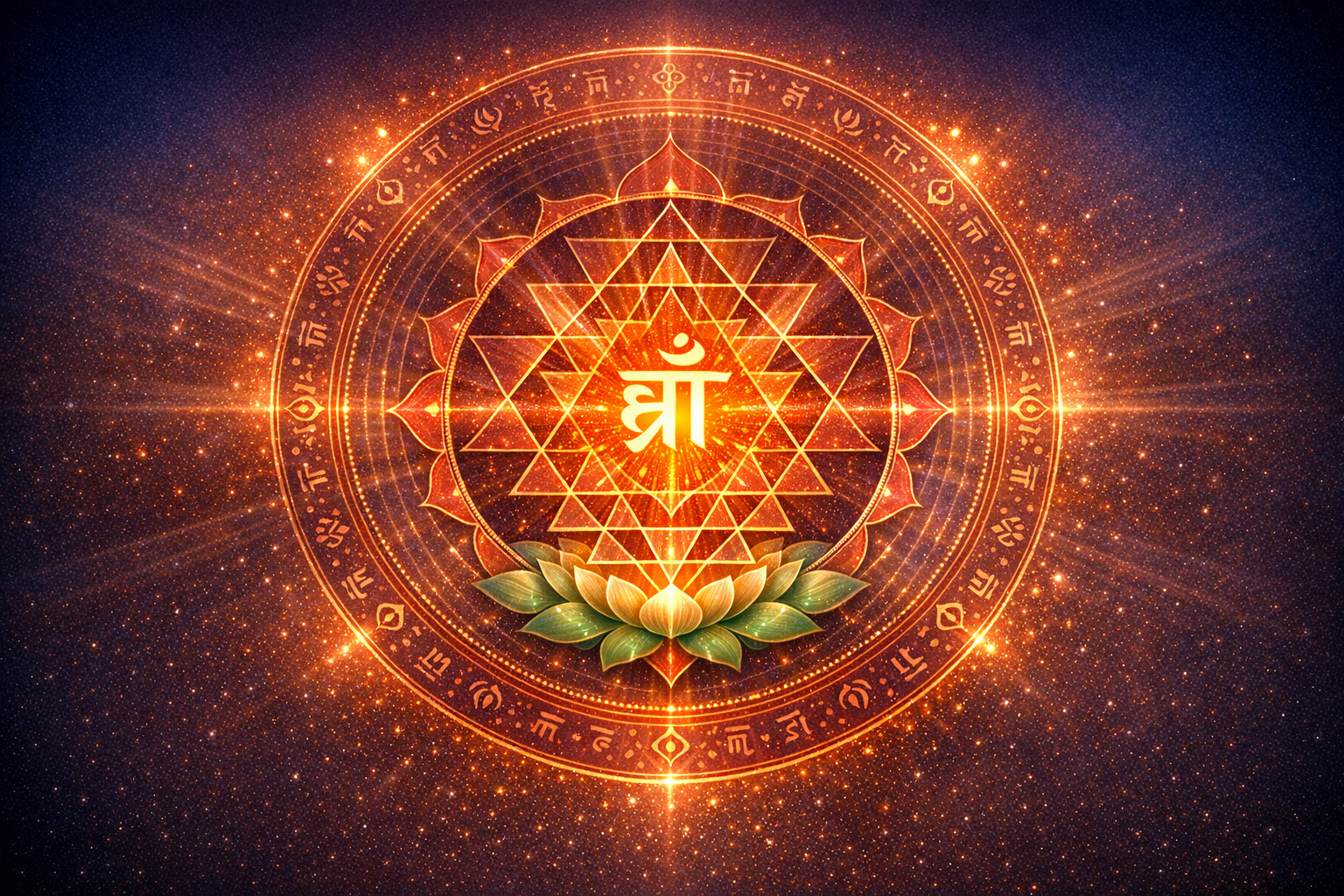
Phonetically and symbolically, hrīṁ (Devanāgarī: ह्रीं) is analyzed into four components: ha, ra, long ī, and the bindu (anusvāra). Mantraśāstra literature commonly associates ha with the expansive, life-breathing principle (Śiva or prāṇa), ra with fire (agni) and radiance (tejas), long ī with the luminous stream of Śakti’s compassionate intelligence, and bindu with the subtlest point of returnnada-binduthe seed of reabsorption. The effect is a psychoacoustic arc: propulsion (ha), ignition (ra), expansion (ī), and resolution (ṁ), mirroring the cycle of manifestation and dissolution.
Transliteration varieshrim, hreem, hrīṁand each convention aims to preserve the long ī and the nasalized closing. Traditional pronunciation places a gentle flap on r (as in Sanskrit), sustains ī for two mātrā-beats, and allows the bindu to resonate softly in the nasal cavity, tapering to silence. A related, widely venerated Buddhist seed is hrīḥ (with visarga), classically linked to Amitābha and Avalokiteśvara, whereas Shākta practice often prefers hrīṁ (with anusvāra). The phonetic nuance is not merely orthographic; practitioners understand the two closingsvisarga (ḥ) and bindu (ṁ)to inflect the energetic quality of the sound-current.
The standing of hrīṁ in Shākta lineage is reinforced across multiple sources in the mantra and tantra corpus. It is central to the famed Navārṇa mantra“oṁ aiṁ hrīṁ klīṁ cāmuṇḍāyai vicce”where it functions as the luminous middle, harmonizing the vāk-power of aiṁ and the attractive, cohesive potency of klīṁ. Śrī Vidyā traditions extol hrīṁ as the refrain of the Pañcadaśī mantra, concluding each of the three kūṭas (ka-e-ī-la-hrīṁ; ha-sa-ka-ha-la-hrīṁ; sa-ka-la-hrīṁ), underlining its role as both seal and summation of Devī’s triune presence as word (Vāgbhava), will (Kāmarāja), and power (Śakti). Commentarial literature and ritual manuals, including works ascribed in tradition to Bhāskararāya and the Yoginīhṛdaya stream, treat hrīṁ as a signature of the Goddess’s sovereignty.
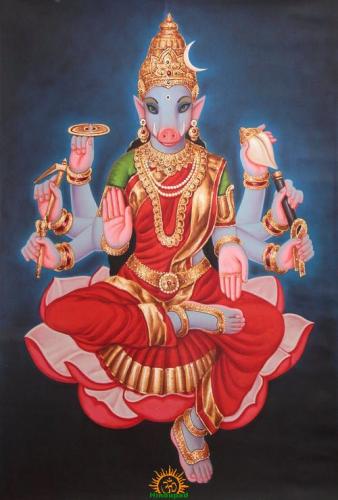
Iconographically and theologically, hrīṁ is linked with forms such as Lalitā Tripurasundarī, Bhuvaneśvarī, and Durgā. The epithet “Hreemkāra” (hrīm-kāra) appears in hymnody to denote the Devī who is both the utterance and the uttered, the breath and the brilliance animating the cosmos. In meditative visualization, hrīṁ is often envisioned as a radiant seed-sun at the heart of the Goddess, bathing the subtle body in a rose-golden or ruby aurathe colorations ascribed to Śakti’s tejas and compassion.
A subtle-body mapping commonly associates hrīṁ with the anāhata (heart) cakra, guided by several cues: the term hṛd (heart) is phonetically echoed; the syllable’s felt resonance gathers naturally in the chest; and its devotional and integrative effectslove, clarity, and courageare classically anāhata qualities. Some lineages also work with hrīṁ at ājñā (brow) for its discerning, unveiling function. Across these mappings, an emphasis remains on harmonizing the nāḍīs and stabilizing attention in the sushumnā prior to deeper mantra absorption.
From a philosophy-of-sound perspective (śabda–tattva), hrīṁ condenses the triptych of nada–bindu–kalā: the subtle vibration (nada), its point of concentration (bindu), and the ray of creative articulation (kalā). Where “oṁ” articulates ground-being across a–u–m and silence, hrīṁ articulates Śakti’s dynamic revelationigniting will, illuminating intelligence, and saturating experience with compassionate presence. This is why hrīṁ is invoked both for worldly clarity (removing confusion and lethargy) and for spiritual insight (dissolving limiting identifications).
Ritually, hrīṁ appears in nyāsa sequencesthe sacramental installation of mantra energies in the bodywhere practitioners may employ forms such as “hrīṁ hṛdayāya namaḥ” (to the heart), “hrīṁ śirase svāhā” (to the head), “hrīṁ śikhāyai vauṣaṭ” (to the crown-lock), “hrīṁ kavacāya hum” (as protective armor), and “hrīṁ netratrayāya vauṣaṭ” (to the three eyes), culminating with “hrīṁ astrāya phaṭ” (as a protective field). Specifics vary by lineage, and authentic transmission is emphasized to preserve safety, efficacy, and adhikāra (qualified readiness).
In japa practice, hrīṁ may be undertaken as a stand-alone bīja or integrated within composite mantras like the Navārṇa. Foundational guidelines include: setting a clear and ethically sound saṅkalpa (intention), adopting a steady posture with relaxed breath, synchronizing the elongated ī with the heart’s gentle expansion, and allowing the bindu to resolve into quiet stillness. Common counts are 108 or 1008 recitations, though steadiness and quality of attention outweigh mere numerical targets. Traditional advice encourages daily continuity (niyata-abhyāsa), preferably under the guidance of a competent guru.
The psychoacoustics of hrīṁ are frequently described in terms of breath, resonance, and affect. The initial aspiration of ha entrains diaphragmatic breathing and clears stagnation; the trilling ra fosters alertness and subtle warmth; the sustained ī stabilizes attention; and the bindu gently entrains parasympathetic calm. Practitioners often report a coherent heart–mind field (anāhata–manas alignment), supporting compassion without sentimentality and clarity without harshnessqualities consistent with the bhakti tradition and Yogic balance (sattva).
Ethically and philosophically, hrīṁ also resonates with the Sanskrit hrīa moral and aesthetic modesty, an inner conscience that recoils from harm. This subtle attunement guards the practice from power-seeking or instrumentalism, aligning mantra with yama–niyama (non-harm, truthfulness, moderation, purity, and contentment). In the Shākta view, Devī’s grace through hrīṁ is inseparable from right conduct; sound becomes salvific when character is refined.
Within Śrī Vidyā, hrīṁ functions as an energetic integrator across the three kūṭas of the Pañcadaśī mantra, sealing each segment with Devī’s definitive stamp. In advanced practice, this bīja is contemplated as the radiant heart of Tripurasundarī, seated upon the bindu of the Śrīcakra, where it condenses the ten kalās, the pañca–kośa (five sheaths), and the pañca–bhūta (five elements) into one effulgent pointan imaginal-ritual cosmology harmonized through sound.
Textual and ritual streams frequently cited in connection with hrīṁ include the broader Kularnava tradition, Mantramahodadhi, Tantrasāra, and commentarial lines associated with the Yoginīhṛdaya, among others. While the specifics of interpretation varywith some emphasizing metaphysical analysis and others performance and liturgical nuancethe consensus treats hrīṁ as a catalytic sound for removing inner obfuscation (āvaraṇa) and kindling insight (prabodha).
Across Dharmic traditions, the centrality of sacred sound offers a shared bridge. Vajrayāna Buddhism venerates hrīḥ as a seed of enlightened presence (for example, Amitābha or Avalokiteśvara), underscoring compassion and radiant awareness; this is conceptually allied to the Shākta intuition of a compassionate, unveiling light. Medieval Jain ritual manuals in certain tantric sub-traditions have at times adopted bīja syllables like hrīṁ for specific protective or devotional contexts, even as the canonical Jain focus remains the Namokār Mantra. Sikh teachings on Śabad (divine sound) and “Ik Oṅkār” affirm a unitive sonic theology in which sound is a vehicle of realization. These diverse articulations converge on the insight that sound is not merely representational but participatoryan instrument of awakening and unity rather than division.
For practitioners integrating hrīṁ into yoga and meditation, several precautions preserve balance. First, stabilize ethical foundations (non-harm, truthfulness, moderation) to avoid amplifying unprocessed drives. Second, regulate breath gently; forced prāṇāyāma or excessive volume can agitate rather than clarify. Third, increase intensity gradually, allowing the nervous system to entrain to the mantra’s rhythm. Fourth, seek qualified guidance for advanced rites (e.g., elaborate nyāsa or homa), as lineages transmit context that written instructions cannot fully capture.
Common errors include reducing hrīṁ to a technique for narrow aims, fixating on pronunciation at the expense of presence, and neglecting the contemplative pauses after the bindu, where insight often dawns. Traditional counsel emphasizes that mantra is a relational practice; the Devī is invoked as a living presence, and the practitioner’s humility (hrī), devotion (bhakti), and discernment (viveka) become the true amplifiers of its power.
The effects ascribed to sustained hrīṁ practice include increased clarity of understanding (supporting jñāna), deepened devotional feeling (bhakti) that is steady rather than sentimental, enlivened will and courage (kriyā–śakti) free from aggression, and a cohesive heart–mind field that stabilizes meditation. In practical life, this may appear as ethical spontaneity, resilient calm, and a reconciling attitude that seeks truth without denigrating othersqualities aligned with the shared Dharmic aspiration to foster unity amid diversity.
In broader cultural perspective, hrīṁ also has pedagogical value. It offers a concrete locus for integrating streams of Hindu thoughtUpaniṣadic insight into consciousness, Tantric ritual intelligence, and Bhakti affectwhile simultaneously opening dialog with Buddhist, Jain, and Sikh reflections on sacred sound. Approached in this spirit, the Māyā bīja becomes a shared doorway to contemplative literacy, ethical refinement, and inter-traditional friendship.
A simple, lineage-consistent framework for personal practice may look like this: sit steadily, set a saṅkalpa aligned with non-harm and service, soften the gaze to the heart space, and intone “hrīṁ” with gentle attention to the arc of breath. Allow the long ī to illuminate the chest and the bindu to resolve into silence; rest briefly in that silence without reaching for the next repetition. After a round (for example, 108 recitations), close with gratitude, offering the practice for the welfare of all beingsan ethos cherished across Dharmic paths.
Ultimately, the reason hrīṁ endures is not only its venerable scriptural pedigree but its experiential precision. It meets the practitioner at the heart, kindling intelligent warmth; it cuts through drowsiness without courting agitation; it anchors devotion without collapsing into sentimentality. As a signature of Devī’s māyā, it invites participation in the artistry of realitymeasured, meaningful, and mercifuland guides attention from multiplicity back to the ever-present source.
Inspired by this post on Hindu Blog.