
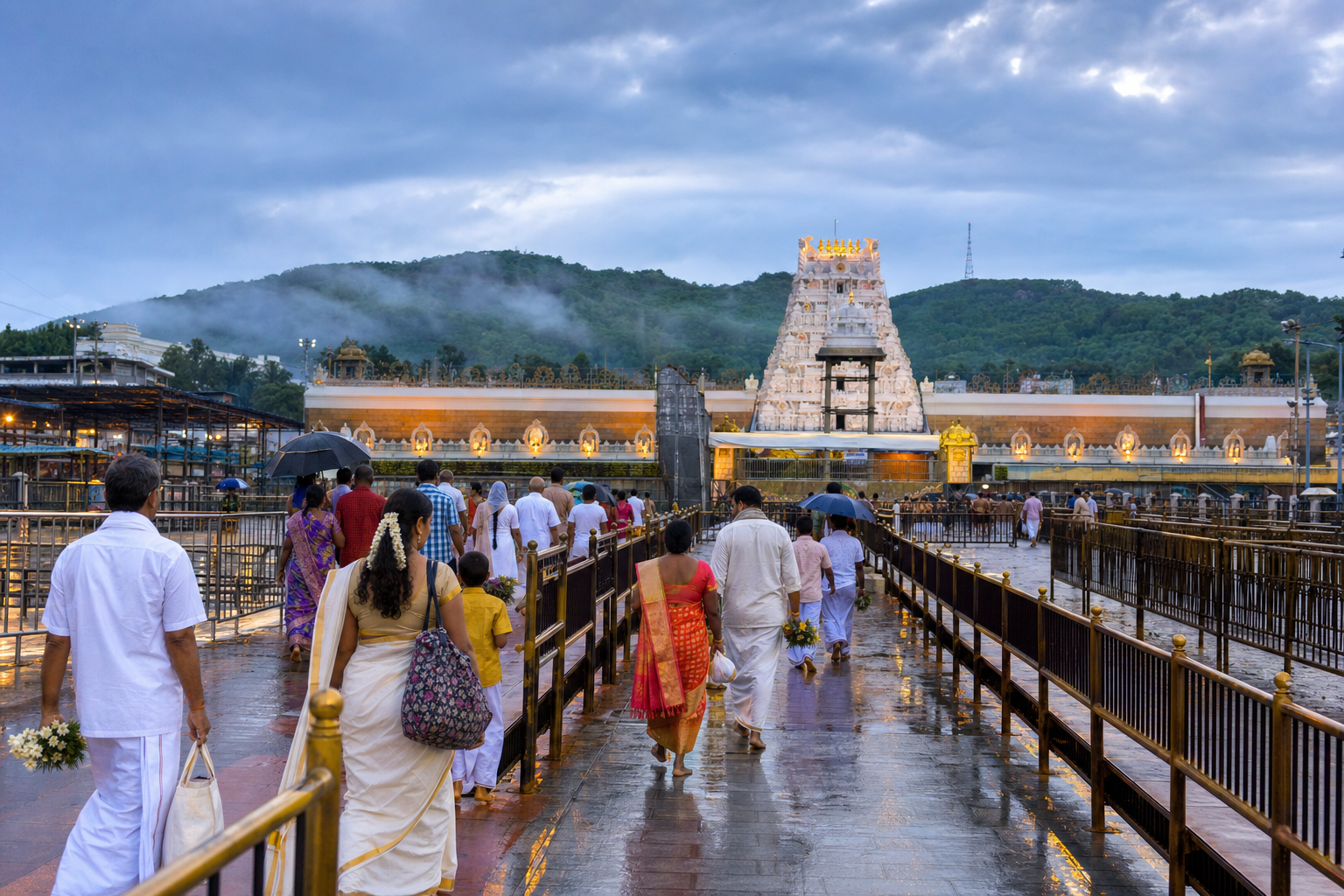
You may need to choose your June 2026 travel dates now, but Tirumala’s festival calendar cannot be read safely as a fixed list of Gregorian dates. The sensible approach is to decide which observance matters most to you, keep the surrounding days flexible, and commit only when the temple-specific TTD notice confirms the ritual date and access arrangements.
If Jyeshtha Abhishekam is your priority, build the pilgrimage around it. If your aim is a broader Tirumala-Tirupati yatra, allow two or three days and choose one nearby temple festival rather than trying to cover every procession. That single decision will shape your bookings, darshan plan, and time on the hill.
Key takeaways for a June 2026 pilgrimage
- Treat any June date as provisional until TTD issues a temple-specific confirmation based on the applicable tithi, nakshatra, and ritual window.
- Jyeshtha Abhishekam is Tirumala’s principal June observance to watch. It is normally a three-day festival for Sri Malayappa Swamy with Sridevi and Bhudevi.
- A festival date and access to its principal ritual are separate questions. Confirm your darshan or seva entitlement instead of assuming an ordinary ticket includes the ceremony.
- Appalayagunta, Srinivasa Mangapuram, Tirupati, and Tirumala have distinct calendars. Check each temple by name.
- Allow two or three days if you want both Tirumala darshan and an off-hill festival. Keep one substantial buffer rather than filling every available hour.
- Plan for pre-monsoon heat, possible early showers, festival-day changes, restricted-item deposits, and longer queues during the school-vacation period.
Why a Tirumala festival can move by a day

TTD maintains a layered ritual calendar comprising daily sevas, weekly and fortnightly observances, monthly vratas, annual festivals, and the birth-star celebrations of Alvars and Acharyas. With close to 450 utsavams observed annually, a seemingly ordinary date may already carry liturgical significance.
June generally falls across Jyeshtha and Ashadha, corresponding broadly to the transition from Tamil Vaikasi to Aani. These lunar and solar month names help you understand the season, but they do not by themselves settle a festival’s Gregorian date.
The operative tithi or nakshatra may be assessed at Tirumala’s local sunrise or within the ritual window prescribed for that observance. The Vaikhanasa Agama governs the worship of Sri Venkateswara at Tirumala, while other TTD temples follow their respective traditions. Because a tithi can begin on one civil date and end on another, a general almanac may place an observance one day away from the date ultimately followed at the temple.
Use this planning order:
- Choose the observance or temple that matters most to you.
- Wait for the final 2026 TTD notice naming that temple, not merely a generic Panchang entry.
- Confirm darshan or seva access separately; the presence of a festival does not guarantee access to every ritual.
- Recheck the notice before departure for reporting times, procession arrangements, or changes to regular sevas.
If an online calendar supplies an exact date without a corresponding TTD confirmation, use it to identify a likely travel window, not to buy a tightly timed itinerary. A flexible day is more valuable here than an unsupported appearance of precision.
Make Jyeshtha Abhishekam your anchor if darshan is the priority
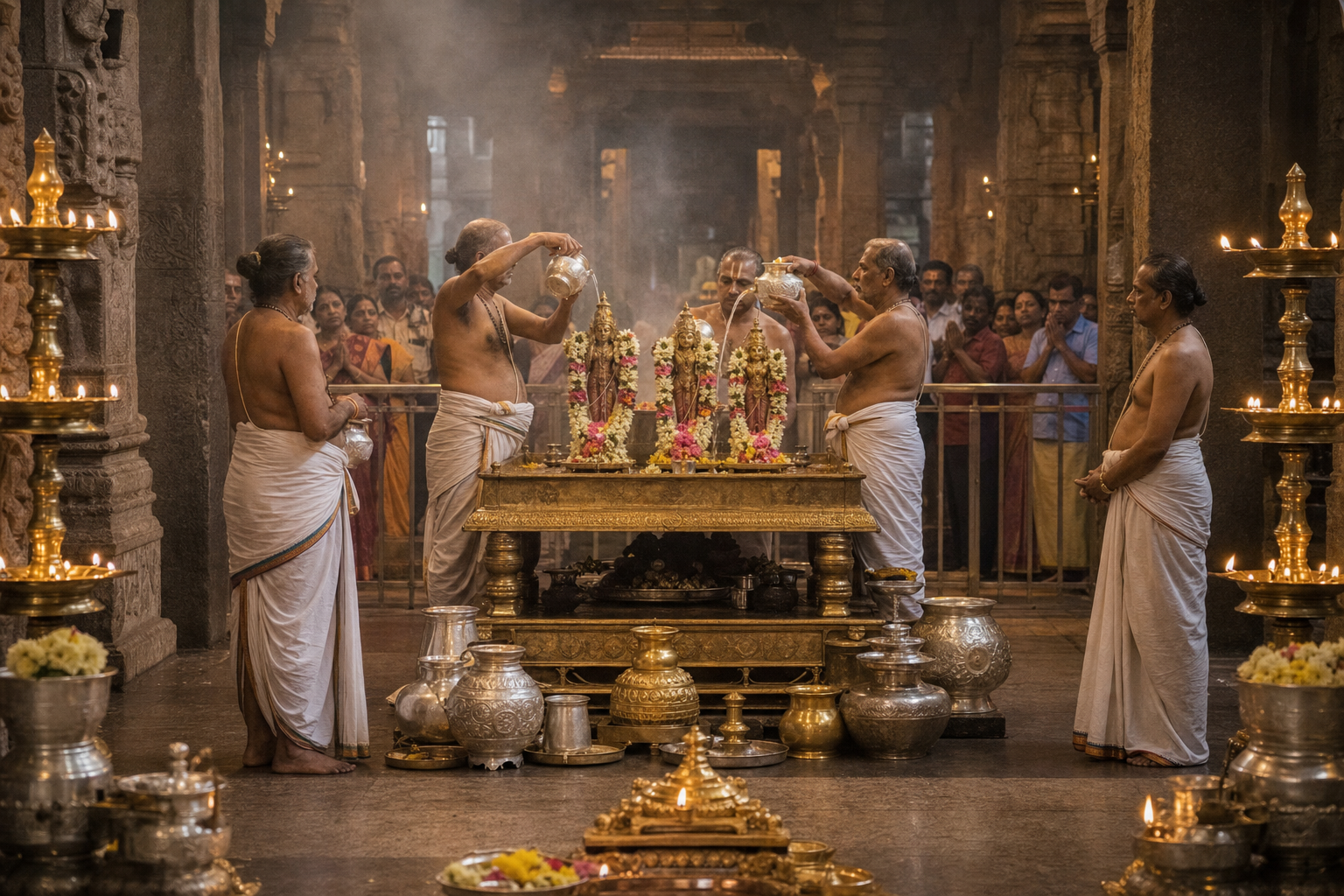
Jyeshtha Abhishekam, also called Abhidyeyaka Abhishekam, is the June observance most likely to determine a devotee’s Tirumala dates. It is ordinarily conducted over three consecutive days for the processional deities: Sri Malayappa Swamy accompanied by Sridevi and Bhudevi.
The central rite is snapana tirumanjanam, the ceremonial bathing of the Utsava Murtis with prescribed mantras and ritual precision. Specially consecrated kavachams are associated with the course of the observance. The festival’s emphasis is protection, purification, and the welfare of creation.
This is not merely a decorative occasion. The Utsava Murti is the Lord in processional form, coming forth from the inner ritual world of the temple into a form of presence that devotees can approach more directly. Jyeshtha Abhishekam therefore brings together two dimensions of bhakti: the exact discipline of Agama and the compassionate accessibility of Sri Venkateswara.
If this is the reason for your journey, arrive in Tirumala before the first day rather than attempting same-day hill travel and reporting. Keep the following morning free as well. Festival access, regular darshan, and a booked arjitha seva may operate through different queues or reporting rules, so verify each one independently.
Do not assume that a general darshan booking places you inside the principal abhishekam ritual. Check whether TTD has announced a specific seva, viewing arrangement, procession, or restriction. If access is limited, you can still orient the pilgrimage around the festival without treating proximity to one ceremony as the sole measure of darshan.
Choose one complementary temple rather than racing across Tirupati
The sacred geography extends beyond the hill shrine. Several TTD-managed temples customarily hold important observances in the Jyeshtha-Ashadha or Vaikasi-Aani period, but their schedules are not interchangeable. Search each final notice by the full temple name.
| Temple | June observance to watch | What should guide your decision |
|---|---|---|
| Sri Venkateswara Swamy Temple, Tirumala | Jyeshtha Abhishekam | Choose this if the three-day worship of Sri Malayappa Swamy with Sridevi and Bhudevi is your central purpose. |
| Sri Prasanna Venkateswara Swamy Temple, Appalayagunta | Annual Brahmotsavams commonly scheduled in the Jyeshtha-Ashadha window | Look for Ankurarpanam, vahana sevas, processions on the mada streets, and the concluding Chakra Snanam. |
| Sri Kalyana Venkateswara Swamy Temple, Srinivasa Mangapuram | Sakshatkara Vaibhavotsavams typically observed in this period | Choose this for worship centred on the Lord’s manifest grace, kalyana theology, related rituals, and parayanas. |
| Sri Govindaraja Swamy Temple, Tirupati | Vaikasi Brahmotsavams, which may extend from late May into early June | Watch for vahana sevas, Rathotsavam, and the concluding sacred bath. Confirm whether the 2026 festival actually crosses into June. |
| Sri Kapileswara Swamy Temple, Tirupati | Masa Shivaratri | Include this when a Saiva observance belongs in your yatra, while confirming the applicable lunar-month date. |
Ankurarpanam deserves particular attention when you plan around a Brahmotsavam. This consecrated seed-sowing rite precedes the principal festival days and ritually inaugurates the celebration. If witnessing the opening matters to you, arriving only for the most prominent vahana procession may be too late.
If you have only two days, pair Tirumala with one temple below the hill. Choose Appalayagunta for the full Brahmotsava pattern, Srinivasa Mangapuram for Sakshatkara and kalyana-oriented worship, Govindaraja Swamy Temple for an urban Vaishnava festival if its dates extend into June, or Kapileswara for the Saiva dimension of Tirupati’s sacred landscape. Trying to combine several processions on the same day leaves little protection against queues and schedule changes.
Build the itinerary around ritual commitments and real buffers
Know which observances continue regardless of the headline festival
The daily worship cycle continues through June. Suprabhata Seva opens the temple day, while Thomala and Archana sustain the nitya-puja sequence. Arjitha offerings such as Kalyanotsavam, Arjitha Vasanthotsavam, and Sahasra Deepalankara Seva proceed on notified days. Friday Abhishekam to the Mula Virat remains an important weekly observance.
Special festivals can alter ordinary access, reporting, or seva arrangements. A recurring seva appearing on the usual weekly pattern is therefore not sufficient confirmation for your particular Friday. Check the festival notice and the seva status together.
June also includes monthly observances such as Ekadashi, Amavasya, Purnima, and Sankatahara Chaturthi. If you intend to keep a vrata, establish the TTD-observed date before coordinating fasting, travel, and darshan. The same principle applies to Masa Shivaratri at Sri Kapileswara Swamy Temple.
Koil Alwar Tirumanjanam is another item to monitor. This extensive purification of the sanctum and temple precincts is performed quarterly and may be scheduled in the June-July corridor in preparation for later observances. Do not add it to your plan unless TTD announces it for June 2026, but account for any changed arrangements if it does appear.
A workable three-day pilgrimage
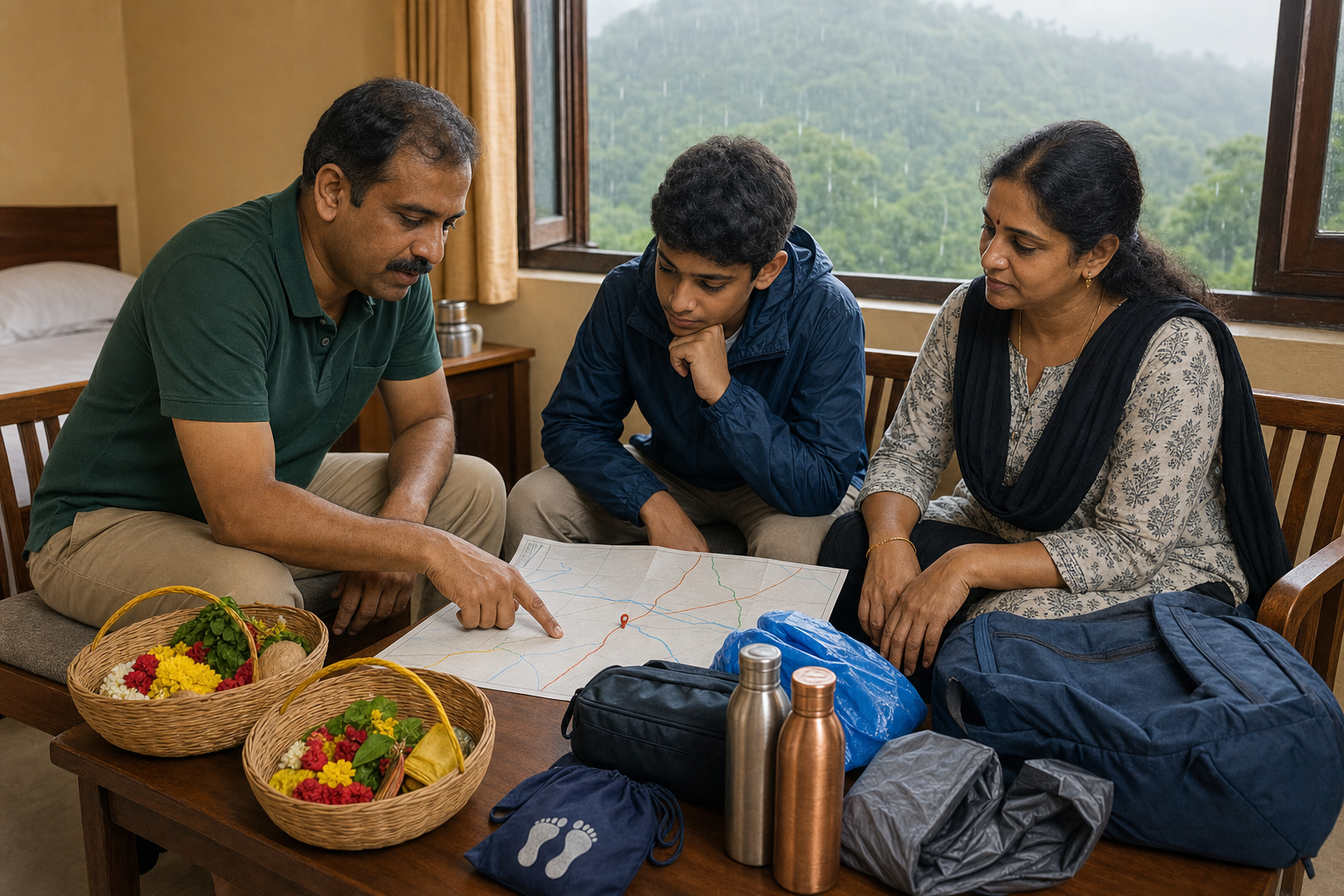
- Day one: arrival and primary darshan. Reach Tirumala with enough time to deposit restricted items, settle into accommodation, and report without rushing. Do not schedule an off-hill procession on the same day.
- Day two: the anchor observance. Reserve this for Jyeshtha Abhishekam, a confirmed arjitha seva, or the principal Tirumala commitment that brought you there. Leave the rest of the day adjustable until TTD publishes the operational arrangements.
- Day three: one complementary temple and the travel buffer. Visit the confirmed festival at Appalayagunta, Srinivasa Mangapuram, or Govindaraja Swamy Temple. If no special festival aligns with your dates, use the day for a quieter visit to Govindaraja Swamy or Kapileswara rather than forcing an invented festival circuit.
For a two-day trip, compress the third day’s temple visit only after your main Tirumala commitment is secure. Do not remove the arrival buffer. The first casualty of an overpacked plan is usually the observance you travelled farthest to attend.
Complete this checklist before you leave
- Save the final TTD notification for your temple and festival, including reporting instructions.
- Book arjitha sevas only through official channels and retain the confirmation required for entry.
- Check whether the festival changes ordinary darshan, weekly sevas, or movement around procession routes.
- Carry light clothing suitable for pre-monsoon heat while following the current TTD dress code. Add simple rain protection for possible early showers.
- Plan to deposit mobile phones and other restricted items at the designated counters instead of bringing them to the entry point.
- Allow more queue time during the school-vacation period, particularly in early June.
- Check annadanam schedules and place the meal around your reporting time, not the other way around.
A June pilgrimage becomes more coherent when you choose one devotional intention for it. That may be darshan of Sri Malayappa Swamy during Jyeshtha Abhishekam, participation in a vrata, attention to an Alvar or Acharya Tirunakshatram, dana, or quiet seva. The wider dharmic values of bhakti, ahimsa, generosity, meditative attention, and service become practical in the way you keep the queue, share limited space, and refuse to turn darshan into a race.
Start with the observance you would regret missing, reserve two or three days around its likely window, and wait for TTD’s final temple-specific announcement before locking the itinerary. That gives the Panchang, the Agama, and the realities of pilgrimage the room each one requires.
References
