

If you are a temple trustee, sevadar, cultivator, lawyer, or devotee, the immediate question is not whether Maharashtra should reform an old land system. It is whether that reform can give cultivators lawful security without cutting off the income that sustains daily worship, festivals, food distribution, heritage care, and religious service.
The precise clauses of Maharashtra’s proposed Devasthan inam measure may change before enactment. Do not infer the final legal effect from the word abolition alone. Obtain the operative text, identify what happens to each category of land, and test every promise against one practical question: after the land relationship changes, who must pay the religious institution, how much, when, and under what enforceable obligation?
Key takeaways
- Devasthan land is a purpose-bound endowment, not the trustee’s private real estate. Its recurring yield may finance worship and charitable work long after the original grant.
- Cultivator security and endowment protection are not mutually exclusive. Occupancy can be regularized while a permanent charge, indexed annuity, or guaranteed revenue share continues for the deity or institution.
- A one-time payment is not automatically equivalent to perpetual income. Compare its durability, indexation, payment security, and permitted use with the income stream being extinguished.
- The constitutional question depends on the final law. Religious property can be regulated, but deprivation of the means needed for religious activity raises issues under Articles 25, 26, and 300A.
- Trustees should assemble a parcel-level record now: title history, revenue and tenancy entries, boundaries, occupancy, income, religious use, encroachments, disputes, and current photographs.
- Any acceptable reform must protect pending recovery claims, service obligations, sacred ecology, appeal rights, and a predictable transition. A vague promise of compensation is not enough.
The decisive test is what replaces the land income

A Devasthan inam was intended to support a religious or charitable purpose through land. Agricultural produce, rent, or another land-based return paid for such recurring needs as puja, naivedya, utsavas, annadanam, building maintenance, and remuneration for pujaris or other sevadars. The arrangement was designed to keep producing support, not merely to place an asset on an institution’s balance sheet.
That distinction changes how you should evaluate reform. If the State changes occupancy while preserving an enforceable income stream, the institution may retain the economic substance of the endowment. If the land vests elsewhere and the recurring benefit disappears, the reform has not simply changed a revenue classification. It has transferred the cost of a public land-policy objective to a purpose-bound religious corpus.
In the Hindu legal setting, the deity can be treated as a juristic person holding property through those responsible for the institution. Trustees therefore do not own endowed land as personal property that they may casually surrender. Their first duty is to identify the legal holder, the terms of the endowment, and the continuing purpose attached to the asset. The broader Devasthan framework also affects Jain derasars, Buddhist viharas, and Sikh gurdwaras, so the final classification cannot assume that every institution has the same liturgy or governance structure.
When you obtain the draft, rules, schedules, or explanatory material, search for more than the headline provisions. Mark every clause dealing with vesting, occupancy, tenancy, compensation, annuity, alienation, conversion, pending disputes, encroachments, service inams, record correction, appeals, and commencement. Definitions and transitional clauses often decide the real result.
Do not mistake a capital payment for replacement income
Suppose a reform removes a parcel that has supported recurring worship and gives the institution a single payment. The correct comparison is not land value versus payment in the abstract. Ask whether the replacement can generate a dependable, inflation-resistant return for the same religious purpose without consuming the principal.
- Is the amount based on historical productivity, current lawful income, market value, or an administrative formula?
- Is it paid once, periodically, or through a permanent statutory obligation?
- If periodic, is it indexed so that its real value does not steadily decline?
- Is payment automatic, or must a trustee apply repeatedly and wait for discretionary approval?
- Which public authority is legally liable if payment is delayed or omitted?
- Is the money credited directly to a designated institutional account and ring-fenced for the original endowment purpose?
- Can creditors, intermediaries, or another government programme divert or attach it?
- What remedy is available when the calculation, classification, or payment is wrong?
A label such as compensation, grant, subsidy, or assistance answers none of these questions. The entitlement, formula, payer, schedule, indexation, enforcement mechanism, and permitted use must appear in law or in rules that the law clearly authorizes.
The constitutional issue is functional, not rhetorical
Religious status does not place every administrative matter beyond regulation. The distinction associated with the Shirur Mutt jurisprudence permits regulation of secular administration while protecting religious affairs. Article 26 also recognizes the rights of a religious denomination to own and acquire property and to administer it in accordance with law. Article 25 protects religious practice, while Article 300A requires authority of law for deprivation of property.
The difficult question arises when control of a secular asset removes the practical means of performing religious duties. If daily worship, a festival calendar, sevadar support, or charitable activity depends on endowed income, the loss is not adequately described as an accounting adjustment. It may burden the exercise of religion itself. The relevant constitutional concerns include religious autonomy, property protection, and proportionality.
Neither slogan ends the legal inquiry. Calling land sacred does not automatically invalidate agrarian regulation, and calling a measure land reform does not automatically justify destroying an endowment. The final text, the public purpose, the treatment of cultivators, the availability of less destructive alternatives, the replacement income, and the actual effect on religious functions will matter. Because these questions turn on the institution’s records and the exact statutory language, a trustee considering consent, surrender, settlement, or litigation should obtain advice from lawyers familiar with both Maharashtra land-revenue law and public-trust law before signing anything irreversible.
Cultivator security and endowment continuity can coexist
Land-to-the-tiller and tenancy-security objectives address a real concern: a cultivator should not remain indefinitely vulnerable merely because the land originated in an old grant. But the deity or religious institution should not be made financially vulnerable in order to solve that problem. A durable reform must recognize both interests in its design.
Occupancy with a permanent statutory charge
One model gives a qualifying cultivator secure occupancy while recording a continuing charge in favour of the deity or trust. The charge can represent an annuity or revenue share and can be made recoverable through a reliable public mechanism. This changes the tenure relationship without erasing the endowment’s continuing economic benefit.
The detail is decisive. The law must say whether the charge survives sale, inheritance, partition, mortgage, conversion, acquisition, and changes in land use. It must identify who collects it, where it appears in the land record, which claim has priority, and what happens on default. A charge that vanishes when the parcel is transferred is not permanent protection.
An indexed and ring-fenced annuity
A second model converts the historical land obligation into a periodic annuity credited directly to the institution. To replace a productive asset, the annuity should be predictable, indexed, enforceable, and restricted to the institution’s religious and charitable purposes. Monthly credit can reduce the cash-flow gap between recurring worship expenses and irregular administrative disbursements.
Indexation needs a defined method and review process. Ring-fencing needs more than a separate ledger entry: the statute should prevent diversion, identify authorized expenditure, require an auditable trail, and provide a remedy for late or incomplete payment. Otherwise the institution exchanges a tangible asset for an uncertain claim on future budgets.
A State-guaranteed stabilization fund
A third model places replacement capital in an Endowment Stabilization Fund and pays each institution a yield tied to the historical productivity of its inam land. Pooling can spread risk, but it also creates distance between a particular endowment and its income. Trustees should therefore demand institution-level entitlements, a disclosed allocation formula, independent audits, protection against political diversion, and direct payment schedules.
These are policy models to press for, not assumed provisions of the proposed law. They can also be combined. For example, an occupant may receive secure tenure while a statutory charge supports the institution, with the stabilization fund covering verified shortfalls during transition. What matters is that the obligation survives administrative delay and a change of government.
Service inams require a separate answer
Some endowed arrangements supported a specified religious service rather than a general institutional budget. If their tenure or return disappears, a nominal payment to the institution may not preserve the actual service. The reform must identify the puja, recitation, music, guardianship, preparation, or other duty attached to the grant; determine who is presently responsible for it; and provide a stable means of continuing it.
This does not require freezing every historical personnel arrangement forever. It requires preserving the religious function and its funding while applying lawful standards of accountability. Ask the institution to document the service calendar, responsible office, customary inputs, current cost, succession method, and contingency plan. Without that record, an administrator may see only a land entry and miss the living obligation behind it.
Build the evidence file before any land status changes
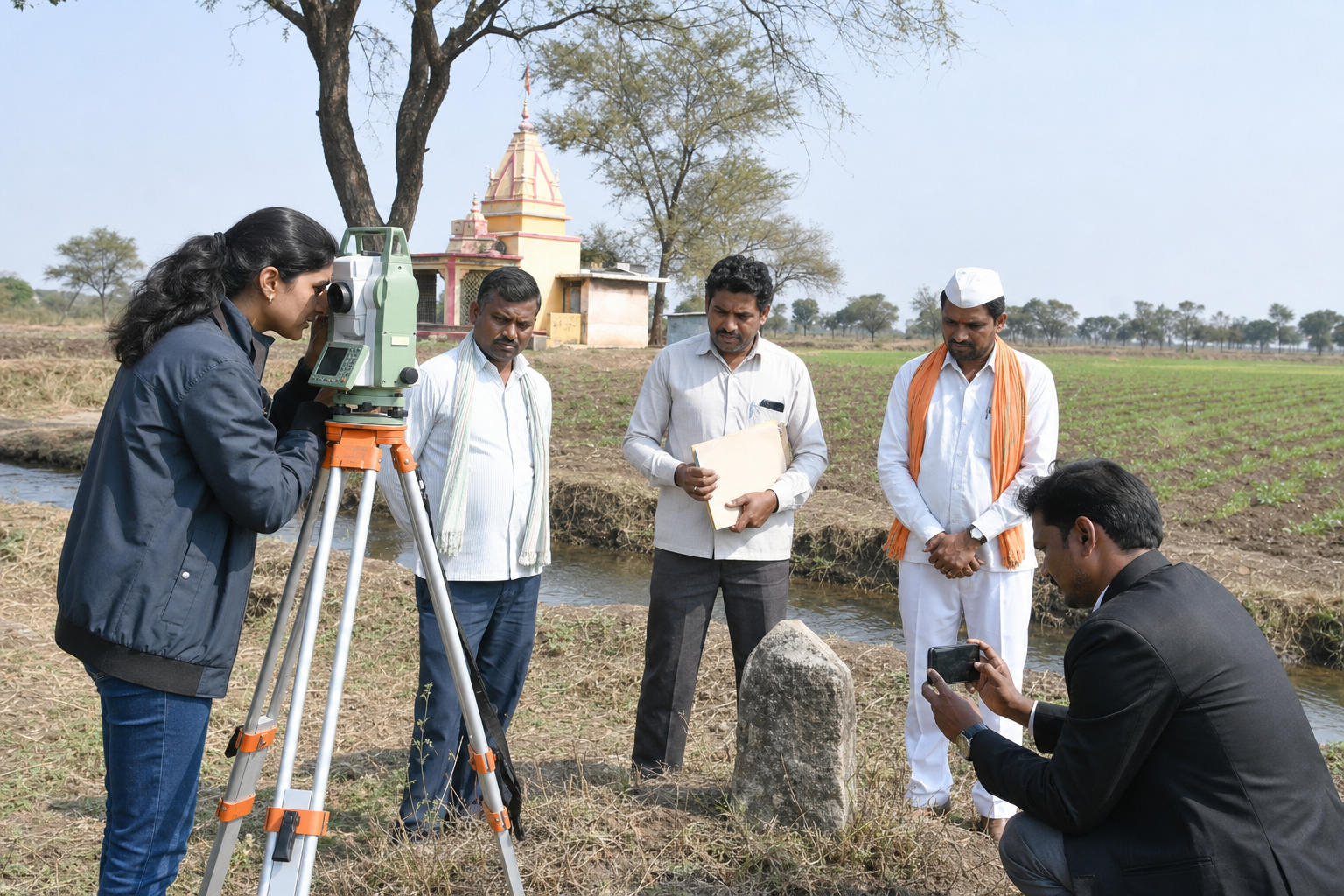
Old Devasthan records may be dispersed among trust files, revenue registers, survey maps, court papers, tenancy proceedings, and family-held service documents. Inconsistent mutations or incomplete digitization can turn a reform exercise into an accidental validation of encroachment. A clean, parcel-level evidence file is therefore the most useful thing an institution can create before classifications begin to move.
- Establish the legal identity. Collect the trust registration, governing scheme, trustee orders, institutional rules, and the original grant, sanad, or endowment instrument if available. Record whether the property is shown in the name of the deity, institution, trust, manager, or another historical office.
- Create one row for every parcel. Record the village, survey or gat identifier, area, revenue classification, boundaries, present occupant, claimed tenancy, current use, and the old identifier from which a new entry was derived. Do not merge adjacent parcels merely because they are managed together.
- Build the record chain. Arrange revenue extracts, mutations, surveys, tenancy entries, acquisition notices, lease documents, permissions, tax or assessment records, and judicial or administrative orders chronologically. Link every later entry to the document that purportedly changed the earlier one.
- Document the income trail. Preserve leases, rent receipts, crop-share records, bank credits, arrears, audited accounts, and budget entries. Separate potential income from income actually collected, and explain why any gap arose.
- Show the religious dependence. Connect the parcel or its income to daily worship, festivals, annadanam, vidyadanam, sevadar remuneration, maintenance, conservation, or another stated purpose. Keep the service calendar, approved budgets, invoices, resolutions, and payment records that demonstrate continuity.
- Map possession and disputes. Identify lawful occupants, disputed tenants, licensees, encroachers, vacant portions, access routes, water bodies, groves, wells, tanks, structures, and pending recovery actions. Keep case numbers and the latest orders with the relevant parcel rather than in a separate general litigation file.
- Capture present conditions. Commission a lawful survey where needed and retain dated, geo-referenced photographs of boundaries, markers, access, cultivation, sacred features, and encroachments. Aerial or drone work should comply with applicable permissions; technology does not excuse an unlawful survey.
- Protect the archive. Scan both sides of every document, preserve legible colour copies of seals and annotations, and keep backups under controlled access. Maintain an index showing where each original is held and who last handled it.
- Record discrepancies instead of hiding them. If area, name, classification, or possession differs across records, list the conflict and seek the appropriate correction. Do not discard an inconvenient older page or silently rewrite the history to make the file look tidy.
- Pass a reasoned trustee resolution. The governing body should formally identify endangered parcels, authorize record collection and legal review, state the religious consequences of lost income, and name the people responsible for responding to notices. This reduces confusion when a short procedural deadline arrives.
The parcel register should distinguish title from possession, possession from lawful tenancy, and lawful tenancy from encroachment. Treating all occupants as encroachers weakens a credible case for cultivator protection. Treating every long possession as valid title can surrender the institution’s claim before the law has determined it.
Trustees should also calculate a religious-dependence statement. List the recurring activities financed by endowment income, their payment rhythm, the people or services affected, and the consequence of interruption. This converts a general claim that land supports dharma into evidence an administrator or court can examine.
Do not sign a surrender, no-objection declaration, change-of-use consent, revised lease, or private settlement merely to avoid immediate administrative friction. Such a document can affect title, compensation, recovery proceedings, and the trust’s later challenge. The safer course is to place the exact document, parcel history, trust authority, and proposed consideration before qualified counsel and record the decision through the institution’s lawful governance process.
Demand a clause-by-clause protection package
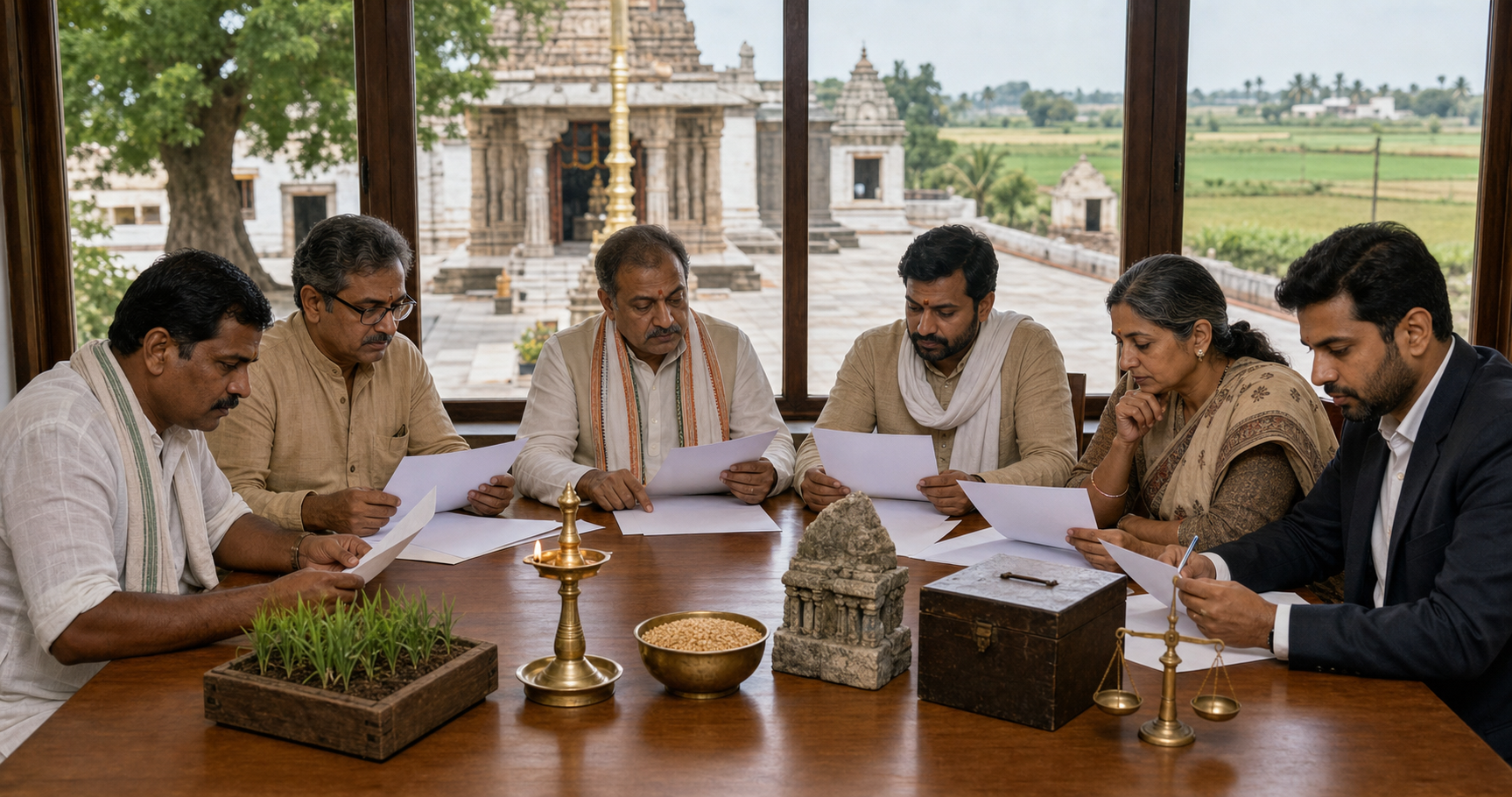
A useful representation to government does more than declare support or opposition. It identifies a clause, explains the harm or ambiguity, supplies a replacement formulation, and shows how that formulation protects cultivators as well as the endowment. Whether you act through one institution or a coalition, insist on written answers to the following questions.
Scope, classification, and vesting
- Which statutory and revenue categories fall within Devasthan inam, and which are excluded?
- Are Hindu temples, Jain derasars, Buddhist viharas, Sikh gurdwaras, service grants, public trusts, denominational institutions, and privately managed endowments treated separately where their legal structures differ?
- Does the law vest title, extinguish an incident of tenure, regularize occupancy, or merely change revenue liability?
- What is the legally effective date, and how are transactions, notices, and orders during the transition treated?
- How can an institution challenge a mistaken classification before its rights are altered?
Income, compensation, and enforcement
- What continuing economic interest remains with the deity or institution after reform?
- How is the historical productivity or lawful income of each parcel established when records are incomplete?
- Is replacement income indexed, ring-fenced, directly credited, and protected from diversion?
- Does the entitlement continue permanently, or expire after an administrative period?
- Who bears liability for non-payment, and what recovery mechanism is available without forcing a small institution into prolonged litigation?
- Does a statutory charge survive transfer, inheritance, partition, mortgage, acquisition, and conversion?
Tenants, encroachments, and pending proceedings
- What evidence establishes lawful cultivation or tenancy, and what opportunity does the institution have to contest a false claim?
- How does the law distinguish a protected cultivator from an encroacher, licensee, trustee, manager, or person placed in possession for religious service?
- Will a vesting or regularization clause accidentally defeat pending recovery actions or reward a recent encroachment?
- How are arrears, unauthorized transfers, subletting, and land-use violations treated?
- Can the cultivator receive security without extinguishing the trust’s enforceable revenue interest?
Worship, service, heritage, and ecology
- Which mechanism preserves a daily or seasonal religious service formerly supported by the land?
- How will pujaris, archakas, granthis, monks, other sevadars, and institutional service offices be paid during transition?
- Must the competent authority assess the effect on worship, festivals, annadanam, education, maintenance, and conservation before altering the income source?
- Are sacred groves, temple tanks, wells, river edges, processional routes, access corridors, and heritage structures identified before subdivision or conversion?
- Will a heritage or environmental restriction survive the transfer of occupancy or title?
Rural and urban parcels need different scrutiny. Rural endowment land may combine cultivation with water recharge, vegetation, access, or local employment. Urban and peri-urban land may face intense conversion pressure even when it remains essential to processions, gatherings, pilgrim services, or the setting of a heritage structure. The cultural and environmental functions of Devasthan land should be mapped before the law makes fragmentation or change of use easier.
Procedure, notice, appeal, and transition
- Will the institution receive parcel-specific notice, the evidence relied upon, and a meaningful opportunity to respond?
- Which officer makes the first decision, and is that officer independent of the authority benefiting from vesting?
- Is there a reasoned written order, a correction process for record errors, and an effective appeal before irreversible transfer?
- Are limitation periods realistic for institutions whose records are old, dispersed, or not fully digitized?
- Does the status quo continue while a timely objection or appeal is pending?
- Who pays for surveys, record reconciliation, and transition administration?
- How is worship funded between the effective date of reform and the first replacement payment?
Modernize oversight without erasing the corpus
Maharashtra already has public-trust oversight through the Bombay Public Trusts Act, 1950, alongside its land-revenue framework. Better records, audits, leases, and enforcement can be built onto that architecture. Abolition is not the only route to accountability.
- Create a verified asset registry. Give every parcel a unique identifier linked to its trust entry, revenue record, map, boundary evidence, occupancy status, lease status, income, disputes, and heritage features.
- Use GIS and time-stamped surveys. Geo-referenced boundaries, dated images, marked access routes, and alerts for suspected changes can expose encroachment early. A digital map should supplement, not silently replace, the legally authoritative record.
- Publish useful information. Parcel identity, institutional ownership, area, lawful use, lease status, income category, and audit status can be disclosed while sensitive personal identifiers and security information remain protected.
- Standardize leases. Templates should specify permitted use, rent review, payment route, inspection, maintenance, anti-encroachment terms, assignment restrictions, restoration duties, and consequences of default.
- Collect money through traceable accounts. Escrow or direct digital collection can reduce cash leakage and automatically allocate income to authorized religious, maintenance, and charitable heads.
- Publish annual audits in Marathi and English. The public should be able to see the opening assets, changes during the year, income due, income received, arrears, expenditure, disputes, and closing position.
- Use representative governance. Any Dharmic endowment council should include Hindu, Jain, Buddhist, and Sikh institutions, religious functionaries, land-revenue specialists, public-trust lawyers, conservation expertise, and community representation, with safeguards against routine political interference.
Digital systems can improve traceability, but they cannot make a wrong opening entry true. Even a blockchain-backed mutation ledger will preserve an error if the original title, area, occupant, or boundary was entered incorrectly. Begin with verification, provide a visible correction history, and retain the underlying documents.
The practical decision rule is simple. Support cultivator security where claims are lawful and verified. Support audits, transparent leases, mapping, and public accountability. Oppose any clause that extinguishes endowed value without an enforceable equivalent, converts an encroachment into title without due process, interrupts a religious service without replacement funding, or permits sacred and heritage land to be alienated before its functions are recorded.
If you are responsible for an institution, begin with the parcel register and religious-dependence statement. If you are a devotee, ask the management whether those two records exist and whether pending disputes have been mapped. If you represent a wider Dharmic body, coordinate clause-specific submissions across Hindu, Jain, Buddhist, and Sikh institutions so that government receives workable amendments rather than only general objections. Reform should end uncertainty and abuse; it should not end the endowment.
References
