

If you are deciding when to complete a Dwitiya vrata, hold a puja, or begin an undertaking on Tuesday, June 2, 2026, the date has one decisive turn: Krishna Paksha Dwitiya continues until 5:03 PM, after which Krishna Paksha Tritiya begins. For most Panchang conventions in India, that is the principal tithi boundary around which to plan the day.
Do not treat 5:03 PM as a universal clock time. Panchang calculations are location-sensitive, and your operative timings depend on local sunrise, sunset, time zone, and lunar calculations. Use the timing here as an India-region anchor, then confirm it in a trusted Panchang for your city if a vrata, sankalpa, samskara, or other rite has an exact tithi requirement.
The June 2 Panchang at a glance
Key takeaways
- Vara: Tuesday.
- Paksha: Krishna Paksha, the waning half of the lunar cycle.
- Tithi before the transition: Krishna Paksha Dwitiya until 5:03 PM under the India-region timing used here.
- Tithi after the transition: Krishna Paksha Tritiya from 5:03 PM onward.
- Dwitiya-dependent observance: Complete it before the transition if the ritual rule requires Dwitiya to be present at the time of performance.
- New beginnings: Check local Rahu Kalam, Yamaganda, and Gulika before choosing a clock time; Tuesday fixes their daylight segments, not their universal clock hours.
- Generally auspicious interval: Abhijit Muhurat is centred on local solar noon, subject to other contraindications.
- Nakshatra and Rashi: Confirm them from a city-specific Panchang rather than inferring them from the tithi.
The most common planning mistake is to call the entire civil date either Dwitiya or Tritiya. A civil date runs from midnight to midnight, but a tithi follows the changing angular relationship between the Moon and Sun. June 2 therefore contains portions of two tithis.
Why sunrise and the 5:03 PM transition both matter
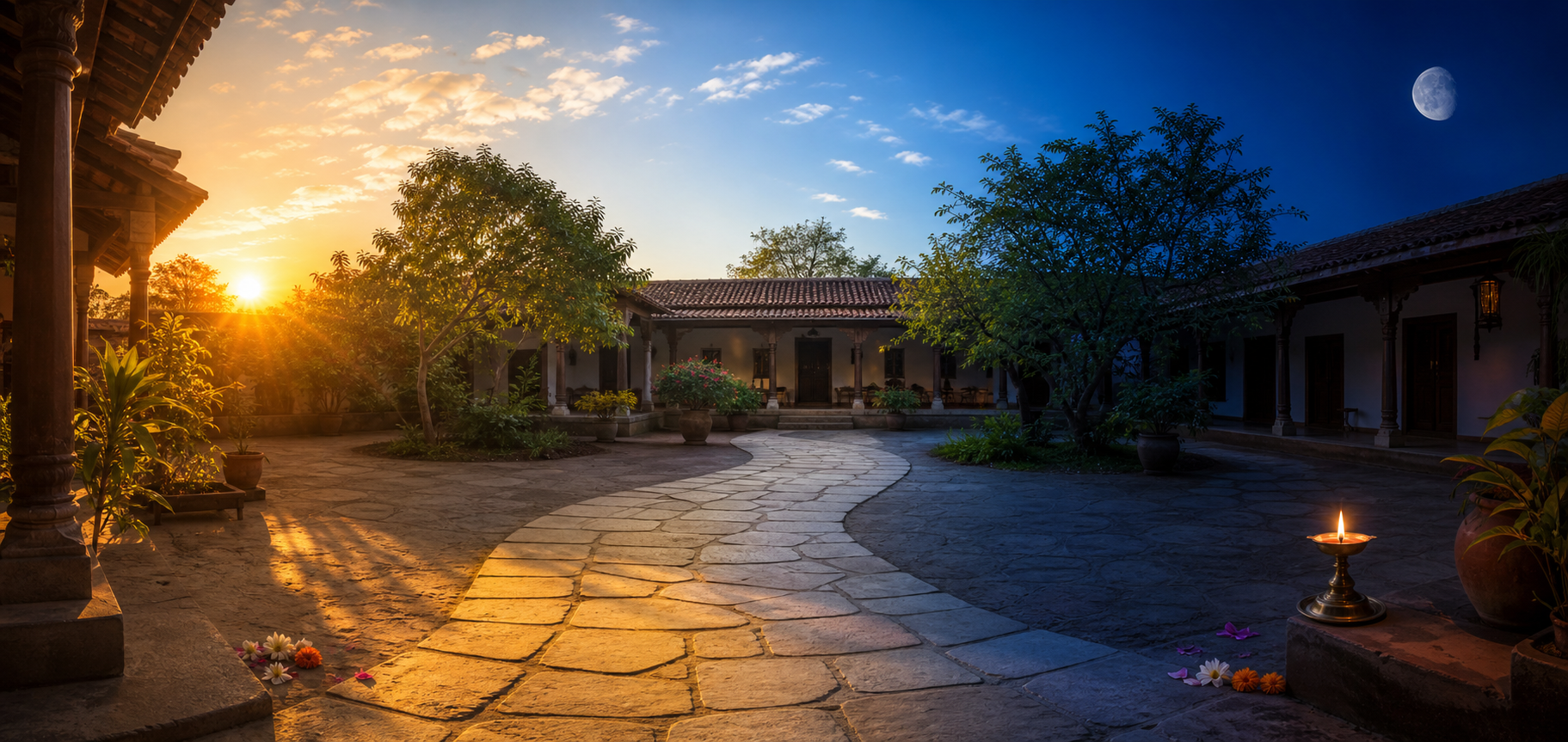
A tithi is an astronomical interval. Each one corresponds to 12 degrees of change in the angular separation between the Moon and Sun. Krishna Paksha begins after Purnima as the visible lunar light decreases and proceeds toward Amavasya. Dwitiya is the second tithi of that waning sequence, while Tritiya is the third.
This explains why a tithi can end in the middle of an afternoon rather than at sunrise or midnight. The 5:03 PM change marks the point at which the lunar elongation crosses from the Dwitiya interval into the Tritiya interval under the stated convention.
Traditional observance often gives special importance to the tithi present at local sunrise. That rule helps determine which civil date carries an observance. It does not make the precise end time irrelevant. A time-bound vrata, offering, sankalpa, or rite may require the specified tithi to be present when the act is performed.
Ask two separate questions before you schedule anything:
- Which tithi is present at sunrise in the location where you will perform the observance?
- Does your household or sampradaya require the rite to occur while that tithi is actually present, or only on the civil day selected by the sunrise rule?
If your local calculation agrees with the 5:03 PM boundary and your rite must be completed during Dwitiya, treat 5:03 as the completion limit, not the time to begin. Leave enough margin for the sankalpa, worship, offerings, and concluding prayers. If the prescribed rule is unclear, follow the regional Panchang or the guidance of the priest or acharya responsible for that tradition rather than creating a rule from the date alone.
Calculate Tuesday’s local Rahu Kalam and other windows
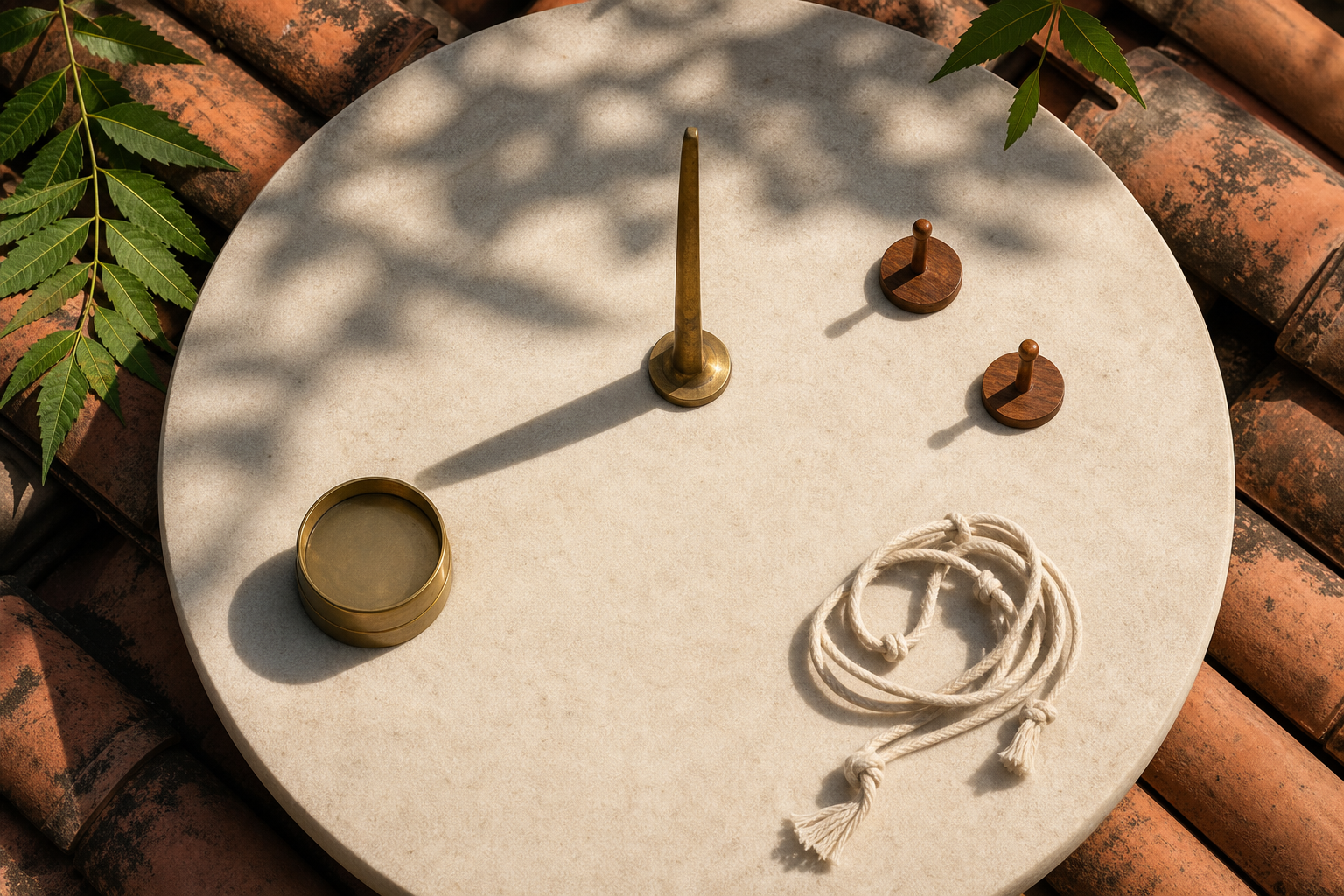
Rahu Kalam, Yamaganda, and Gulika cannot be responsibly converted into one set of clock times for every reader. Their positions are calculated by dividing the interval from local sunrise to local sunset into eight equal parts. A city with a different sunrise or sunset receives different start and end times.
For Tuesday, Yamaganda occupies the third daylight part, Gulika the fourth, and Rahu Kalam the seventh. You can calculate them without guessing:
- Write down the local sunrise and sunset for June 2, 2026.
- Find the total daylight duration between those two times.
- Divide that duration by eight. Call the result one daylight segment.
- Count the segments forward from sunrise using the Tuesday placements below.
- Calculate local solar noon separately as the midpoint between sunrise and sunset.
If sunrise is represented by S and one-eighth of the daylight duration by D, the working intervals are:
| Window | Tuesday placement | Calculation from sunrise | Practical use |
|---|---|---|---|
| Yamaganda | Third daylight segment | S + 2D through S + 3D | Generally avoid initiating an optional new undertaking. |
| Gulika | Fourth daylight segment | S + 3D through S + 4D | Usually excluded when selecting a clean commencement time. |
| Rahu Kalam | Seventh daylight segment | S + 6D through S + 7D | Generally avoid beginning important new work. |
| Abhijit Muhurat | Centred on local solar noon | Approximately 24 minutes before to 24 minutes after solar noon on a typical day | Often favoured for suitable undertakings when no strong contraindication applies. |
Do not substitute 12:00 noon for local solar noon. Solar noon is the midpoint of that location’s sunrise-to-sunset interval, and the exact Abhijit duration should be obtained from a local calculation because seasonal day length varies.
These periods are principally filters for commencing new work. Their presence does not mean that every routine duty, continuing responsibility, or ordinary act must stop. Likewise, Abhijit Muhurat is not an automatic override for every conflict. Use it only after checking the tithi requirement and any other conditions attached to the intended activity.
A practical plan before and after the tithi change
The waning fortnight traditionally supports reduction, reflection, and release more readily than restless expansion. You can use that rhythm without turning the Panchang into a deterministic prediction. Let it shape the intention and timing of an act; do not ask it to replace judgement.
- At local sunrise: Confirm that Dwitiya is present in your city. Use the tithi required by your household tradition when making a formal sankalpa.
- During Dwitiya: Give priority to any observance explicitly assigned to Dwitiya. For ordinary life, the period suits review, consolidation, relational balance, constructive family conversation, and seva better than unnecessary expansion.
- Before 5:03 PM: Finish a Dwitiya-bound act with a sensible margin if the India-region timing applies to you. Beginning immediately before the boundary is not the same as completing the rite within the tithi.
- At the transition: A short period of japa, meditation, or self-audit fits the waning rhythm well. Notice one habit, obligation, or source of excess that can be reduced rather than adding another vague resolution.
- After 5:03 PM: Tritiya supports small, deliberate beginnings within the waning phase. Skills practice, a limited pilot, an iterative improvement, or a measured commitment fits better than a rushed expansion.
- Before any important start: Overlay the local avoidance periods. The arrival of Tritiya does not by itself create a shubh muhurta if the intended minute falls inside Rahu Kalam, Yamaganda, or another unsuitable interval.
That last distinction is easy to miss. Tithi tells you one quality of the time; it does not settle the entire muhurta. If your intended act can be moved, first identify the correct tithi, remove the locally calculated avoidance periods, and only then choose among the remaining intervals.
Verify Nakshatra, Rashi, Yoga, and Karana locally
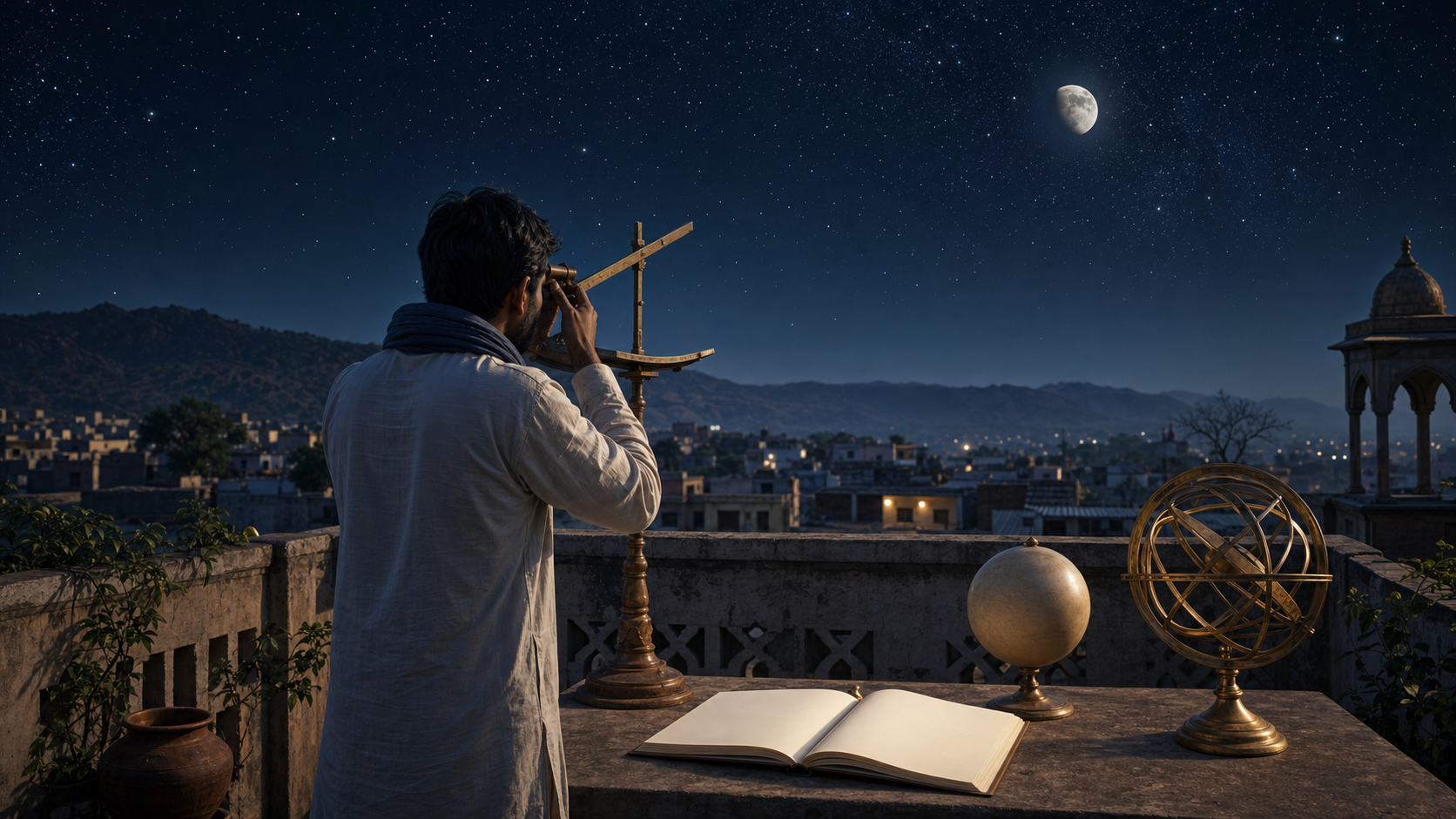
An exact Nakshatra or Moon Rashi should not be guessed from the tithi. Nakshatra depends on the Moon’s position among the 27 lunar mansions, while Rashi describes its zodiacal placement. Both require the Moon’s longitude at the relevant time and a reliable calculation for your location and time zone.
A complete Panchang-based muhurta evaluates five limbs:
- Tithi: Dwitiya before the transition and Tritiya afterward under the stated timing.
- Vara: Tuesday.
- Nakshatra: Verify for the city and intended time.
- Yoga: Verify before refining the muhurta.
- Karana: Verify for the exact interval in which the act will begin.
Moon Rashi adds broader context even though it is not one of those five limbs. Advanced selection may also use planetary hora. Jupiter’s hora may be considered for learning and Mercury’s for trade, but a suitable hora should not be used in isolation or allowed to overlap Rahu Kalam or Yamaganda without examining the wider muhurta.
Amanta and Purnimanta systems do not change the astronomical basis of the tithi, but they can change month reckoning, festival labelling, and household practice. This matters especially when a family follows one regional calendar while living in another region or outside Bharat. Keep the family’s calendrical tradition, the place of performance, and the local clock calculation together.
This location-sensitive method reflects a wider dharmic inheritance rather than a defect in the calendar. Buddhist Uposatha cycles, Jain vrata and upavasa practices, and the Sikh Panth’s historical use of Bikrami reckoning show different ways communities have related sacred observance to calendrical time. Shared astronomical roots do not erase differences in ritual rules, so follow the discipline of the tradition in which the observance is actually being performed.
Your next step is simple: open a trusted Panchang set to the city of performance, write its sunrise and sunset beside June 2, mark the three Tuesday avoidance periods, and confirm Nakshatra, Yoga, Karana, and Moon Rashi for the minute you are considering. Then place any Dwitiya-bound act safely before the local transition rather than building the plan around a generic timetable.
References
