
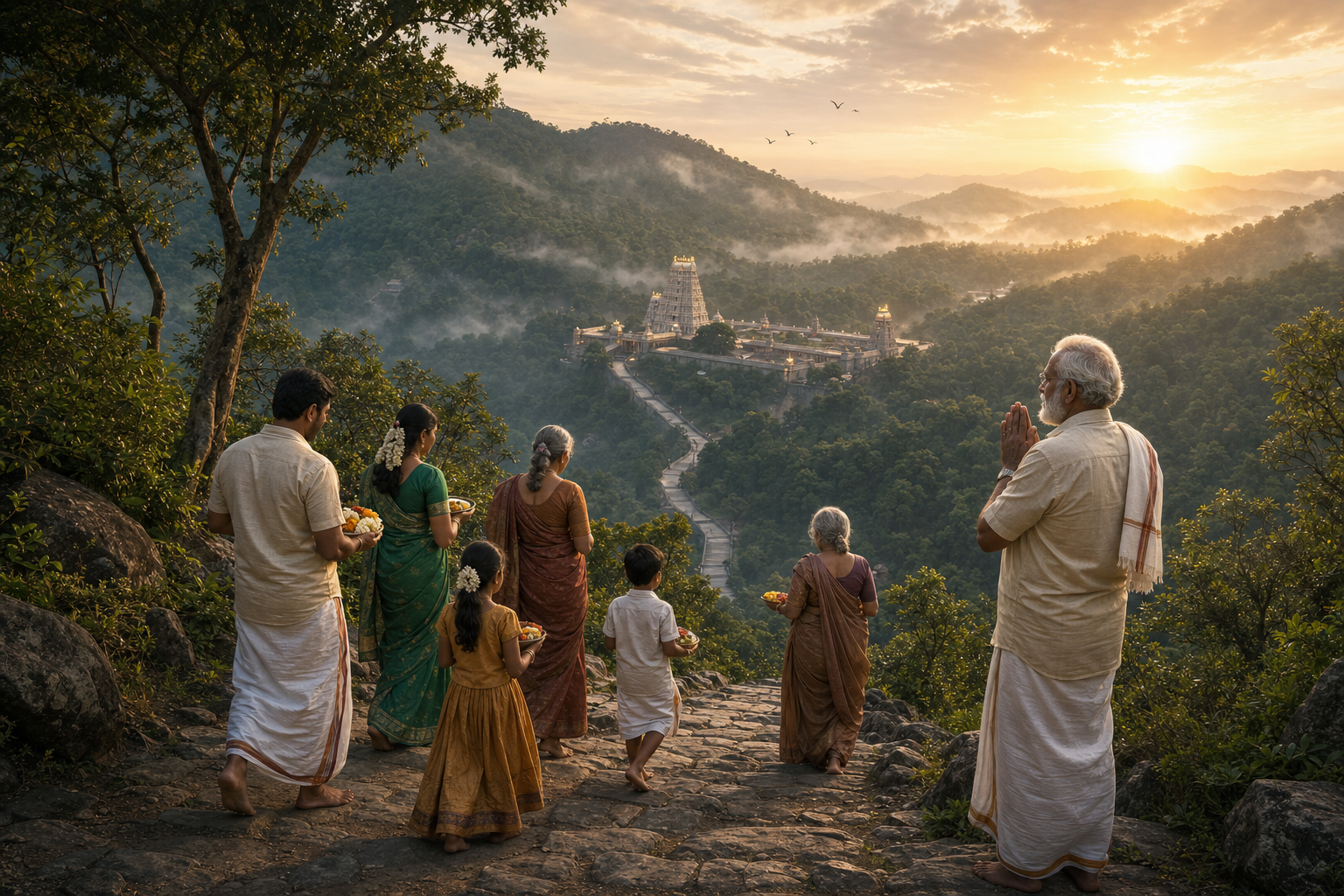
You may be turning toward Venkateshwara Swamy because ordinary effort has not resolved an illness, debt, family difficulty, or uncertain decision. You want to pray with your whole heart, but you do not want faith to become credulity or an excuse to neglect what must still be done.
The Tirumala tradition gives you a demanding but practical way to hold both concerns. Ask for anugraha, or grace. Submit to the discipline of ritual. Continue medical, financial, legal, and personal duties. Then judge the experience by the clarity, humility, and service it produces in you.
Key takeaways
- A Venkateshwara miracle is best understood as grace working through circumstances, effort, and karmic causes, not necessarily as a visible suspension of natural order.
- Testimony can carry religious meaning without becoming public proof. Separate what happened from what you infer about it.
- Ritual is not a technique for forcing a result. It trains attention, surrender, gratitude, and responsibility.
- A sound vow should make you more truthful, compassionate, disciplined, and useful, whether the desired outcome comes quickly, slowly, or in an unexpected form.
- Prayer should accompany appropriate treatment and practical action. It should never be used to justify delaying them.
A miracle is grace, not an escape from causality
The word “miracle” can mislead if it makes you imagine that divine action must be spectacular. Many Venkateshwara testimonies concern something quieter: protection during danger, timely assistance, steadiness during treatment, an unexpected livelihood opportunity, reconciliation, or clarity at the moment a decision must be made. Devotees recognize a meaningful alignment between need, effort, circumstance, and compassion.
Three Dharmic terms help you interpret such an experience. Adbhuta is the wondrous quality of an event. Anugraha is grace, the compassionate help attributed to the Divine. Siddhi means attainment; it should not be casually applied to every coincidence or favorable turn. A surprising event may evoke adbhuta, but its enduring religious meaning depends on whether you receive it as anugraha and answer it with dharma.
This understanding does not require you to deny ordinary causes. If a doctor treats an illness, relatives provide care, and the patient recovers sooner than expected, gratitude to Venkateshwara does not erase the treatment or the people involved. Devotion sees those causes themselves as possible instruments of grace. The appropriate response is to thank the Lord, the clinicians, the caregivers, and everyone else whose work mattered.
Dharmic reasoning also gives you more than one way of knowing. Pratyaksha concerns what you directly experienced. Anumana concerns what you infer from it. Shabda includes trustworthy testimony, especially scriptural testimony. These forms of knowledge can support one another, but they should not be collapsed into a single claim.
- State the observable event. What happened, and what can you honestly establish without interpretation?
- Name the interpretation. Do you understand the timing or outcome as Venkateshwara’s grace? Say that as devotional meaning, not as a laboratory demonstration.
- Preserve ordinary causes. Identify the treatment, planning, skill, assistance, or change in conduct that contributed to the outcome.
- Examine the fruit. Has the experience made you humbler, steadier, more truthful, or more willing to serve? Or has it produced superiority, compulsion, and careless certainty?
The last question matters most. A claimed miracle that becomes an excuse for arrogance or irresponsibility has not been absorbed in a Dharmic way. Grace should deepen gratitude and duty.
Venkateshwara devotion is not merely a modern collection of personal anecdotes. The Puranic sacred geography of Venkatachala appears in the Skanda Purana’s Venkatachala Mahatmyam, the Varaha Purana, and the Padma Purana. Medieval and later inscriptions record vows, endowments, and thanksgiving gifts made after perceived help. Those records do not prove the supernatural mechanism behind each event, but they do show that gratitude for fulfilled vows has long been part of the temple’s living history. Contemporary accounts continue the same broad pattern of protection, healing, guidance, livelihood recovery, and inner transformation.
Ritual gives devotion a disciplined form
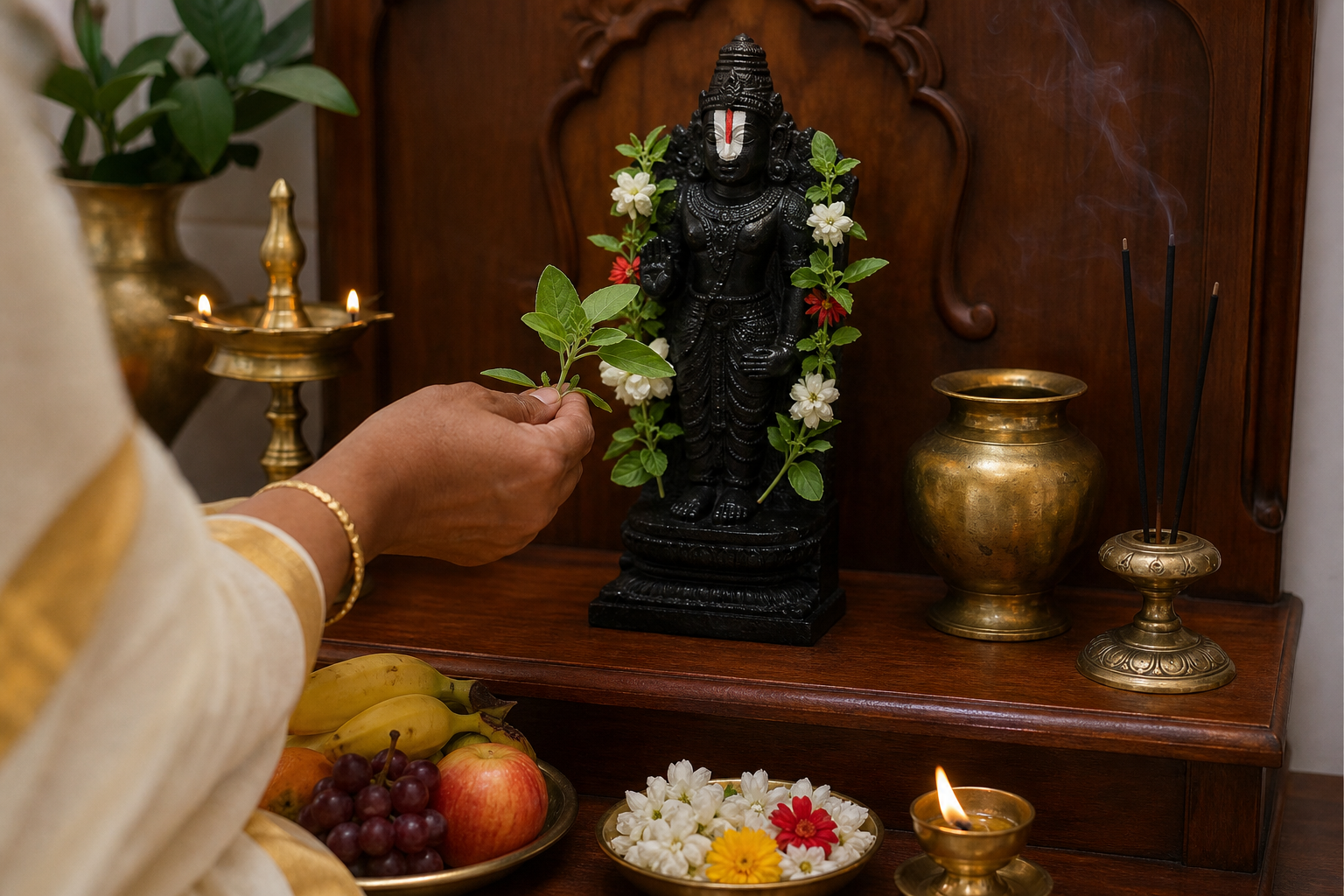
If grace cannot be forced, why perform ritual at all? Because ritual changes the posture in which you meet uncertainty. It gathers a scattered mind, places desire within a sacred order, and gives gratitude an embodied expression. The result may be an outward change, an inward change, or both, but the rite is not a lever that compels Bhagavan.
At Tirumala, liturgical precision matters. The tradition shaped under the influence of Sri Ramanujacharya does not treat devotion as a burst of private emotion detached from sampradaya. Timing, recitation, offerings, sacred images, and the roles of those serving the deity form an inherited discipline. This protects worship from becoming whatever an individual happens to prefer in the moment.
Darshan and seva
Darshan is often brief, especially when many pilgrims are waiting. Its value does not depend on holding the sanctum in your gaze for a long time. Prepare the mind before you arrive: decide what you are placing before Venkateshwara, remember what you must take responsibility for, and enter without demanding a particular sensation. A few attentive moments can be more honest than a long visit spent searching for a sign.
Suprabhatam, composed by Prativadi Bhayankara Annan, ceremonially awakens the Lord at dawn. Kalyanotsavam places the divine marriage at the center of worship. Sahasra Deepalankara Seva and Tiruppavada Seva express devotion through their own ordered forms. The point of participating is not to collect prestigious experiences. Choose a seva whose meaning supports the disposition you need to cultivate, and follow its discipline without treating access as evidence that you have been singled out.
The public processions of Malayappa Swamy make darshan accessible beyond the sanctum. During Brahmotsavam, the deity’s movement on vahanas such as Garuda Vahana and Hanumantha Vahana turns the hill into a shared field of worship. Vaikuntha Ekadasi similarly concentrates attention on the symbolic opening of a doorway to grace. If you attend a major observance, expect the communal dimension to be part of the practice: patience with other pilgrims is not separate from your devotion.
Nama, prasadam, and embodied gratitude
Repeating “Govinda” or “Om Namo Venkatesaya” gives the mind one sacred point to return to. On the ghat roads or the Alipiri-Mettu footpath, repetition can steady breath and attention. That settling is not by itself proof of a miracle. It is a form of interior preparation that may help you notice fear, hope, duty, and gratitude more clearly.
Theertham, tulasi, mantrakshata, and Srivari laddu carry the relationship with the sanctum into ordinary life. Receive prasadam reverently, but do not reduce it to a lucky object. Its fuller logic is reception followed by sharing: you accept what is given and allow gratitude to become generosity.
Hair tonsure at Kalyana Katta makes surrender physical. Its meaning is not that hair purchases a favor. It can represent relinquished vanity, fulfilled gratitude, and a decision to begin again with humility. The outer act becomes spiritually serious when you pair it with an inner relinquishment: a habit of pride, dishonesty, resentment, or waste that you are actually prepared to change.
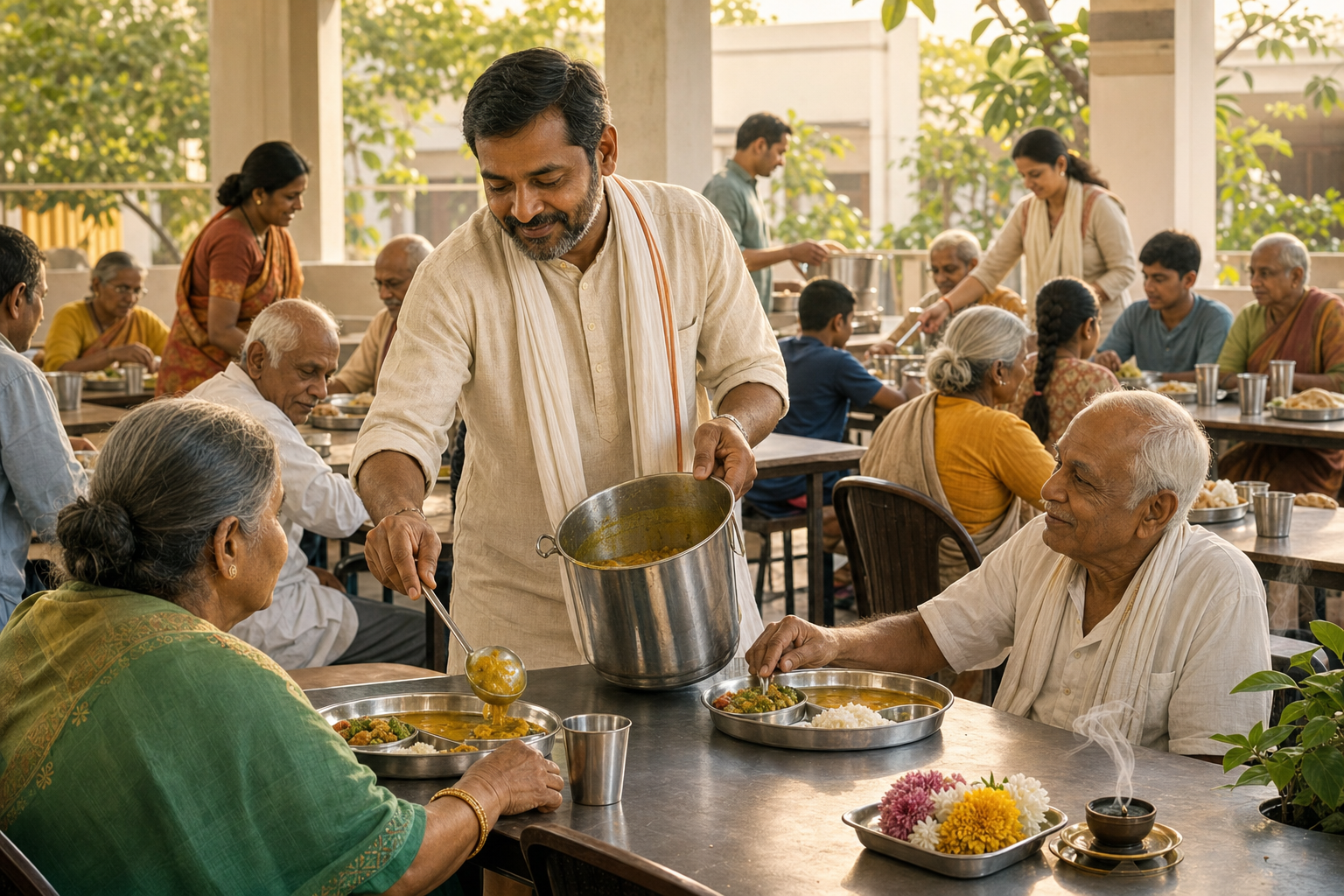
Annadanam and contributions to education, healthcare, or Dharmic preservation extend the same principle into public good. The temple tradition joins worship to service. When thanksgiving feeds, heals, or educates someone, a private experience of grace acquires a social form.
Make a vow that strengthens dharma
A sankalpa is easy to misunderstand as a bargain: “Give me this result, and I will give you that offering.” That frame can turn devotion into anxiety, especially when you begin wondering whether the wording was correct or whether an unexpected setback means divine displeasure. A better vow places your desire inside a commitment to right action.
- Name the need plainly. Ask for healing, employment, reconciliation, a safe journey, or clarity without pretending that you do not care about the outcome.
- Name the duty that remains yours. This may be following treatment, applying for work, restructuring a business, apologizing, studying, or seeking qualified advice.
- Choose an offering within your control. Nama-smarana, seva, annadanam, a responsible donation, hair tonsure, or another traditional observance can embody the vow.
- Keep the offering proportionate. Do not promise money you would need to borrow or funds required for essential family obligations. Gratitude that creates fresh financial harm defeats its own purpose.
- Define the change in conduct. Add one commitment involving satya, dayā, ahimsa, self-restraint, or service. This prevents the vow from ending as soon as the crisis passes.
- Fulfil it without display. If you understand the prayer as answered, complete the promised act as soon as reasonably possible and let gratitude reshape daily behavior.
Illness requires particular clarity. Darshan, tirunamam, theertham, prasadam, mantra, and prayer may accompany professional healthcare and may help a devotee meet treatment with steadiness. They are not substitutes for diagnosis, medication, surgery, emergency care, or follow-up. Do not delay care while waiting for a sign. If fasting would conflict with a medical condition or treatment plan, choose nama-smarana, simple food discipline approved for your circumstances, or seva instead.
Use the same discipline with money. Pray for opportunity and relief, but also examine contracts, expenses, debt, and professional advice. A new customer or unexpected offer may be received as krupa; it must still be evaluated prudently. Faith does not require you to ignore unfavorable terms.
If the desired result does not arrive, do not keep escalating the cost or severity of the vow in an attempt to force it. Return to the original prayer, continue the actions that remain Dharmic, and ask whether help has appeared in another form: endurance, a necessary truth, a trustworthy person, or the courage to accept a changed path. This does not turn every disappointment into a hidden success. It keeps suffering from being compounded by magical bargaining.
Read testimonies and dreams without losing discernment
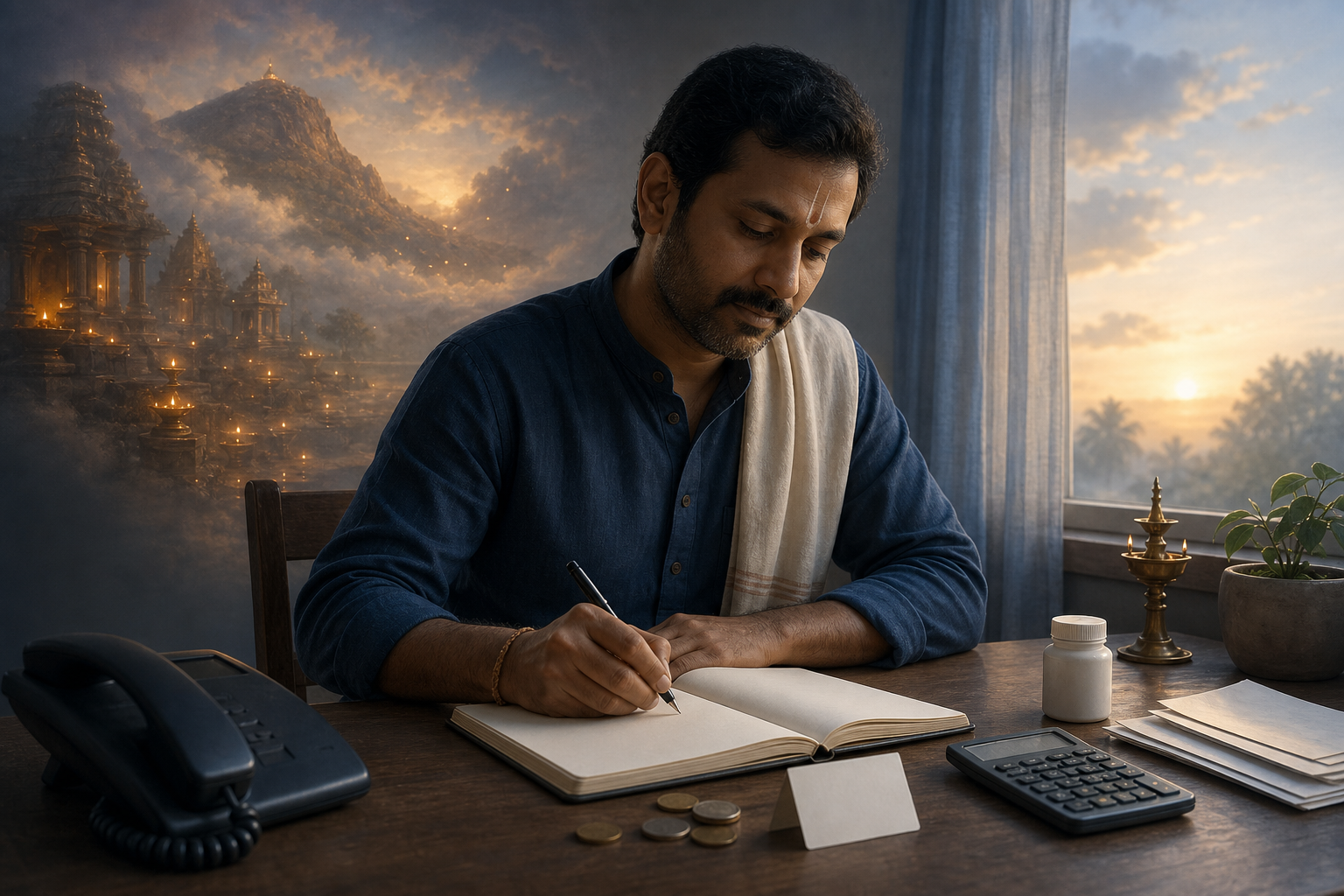
Accounts of Venkateshwara’s help deserve neither automatic dismissal nor automatic universalization. A family’s testimony may be spiritually decisive for the people who lived it while remaining inconclusive to an outsider. You can respect the testimony without claiming more certainty than it carries.
When someone survives danger after invoking Govinda, three layers are present. The survival is the event. The attribution to Venkateshwara is the devotional interpretation. The gratitude, changed conduct, or offering is the response. Keeping those layers distinct allows faith and intellectual honesty to remain together.
Dream-darshan and striking coincidences need the same care. A dream may bring consolation or draw your attention to a neglected duty. Treat it first as an invitation to prayer and examination, not as an unquestionable command. A dream alone is not sufficient reason to stop medical care, transfer money, abandon a binding responsibility, accuse another person, or take a dangerous journey.
Test the apparent message against dharma. Does it accord with truthfulness, non-violence, compassion, humility, and your legitimate obligations? Does it invite measured action, or demand secrecy, harm, recklessness, or self-glorification? A prompting that contradicts dharma should not acquire authority merely because it arrived in a vivid form.
You should also resist competitive miracle-telling. One person’s recovery does not mean another devotee lacked faith. One family’s fulfilled fertility prayer does not explain another family’s grief. One pilgrim’s unusual access to a seva does not establish higher spiritual status. Grace is not a public ranking system, and suffering should never be used as evidence against the sufferer’s devotion.
The soundest testimony usually keeps human effort visible. A student prays and continues studying. A business owner offers seva and restructures operations. A patient receives prasadam and completes treatment. The devotee may see the timely mentor, stable contract, or recovery as Venkateshwara’s krupa, but the interpretation does not cancel disciplined action. It illuminates it.
Carry Tirumala home with you
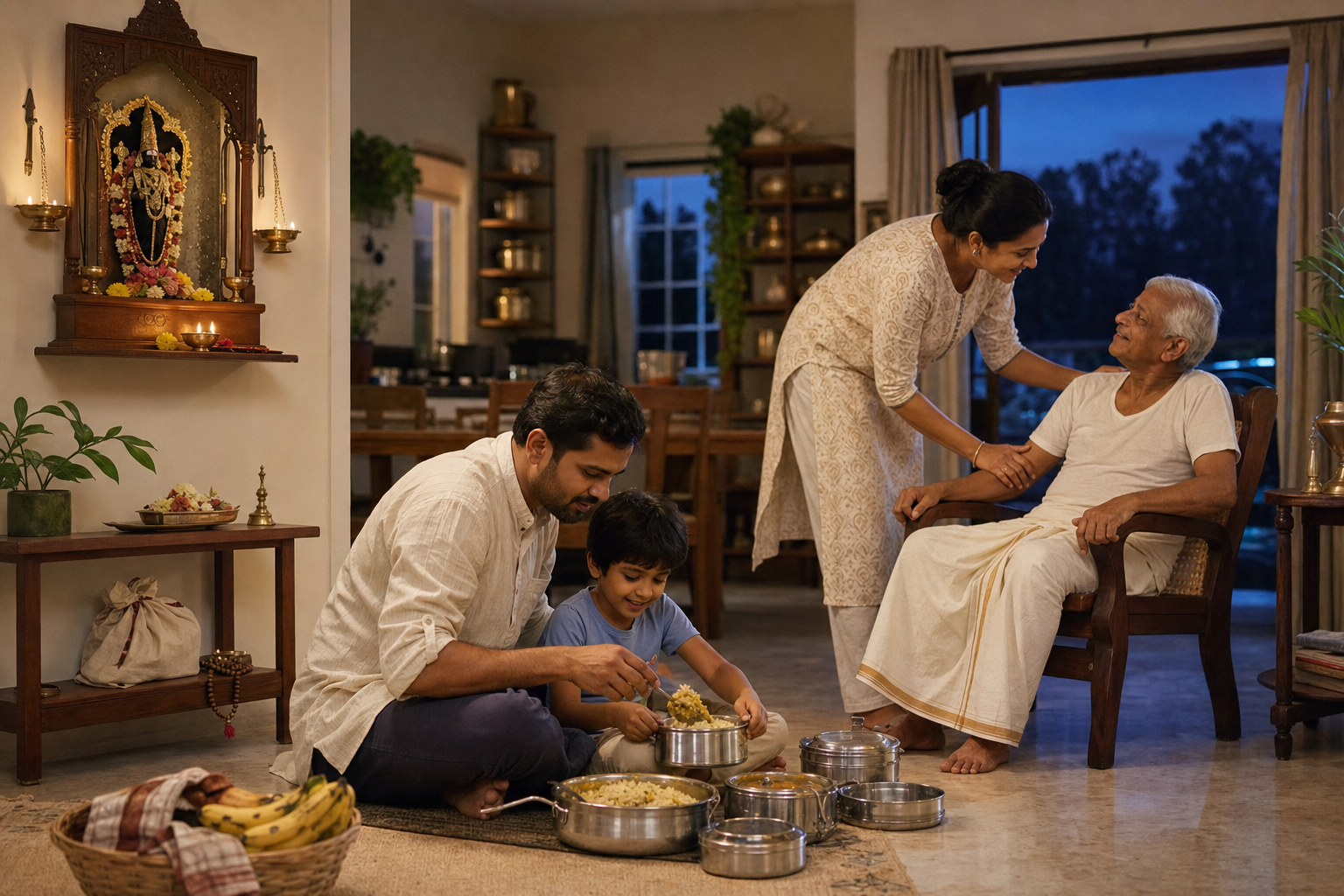
A pilgrimage can become a brief emotional peak unless you decide in advance what will continue afterward. Build the visit around a simple sequence: preparation, darshan, gratitude, and sustained conduct.
- Before the journey, write one honest prayer. Include what you seek, what you fear, and the practical duty you will continue performing.
- Choose one manageable discipline. This could be daily Govinda nama-smarana, recitation of Sri Venkatesa Suprabhatam, reading from the Venkatachala Mahatmyam, or singing an Annamacharya kriti.
- Enter darshan without scripting the experience. Do not demand tears, a bodily sensation, an unusual event, or instant certainty. Offer attention rather than chasing evidence.
- Receive prasadam as a responsibility to share. Let the sacred gift remind you to feed, assist, or encourage someone beyond your immediate circle.
- Complete any promised offering responsibly. Fulfil your vow without neglecting dependants, borrowing for display, or treating a large donation as more spiritually valid than sincere service.
- Review the fruit after returning. Look for improved conduct, clearer decisions, steadier practice, and greater compassion, not an endless stream of coincidences.
If you cannot travel to Tirumala, the relationship is not closed to you. Nama-smarana, Suprabhatam, Annamacharya’s devotional songs, scriptural reading, and service can form a serious household practice. Vaikuntha Ekadasi may be observed through prayer, appropriate upavasa, and charity; the form should remain compatible with health and family duties.
The Tirumala tradition ultimately asks you to make grace visible through the life you lead. Begin with one line on paper: “Venkateshwara, this is what I seek; this is the duty I will perform; this is the service I will offer.” Keep that line where you pray, and let the next responsible action become part of the prayer.