-
Śrīmad Bhāgavatam 3.22.28 and Nṛsiṁha Caturdaśī: Timeless Dharma, Protective Grace, and Bhakti Power

Śrīmad Bhāgavatam 3.22.28 situates household vows within a God-centered ethic, showing how domestic life becomes a disciplined path of bhakti-yoga. Read alongside the devotional mood of Nṛsiṁha Caturdaśī, the verse underscores a unified principle: sincere vows invite protective grace. The Prahlāda–Nṛsiṁha narrative exemplifies devotion under trial and the Lord’s compassionate precision in safeguarding truth. Practical…
-
Mercy Beyond Boundaries: How Lord Narasimha’s Mayapur Grace Answers Prayers Through Nama

This article explores a widely shared testimony of Lord Nrisimhadeva’s mercy at ISKCON Mayapur, showing how, within Vaishnava theology, grace is believed to extend even beyond formal devotional identity. It situates the couple’s experience—pilgrimage, vrata, and heartfelt surrender on Nrisimha Caturdasi—in the broader bhakti framework that emphasizes the transformative power of nama. It explains how…
-
When the Deity Answers: An Offering, a Prayer, and the Astonishing Grace of Lord Narasimha

A devotee couple offered a crystal necklace to Lord Nrsimhadev and, after a simple prayer for guidance, found the Deity adorned with the same ornament the very next day. This account—situated within Vaishnava temple practice and the Bhakti Tradition—illustrates how ritual protocol, theological principles of reciprocity, and lived devotion intersect. The piece explains why offered…
-
On Narasimha Jayanti: Lord Nrsimhadeva’s Fierce Compassion, Iconography, and Dharma’s Triumph

Narasimha Jayanti honors Lord Nrsimhadeva as fierce compassion in action—protection deployed solely to restore Dharma. This article grounds the observance in the Bhagavata Purana (7.8.30–31), unpacks the lion–elephant imagery as a classical sign of moral restoration, and explains how the avatara’s liminal form answers absolutist violence without becoming absolutist. It surveys major iconographic forms (Ugra,…
-
When Devotion Meets Divinity: How Lord Nrsimhadeva’s Grace Manifests in Real Time

Across Sanatana Dharma, testimonies surrounding Lord Nrsimhadeva in Mayapur suggest that sincere petitions often meet with remarkable immediacy. This piece situates such “lilas” within a careful academic framework that distinguishes the authority of sastras from the experiential value of testimony. It explains how Bhakti Tradition principles—intention (sankalpa), remembrance, and mantra—shape perceptions of instant reciprocation, anchored…
-
Unraveling Nrsimhadev’s Missing Jewels: Sacred Trust, Heritage Security, and Hope

A sudden, disorienting phone call while abroad—“heart attack”—captures the vulnerability communities feel when sacred jewels of Nrsimhadev are reported missing. This analysis reframes the mystery as a call to stewardship, integrating ritual integrity with modern heritage preservation and temple security. Readers gain a practical blueprint: clear governance and SOPs, meticulous inventories with high-resolution documentation, conservative…
-
Fierce Compassion on Narasimha Caturdashi: Dharma’s Triumph, Prahlada’s Faith, Rituals and Meaning

Narasimha Caturdashi (Narasimha Jayanti) commemorates the man-lion avatara of Vishnu who restores dharma while protecting steadfast devotees, as outlined in the Bhagavad-gita’s verses on divine intervention. The Prahlada narrative from the Bhagavata Purana illustrates unwavering bhakti in the face of authoritarian suppression, framed not as sectarian conflict but as a timeless lesson in ethical resilience.…
-
Shaligram, Shankha, and Tulsi: Unlocking Vishnu’s Living Presence and Timeless Grace

This comprehensive exploration presents the sacred triad of Shaligram, Shankha, and Tulsi as a living, scripturally grounded pathway to Vishnu worship. It clarifies the Shaligram’s geological identity as a natural ammonite fossil from the Kali Gandaki near Muktinath, honored as a svayambhū form of Vishnu requiring no prāṇa-pratiṣṭhā. It explains how the Shankha (Turbinella pyrum)…
-
Lakshmi Ghot in Bengal: Sacred Clay-Pot Worship for Prosperity, Harmony, and Eco-Devotion

Bengal’s Lakshmi Ghot tradition consecrates an earthen pot as the living locus of Goddess Lakshmi, offering a compact yet theologically complete home ritual. This long-form guide decodes the symbolism of the kalasha—clay, water, leaves, grains, and coconut—as a microcosm of abundance governed by dharma. It situates the practice within Kojagari Lakshmi Puja on Sharad Purnima…
-
Hindu Wisdom Beyond Pride: Shattering Ego’s Illusion to Reveal the Sacred in All Creation

This essay examines the illusion of worthlessness through Hindu philosophy and a classic teaching tale, The Search for the Void. It explains how ahaṃkāra (ego) and avidyā (misapprehension) distort judgment, while the Upaniṣadic vision—īśāvāsyam idaṁ sarvam and sarvaṁ khalvidaṁ brahma—reveals intrinsic, relational value. A detailed retelling of the Guru–Śiṣya narrative shows how “void” becomes a…
-
Bhagavan Alone Is Real: Timeless Vedanta, Living Bhakti, and the Joy of Dharmic Unity

This article unpacks the aphorism “Know that Bhagavan alone is real. Nothing else matters” through the lenses of the Upanishads, Bhagavad Gita, and major Vedanta schools (Advaita, Vishishtadvaita, Dvaita). It clarifies Bhagavan as the sat-chit-ananda ground of being and explains why the phrase does not deny ethical life but re-centers it in the Real. Readers…
-
May 7, 2026 Panchang: Exact Tithi Shift, Nakshatra, Rashi and Shubh Muhurat Guide

May 7, 2026 (Thursday) begins with Krishna Paksha Panchami and shifts to Krishna Paksha Sashti at 6:51 AM in most regions. This guide explains what a tithi is, why timings vary by location, and how to plan auspicious actions using Abhijit Muhurat while avoiding Rahu Kalam, Yamaganda, and Gulika. It outlines how Nakshatra, Yoga, Karana,…
-
Kumbhakarna’s Vision of Oneness: Ramayana’s Battlefield as a Revelation of Non-Dual Truth

Kumbhakarna’s encounter with Rama in the Ramayana is more than a dramatic duel; it is a philosophical disclosure that reframes war as a revelation of oneness. Grounded in Yuddha Kanda and illuminated by Vaishnava doctrine on Jaya–Vijaya, the episode supports a Vedantic reading in which multiplicity is undergirded by a single reality. Advaita, Vishishtadvaita, and…
-
When Panic Feels Dangerous: Retrain the Nervous System with Breathwork, Science, and Dharma

Panic feels dangerous because the body’s alarm system is loud, not because the body is failing. This long-form, research-informed guide explains how the autonomic nervous system creates the fight-or-flight surge and how understanding this physiology breaks the fear-of-fear loop. Readers learn a practical breathing protocol (four-six breathing), sensory grounding, and gentle exposure skills that retrain…
-
Shivling Beyond Form: Debunking Phallic Myths with Scriptural and Iconographic Evidence

The Shivling is widely mischaracterized as a purely phallic symbol, yet Sanskrit philology, Purāṇic and Āgamic theology, Shilpa Shastra geometry, and the archaeological record point to a more expansive meaning: liṅga as a sign, axis, and cosmogram of the formless. This analysis explains how Lingodbhava and Jyotirliṅga narratives foreground an infinite column of light rather…
-
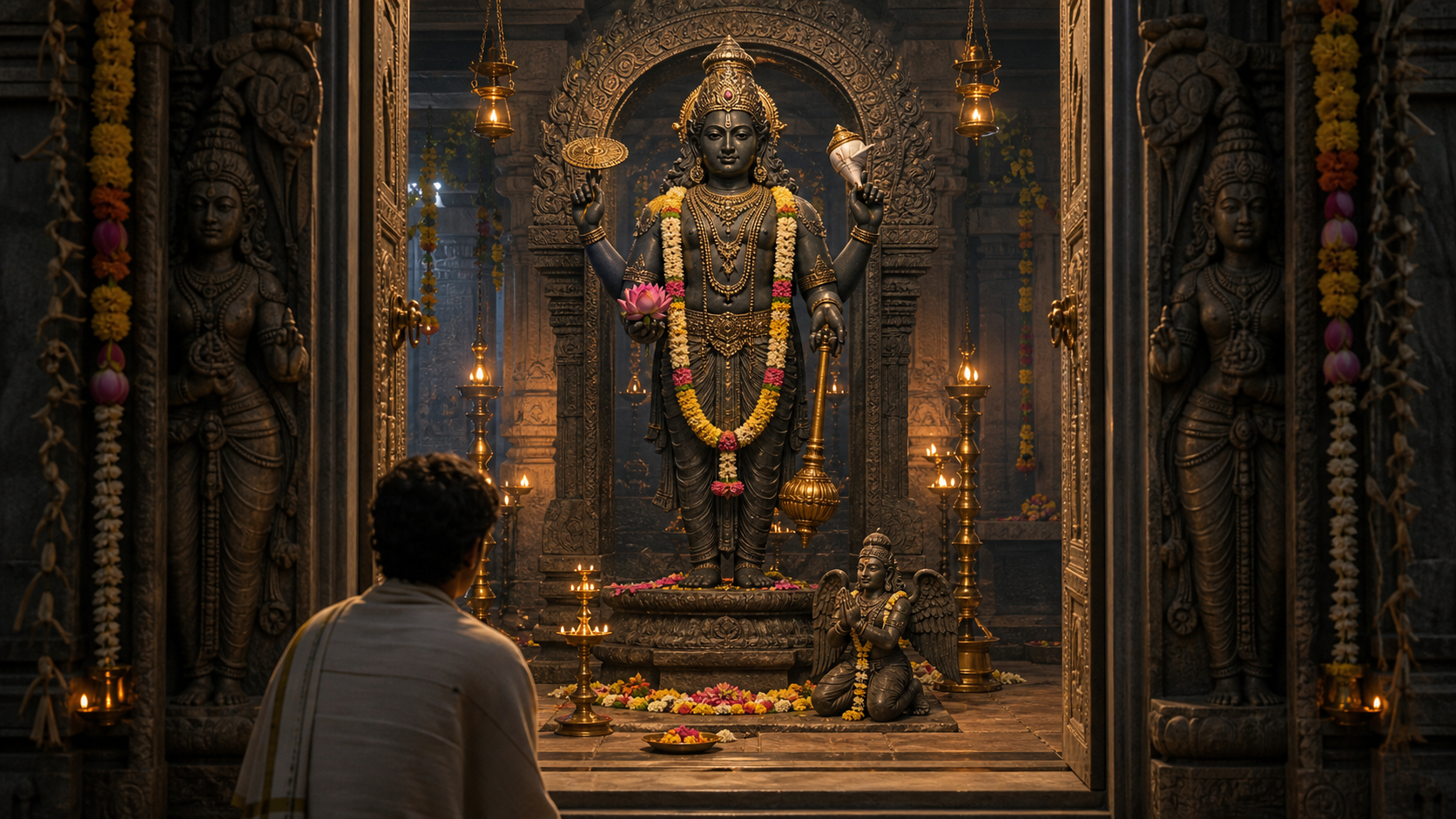
Narasimha Iconography Decoded: Forms, Symbols, and Sacred Meanings in Hindu Temple Art

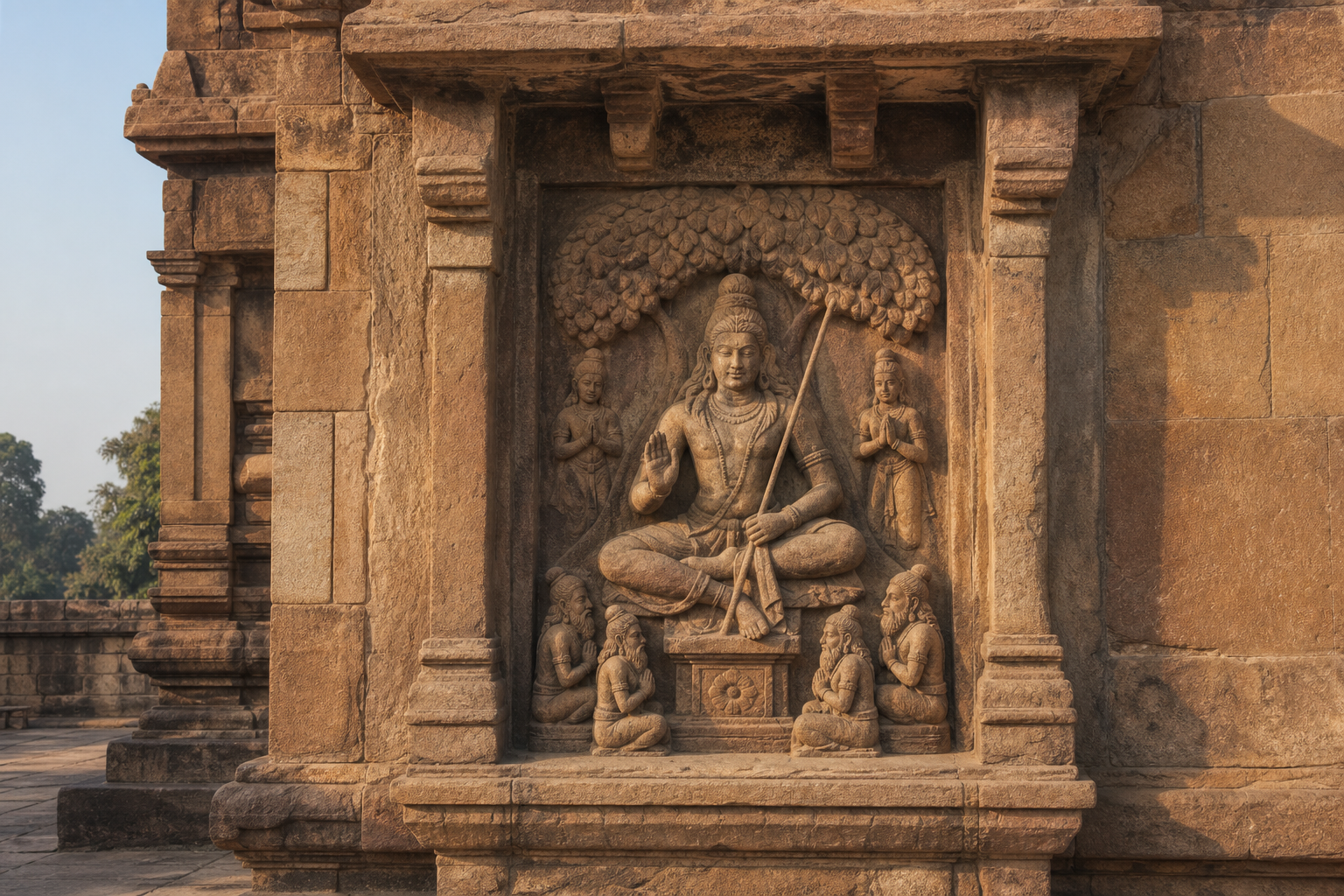
This long-form guide decodes the iconography of Narasimha—Hinduism’s half-lion, half-man avatar of Vishnu—across textual sources, temple sculpture, and living ritual. It details the major forms (Ugra/Kevala, Lakshmi-Narasimha, Yoga-Narasimha, Jvala/Krodha), their attributes and mudras, and how Shilpa Shastras and Agamas govern measurements and aesthetics. Readers learn to recognize narrative panels (pillar-theophany, twilight justice) and to interpret…
-
The Saint in the Streets: Sri Jayananda Prabhu’s Legacy and the Rise of Ratha‑yatra in the West

Sri Jayananda Prabhu’s disappearance day highlights a life that fused Gaudiya Vaishnava devotion with rigorous public service. Credited with helping establish the first large-scale Ratha‑yatra outside India in San Francisco, he translated kirtan philosophy into civic practice through engineering acumen, volunteer management, and respectful engagement with city institutions. His servant leadership—marked by humility, reliability, and…
-
Honoring HG Agnideva Prabhu’s Timeless Kirtan Legacy and Devotional Service to Srila Prabhupada

HG Agnideva Prabhu, a legendary ISKCON kirtaneer, passed away, and devotees around the world responded in prayerful unity—including a Zoom kirtan with about one hundred participants captured at 2 pm NZ time. This tribute situates his life within Gaudiya Vaishnavism’s sankirtana tradition while offering a technical view of kirtan’s modal frameworks, tala choices, instrumentation, vocal…