
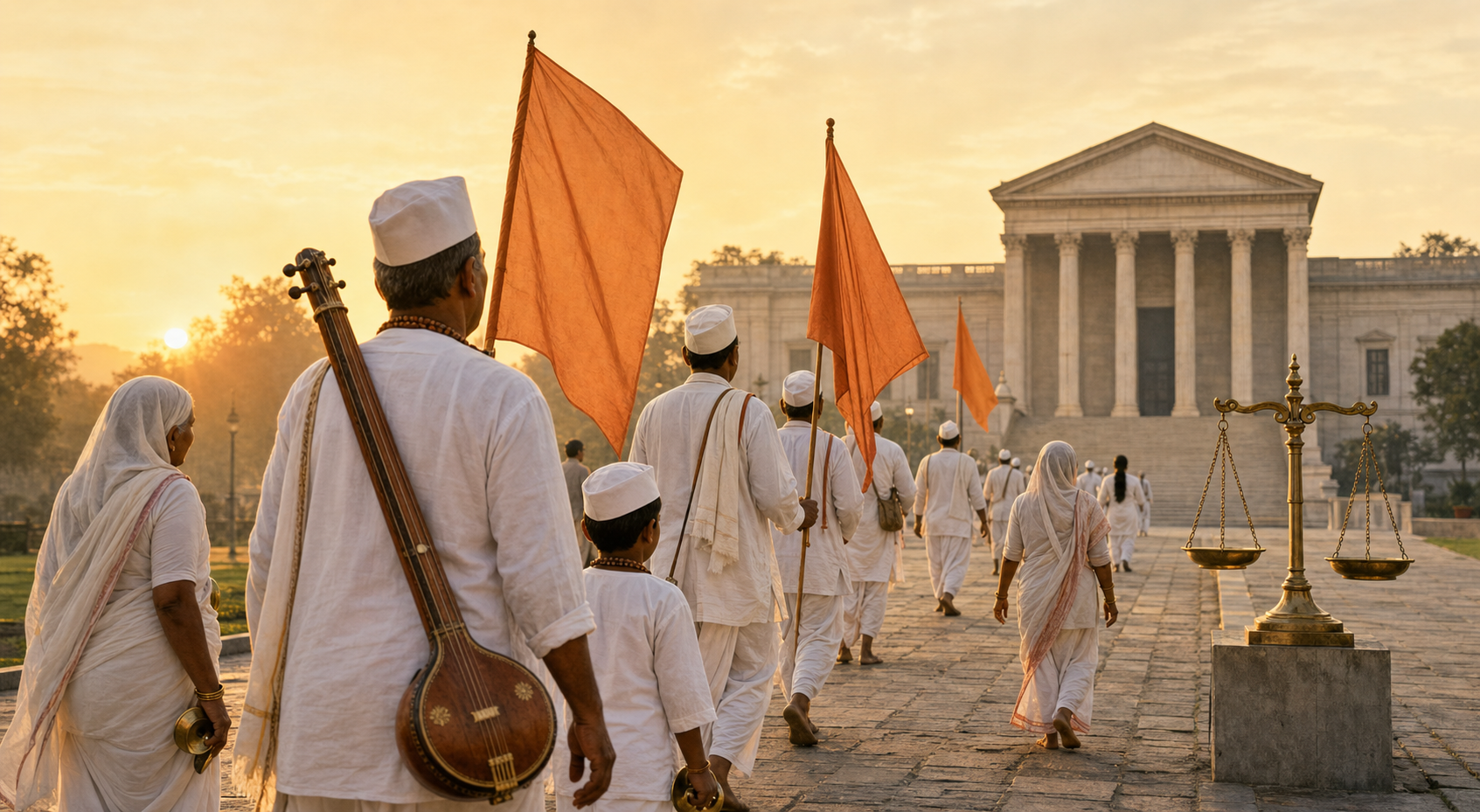
If a public figure is accused of insulting Warkaris, you have to protect the community’s dignity without turning a potentially valid complaint into a noisy but legally weak campaign. Preserve the complete record before circulating a clip, distinguish moral injury from criminal liability, and ask institutions for action that can survive scrutiny.
In the dispute involving NCP leader Vikas Lavande, Hindu Janajagruti Samiti has called for immediate legal action, including arrest if statutory thresholds are met, over remarks alleged to be derogatory toward the Warkari Sampradaya. The allegation warrants serious examination. It also remains an allegation until the words, context, intent, and applicable law have been tested.
Dignity and criminal liability are different questions

The Warkari Sampradaya is not merely an interest group that happens to take offence. Its devotion to Vithoba of Pandharpur, the singing of abhangs, the discipline of the Wari, and its traditions of simplicity and seva belong to Maharashtra’s living moral inheritance. Families carry these practices across generations. A disparaging remark can therefore wound religious conviction, regional memory, and community identity at the same time.
That cultural weight explains why the response is strong, but it does not by itself establish a crime. Religious-speech cases turn on defined legal elements. Hurt is evidence of social impact; it is not a substitute for proving deliberate intent, malicious purpose, promotion of enmity, or a legally relevant threat to public order.
The controversy has been framed through several provisions of the Indian Penal Code:
- Section 295A concerns deliberate and malicious acts intended to outrage religious feelings by insulting a religion or its beliefs.
- Section 153A concerns the promotion of enmity between groups on grounds that include religion.
- Section 505(2) concerns statements that foster enmity or ill will between groups and are conducive to public mischief.
- Section 298 may become relevant where words are uttered with deliberate intent to wound religious feelings.
These provisions do not describe the same wrong. Listing all of them in a complaint without connecting each one to a specific fact can weaken rather than strengthen the demand for accountability. Ask what the exact words did: Did they insult a religious belief? Did they target Warkaris as a group? Did they encourage hostility between communities? What surrounding conduct supports an inference of deliberate malice?
The constitutional framework requires the same precision. Article 19(1)(a) protects freedom of speech and expression, while Article 19(2) permits reasonable restrictions on grounds that include public order, decency, and morality. Article 25 protects freedom of conscience and the right to profess, practise, and propagate religion, subject to public order, morality, and health. Neither protection is absolute, but neither can be discarded merely because a controversy is politically charged.
In Amish Devgan v. Union of India (2020), the Supreme Court emphasised that Section 295A reaches deliberate and malicious conduct, not every careless or offensive expression. The words, context, audience, and likely impact must be read together. Pravasi Bhalai Sangathan v. Union of India (2014) recognised the available statutory tools while cautioning against overcriminalisation. Shreya Singhal v. Union of India (2015) sharpened the distinction among discussion, advocacy, and incitement. For you, the practical lesson is simple: do not treat a cropped clip and a criminal offence as interchangeable.
Build the evidentiary record before amplifying the outrage
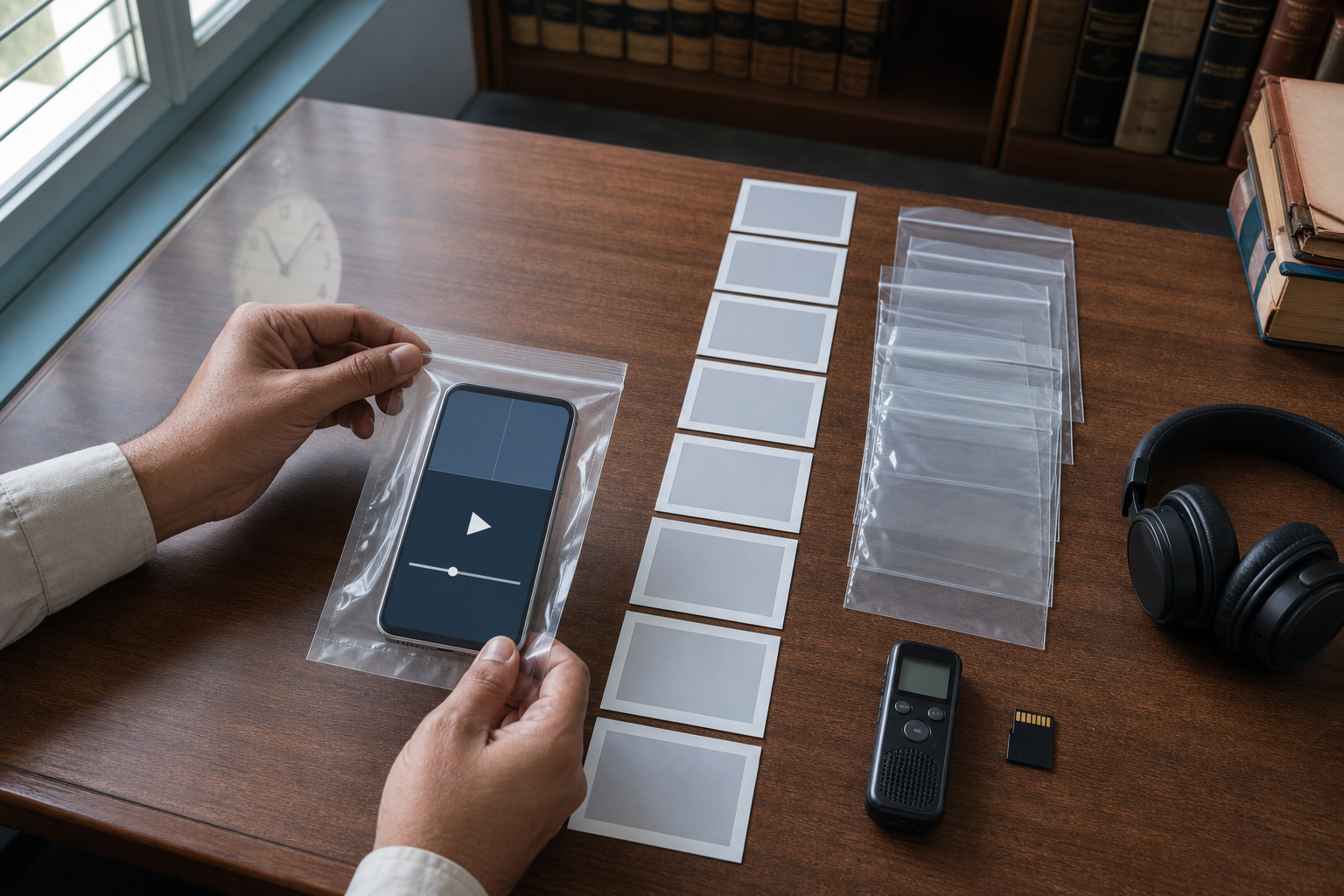
The full recording is more useful than the most viral excerpt. A short clip may prove that certain words were spoken, but it may not establish what prompted them, whether they were quoted from someone else, whether a clarification immediately followed, or whether the circulating version has been edited. Context can aggravate an offence or defeat an allegation, so preserve it even when you believe it will help the speaker.
A credible evidence packet should contain:
- The earliest obtainable copy of the complete audio or video, kept untouched in its original format where possible.
- The original URL, account name, publication time, venue, event name, and any available description of the audience.
- A transcript in the language actually spoken, with timestamps showing where the disputed passage appears.
- A separate translation if one is needed. Mark it as a translation, identify who prepared it, and preserve disputed Marathi expressions rather than forcing them into an overconfident English equivalent.
- The material immediately before and after the disputed words, including the question or exchange that prompted them.
- Information establishing the speaker’s identity and whether the account that published the recording is official, affiliated, independent, or unknown.
- Any later clarification, deletion, repetition, apology, or endorsement. Subsequent conduct may matter when intent is disputed.
- Concrete evidence of impact, such as identifiable threats, calls for hostility, or a credible risk of confrontation. Separate this from general anger or partisan criticism.
- Names and contact details of direct witnesses, shared only with their consent and with the appropriate authorities.
Keep an untouched evidence folder and use copies for transcription, subtitling, or highlighting. Note who obtained each item and when. Do not add dramatic music, splice reactions into the recording, or circulate a translated caption as though it were the original speech. Those choices may increase attention while making authenticity harder to establish.
Separate facts, inferences, and reactions in your notes. The exact words are facts if the recording is authentic. Malice is an inference that must be supported by wording, repetition, setting, warnings, or surrounding conduct. Community hurt is a genuine reaction, but it should be documented through responsible representations rather than inflated claims about unrest.
Never try to manufacture evidence of public-order danger by encouraging confrontation. Threats and retaliatory language can endanger people, distract from the original conduct, and undermine the moral and legal standing of the complaint.
Ask for legal action that can survive judicial scrutiny
A written complaint should make the investigating officer’s task easier. It should identify the conduct, explain the community’s concern, supply the supporting material, and request application of whatever law the verified facts actually disclose. It should not announce guilt as a settled fact or make arrest the only acceptable sign of respect.
Organise the complaint around the following points:
- Identify the complainant and explain the complainant’s connection to the Warkari tradition or the affected community.
- State the allegation neutrally, naming the speaker, occasion, platform, and disputed words without embellishment.
- Point the officer to the complete recording and the relevant timestamps. Attach the original-language transcript and clearly labelled translation.
- Explain why the words concern Warkari religious belief, practice, or collective identity rather than merely disagreeing with a political position.
- Describe the facts said to show deliberate or malicious intent. Keep this separate from the evidence of reach, reaction, and public-order risk.
- List every attachment so an investigator can locate and preserve the evidence quickly.
- Request a lawful investigation and action under the provisions that are made out after verification.
- Ask for written acknowledgement of the complaint and preserve a copy of everything submitted.
A clean factual core can state that on the specified date, at the identified venue or platform, the named speaker used the disputed words at the recorded timestamp; that the enclosed unedited recording and transcript supply the context; and that the listed surrounding facts warrant examination of deliberate intent, injury to religious feelings, group hostility, and public-order impact. This structure is stronger than adjectives such as shocking, unforgivable, or anti-Hindu unsupported by analysis.
Arrest is not automatic. Under the Supreme Court’s guidance in Arnesh Kumar v. State of Bihar (2014), police dealing with offences punishable by imprisonment of up to seven years must examine whether arrest is necessary and proportionate, often using a notice under Section 41A of the Code of Criminal Procedure. Although Sections 153A and 295A are typically described as cognizable and non-bailable, those classifications do not make arrest self-executing. A notice is not an acquittal, just as an arrest is not a conviction.
Section 196 of the Code of Criminal Procedure also requires prior sanction for a court to take cognizance of certain offences, including Sections 153A and 295A. That safeguard shapes the prosecutorial path even where investigation can proceed. A serious demand should therefore seek preservation of evidence, a reasoned investigation, necessary preventive steps, and proportionate enforcement rather than promising a particular procedural result before the authorities have assessed the record.
The section numbers above belong to the IPC and CrPC framework through which this dispute was described. Before submitting a present-day complaint, have a lawyer practising criminal law in Maharashtra verify which substantive provisions, procedural provisions, and sanction requirements are in force for the date and place concerned. Copying legacy section numbers into a current filing without checking them can obscure an otherwise sound grievance. This general framework is not a substitute for advice on an individual case.
If there is an immediate risk of violence, provide the police with concrete details: the persons or groups involved, the place at risk, the conduct threatened, and the evidence supporting the warning. Do not bury urgent safety information inside a broad cultural memorandum.
Defend Warkari dignity without reproducing the insult
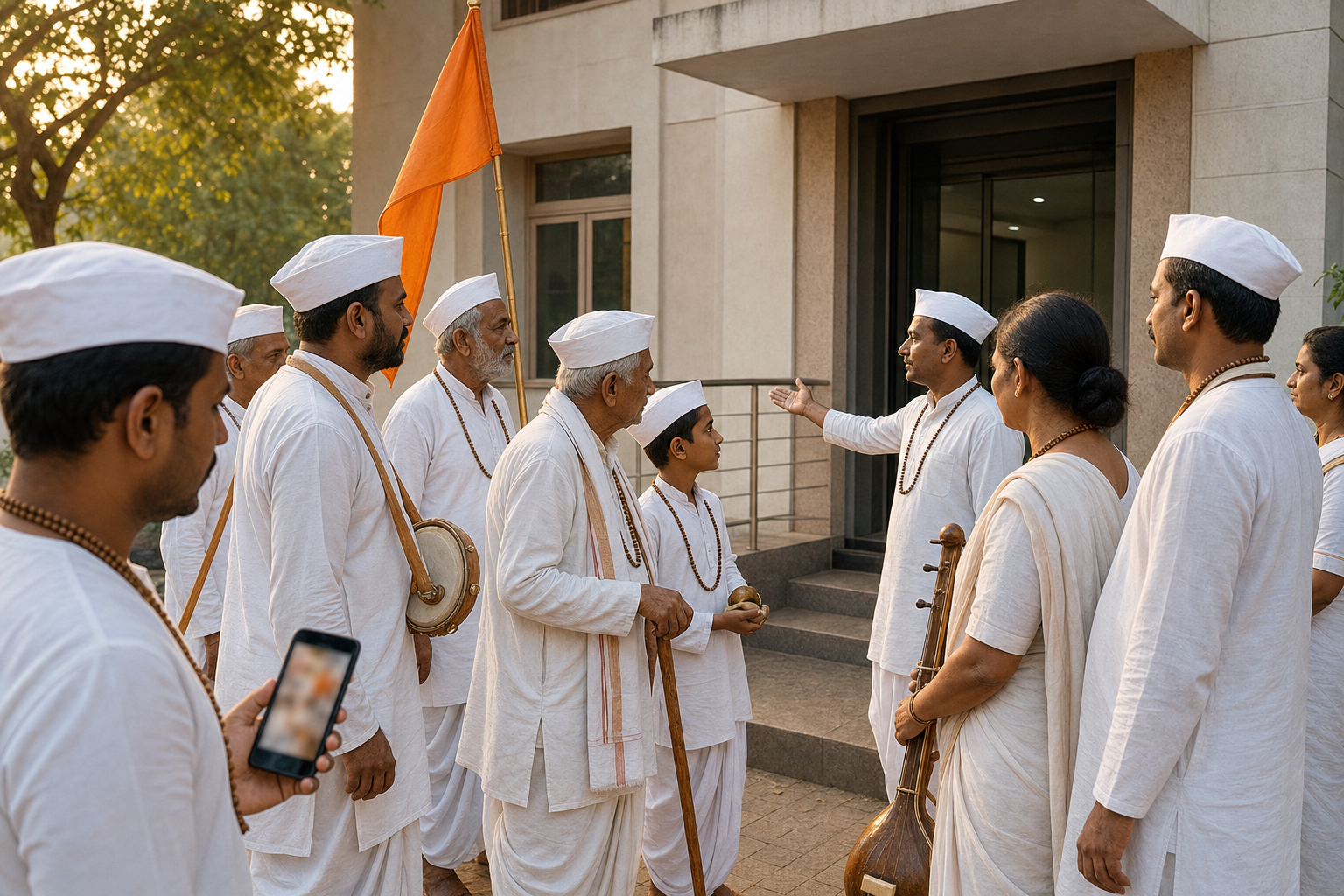
A public response can protect dignity or become an unpaid distribution network for the offending words. Reposting the most inflammatory fragment again and again may expose more people to the insult while stripping away the context needed for accountability. Publish only what is necessary to identify the grievance, and link to an authoritative statement or evidence record rather than rewarding sensational copies.
A disciplined community response can proceed on several tracks:
- State what is alleged, what has been verified, and what remains uncertain. Correct inaccurate captions or translations even when they favour your side.
- Request a specific form of repair: release of the complete recording, clarification, withdrawal of the words, an apology, or a public reaffirmation of respect for the Warkari Sampradaya.
- Ask the political party or institution concerned to examine the conduct under its own code and to set expectations for future public communication.
- Invite recognised Warkari representatives, dharmic scholars, and responsible civic mediators into the discussion before partisan voices monopolise it.
- Make the tradition visible through abhang, seva, education about the Wari, and support for the living institutions surrounding Pandharpur. Cultural confidence should not depend entirely on the vocabulary of prosecution.
- Reject threats, doxxing, collective abuse, and dehumanising labels. They contradict the restraint being demanded from the original speaker and may create a separate legal and moral wrong.
An apology can matter without automatically ending every legal question. Its timing, clarity, and sincerity may bear on social repair and on how later conduct is understood. A vague statement that people misunderstood the speaker is different from an unqualified withdrawal that identifies the harmful words and affirms respect for Warkaris. You can ask for that distinction without prejudging what criminal law requires.
The Warkari ethic of humility, devotional singing, simplicity, and mutual care also offers the standard for the response. Its affinities with Sikh seva and kirtan, Jain ahimsa, and Buddhist karuna make restraint a dharmic strength rather than a retreat. Firmness and self-command belong together.
Key takeaways: act in this order
- Preserve the complete, original record before reposting or editing the disputed passage.
- Verify the speaker, language, translation, occasion, audience, and surrounding exchange.
- Test the facts against the elements of the possible offence; community hurt alone does not prove deliberate malice or group enmity.
- Submit a factual complaint with an indexed evidence packet and ask for written acknowledgement.
- Seek proportionate investigation rather than treating immediate arrest as the only meaningful institutional response.
- Pair legal accountability with clarification, retraction, apology, party responsibility, and visible celebration of Warkari practice.
- Keep every protest, statement, and online action consistent with seva, humility, and ahimsa.
If you are responding now, stop circulating fragments and start building the verified record. Obtain current legal review, make a precise request to the authorities, and give the speaker or institution a defined path to repair the injury. That combination gives the law something it can assess and shows that Warkari dignity is defended through truth, discipline, and dharmic conduct.