

You can be loyal to your family and still know that your family is wrong. You can keep a promise and still see that its fulfilment will hurt someone innocent. You can protect an institution while wondering whether its rules are undermining the very justice the institution exists to serve.
The Ramayana enters precisely this difficult territory. It does not reduce dharma to doing whatever your role demands, nor does it make private sincerity the final judge of right action. It asks you to identify the duties in conflict, test each one against truth and non-harm, choose without disguising self-interest as principle, and accept the cost of your choice.
Why two sincere duties can point in opposite directions
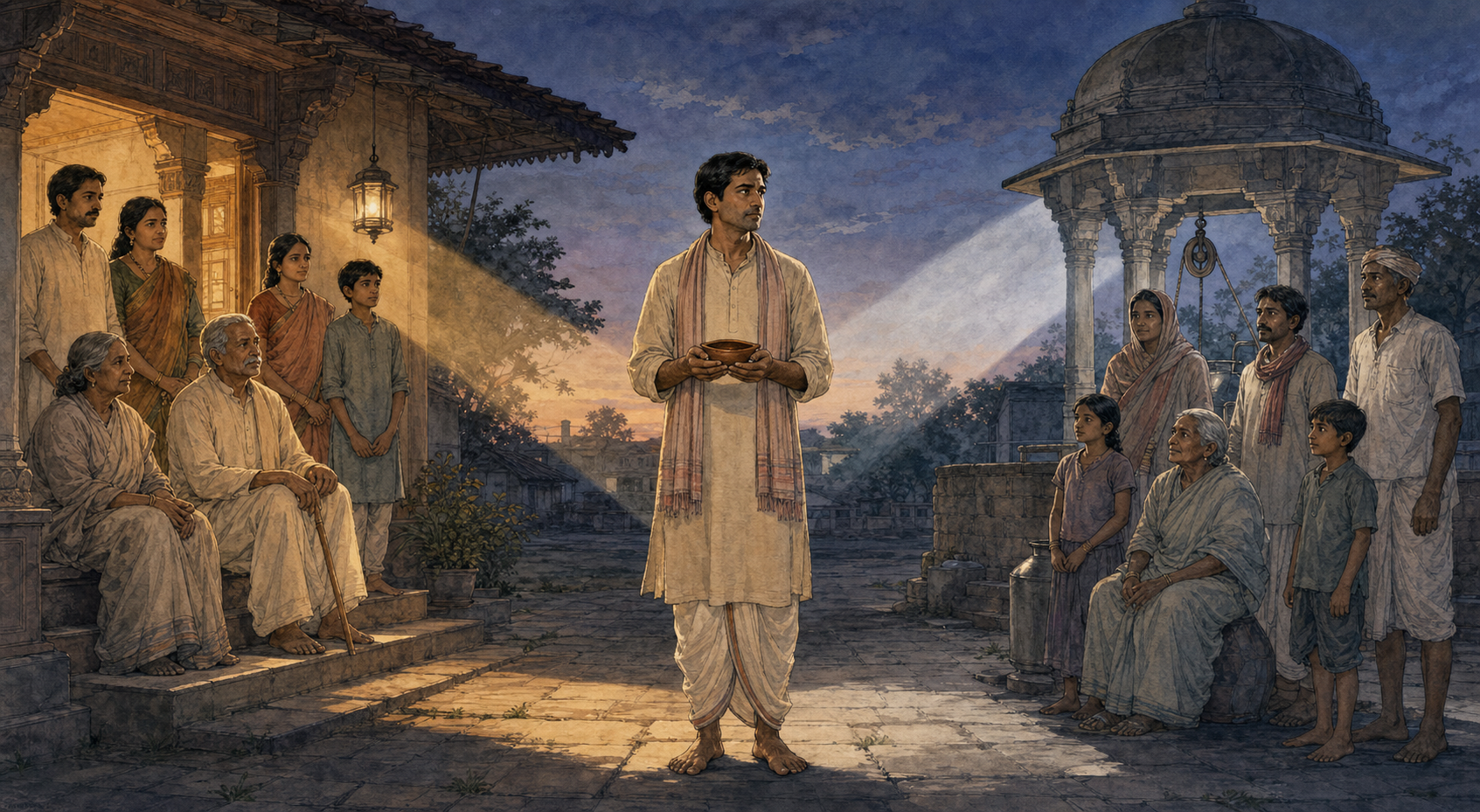
A dharmic conflict is rarely solved by finding one rule and applying it mechanically. The moral field contains several layers of obligation, each answering a different question:
- Sādhāraṇa-dharma asks what every person owes to others: satya, or truth; ahiṁsā, or non-harm; dayā, or compassion; dāna, or generosity; and kṣamā, or forbearance.
- Svadharma concerns the responsibilities arising from your role and stage of life. A parent, judge, ruler, sibling, employee and spiritual aspirant do not face identical obligations.
- Rājadharma asks what protects justice, social order, institutional integrity and public trust. Its modern analogues arise wherever a person exercises authority over others.
- Āpad-dharma recognizes that a genuine emergency may change what can be done, although urgency does not erase ethical limits.
- Maryādā supplies the boundary. It asks whether a proposed act crosses a normative limit even when the actor claims a worthy purpose.
The collision matters because each claim may contain a genuine good. Rāma’s duty as a son, Bharata’s responsibility toward Ayodhya, Sītā’s fidelity to her marriage, Vibhīṣaṇa’s loyalty to his family and Hanumān’s commitment to his mission are not trivial attachments. The difficulty begins when honouring one good appears to endanger another.
Yet not every appeal to duty deserves equal standing. Rāvaṇa possesses learning, authority and the fruits of tapas, but none of these can turn abduction into righteous conduct. His desire and pride breach maryādā. Kumbhakarṇa recognizes Rāvaṇa’s wrongdoing but fights for him out of fraternal loyalty. His tragedy shows how a real virtue becomes misdirected when it is separated from truth.
This gives you an essential first test: ask whether you face two defensible duties or whether one supposed duty is merely protecting desire, status, fear or group loyalty. Name the person or good each obligation protects. Then name the limit it must not cross. If a role requires you to become complicit in clear adharma, invoking svadharma does not purify the act.
What the Ramayana’s hardest choices actually teach

Before using an episode as a moral precedent, identify which telling you have in mind. Valmiki’s Ramayana, the Adhyatma Ramayana, Kamban’s Iramavataram, Tulsidas’s Ramcharitmanas and the Jain Paumachariya bring different theological and ethical emphases to the narrative. Even the familiar Lakṣmaṇa Rekhā is a popular motif absent from Valmiki’s Ramayana. Textual precision prevents a later retelling, devotional interpretation or cultural memory from being presented as though it were the only form of the story.
Rāma and Bharata: preserve the promise without seizing its reward
When Rāma accepts exile, he places satya and filial fidelity above personal comfort and immediate royal succession. The decision protects more than a private promise between father and son. A royal house that treats its word as disposable weakens the moral basis on which it expects obedience from everyone else.
Bharata responds to the same crisis differently. He refuses the coronation obtained through Kaikeyī’s demand, places Rāma’s pādukā on the throne and serves as regent. He does not abandon Ayodhya merely to keep his hands symbolically clean. He accepts the administrative burden while refusing the legitimacy and personal benefit of usurpation.
The practical distinction is powerful: responsibility and entitlement are not the same thing. When an organization or family is destabilized, you may need to perform necessary work without claiming the disputed reward. Bharata’s model is neither passive withdrawal nor opportunistic advancement. It is stewardship joined to renunciation.
Sītā: distinguish voluntary sacrifice from imposed sacrifice
Sītā elects to accompany Rāma into the forest. That choice displays agency within fidelity; she is not merely transported into exile as an accessory to someone else’s vow. Later episodes are much more ethically fraught. The agni-parīkṣā appears in certain tellings as a response to public doubt, while the subsequent separation places Rāma’s responsibility as ruler in severe tension with his responsibility toward Sītā.
You do not resolve this tension by turning Sītā’s endurance into a command that other people must silently bear mistreatment. A sacrifice chosen by the person who pays its cost is morally different from a sacrifice imposed by the person who benefits from it. Nor does invoking rājadharma automatically settle whether a ruler’s response to public rumour is just. Institutional pressure may explain a decision without making the decision ethically unassailable.
Whenever duty language falls most heavily on the person with the least power, pause. Ask who chose the burden, who benefits from it, whose testimony is being trusted and whether public appearance has displaced fairness. This is especially important when someone cites family honour, reputation or community expectations to limit another person’s agency.
Vibhīṣaṇa and Kumbhakarṇa: know when loyalty becomes complicity
Vibhīṣaṇa does not begin by deserting Laṅkā. He counsels Rāvaṇa against his course. Only when counsel fails does he leave and align himself with Rāma. Kumbhakarṇa also recognizes the wrong, but he ultimately allows fraternal duty to govern his action. The contrast is not between a loyal brother and a disloyal one. It is between loyalty disciplined by justice and loyalty allowed to override justice.
This matters whenever a group asks you to conceal harm for the sake of unity. First determine whether honest internal correction remains possible. Speak clearly enough that silence cannot later be mistaken for agreement. If the wrongdoing persists and threatens others, loyalty to the group’s stated purpose may require refusing loyalty to its present leadership. Vibhīṣaṇa’s path also warns against dramatic self-righteousness: dissent should serve the threatened good, not merely advertise the dissenter’s purity.
Hanumān and Vāli: force requires purpose, limits and scrutiny
Hanumān’s mission in Laṅkā joins courage to disciplined intelligence. He carries Rāma’s ring as pramāṇa for Sītā, seeks reliable knowledge, limits harm to noncombatants and returns with information needed for the larger mission. Strength is never his only qualification. Bhakti gives his strength a purpose, while viveka governs its use.
His conduct offers a practical pattern for any forceful intervention: establish your identity and authority, verify the situation, distinguish the objective from emotional spectacle, reduce harm unrelated to that objective, and return with accurate information. Ahiṁsā here does not require helplessness. It demands that necessary power be calibrated rather than indulged.
Rāma’s killing of Vāli from concealment remains more contested. Rāma’s justification in Valmiki’s Ramayana rests on rājadharma and his authority to punish Vāli’s seizure of his brother’s wife and rule by might. Critics focus on the manner of the killing and the expectations of kṣatriya combat; defenders emphasize the requirements of public order, emergency and proportionality.
Do not erase this disagreement merely because you want the epic to supply an easy rule. When someone claims exceptional authority or emergency necessity, test four things separately: whether the person has legitimate jurisdiction, whether the alleged wrong has been established, whether ordinary remedies are genuinely unavailable, and whether the chosen means exceed the harm being prevented. A noble objective cannot be allowed to answer every question about method.
A seven-question dharma test for a real decision

The Ramayana does not provide an algorithm that removes moral responsibility. It does, however, support a disciplined order of inquiry. Use these seven questions before making a decision that you are tempted to justify simply as your duty:
- What do you actually know? Separate witnessed facts, reliable evidence, interpretation and rumour. Do not make another person pay for uncertainty while treating public suspicion as proof.
- Which universal virtues are at stake? Write down the claims of truth, non-harm, compassion, fairness, generosity and forbearance. This establishes the ethical ground beneath every specialized role.
- Which roles create legitimate duties? List your obligations as a family member, professional, citizen, leader or spiritual practitioner. Include duties you accepted voluntarily and responsibilities created by your power over others.
- Where is the maryādā? Identify the boundary you will not cross even for a desirable result. If your plan requires abduction, coercion, calculated falsehood, punishment of the innocent or concealment of serious harm, duty language is probably masking adharma.
- Who bears the wider consequence? Apply a rājadharma-like test even if you hold no public office. Ask what your choice will do to dependants, colleagues, institutional trust and people who cannot participate in the decision.
- Is this truly an emergency? Āpad-dharma applies to exceptional conditions, not ordinary inconvenience. State what will happen if you wait, what information is unavailable and when normal standards can resume.
- Which option preserves the most truth with the least avoidable harm? Choose the course that remains within maryādā, then identify the personal advantage you may need to surrender. Act with tyāga and accept the foreseeable consequence with dhṛti rather than rewriting the story afterward to make yourself blameless.
Write the answers before acting if the decision is serious. The point is not paperwork. Writing exposes the places where words such as loyalty, honour, emergency or public interest are doing more work than the facts can support. If you cannot describe the supposed emergency without exaggeration, or the affected person would reject your account of the burden being placed on them, you have found the part of the decision that needs further scrutiny.
Use many-sidedness without falling into relativism
Jain anekāntavāda adds a useful discipline: state the strongest morally serious account of each side before judging. The Buddhist middle way cautions against making an extreme reaction feel righteous merely because the problem is urgent. The Sikh sant-sipāhī ideal rejects the false choice between spiritual devotion and the defence of justice. These perspectives can widen your discernment, but they do not imply that every position is equally dharmic. Many-sided truth is a reason for humility; it is not permission to excuse a breach of truth or non-harm.
How to apply the test at work, at home and in public life
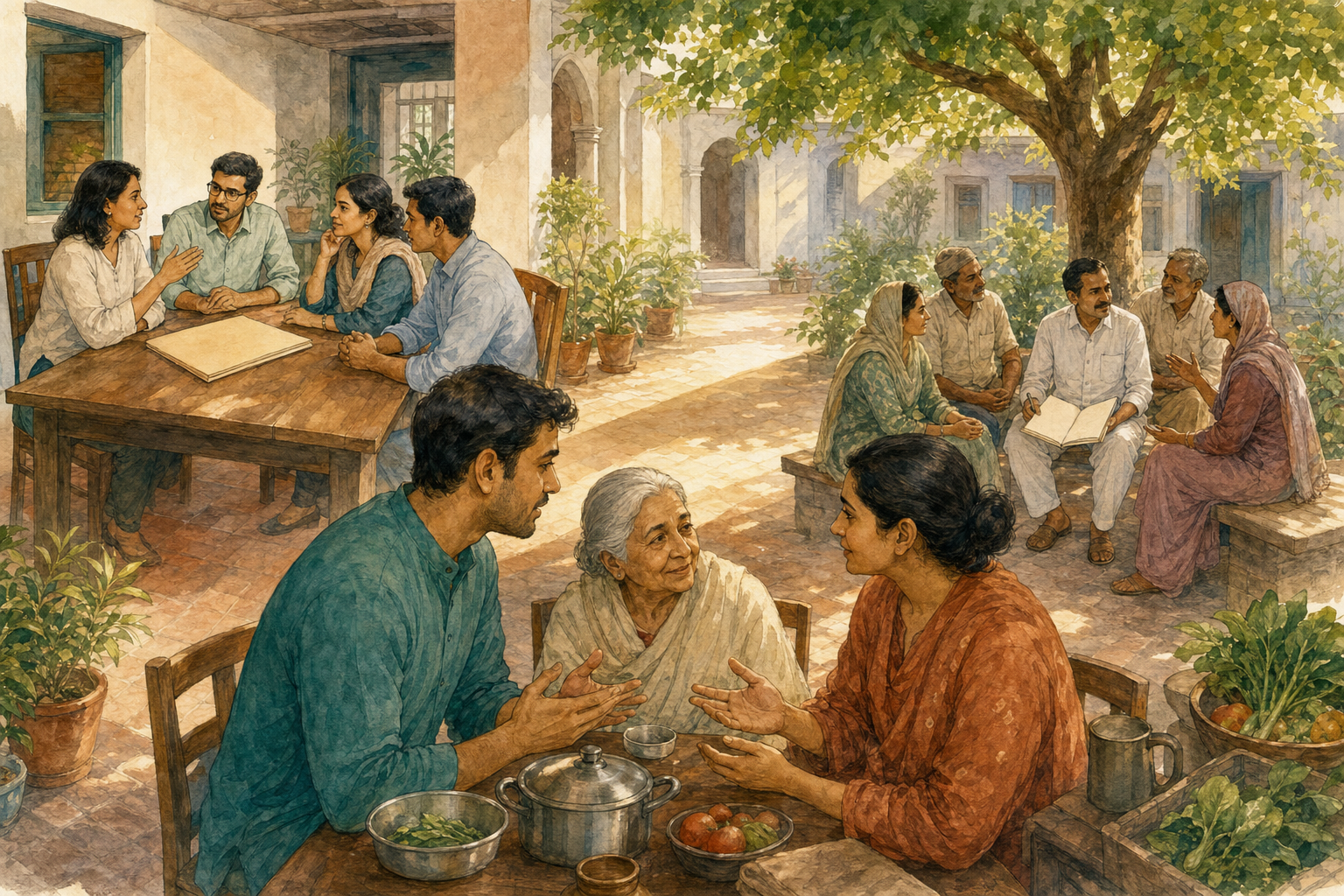
At work: loyalty versus serious wrongdoing
Suppose you discover conduct that harms customers, employees or the public. A Vibhīṣaṇa-like response begins with verification rather than accusation. Preserve an accurate account of what you know, distinguish evidence from inference, and use a credible internal route when doing so does not expose others to further harm. Make the ethical objection explicit; vague discomfort is easy for an institution to absorb without changing.
If internal correction repeatedly fails while serious harm continues, organizational loyalty no longer settles the question. Yet an epic analogy is not legal guidance. External disclosure can carry legal, contractual and professional consequences, especially where confidential information is involved. Before releasing material, use an appropriate independent reporting channel and obtain qualified advice about the rules that apply to your situation. Dharma requires courage, but it does not require careless handling of evidence.
At home: ambition versus care
A Bharata-like conflict arises when a promotion, move or demanding opportunity arrives while a parent or dependant needs care. The wrong first question is whether choosing family proves that you are virtuous. Start with concrete duties: what care is actually needed, what only you can provide, what can be shared, and how long the present need is likely to govern the decision.
Then separate temporary stewardship from permanent self-erasure. You might slow advancement, defer a move or take on coordination without abandoning every long-term aim. Set a date to review the arrangement and invite other responsible people into the burden. Tyāga is meaningful when it protects a real good; it should not become a convenient system in which one conscientious person absorbs every cost while everyone else invokes that person’s duty.
In leadership: public confidence versus individual fairness
The tension surrounding Sītā warns leaders against treating reputation as a moral trump card. Public trust matters, but a response driven by rumour can preserve appearance by sacrificing the person least able to answer the accusation. Before acting, ask what has been established, whether the affected person has been heard, who gains from the appearance of decisiveness, and whether a less harmful response could protect the institution.
The Vāli episode adds scrutiny of means. A leader cannot prove the justice of an exceptional measure merely by repeating the seriousness of the alleged wrong. Authority, evidence, necessity and proportionality are distinct questions. If any one of them is missing, claiming rājadharma may be a way of borrowing sacred language for unaccountable power.
In relationships: protection versus control
The Lakṣmaṇa Rekhā motif survives because protective boundaries are morally intuitive. Its danger lies in confusing a boundary you maintain around your own conduct with a line you draw around another competent person’s choices. A protective rule becomes controlling when the supposed beneficiary cannot question it, help define it or leave it without punishment.
When you propose a boundary for someone else’s safety, state the specific harm, the evidence for it, the duration of the restriction and the conditions under which it ends. If you cannot do that, you may be defending your anxiety or authority rather than the other person’s welfare.
Key takeaways
- A genuine dharma crisis often places two real goods in conflict, but desire, pride and group loyalty can also disguise themselves as duty.
- Svadharma remains answerable to sādhāraṇa-dharma and maryādā. A role does not authorize clear harm simply because the role is traditional or important.
- Rāma and Bharata show that preserving a rightful order may require sacrifice without either abandonment of responsibility or seizure of advantage.
- Sītā’s experience requires you to distinguish sacrifice freely chosen by the person bearing it from sacrifice imposed for someone else’s reputation or benefit.
- Vibhīṣaṇa and Kumbhakarṇa reveal the dividing line between loyal correction and complicity, while Hanumān shows how power can remain purposeful, evidence-led and limited.
- When authority or emergency is invoked, test facts, jurisdiction, necessity, proportionality and the treatment of those who have the least power.
The next time two duties pull you apart, do not begin by asking which character will vindicate the choice you already prefer. Name the truths, roles, boundaries and affected people first. Then choose the course whose cost you are willing to bear yourself rather than quietly transferring it to someone else.