-
Discover Why Ayyappa Pilgrims Wear Black: The Complete, Devotional Sabarimala Dress Guide
Ayyappa devotees traditionally wear black during the Deeksha period to embody humility, equality, and disciplined focus. Over years of observance, many transition to saffron, a color associated with renunciation and deepened resolve. This guide explains how the dress code supports the 41-day Mandala Kalam through simplicity and inner concentration. It clarifies regional variations and the…
-
Makaravilakku 2026: Complete Guide to Sabarimala Makara Vilakku—Date, Rituals, Meaning

Makaravilakku 2026 at Sabarimala will be observed on 14 January, coinciding with Makar Sankramana and culminating in the revered Makara Jyoti Darshanam. The week-long festival features disciplined pilgrimage practices, including vratham, irumudi kettu, and core temple rituals such as abhishekam, ney abhishekam, and evening deeparadhana. The festival’s symbolism of light reflects a shared dharmic ideal…
-
Proven Pathways to Transform Outrage into Unity: Texas Anti-Diwali Protest Analysis

A small group of masked protesters in Texas used derogatory language toward Diwali, sparking widespread outrage and a vital public conversation about Hinduphobia. This analysis clarifies what happened, why it matters for the Hindu American Community, and how to respond lawfully and effectively. Readers will discover practical steps that transform anger into action, from incident…
-
Master the Essential Test of Spiritual Growth: Srila Prabhupada’s Gainesville Insight (1971)

Srila Prabhupada’s 1971 Gainesville interview offers a precise and inclusive test for spiritual progress: judge by the result—transformed character, not external form. Rather than emphasizing dress or titles, the teaching centers on ethical conduct and reliability, captured in the phrase “a very perfect gentleman.” This criterion aligns with shared dharmic values across Hinduism, Buddhism, Jainism,…
-
Master the Gita’s Asvattha Metaphor: Complete Guide to Breaking Karmic Bonds

The Bhagavad Gita’s asvattha (banyan) metaphor explains how material life multiplies into a forest of obligations, desires, and consequences that obscure the original root of existence. By naming the dynamic as karmanubandhini, it shows why actions bind and how discernment and non-attachment loosen their grip. The image offers a practical roadmap: redirect attention from proliferating…
-
Discover the Proven Path on the Razor’s Edge: Master Vigilance, Free Will, and Spiritual Resilience

Spiritual progress requires vigilant attention, because free will remains active even at advanced stages of practice. This reflection highlights how independence can elevate or derail one’s journey, and why steady discipline protects devotion. It connects Hindu Dharma with parallel insights from Buddhism, Jainism, and Sikhism, illustrating unity in spiritual diversity. Readers discover practical methods—japa, study,…
-
Complete Guide to Panchopachara: Discover and Master the Five Sacred Offerings in Hindu Worship

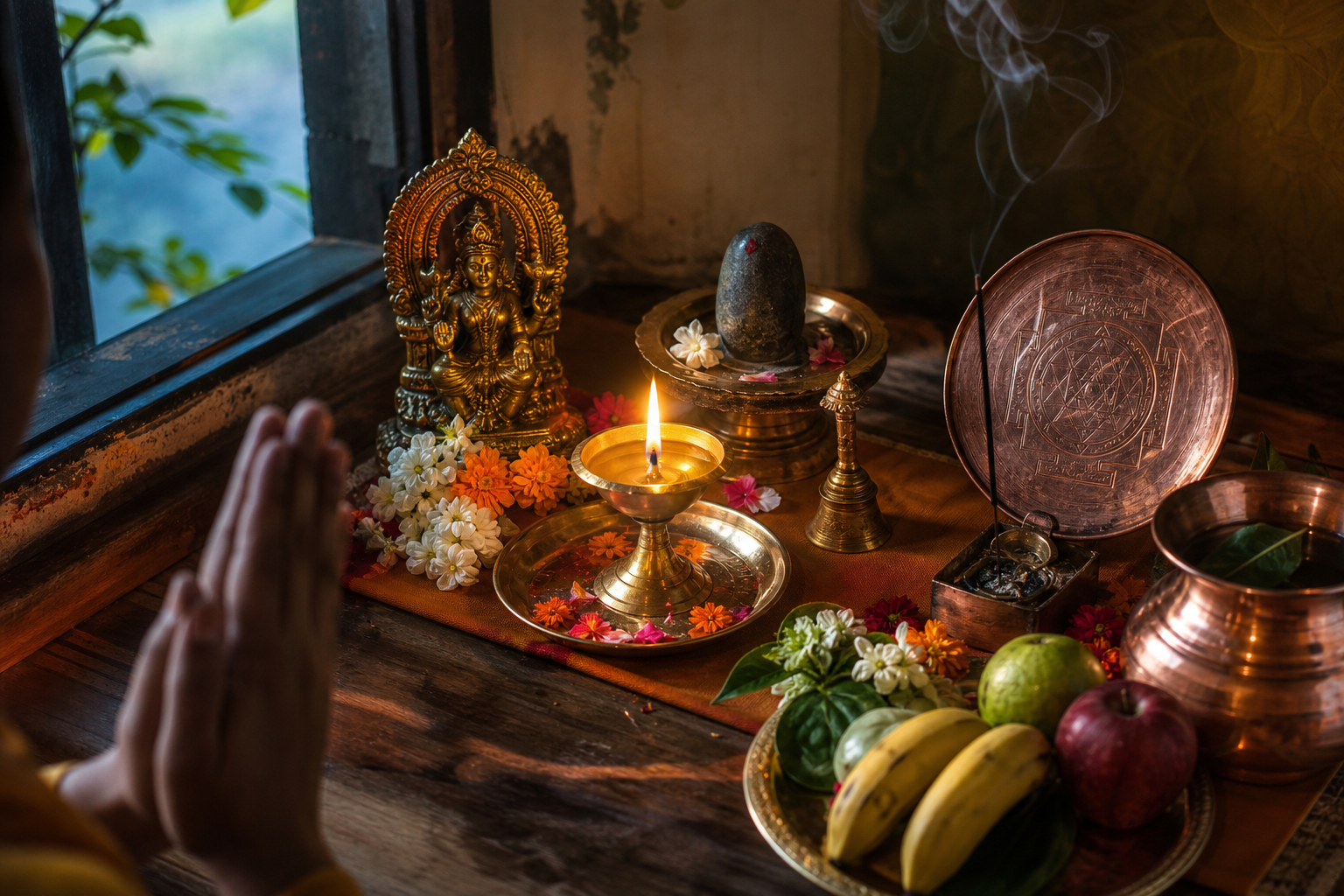
Panchopachara puja is a foundational Hindu ritual that unites temple worship and home practice through five sacred offerings. The sequence—gandha, pushpa, dhupa, dipa, and naivedya—engages the senses, aligns intention, and transforms simple actions into a contemplative experience. Readers discover the symbolism of each offering, the scriptural continuity behind the rite, and a practical way to…
-
Master Panchatapas: A Complete Guide to Panchagni Tapas and Transformative Hindu Austerity
Panchatapas, or Panchagni Tapas, is a rigorous Hindu austerity in which a practitioner sits amid four ritual fires with the sun as the fifth, embodying the purifying principle of tapas. Rather than glorifying hardship, the practice foregrounds intention, ethical restraint, and mental clarity. Its symbolism—illumination, sacrifice, and disciplined boundaries—highlights how outer form serves inner transformation.…
-
Complete Guide to Inclusive Chhath: Navigating Delhi’s ‘Jihad-Free’ Campaign with Harmony

Chhath Puja in Delhi is entering 2025 amid discussion of a VHP-branded “Jihad-Free Delhi” certification initiative. This analysis places the campaign within the festival’s satvik ethos and India’s commitment to Religious harmony. It highlights how language choices can shape social cohesion and recommends process-focused standards—transparent labeling, hygiene compliance, and fair procurement—to respect ritual preferences without…
-
Complete Panchang for Nov 2, 2025: Shukla Paksha Dwadashi, Nakshatra & Rashi Guide

November 2, 2025, in the Hindu Panchang marks Shukla Paksha Dwadashi, following Shukla Paksha Ekadashi until 2:57 AM. This clear transition time helps plan fasting parana and other observances with confidence. The day’s rhythm supports steady practices like japa, satvik meals, and quiet study, fostering clarity and compassion. While Nakshatra, Rashi, and precise muhurat are…
-
Master the Dharmic Path: Essential Insights to Overcome Obstacles to Virtue

The ancient Hindu teaching, “The path of the good is fraught with innumerable obstacles,” explains why ethical living demands perseverance and clarity. It shows that resistance is a natural part of spiritual development rather than evidence of failure. Drawing on Hindu Dharma and the Bhagavad Gita, it highlights abhyasa, tapas, viveka, and shraddha as proven…
-
The Two Sacred Fires: A Complete Hindu Wisdom Guide to Food, Sex, and Inner Mastery

This article examines how Hindu Dharma interprets two primal drives—nourishment and desire—as “two sacred fires,” offering a practical, ethical, and spiritual framework to harmonize them. Drawing on Vedic philosophy, the Upanishads, Ayurveda, and Yoga philosophy, it explains how jatharagni and desire can be stewarded rather than suppressed. It highlights shared insights across Buddhism, Jainism, and…
-
Nama in Sri Vaishnavism: The Complete, Proven Path to Transformative Divine Identity

Sri Vaishnavism places divine remembrance at the center of spiritual life, and Nama—the conferring of a devotional name within the Pancha Samskaras—marks a profound identity transformation. Grounded in prapatti and supported by practices such as Om Namo Narayanaya, japa, kirtana, and Vishnu Sahasranama recitation, Nama aligns personal purpose with devotion to Vishnu. The rite integrates…
-
Essential Guide: Subramanya Swamy Homam at Kapileswara Temple, Tirupati—Dates & Significance

Sri Subramanya Swamy Homam began at Sri Kapileswara Swamy Temple, Tirupati, on 24 October 2025 as part of month-long Kartika Masa observances. Conducted from 24–26 October, the homam is followed by the Dakshinamurthy Swamy Homam on 27 October. Devotees report an atmosphere of serenity shaped by Vedic chants, consecrated fire, and disciplined offerings. The sequence…
-
Discover Traimasika Metlotsavam 2025 at Tirumala: Complete Guide to Dates and Rituals
Traimasika Metlotsavam at Tirumala will be observed from 30 October to 1 November 2025 by the Dasa Sahitya Project of TTD. Nearly 3000 bhajan troupes from Andhra Pradesh, Telangana, Tamil Nadu, and Karnataka typically participate, creating an immersive atmosphere of devotional music and collective worship. Key rituals—shobha yatra, bhajans, and metla puja—highlight humility, perseverance, and…
-
Ultimate Rohini Nakshatra Guide: Discover Bhuvaneshwari Sadhana for Lunar Mastery

Rohini Nakshatra harmonizes naturally with Bhuvaneshwari Sadhana, uniting lunar sensitivity with the compassionate vastness of the cosmic mother. Rooted in Vedic symbolism—Moon rulership and Brahma/Prajapati’s generative power—this upasana cultivates emotional equilibrium and creative growth. A practical routine with Monday, Rohini transit, or Purnima observances, simple offerings, and the mantra “Om Hreem Bhuvaneshwaryai Namah” builds sustainable…
-
Alopi Devi Temple, Prayagraj: Complete Guide to the Unique ‘Disappearing’ Shakti Peetha

Alopi Devi Mandir in Prayagraj (Alopshankari Devi) is a unique Shakti shrine where an empty wooden palanquin (doli) is venerated instead of an idol. Two enduring legends explain its name—either the last remnant of Sati “disappeared” here or a divine rescue left only the sanctified palanquin. Daily aarti, Navaratri observances, and Kumbh Mela pilgrimages sustain…
-
Discover Nampally Gutta’s Giant Serpent Temple: A Complete Guide to Lakshmi Narasimha Swamy

Nampally Gutta Narasimha Swamy Temple in Telangana is renowned for its giant serpent-shaped architectural motif and hilltop setting near Vemulawada, about 160 km from Hyderabad. This guide highlights its symbolic design, spiritual focus on Lakshmi Narasimha, and the contemplative experience created by the ascent. Travelers gain practical insights on timing, access, and respectful visitation practices.…