
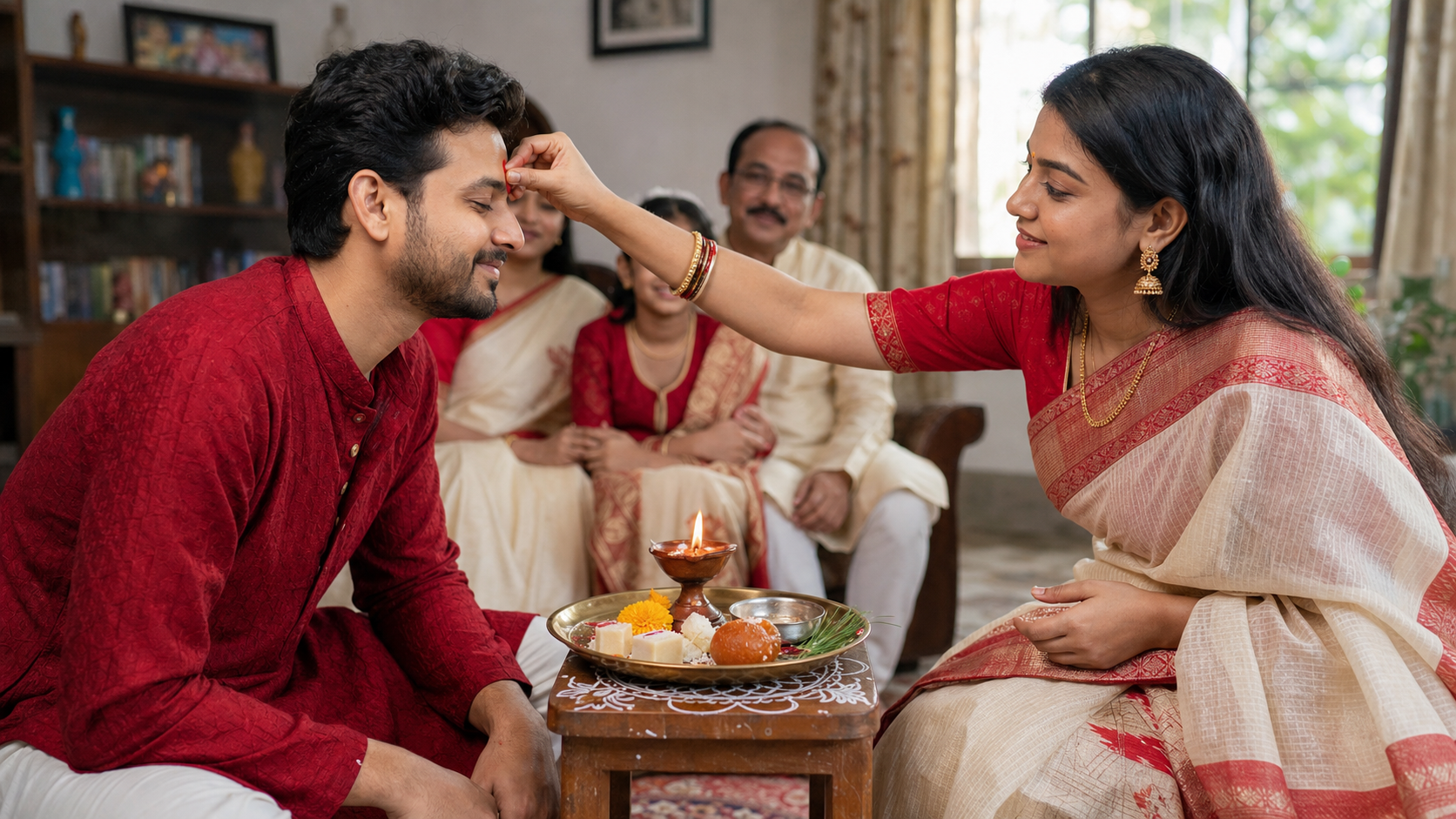
If you are arranging Bhai Phonta for your family, the practical questions come first: Is it on October 23 in 2025? What belongs on the ritual plate? Does a sister have to fast? And what can you preserve when a brother and sister live in different places?
The short answer is that Bhai Phonta falls on October 23 in 2025. The essential observance is intimate rather than elaborate: a sister applies the sacred fota to her brother’s forehead, prays for his health and long life, and receives his gratitude and commitment of support. Everything else should help the family express that bond, not turn the day into a performance.
Fix the date first, then confirm the local observance window
Bhai Phonta is the Bengali form of the festival widely known elsewhere as Bhai Dooj. It is observed on Kartik Shukla Dwitiya, the second lunar day of the bright fortnight in Kartik, following the Kali Puja and Deepavali observances in Bengal. In 2025, that places Bhai Phonta on Thursday, October 23.
Treat the date and the ritual window as two separate planning decisions. October 23 tells you which civil-calendar day to reserve. It does not by itself give every household one universal clock time. Panchang calculations and regional customs can produce slight differences in the preferred period within Dwitiya. If your family follows a particular temple, priest, Bengali panjika, or inherited household convention, use that same authority to choose the hour.
This distinction matters most for a family spread across cities or countries. Confirm the observance window before people book travel or promise conflicting commitments. For a video gathering across time zones, choose a mutually workable time within the period your family accepts. Do not let a debate over a small calendrical variation overwhelm the purpose of the vrata and blessing.
Prepare a simple fota plate without making every custom compulsory
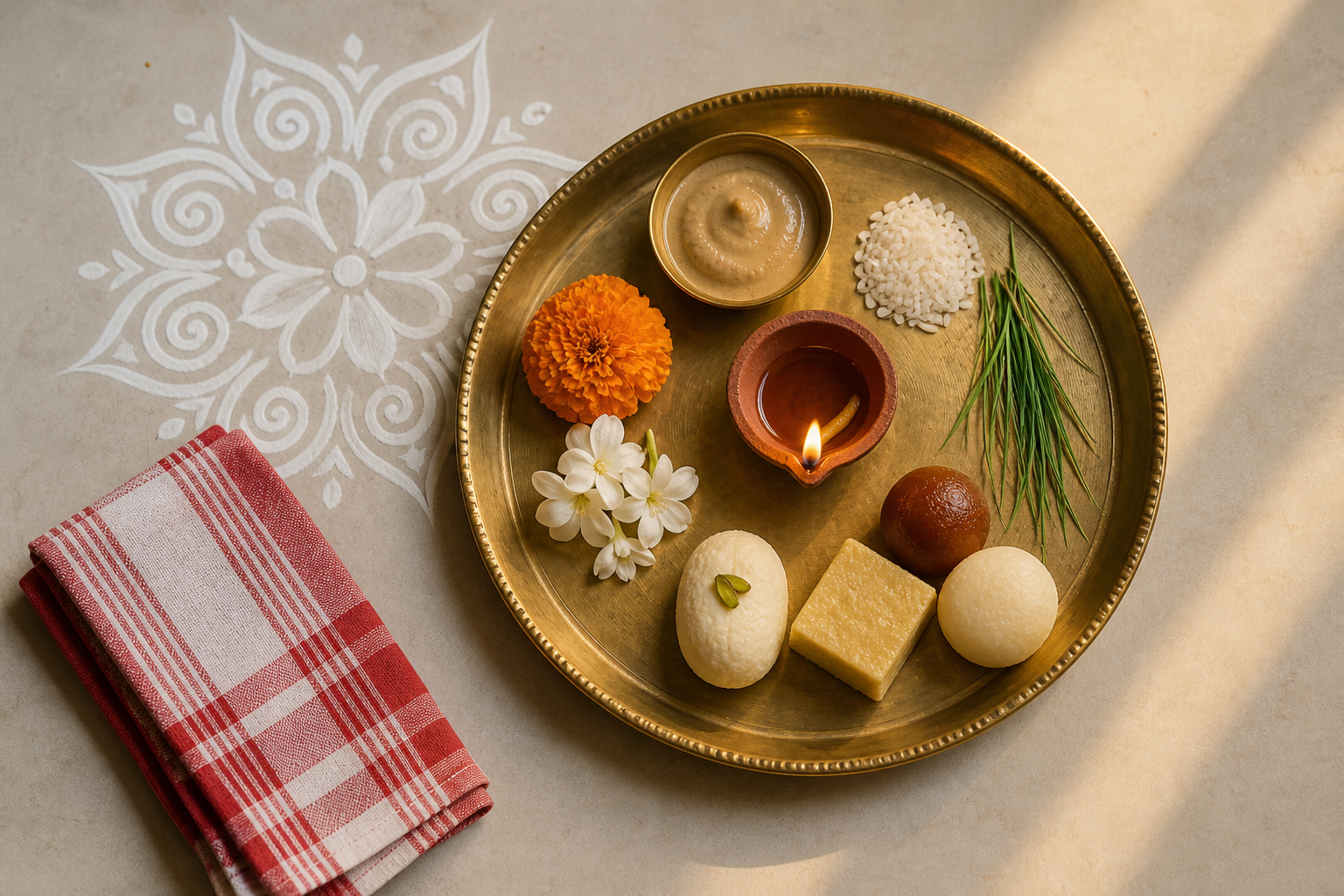
The word fota, also written phonta or phota, refers to the sacred forehead mark at the centre of the ceremony. It is commonly prepared with sandalwood paste; turmeric or kumkum may also be used according to household practice. Aarti, prayers, sweets and gifts surround that central act.
A practical preparation list is therefore short:
- Prepare the fota material used in your family, such as sandalwood paste, with turmeric or kumkum where customary.
- Set out the items your household uses for aarti.
- Make or arrange a modest serving of sweets. Sandesh and narkel naru are especially at home in the Bengali observance.
- Keep the brother’s gift or token of appreciation ready, if gifts are part of your family practice.
- Clean and decorate the place where the siblings will sit, leaving enough room for elders and children to participate without crowding the ritual.
- Tell everyone the agreed time in advance, particularly if a sister intends to observe a fast before the ceremony.
The useful distinction here is between the core and the customary. The fota, blessing and reciprocal affection carry the observance. The exact paste mixture, menu, decoration, fasting practice and value of a gift can vary. A sister may keep a simple fast before the ceremony; fasting should not be presented as a universal test of devotion when the family tradition itself treats it as a choice.
Keep the food plan proportionate to the gathering. Homemade sweets can give children and elders a meaningful role, while simple, eco-conscious offerings reduce waste. If buying an elaborate assortment will leave the organiser rushed during the actual blessing, simplify the menu. Bhai Phonta is weakened, not strengthened, when hospitality consumes all the attention meant for the siblings.
Follow a clear ritual sequence and let family tradition supply the details
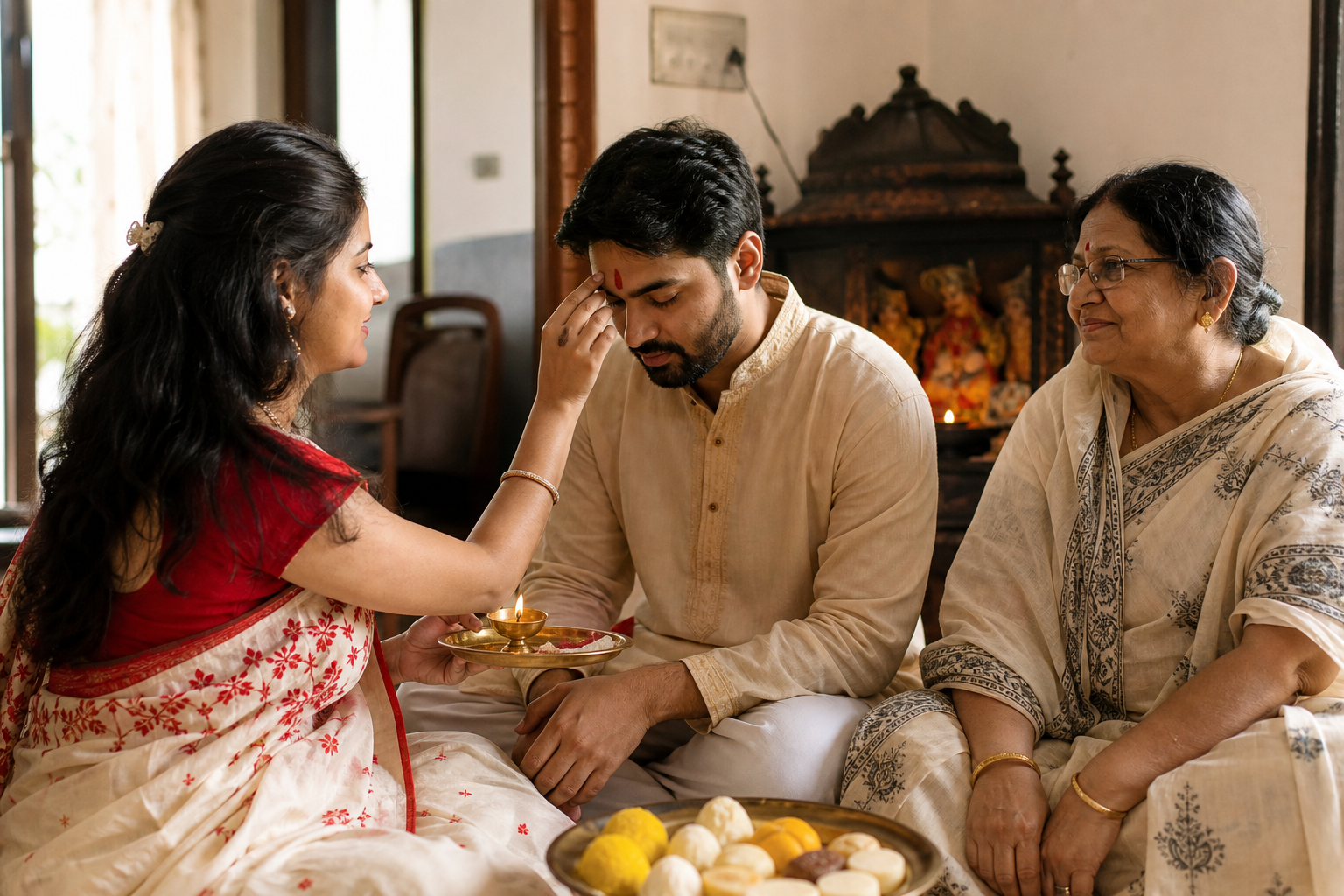
Households differ in their recitations and arrangement of ritual items, but you can organise the observance around a clear sequence. This prevents the common problem of gathering everyone and only then discovering that the paste, sweets or gift is in another room.
- Prepare the space and offerings. Clean the chosen area, arrange the fota paste, aarti items and sweets, and invite elders to sit where they can see and bless the siblings.
- Seat the brother for the blessing. Begin calmly, following the form of respect customary in your household.
- Apply the fota. The sister places the sacred mark on her brother’s forehead while praying for his well-being, health and long life.
- Perform aarti and offer the family’s recitation. Use an inherited prayer or remembered family form where one exists. Some households also recall the traditional account of Yama and Yamuna.
- Share sweets. Let the food mark the movement from formal blessing into family fellowship.
- Make the brother’s response explicit. He should offer thanks and, where customary, a gift. More importantly, he should affirm his reciprocal care and support.
- Receive the elders’ blessings. Invite older family members to bless both siblings, not only the brother receiving the fota.
You do not need to improvise a supposedly ancient formula if your family has not preserved one. Ask an elder about the household’s normal words and sequence before the day. If no fixed recitation is known, keep the prayer sincere and intelligible rather than presenting an invented detail as binding tradition.
Children can do more than watch. Let them help place sweets, prepare decorations or listen to the Yama-Yamuna account. Their role should be concrete and manageable. That is how an annual ceremony becomes transmitted practice rather than background scenery.
Keep the dharma reciprocal: protection is not a one-way promise
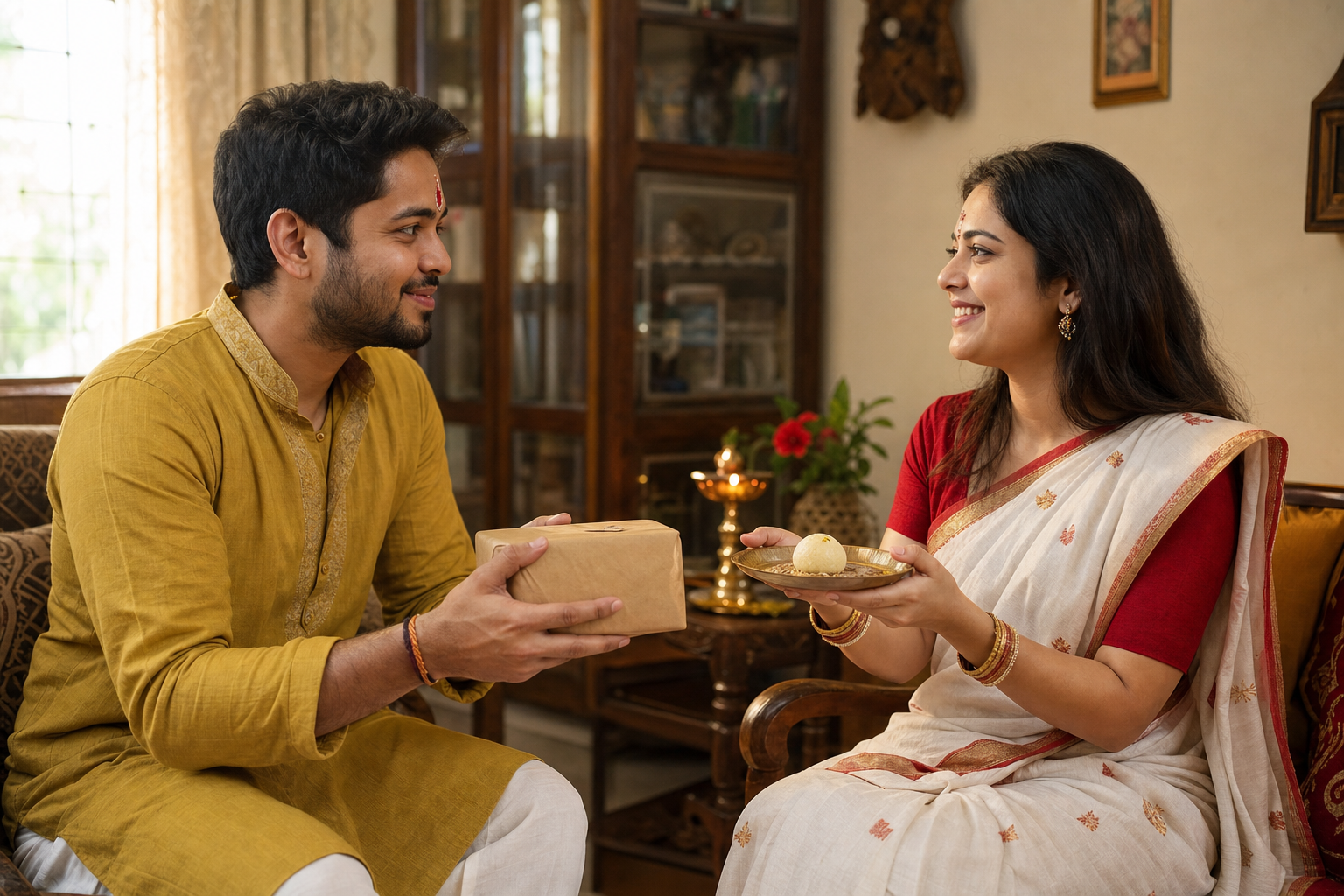
Bhai Phonta is often described through the sister’s prayer for her brother, but stopping there gives an incomplete picture. The brother’s gratitude and pledge of support make the observance reciprocal. The fota expresses care through ritual; his response turns that care into acknowledged responsibility.
That changes how you should approach the gift. A costly object is not the measure of the brother’s sincerity. A small token offered attentively can accompany the deeper commitment: to remain present, respectful and dependable. Likewise, the sister’s blessing should not be reduced to ritual labour performed while everyone else waits to be served.
Families can make the mutuality visible with one simple practice. After the fota, give each sibling a moment to express a specific blessing or commitment. It might concern staying in touch, supporting an elder, helping during difficulty or ending a lingering quarrel. The point is not to create a public confession. It is to connect sacred intention with conduct after the festival.
This is familial dharma in an everyday form. Affection is joined to duty; protection is joined to gratitude; and individual gestures strengthen the stability of the household. Compassion, non-harm and family harmony also make the observance legible across the wider Dharmic family, even while its language, food and aesthetic remain distinctly Bengali.
Preserve the bond when distance changes the ceremony
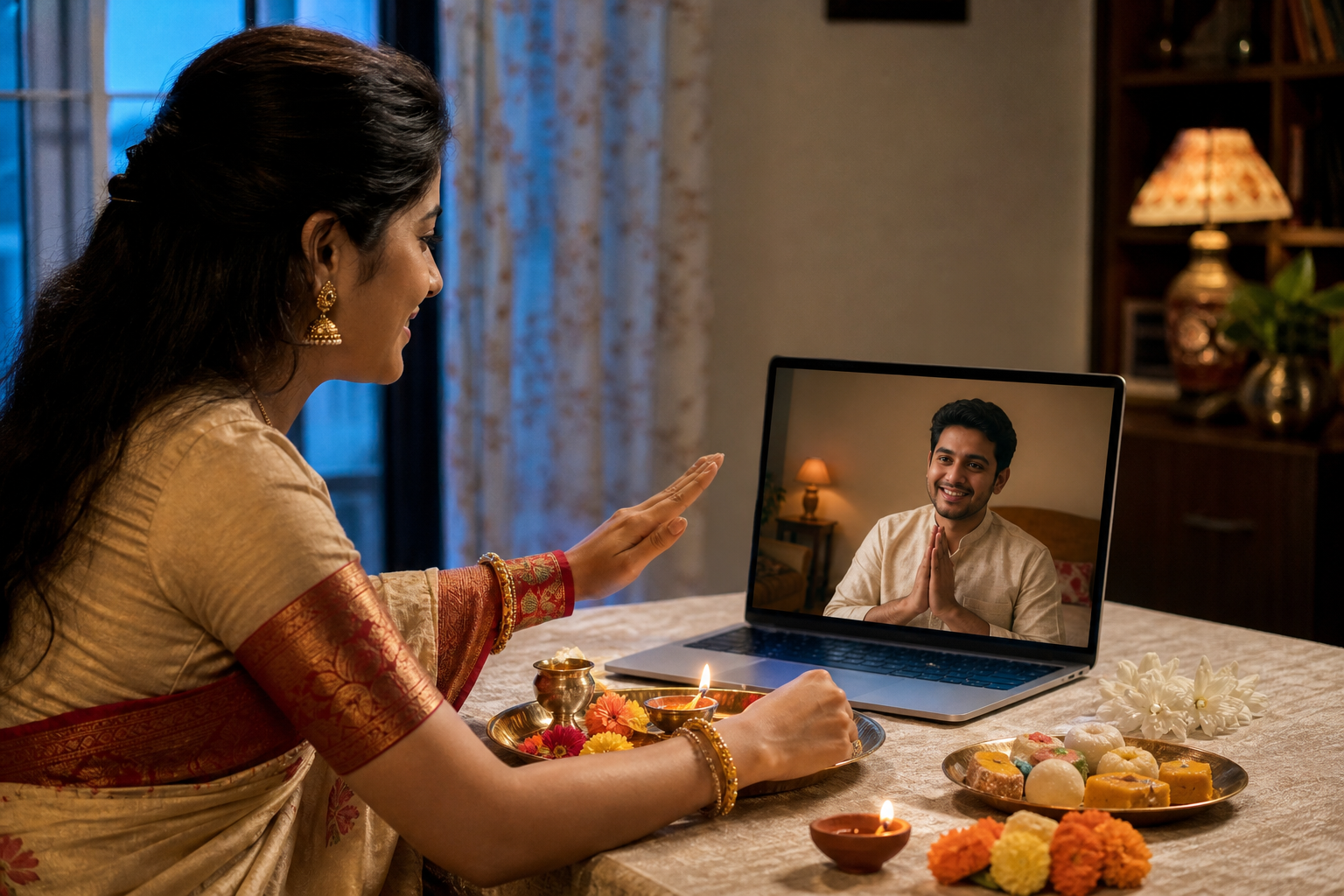
If the siblings cannot meet physically, do not cancel the relationship because the ideal form is unavailable. Families commonly use a video call to share prayers and blessings across distance. Arrange the call in advance, let the sister prepare the fota and offerings at her location, and let the brother be fully present rather than joining between other appointments.
A screen cannot reproduce the physical application of the mark, so be honest about what has changed. Preserve what distance still permits: the prayer, visual darshan of the prepared fota, spoken blessings, gratitude, mutual promises and time with elders. If the siblings meet later and wish to complete the physical gesture according to family practice, they can decide that together without pretending the calendar did not matter.
For a diaspora family, send the time in both local time zones and confirm which panchang convention the household is following. This removes two avoidable causes of confusion. Keep the remote gathering focused; the brother should hear the prayer, respond directly and remain for the family conversation that follows.
Key takeaways for Bhai Phonta 2025
- Date: Bhai Phonta falls on Thursday, October 23, 2025, corresponding to Kartik Shukla Dwitiya.
- Timing: Confirm the preferred Dwitiya window through the panjika, priest, temple or household authority your family normally follows.
- Central ritual: The sister applies fota to her brother’s forehead and prays for his health, well-being and long life.
- Brother’s role: He expresses gratitude and reciprocal support; a gift is a token, not the substance of that promise.
- Flexible customs: Fasting, decorations, the paste mixture, recitations and the sweet menu can follow family practice.
- When apart: Use a planned video call to preserve prayer, blessings, gratitude and participation by elders.
Begin with the one task that prevents most last-minute confusion: ask your family which observance window and ritual form it follows. Once that is settled, prepare the fota, sweets and gathering simply enough that you can give your sibling what the day actually asks for: undivided attention, a sincere blessing and a responsibility carried beyond October 23.
References
