
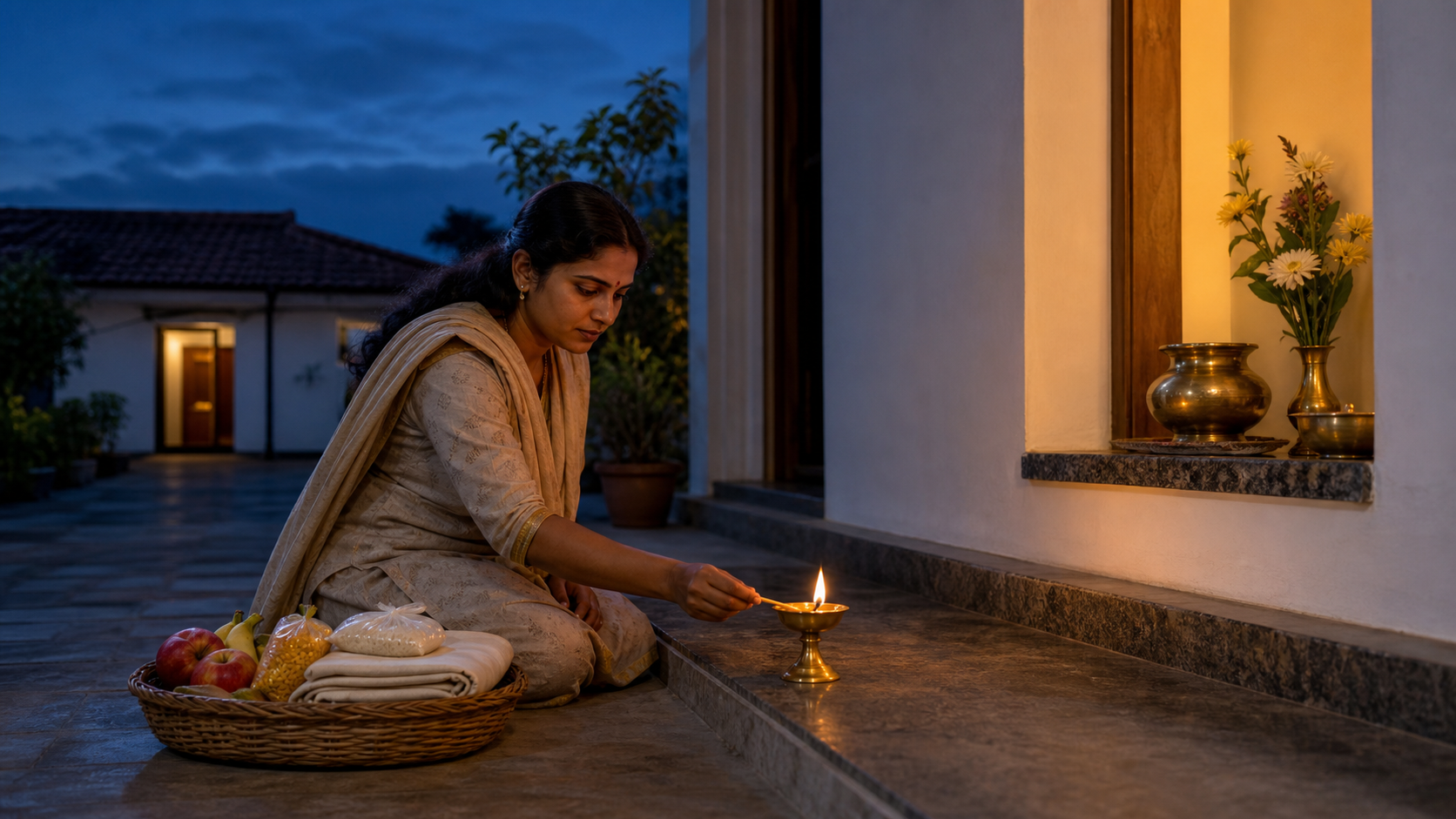
You want to observe Karthika faithfully, but your family practice, local temple, and calendar may emphasize different days or offerings. Should you light lamps, donate Shiva lingams, give to charity, or try to do all of them?
Start with the regional tradition you actually belong to. Then give that tradition a manageable daily rhythm and a responsible recipient. Karthika devotion becomes much clearer when you treat bhakti, discipline, and giving as parts of one vow rather than as a collection of auspicious activities.
Regional precision matters more than false uniformity
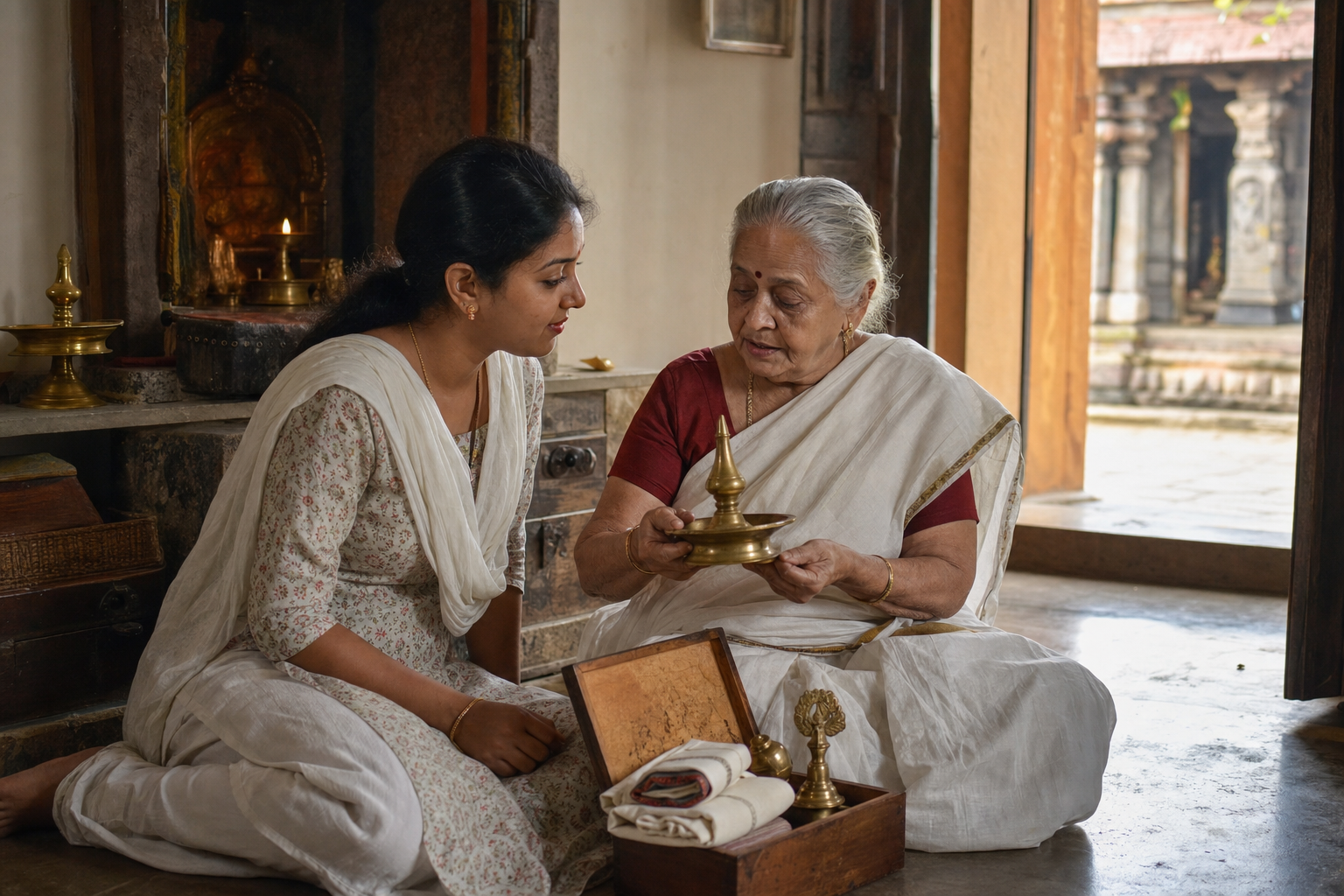
Karthika is a shared sacred season, but it is not expressed identically across Bharat. A Telugu household observing Karthika Masam may organize the month around a Shiva vrata and Linga Daana Nomu. In Varanasi, Kartik Purnima reaches its public culmination through Dev Deepavali, Deep Daan, Ganga worship, and aarti at the ghats. The common sacred month does not erase these regional accents.
Dates must also be calculated afresh. As an archival example, Telugu-calendar Karthika Masam ran from October 22 through November 20 in 2025, while Dev Diwali fell on Kartik Purnima, November 5, that year. Those dates explain a past observance; they are not reusable annual dates. For the year you intend to observe, consult a current local panchangam and confirm the relevant tithi with your family tradition or temple.
Settle three questions before purchasing ritual materials:
- Which regional calendar and sampradaya will govern your vow?
- Does your observance require a daily act, a particular tithi, or both?
- Who can appropriately receive and safeguard what you plan to donate?
If your household brings together more than one regional background, choose one primary calendar for the formal vow. You can respectfully acknowledge another family observance without combining every rite into a single invented procedure. More activity is not automatically more fidelity.
Keep each regional practice intact before combining anything
A sound Karthika plan holds together three elements. Bhakti determines whom and how you worship. Vrata-niyama determines what you repeat with discipline. Dana determines what leaves your possession for a worthy religious or community purpose. If you retain only the outward gift, the practice can become a transaction. If you retain only private worship, its movement toward service may disappear.
Linga Daana Nomu in Telugu Karthika practice
The center of Linga Daana Nomu is not accumulating sacred objects at home. It is preparing or obtaining Shiva lingams, worshipping them, and donating them reverentially. Clay, stone, and other respectfully sourced materials can be used, with increasing attention to ecological responsibility and dignified handling.
A practical sequence is:
- Contact the intended temple, priest, or community recipient before acquiring the lingams. Agree on a suitable number, material, and handoff.
- Establish the daily discipline associated with the vrata. This may include lighting a lamp, quiet japa, and singing the song traditionally connected with the observance.
- On the chosen day, perform simple worship such as abhishekam, deepa, and japa without turning preparation into a display.
- Carry and present the lingams with the same reverence you showed during worship.
- Confirm that the recipient can place, use, or preserve them appropriately. Dana is incomplete if the gift merely transfers a disposal problem.
The whole month can support the vow, while Krishna Paksha Chaturdashi receives particular attention in many households. Follow the tithi recognized by your own panchangam rather than assuming that a civil-calendar date found for another year or region applies to you.
Deep Daan on Varanasi’s Dev Deepavali
Varanasi’s expression culminates on Kartik Purnima. The devotional center is the offering of light in honor of Ganga Mata, joined with Ganga Snan and the grand Ganga Aarti. Dashashwamedh, Assi, and Rajghat are prominent settings, where earthen diyas, mantra, bhajan, rangoli, and temple activity bring household devotion into a vast public sacred space.
You do not have to reproduce the scale of the ghats to participate meaningfully. At home, you can light traditional diyas at dusk, recite a Ganga stotram, perform a simple aarti, read reflectively, and make a charitable offering. Place every flame on a stable, nonflammable surface and supervise it. If you attend the celebration in Varanasi, arrive early, dress modestly, maintain quiet during aarti, follow local arrangements, and leave the ghat cleaner rather than more burdened.
These forms can coexist, but they do not automatically substitute for one another. Lighting lamps does not by itself complete a vow specifically undertaken as Linga Daana Nomu. Donating lingams does not reproduce a Kartik Purnima observance centered on Ganga Mata and Deep Daan. If an inherited vow prescribes a particular element, consult the elder, priest, or tradition from whom you received it before replacing that element with a more convenient act.
Design the vow around an ordinary evening
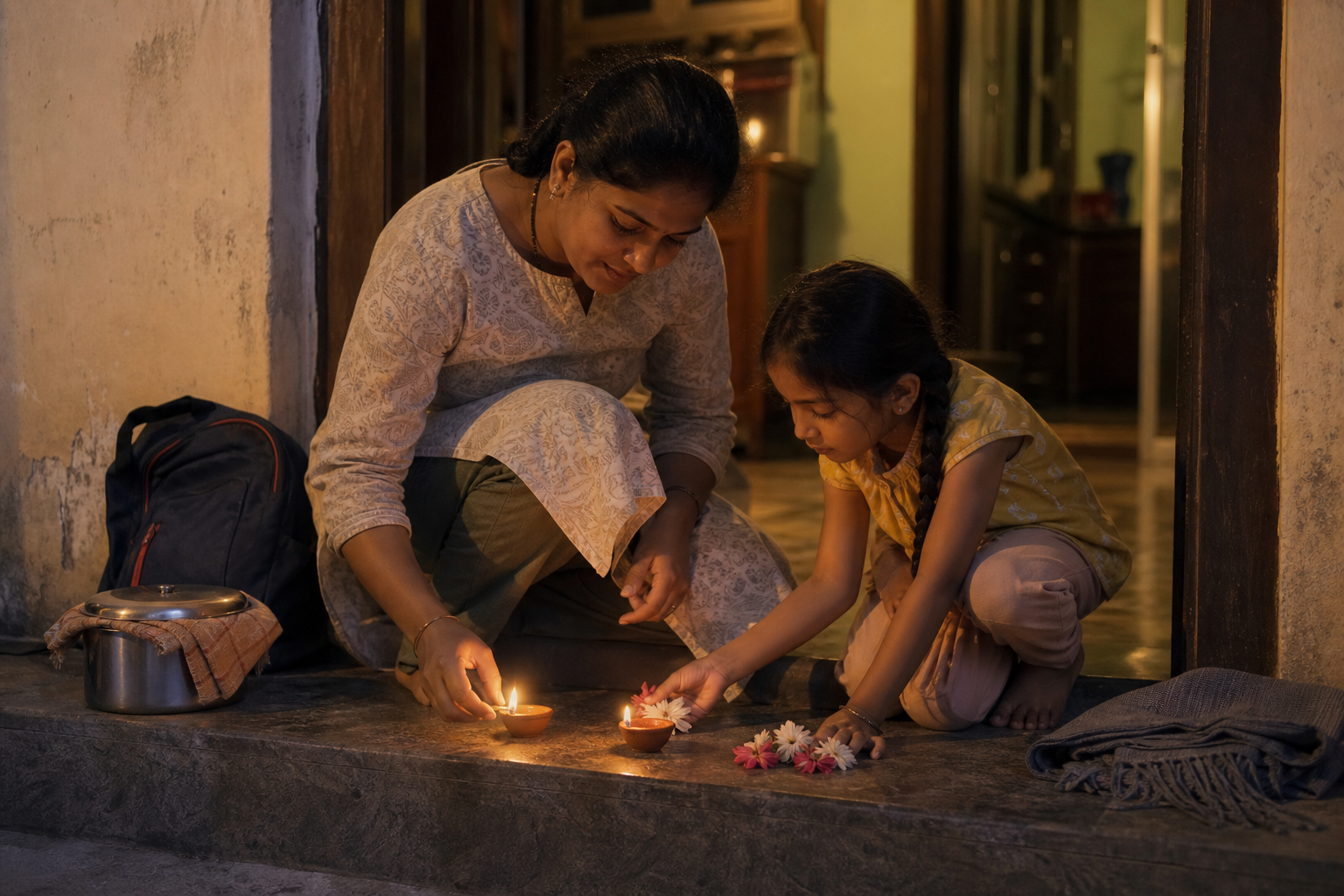
A month-long observance is tested less by the first enthusiastic day than by an unremarkable weekday. Build the discipline for that evening. The daily minimum should be recognizably complete within your tradition, easy to begin, and small enough that the household can maintain it without resentment.
- Write the sankalpa in one sentence. Name the daily act, the intended offering, and the tithi or end point.
- Define the smallest complete daily practice. If the traditional song belongs to your Linga Daana observance, singing it should not be displaced by a growing list of optional additions.
- Prepare the worship space and ordinary supplies before the month begins. Keep sacred objects clean and separate from disposable decorations or household clutter.
- Assign real responsibilities. One person can tend the lamp, another can lead the song or japa, and another can coordinate the donation. Shared work gives children and younger relatives a place inside the tradition.
- Record the anchor tithi only after checking the current panchangam. Add the recipient’s contact and handoff plan at the same time.
- Know whom you will ask if a daily observance is missed. Do not invent a severe penance or quietly change the vow after the fact; seek guidance appropriate to the vrata you undertook.
Give younger family members more than a task. Give them the reason for it in plain language: we light to cultivate clarity, and we give so that devotion serves beyond our own home. That explanation connects ritual action with ethical formation without reducing the ritual to a moral slogan.
Resist measuring the month by the quantity of objects, lamps, photographs, or public activity it produces. The better test is coherence: did worship shape the gift, did discipline sustain the worship, and did the gift reach someone able to receive it well?
Make dana clean in intention, material, and destination
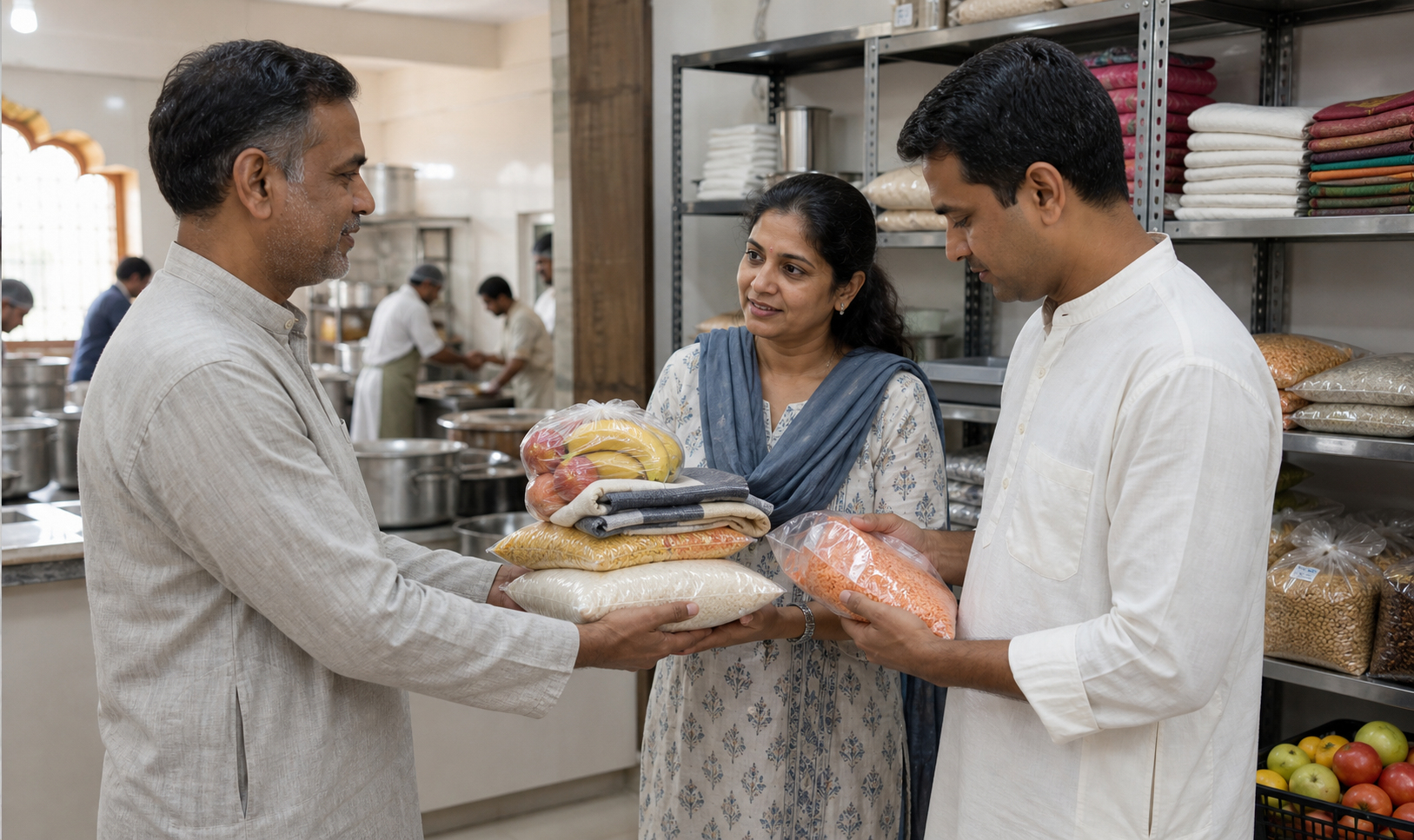
Sacred giving creates responsibility at both ends. Upstream, your choices affect craftspeople and the natural world. Downstream, the recipient must handle what you give. A sincere intention does not cancel careless sourcing, plastic waste, fire hazards, clutter, or an unsuitable donation.
- Find the recipient first. Ask whether the temple, priest, or community actually accepts Shiva lingams and can preserve their sanctity.
- Choose materials that fit the rite. Clay or durable stone lingams and the avoidance of plastic align devotional reverence with ecological care. For Deep Daan, favor traditional earthen lamps and follow local rules governing their placement and removal.
- Pay artisans fairly. Buying locally crafted lingams or diyas can support a living devotional economy, but bargaining that disregards the maker’s labor weakens the ethical purpose of the offering.
- Protect the dignity of the handoff. Do not treat a consecrated or worshipped object like a promotional giveaway. Arrange a deliberate transfer to the person or institution that will care for it.
- Add service where it belongs. Food distribution, ordinary charity, and environmental care along riverbanks can accompany the festival. If you undertook a specific ritual vow, treat these as complementary unless your tradition confirms that they can fulfill its prescribed dana.
- Plan the cleanup. Remove packaging and spent materials responsibly. Public sacred space should not carry the physical cost of your private merit-making.
This disciplined generosity also reveals a civilizational kinship without pretending that all Dharmic traditions perform the same ritual. Dana in Buddhist traditions, dana joined with aparigraha in Jain traditions, and seva in Sikh tradition express related commitments to responsibility, restraint, compassion, and community support. The ethical vocabulary is shared; the theology, vows, recipients, and ritual forms remain distinct.
That distinction is useful when explaining Karthika to a child, a neighbor, or someone from another Dharmic path. Begin with the shared value of generosity, then name the particular Hindu form being observed. You honor unity more honestly when you do not erase difference.
Key takeaways
- Use the current panchangam followed by your family, sampradaya, or temple; never recycle a previous year’s civil-calendar dates.
- Choose one primary regional form for the formal vow instead of merging every Karthika custom you encounter.
- For Linga Daana Nomu, confirm a worthy recipient before acquiring lingams and preserve the daily discipline attached to the vrata.
- For Dev Deepavali at home, a reverently tended diya, prayer, and responsible charity can express the observance without imitating Varanasi’s public scale.
- Treat ecological materials, fair artisan compensation, dignified handling, and cleanup as parts of dana rather than optional additions.
- Do not assume that a general charitable act replaces the prescribed offering of a specific inherited vow.
Your next move is concrete: confirm the governing calendar, write the daily vow in one sentence, and contact the intended recipient. Once those three decisions are settled, you can enter Karthika with steadiness instead of collecting rituals as the month unfolds.
References
- DharmaRenaissance Blog – Discover Linga Daana Nomu: The Complete Guide to Donating Shiva Lingams in Karthika Masam
- DharmaRenaissance Blog – Dev Diwali 2025 on Kartik Purnima: Discover the Complete Guide to Varanasi’s Sacred Light
