
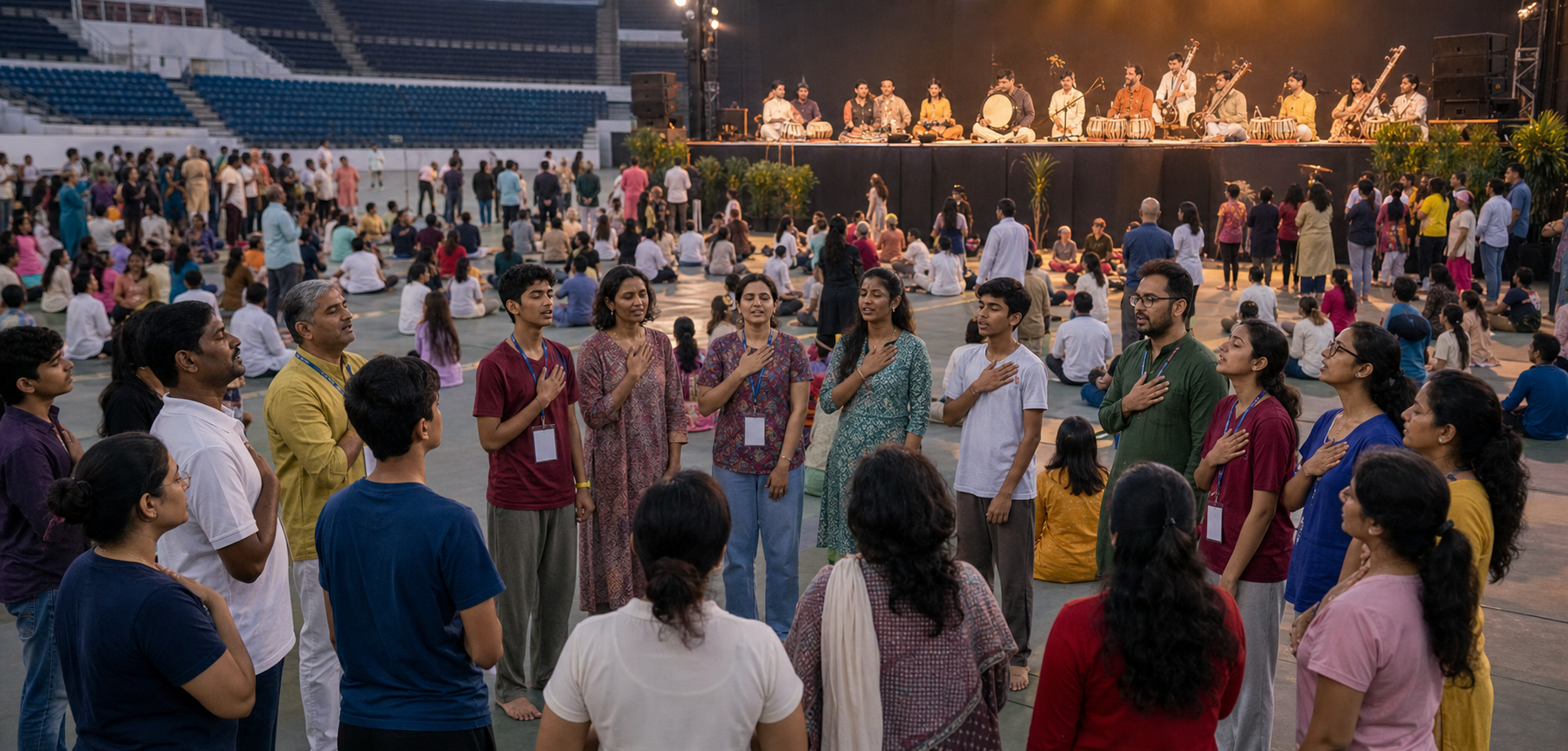
If you are a parent, teacher, youth volunteer or dharmic organiser, the difficult question is not how to reproduce the energy of a stadium gathering. It is how to help someone after the music ends, the pledge is taken and a private concern finally comes to the surface.
On 12 October at Delhi’s IGI Stadium, UDGAAR 2025 brought contemplative practices, expressive arts, families, educators and young people into a collective commitment to Nasha Mukt Bharat. Its most useful lesson is that culture can make the first conversation possible. The work of de-addiction, however, depends on what happens after that conversation.
De-addiction is not a single vow or event. For practical community work, treat it as a connected path: prevention, early recognition, a safe conversation, qualified care when needed and continuing recovery support. A festival can open the door to that path. It should never pretend to be the whole path.
Key takeaways for families and community organisers
- Pair every public pledge with a private, clearly identified way to ask for help.
- Use dharmic ideas of discipline, compassion, mindfulness and seva without turning substance dependence into a verdict on someone’s character.
- Treat yoga, breathing, meditation, music and community participation as supportive practices, not substitutes for medical or psychological care.
- Keep prevention, peer support and clinical treatment distinct. A volunteer may listen and accompany; diagnosis, detoxification and treatment belong with qualified professionals.
- Judge the initiative by whether people can reach appropriate help after the event, not by the volume of applause or the number of public promises.
Why culture can reach people before a warning does
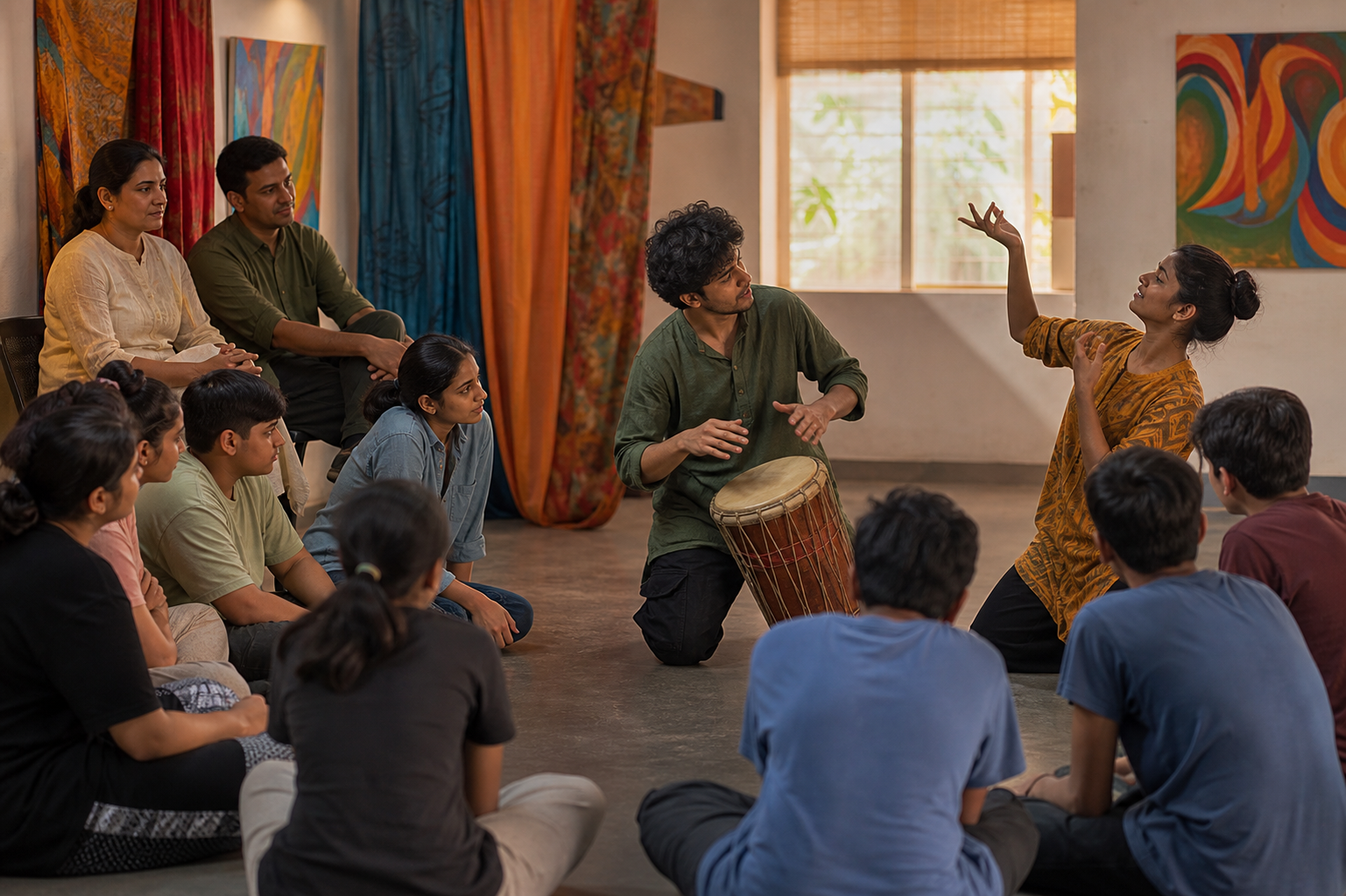
A warning-only campaign begins with the problem. It asks a person to listen while being told what is dangerous, irresponsible or socially damaging. That may convey information, but it can also make someone who is already afraid of exposure withdraw further.
A cultural programme offers a different first step. A person can attend with friends or family, listen to music, move, sit in reflection and hear a message about well-being without being required to disclose anything. Young people encounter constructive role models. Parents and children acquire language they can use together. Educators gain a way to introduce the subject without beginning with accusation.
This is where reflective silence, mindful breathing and gentle movement are valuable. They create a pause in which a participant can notice agitation, pressure or an urge before acting. Uplifting music and collective participation can restore a sense of belonging. Neither function proves that a person is medically safe to stop using a substance, and neither constitutes addiction treatment.
Build a public lane and a private lane into every programme. The public lane may include performance, discussion, reflection and practical wellness exercises. The private lane should identify a person who can receive a concern discreetly, a quiet place or secure contact channel, a verified professional referral and a route for emergencies.
The invitation should be plain: If substance use is affecting you or someone you care about, you can speak privately with the designated coordinator or use this verified contact. Do not promise complete anonymity if your team cannot guarantee it. Explain who may see the information, what will remain confidential and when immediate danger requires outside help.
Dharmic discipline must never become humiliation

Hinduism, Buddhism, Jainism and Sikhism are distinct traditions, not interchangeable versions of one teaching. Yet they provide a strong common ethical vocabulary for this work: disciplined living, mindful attention, compassion, service and responsibility toward the wider community. That convergence allows people to cooperate without erasing their differences.
Self-mastery is useful when it restores agency. It becomes harmful when it is used to tell a struggling person that dependence proves weak character. Compassion is useful when it protects dignity and makes honest disclosure safer. It becomes empty when kind words are offered without a route to competent help.
- Instead of asking why someone cannot simply control themselves, ask which situations make it hardest for them to remain safe.
- Instead of demanding a permanent promise in front of an audience, ask what form of help they are willing to accept now.
- Instead of saying that the person has shamed the family or community, name the harmful behaviour while affirming that the person still deserves protection and care.
- Instead of prescribing more prayer, meditation or yoga as a cure, offer spiritual practice alongside an appropriate professional assessment.
Ahimsa should govern the method as well as the goal. Speech that humiliates, public exposure that isolates and pressure that drives a person into secrecy can deepen harm even when the stated intention is reform. Seva makes the alternative concrete: accompany the person to an appointment, help the family find a suitable service, check in with consent and remain present after the first burst of motivation fades.
Religious authority also needs a clear boundary. A spiritual teacher or community leader can encourage honesty, discipline and hope. Unless professionally qualified for the role, that person should not diagnose dependence, supervise withdrawal or guarantee that a devotional practice will cure it. Dharma contributes moral courage and community; it does not require us to make medical claims in its name.
Build the bridge from a public pledge to qualified help

A pledge becomes credible when a participant knows what to do with it during a difficult evening, after a lapse or when a friend asks for help. Put the support pathway in place before inviting disclosure.
- Define what your initiative actually provides. State whether it offers awareness, peer support, professional counselling, treatment referral or some combination. Do not let participants assume that a cultural programme operates a clinical service when it does not.
- Name a responsible contact and a substitute. Participants should not have to approach a stage full of dignitaries or guess which volunteer is trustworthy. Give the role a visible but discreet contact method and provide a private place for conversation.
- Verify the referral route. Confirm that the service exists, accepts the people you intend to refer and can explain its eligibility, language, hours and likely process. An outdated telephone number is not a safety net.
- Prepare a simple first response. Thank the person for speaking, listen without interrogation, determine whether there is immediate danger and offer the appropriate next connection. Volunteers should not press for a full personal history merely because someone has asked for information.
- Ask permission before following up. Agree on the contact method and what may be shared with a professional or family member. Record only what is necessary for the agreed action.
- Set boundaries for urgent situations. Make sure every organiser knows that an emergency is not a peer-support exercise. Immediate danger requires immediate professional help.
If someone is unresponsive, struggling to breathe, having a seizure, severely confused or in immediate danger of harming themselves or another person, contact local emergency services. Do not leave the person alone while waiting for appropriate help, and do not ask an untrained volunteer to manage the crisis.
Abruptly stopping a substance can be medically dangerous in some forms of physical dependence. A temple, campus group, cultural organisation or family should not attempt to run an improvised detoxification process. The safe next step is an assessment by a qualified clinician or addiction service, with spiritual and community support continuing alongside that care.
Make continuity visible in everyday community life

The atmosphere at a major event can produce a sincere intention, but intention becomes reliable only when the next action is easy to find and socially supported. Continuity does not require every gathering to reproduce the scale of IGI Stadium. It requires predictable contact, clear roles and repeated opportunities to reconnect.
At home
Choose a calm, private moment. Describe the behaviour or consequence that concerns you without assigning an identity to the person. Ask about immediate safety, listen to the answer and offer to accompany them to suitable help. A check-in should not become surveillance, public confrontation or an argument about whether the person is morally good.
On a campus
Separate education from case management. Teachers and student leaders can host dialogues, practise refusal language, challenge social pressure and make support information visible. A private disclosure should move through a defined safeguarding or counselling route rather than becoming material for a group discussion. Never ask students to confess personal substance use in a public session.
In a temple, gurdwara, Jain centre or Buddhist vihara
Use the tradition’s own language and practices honestly. A brief period of meditation, yoga, kirtan, reflective silence or seva may help people regulate attention and regain connection. Place a discreet support contact beside that programme, invite appropriately qualified professionals when individual guidance is offered and train volunteers to understand the limit of their role.
In peer support
A peer can listen, reduce isolation and help someone reach the next appointment or conversation. A peer should not promise to keep an immediate threat secret, take sole responsibility for another person’s recovery or offer medical instructions. The healthiest peer relationship connects a person to a wider circle of capable support.
After each programme, test the pathway rather than admiring the programme itself. Can a participant repeat where private help is available? Is the contact actually staffed? Do volunteers know the emergency route? Has the next check-in, dialogue or supportive practice already been arranged? Can someone who missed the event still find the information?
Do not use public disclosures, personal recovery stories or lists of names as evidence of success. Protecting dignity is part of the initiative, not an administrative detail. Look instead for continuity: the help route remains accessible, referrals are handled responsibly, volunteers stay within their competence and families know where to turn when concern becomes urgent.
Before your next cultural programme, write down who will receive a private request, which qualified service can accept a referral, how immediate danger will be handled and when support will be available again. Test that route yourself. Once it works, culture is no longer decorating a slogan; it is creating the trust and belonging in which a person can choose help without surrendering dignity. Build that route before asking for the next pledge.
References
