
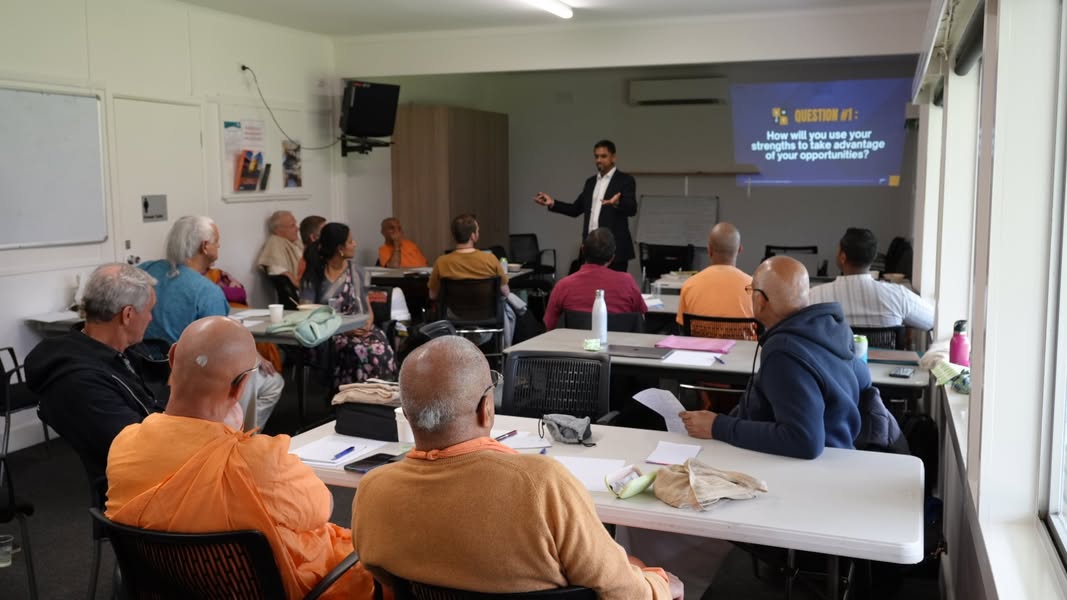

A recent National Strategic Planning workshop brought together most members of the ISKCON Australia National Council for two focused days of structured collaboration. The gathering aimed to align mission, governance, and community engagement across regions, and the consolidated results are now awaited. Participants reported a constructive environment that balanced rigorous analysis with practical next steps designed to enhance service delivery and organizational resilience.
The first day concentrated on a broad strategic plan, clarifying priorities, timelines, roles, and measurable outcomes. Deliberations emphasized evidence-based decision-making, transparent accountability, and periodic review cycles to ensure steady progress. Many described the atmosphere as disciplined yet uplifting, noting a shared sense of purpose and a renewed commitment to collaborative leadership.
The Sunday session focused on a communications and marketing plan to strengthen outreach. Discussions addressed core messages, audience segments, and channel strategy spanning digital platforms, local community gatherings, and interfaith forums. The team also examined feedback loops, crisis communication readiness, and ethical guidelines to ensure consistent, respectful, and factually grounded messaging across Australia.
Throughout the workshop, planners highlighted dharmic unity by affirming shared values across Hinduism, Buddhism, Jainism, and Sikhism, while honoring each tradition’s distinct practices. The approach emphasized interfaith dialogue, cultural sensitivity, and inclusive programming that strengthens community cohesion. This alignment supports unity in diversity and reflects a long-term commitment to respectful engagement and social harmony.
The forthcoming report is expected to present clear milestones, a governance cadence for quarterly reviews, volunteer development pathways, and a unified outreach calendar. These deliverables should support consistent messaging, improved resource allocation, and measurable community impact. By integrating strategic planning with a robust communications framework, the workshop established a durable foundation for growth, service excellence, and sustained community engagement.
Inspired by this post on Dandavats.
