
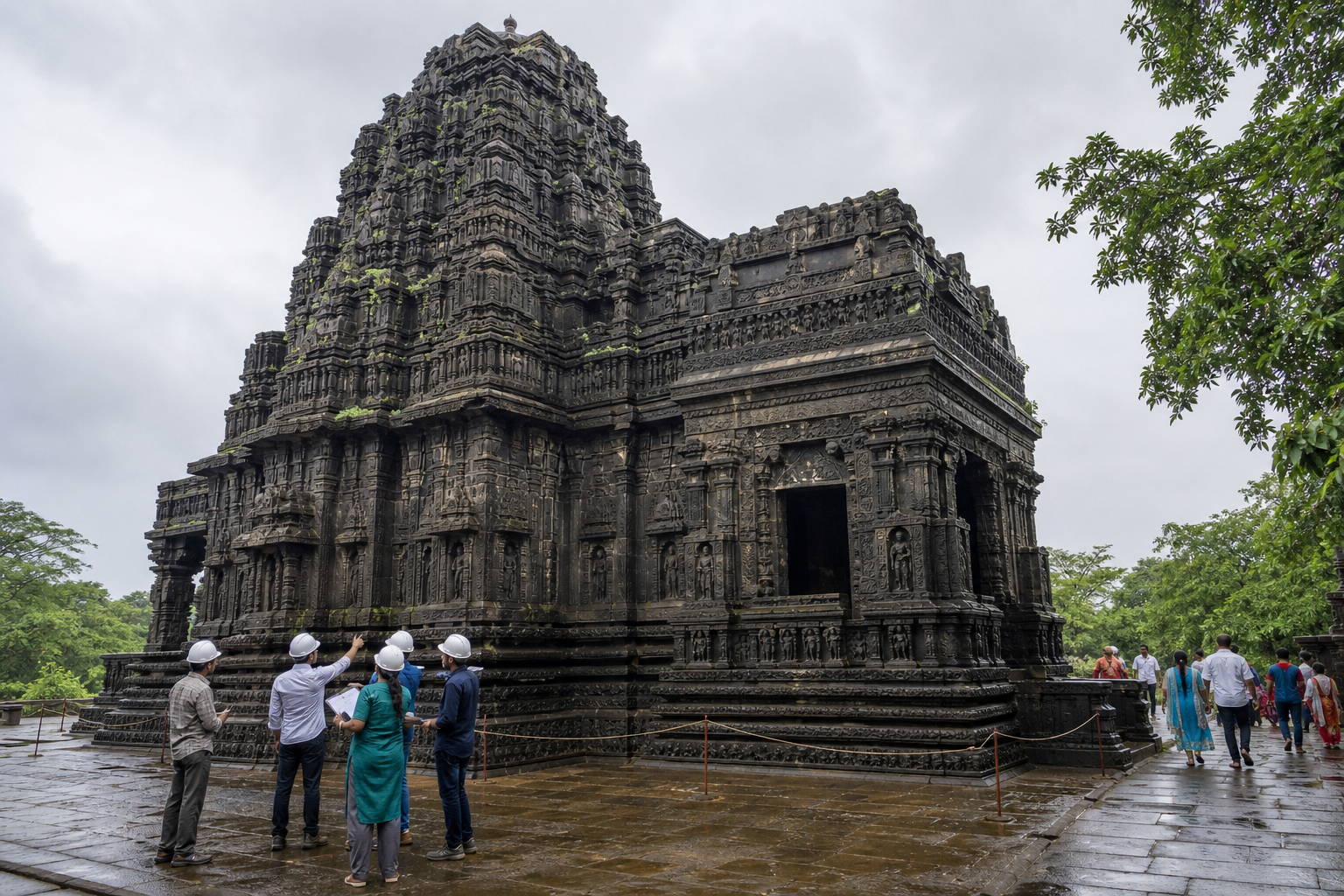
If you are worried about the cracks, damaged carvings and falling stone at Ambernath Shiv Temple, the most useful response is not a hurried repair or a symbolic cleaning drive. It is a demand for a safe, documented conservation programme in which investigation comes before treatment and water control comes before cosmetic patching.
At this 950-year-old, ASI-protected living temple in Thane district, structural safety, daily worship and architectural conservation cannot be handled as separate problems. This guide shows you what the visible damage may mean, which work should come first, what a credible public plan should contain and how devotees can help without accidentally harming the monument.
Read the warning signs without attempting your own repair
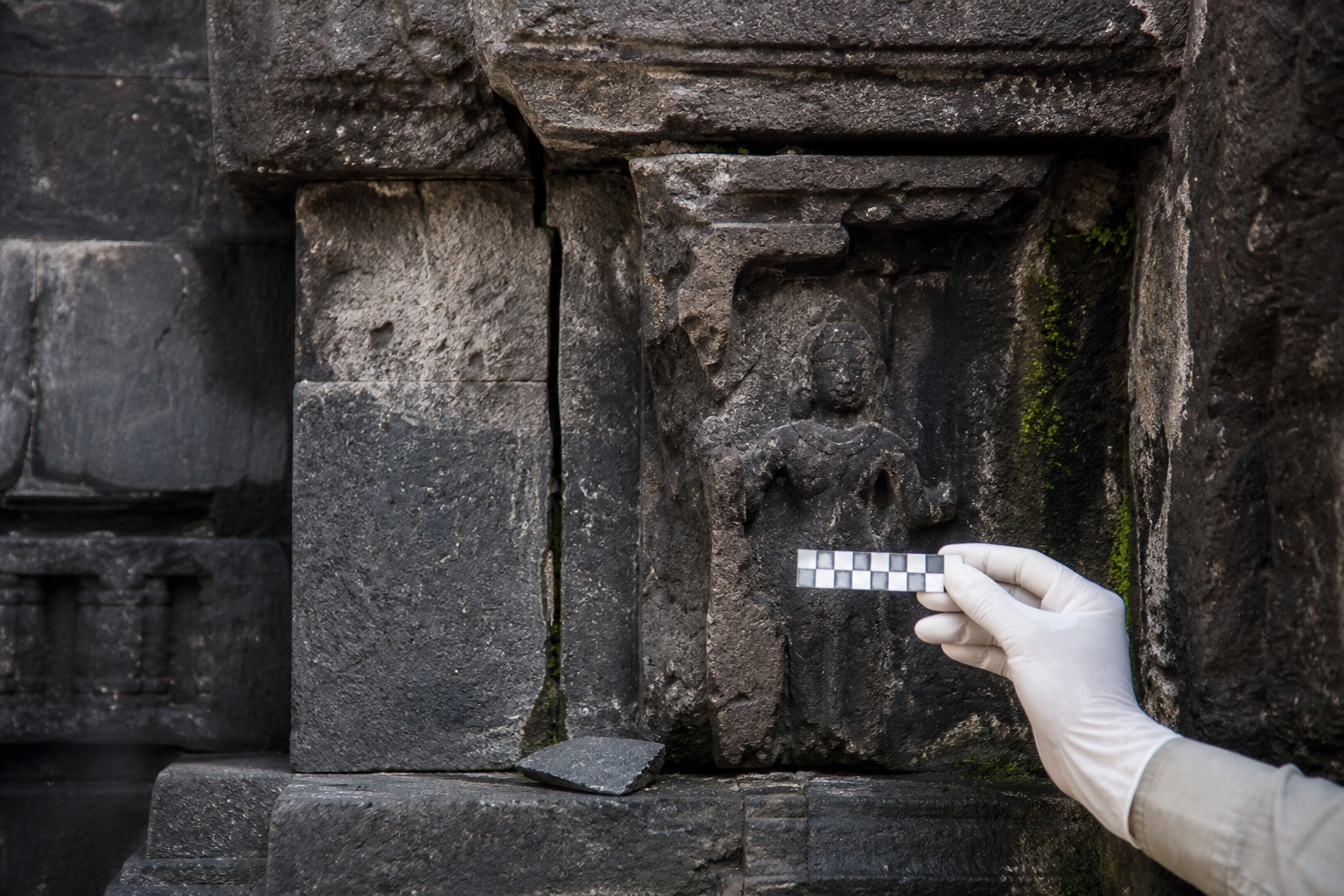
The known signs of distress are serious: deep cracks, localised collapses, damaged sculptures, fissures along masonry joints, displaced stone elements, weathered carvings and micro-vegetation. These conditions justify prompt expert attention. They do not, however, tell a visitor which repair should be applied.
A crack is the visible symptom, not a complete diagnosis. It may reflect movement, an open joint, loss of supporting material, water-related deterioration or more than one mechanism. Its width in a photograph cannot establish whether it is stable or changing. That distinction requires mapped observations, measurements and structural assessment.
Moisture deserves particular attention because monsoon seepage and changing moisture levels appear to have aggravated existing weaknesses. Water can enter through open joints, remain around poorly drained portions of the roof or plinth, and repeatedly wet vulnerable stone and mortar. Small plants can widen entry paths and retain moisture. Removing vegetation without examining its roots may loosen fragile material, so even an apparently simple cleaning task belongs under conservation supervision.
The same caution applies to quick crack filling. A hard or incompatible patch can conceal continuing movement, alter the way moisture travels through the masonry and make a later diagnosis more difficult. Compatible lime-based repair may eventually be appropriate, but only after the crack, surrounding stone, internal voids and water path have been assessed.
When you visit, notice changes without touching them. Useful observations include a newly opened joint, a stone that appears to have shifted, fresh fragments below a carving, a persistent wet streak, new plant growth, or a change in an existing crack. Keep outside barriers and shored areas, and do not move fragments into a supposedly safer position. Their original location is part of the evidence conservators need.
Key takeaways for devotees and heritage advocates
- Ask for a measured condition survey before asking for permanent repairs.
- Treat emergency shoring and visitor protection as immediate safety work, not as the completed conservation project.
- Make roof, joint and plinth drainage central to the plan; repeated water entry can undermine otherwise careful masonry treatment.
- Insist that mortars, grouts and cleaning methods be compatible with the historic stone and tested before broad use.
- Protect darshan by planning visitor movement and construction access together rather than closing worship by default or ignoring physical risk.
- Support transparent timelines, budgets, peer review and maintenance records so that public concern produces verifiable work.
The conservation sequence worth demanding
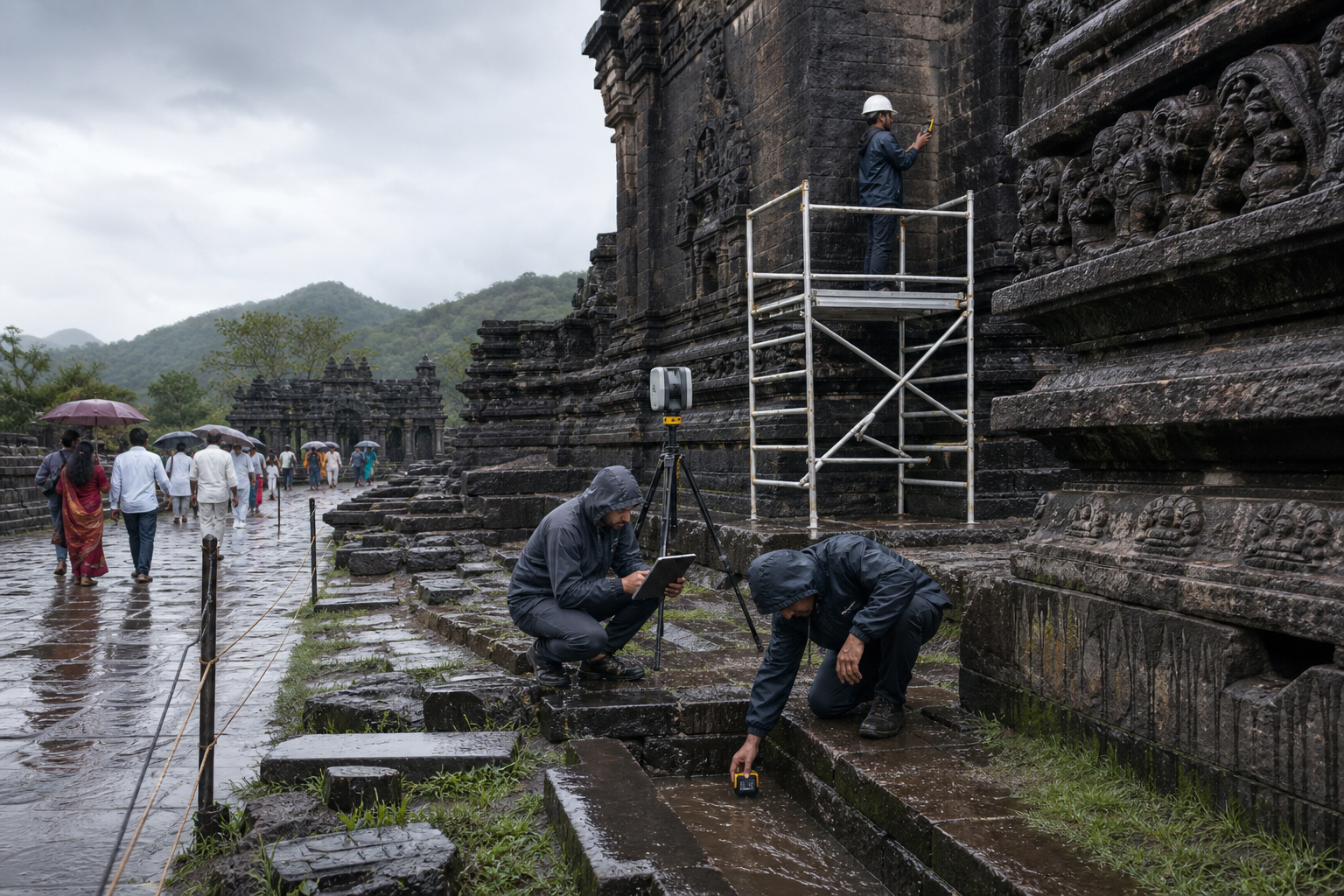
A sound programme should move from evidence to stabilisation and then to carefully selected treatment. Reversing that order risks repairing the appearance of damage while leaving its cause active.
- Create a precise baseline. Begin with a structural and material audit. Non-destructive testing can investigate hidden conditions without unnecessary cutting or dismantling. Three-dimensional laser scanning and photogrammetry can record the geometry, cracks, displaced members and carved surfaces. The record should identify survey dates and locations so later inspections can show whether a condition has changed. A digital model is valuable evidence, but it does not itself stabilise masonry.
- Control immediate hazards. Where stone is unstable or a local collapse presents a risk, temporary shoring, perimeter protection and controlled access should precede lengthy documentation or permanent repair. Temporary supports must be designed and installed by qualified specialists; improvised props can transfer loads into another fragile part of the structure.
- Trace and reduce water entry. Map how rain reaches the roof, joints, wall surfaces and plinth, and how it leaves the site. Potential measures include improved roof and plinth drainage, reversible surface run-off channels and monitored moisture barriers. The correct combination depends on site levels and material behaviour. Any intervention should be checked through the monsoon cycle rather than declared successful merely because the surface looks dry on one visit.
- Test compatible masonry treatments. Once movement, voids and moisture paths are understood, targeted micro-lime grouting may help consolidate internal voids, while compatible lime-based mortar may be used for appropriate joints. These are candidate treatments, not a universal recipe. Trial areas, material specifications and records of where each treatment was used should form part of the permanent conservation file.
- Reassemble displaced original members carefully. Anastylosis allows documented original stone elements to be returned to their proper positions. Identification, orientation and structural support must be established before reassembly. A loose stone should never be reset merely because its likely position appears obvious.
- Conserve sculpture as sculpture, not as ordinary masonry. Weathered and salt-affected carved surfaces may require controlled desalination and careful cleaning. Fragile carvings may also need discreet protective canopies. Aggressive washing, scraping or coating can remove original surface material, so methods should be tested and documented before wider application.
- Manage people and vibration. Visitor routes, work zones and ritual access should be planned together. Controlled movement can reduce crowd pressure around vulnerable areas, while anti-vibration measures may be appropriate where nearby activity affects the structure. Restrictions should respond to identified risks and be reviewed as stabilisation progresses.
- Convert the project into routine care. Completion of major repairs should trigger a maintenance schedule, not the end of attention. Drainage, plant growth, repaired joints, temporary protections and known cracks need repeat inspection. A modest recurring maintenance programme can identify deterioration before it becomes another emergency.
The essential principle is minimal, compatible intervention. Preserve sound historic fabric, treat the cause of deterioration and add only what safety and stability require. This is slower than covering every crack at once, but it gives the temple a far better chance of remaining both authentic and serviceable.
A credible roadmap must protect worship and earn trust
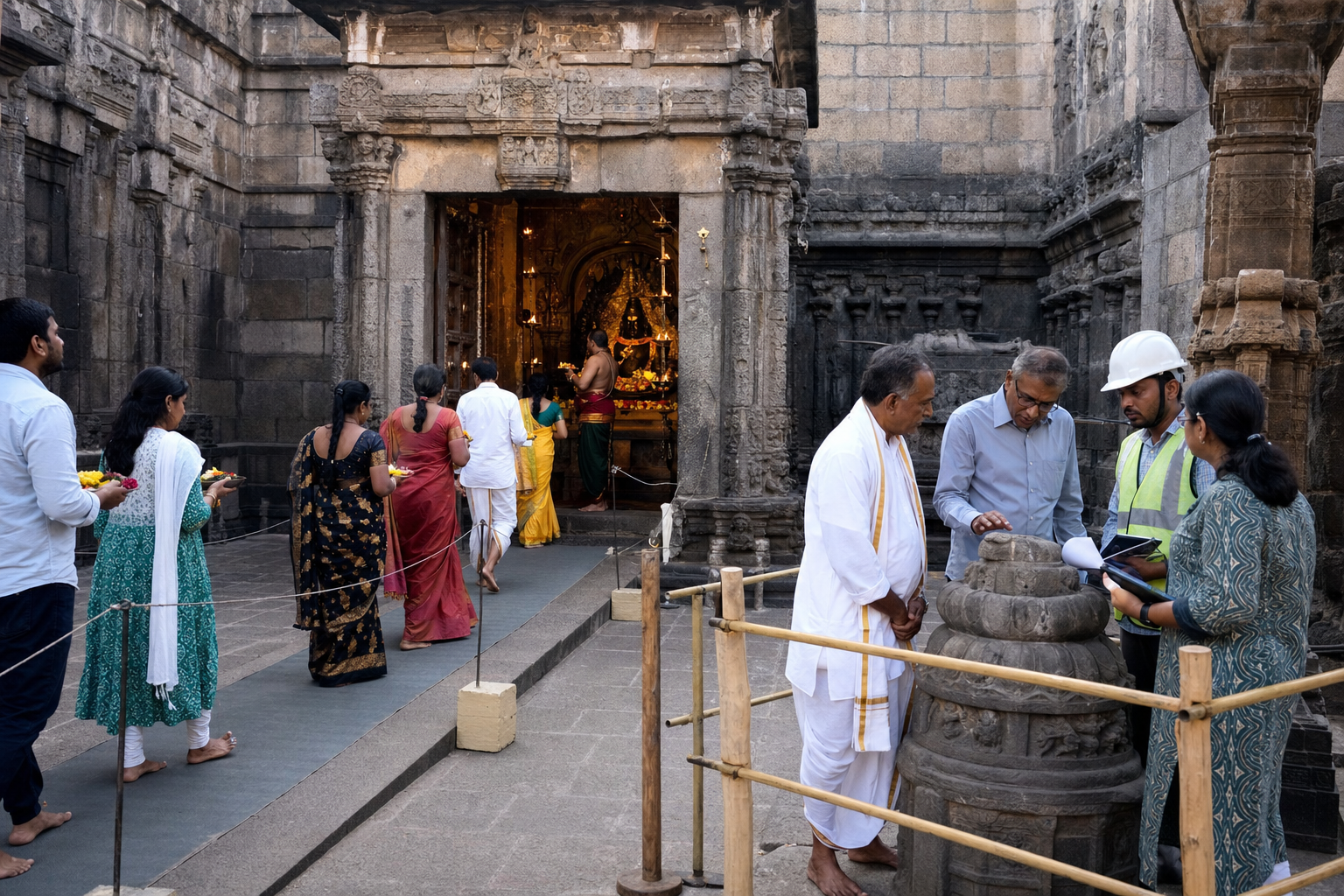
The Archaeological Survey of India is the designated custodian, but stewardship of a living temple also affects priests, devotees, local residents and public authorities. A credible roadmap should therefore make the sequence of decisions visible without turning technical conservation into a public vote. Specialists must decide how the structure is stabilised; the public should be able to see what was examined, what has been authorised and whether promised work was completed.
| Stage | Question to answer | Public evidence to request |
|---|---|---|
| Baseline survey | What is damaged, and which conditions may still be changing? | Dated condition maps, survey methods, scan coverage and a summary of priority risks |
| Emergency stabilisation | Which areas are unsafe now? | Locations of shoring and barriers, reasons for access limits and a review process |
| Water management | Where does water enter, collect and leave? | A drainage plan, monitored moisture locations and inspections across wet and dry conditions |
| Masonry and sculpture work | Why was each material or method chosen? | Material specifications, trial results, treatment locations and photographic records |
| Ritual and visitor access | How will worship continue without exposing people or fabric to avoidable risk? | A route and work-zone plan, temporary restrictions and arrangements for review |
| Long-term care | Who will inspect the temple after major work ends? | A named maintenance responsibility, inspection schedule and condition log |
The roadmap should include timelines, budgets and peer review by conservation architects and structural engineers. It should also explain how the ASI, state archaeology authorities and relevant civic bodies will divide responsibilities. A budget total without scope is not enough: the public needs to know which sum covers investigation, temporary support, drainage, stone treatment, sculpture conservation, access management and continuing maintenance.
Documentation should extend beyond cracks. A public digital archive covering epigraphy, iconography and construction techniques would preserve knowledge that physical repair alone cannot protect. Clear on-site interpretation can then help visitors understand why a barrier, protected carving or restricted route is an act of care rather than an obstacle to darshan.
Ritual continuity must be designed into the works. The mandapa and garbhagriha are not museum rooms, yet living worship does not remove the need for structural precautions. Work zones, safe routes and temporary limits should be discussed with those responsible for worship and then communicated plainly to visitors. The choice should not be framed as unrestricted access versus permanent closure. Phased work and risk-based movement can preserve access wherever the condition of the structure allows it.
Community participation is most valuable when it complements expertise. Hindu devotees can be joined by Buddhist, Jain and Sikh well-wishers in awareness work and expert-guided condition monitoring. That shared Dharmic concern should never be used to justify unsupervised repairs. Volunteers are best placed to notice, record, communicate and encourage compliance with protective measures.
Turn your concern into a useful condition record
If you want to help now, make your next communication specific enough to be checked. A message saying that the temple is in danger expresses concern but gives a conservation team little new information. A dated, located observation can be compared with the baseline and routed to the person responsible for that part of the monument.
- Observe only from an authorised public area. Do not cross a cordon, lean against stonework or climb for a better photograph.
- Record the exact place. Identify the side of the temple, the architectural element or the nearest recognisable feature. A wide context photograph is often as important as a close view.
- Describe what is visible. Write that a joint appears open, a fragment is present, a wet patch persists or a stone seems displaced. Do not diagnose foundation failure or declare imminent collapse unless a qualified assessment has done so.
- Add the date and comparison. State when you observed it and whether you have an earlier photograph from the same viewpoint. Do not claim that a condition is new merely because you noticed it for the first time.
- Flag an immediate access hazard plainly. If loose material appears to endanger visitors, alert on-site staff without touching it. Safety concerns should not wait for a public campaign.
- Submit the record to the custodian. Ask for an acknowledgement or reference number where a reporting channel provides one. Keep the original images and wording so the observation is not distorted through repeated social-media reposting.
A concise report can follow this format: location; date and time; visible condition; change from any earlier dated image; immediate visitor concern; photograph identifiers; and your contact details if a responsible official needs clarification. Keep separate reports for separate locations so each condition can be tracked.
When you advocate publicly, ask four answerable questions: Has a dated structural and material baseline been completed? Which emergency risks have been stabilised? What is the approved drainage and treatment sequence? Where are the timeline, budget, peer review and maintenance responsibility published? These questions move discussion away from assurances and towards evidence.
On your next visit, respect every safety control, make one careful observation and send it through the proper channel. Then keep asking for the documented sequence: diagnose, stabilise, stop water, repair compatibly and maintain. That is how concern for Ambreshwar becomes durable seva rather than a moment of alarm.
References
