
-
Bahuka Armlets in Hindu Iconography: Decoding a Powerful Symbol of Divine Martial Strength
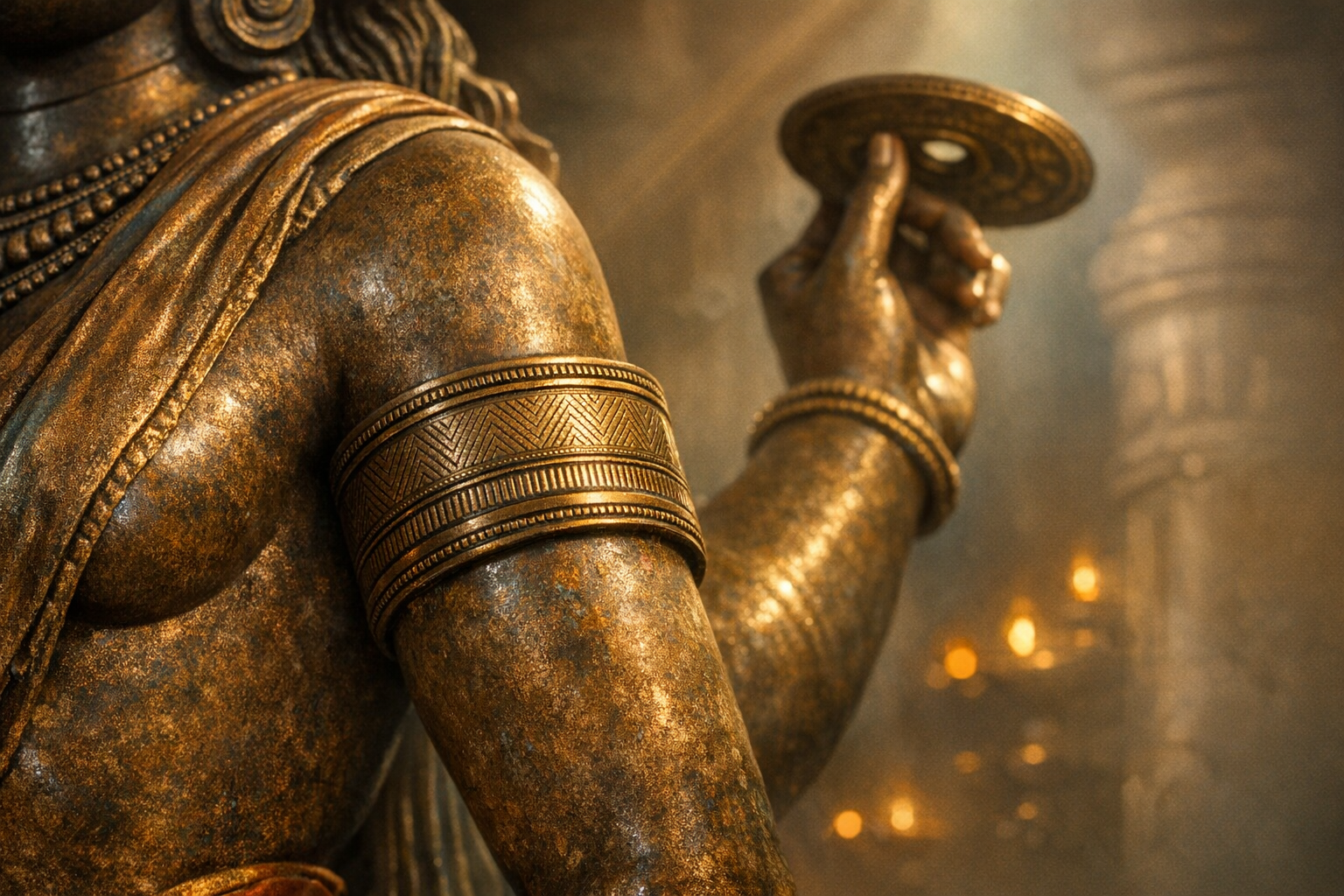
Bahuka is the cylindrical upper arm cuff seen in Hindu temple sculpture, distinct from the circular bahuvalaya and the tied bahubandha. Its compact mass and unbroken profile convey divine strength, martial virtue, and disciplined grace across Shaiva, Shakta, and Vaishnava imagery. Recognizing bahuka in the field refines visual literacy, helping viewers read gestures, moods, and…
-
Why Atharva Veda Appears Monkey-Faced: Unveiling Sacred Simian Symbolism in Temples
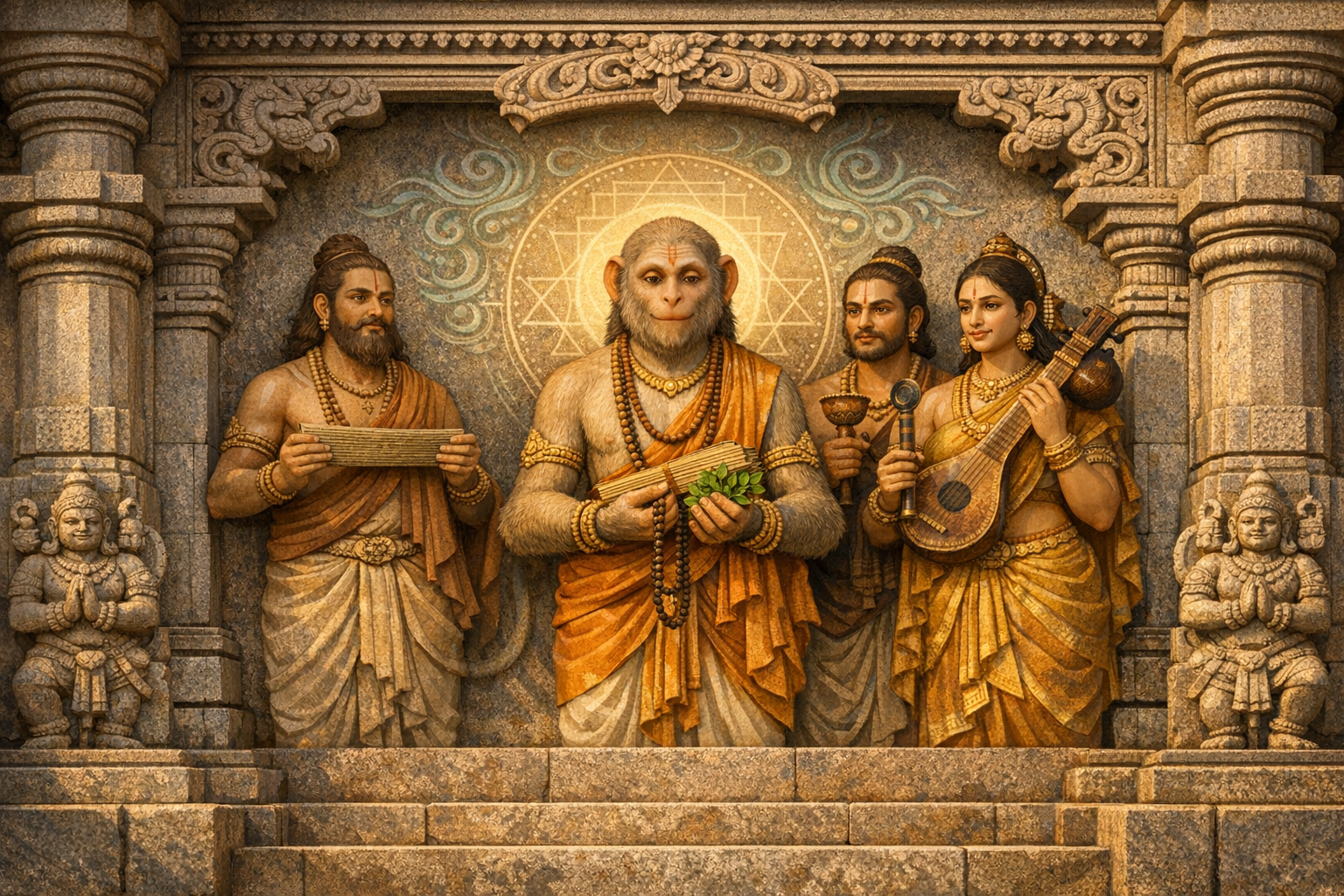
Hindu temple art often personifies the four Vedas as living presences, and in some regional traditions Atharva Veda appears with a monkey-like face. This simian marker is not caricature but a sophisticated code for healing, protection, breath-centered efficacy, and agile, disciplined intelligencequalities deeply associated with Atharvan rites. The discussion situates the motif within flexible Śilpaśāstra…
-
Decoding the Horse-Faced Sama Veda: Iconography, Sacred Sound, and Hayagriva

In Hindu iconography, the Vedas appear as living Veda Purushas; in select programs the Sama Veda is rendered horse-faced, signaling a fusion of sacred sound and Hayagriva theology. The article explains how this equine imagery coheres with the Sama Veda’s musicological coreudgītha, svara, and sāman structureswhile linking it to Hayagriva, Viṣṇu’s horse-headed form who rescues…
-
Unveiling Yajur Veda’s Goat-Faced Icon: Sacred Symbolism in Hindu Temple Art
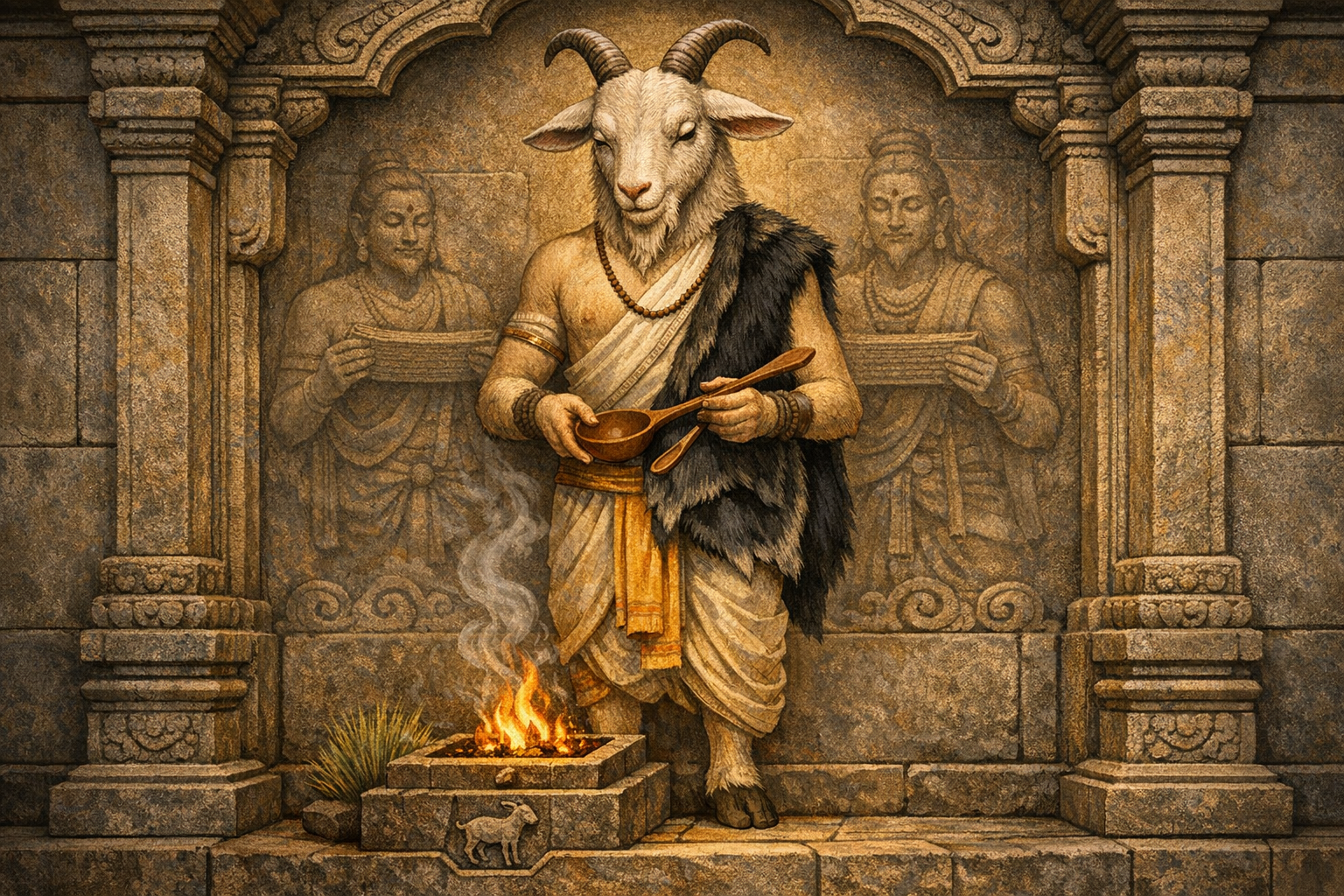
Hindu temple art often personifies the Vedas as living, intentional presences called veda-purushas, and the Yajur Veda is sometimes shown with a goat-faced form. This article explains why: it links ritual practice (yajna), philology (aja as both “goat” and “unborn”), and the Adhvaryu’s tools to a coherent iconographic language. It also clarifies common confusions with…
-
Beyond the Frame: Why Hindu Deity Images Seem IncompleteRevealing Infinity and Dharmic Unity

Many observers assume Hindu deity images are incomplete because they appear stylized, aniconic, or schematic. In classical Hindu thought, however, every sacred image is complete in essence (tattva) and intentionally incomplete in form (rupa), a design that honors the Upanishadic insight that the infinite cannot be fully pictured. Shilpa Shastras, temple architecture, and ritual consecration…
-
Decoding the Donkey-Faced Rig Veda: Esoteric Agamic Iconography, Sound, and Sacred Memory
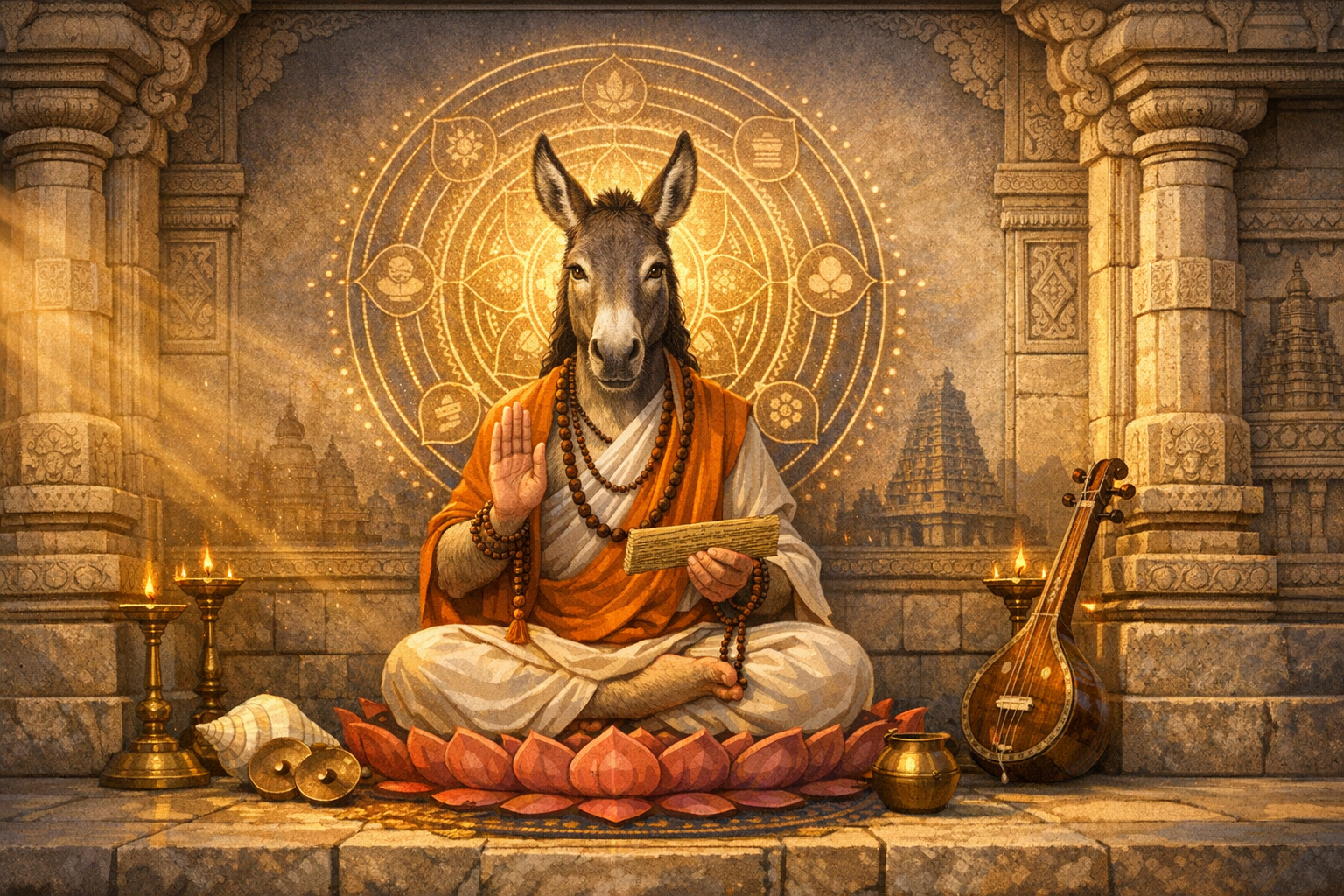
This article decodes a rare Agamic iconographic motif that personifies the Rig Veda as a donkey-faced sage, showing how Hindu sculptures render living śruti in pedagogical form. It explains why the donkey-face signifies raw sound, ascetic endurance, and hermeneutic humilityall central to Vedic study and temple practice. Readers learn how mūrti-lakṣaṇa principles translate doctrine into…
-
Soul in Stone: Classical Hindu Aesthetics, Vishnudharmottara Purana, and Living Sculpture

Classical Hindu aesthetics treats sculpture as a disciplined pathway for making consciousness visible in matter. Drawing on the Vishnudharmottara Purana’s Chitra-sutra, especially Chapter 43 of the third khanda, this article explains how pramana (proportion), bhava (expression), and lavanya (grace) turn craft into living art. It shows how the six limbs of painting inform sculpture, why…
-
Ardhoruka in Hindu Bronzes: Decoding the Warrior’s Drape and Ascetic Power in Iconography
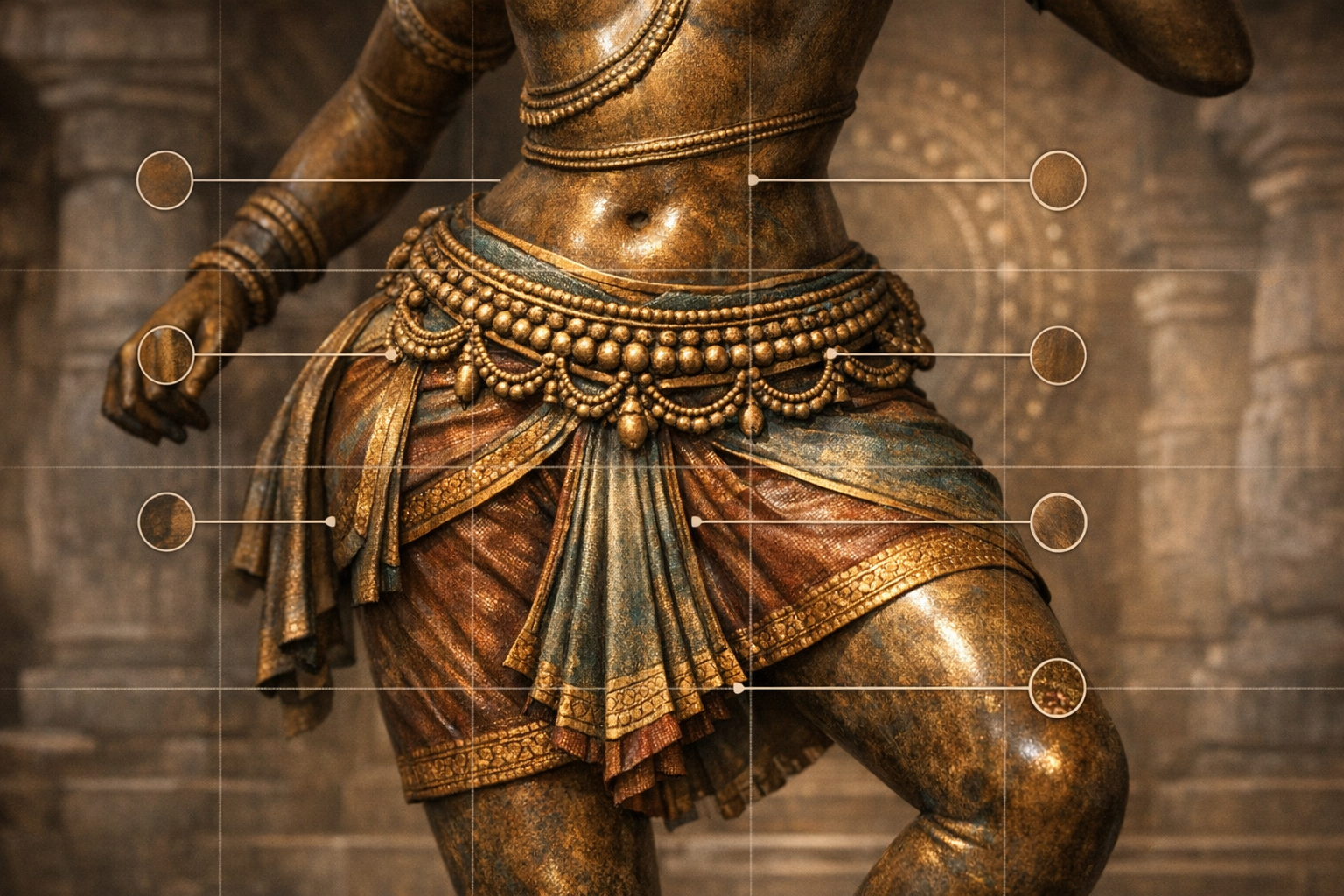
The ardhorukaa short, tightly wrapped lower garmentplays a central role in Hindu bronze iconography, especially in South Indian masterpieces. By exposing the thighs and condensing the silhouette, it signals martial vigor, dance, and ascetic discipline, contrasting with the longer antariya. Canonical texts in the Shilpa Shastras prescribe this form for specific deities, while the lost-wax…
-
Singing Between the Lines: Ekendra Das on Spiritual Messaging in Krsna Conscious Music and Theater
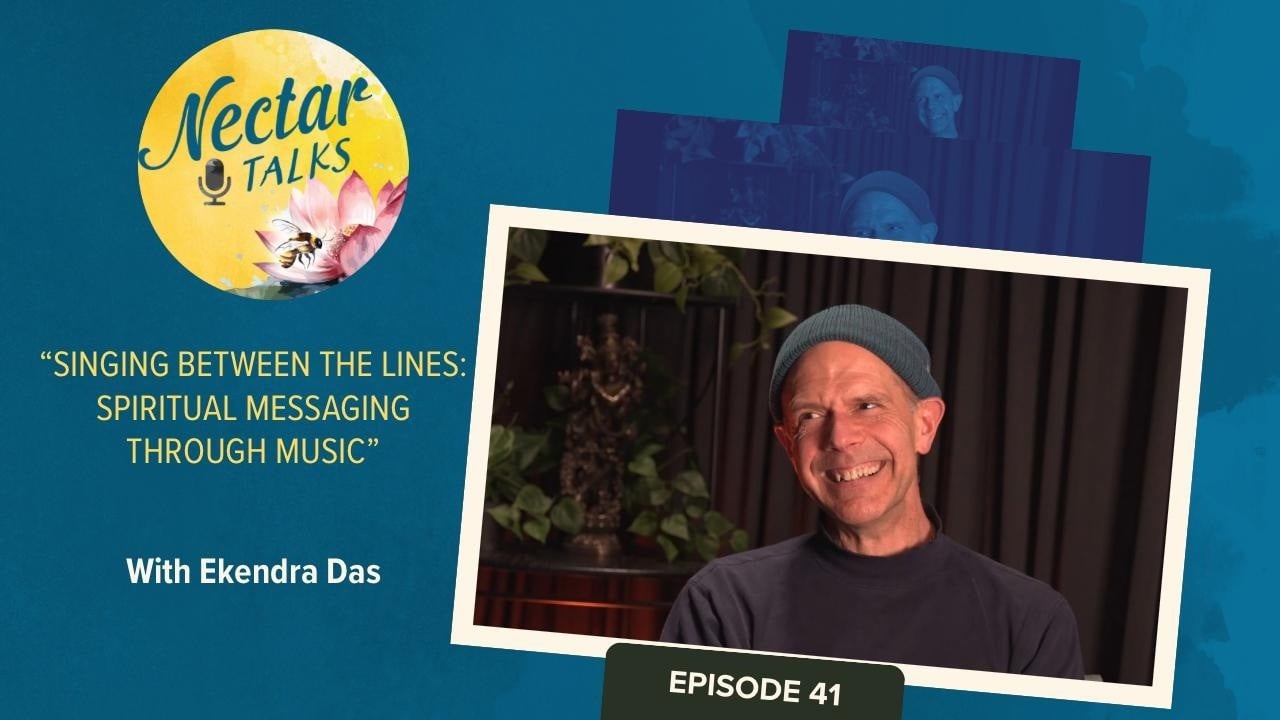
This long-form profile examines how Ekendra Das (Ekendra Prabhu) unites professional musicianship with disciplined seva to communicate dharmic wisdom through Krsna Conscious bands, theater, and responsible humor. It explains how Straight Edge ethics parallel Hindu vrata and align with Buddhist, Jain, and Sikh disciplines, framing music as a practice of clarity rather than escape. Drawing…
-
Bahubandha Unveiled: How the Sacred Tied Armlet Embodies Power in Hindu Temple Sculpture
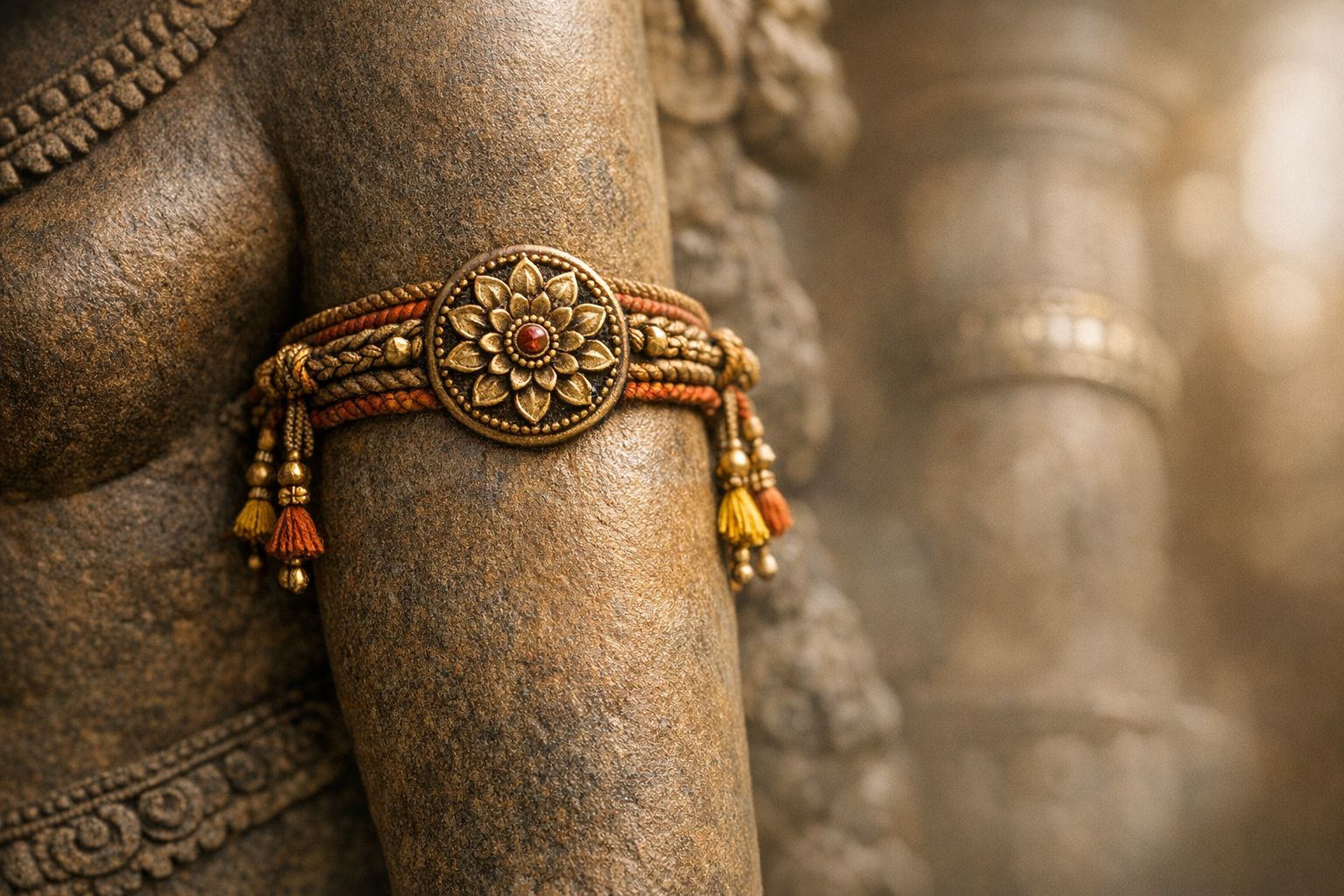
This comprehensive exploration of the bahubandhathe sacred tied armletclarifies how it differs from rigid armlets like the bahuvalaya and keyura in Hindu temple sculpture. Readers gain a clear typology of forms, construction details, and visual cues for identifying tied armlets in stone and bronze across Gupta, Chola, Hoysala, Odisha, and Central Indian traditions. The piece…
-
Solid vs Hollow Hindu Bronzes: Lost‑Wax Mastery, Sacred Meaning, and Smart Selection
Hindu bronze icons emerge from a living dharmic craft shared with Buddhist and Jain traditions, where solid and hollow lost‑wax methods serve different ritual, aesthetic, and conservation needs. This in‑depth guide explains how ghana‑bimba (solid) and suṣira‑bimba (hollow) are made, why temples often prefer hollow casting for processional use, and why small domestic images are…
-
Avanaddha: The Sacred Science of Indian Drums from Vedic Pushkara to Pakhawaj

Avanaddha, the classical Indian family of drums defined in the Natyashastra, links Vedic references such as pushkara and dundubhi with today’s diverse performance, ritual, and communal traditions. This article explains how construction techniquesshell materials, membrane fastening, and the famed syahi loadingengineer near-harmonic overtones and pitch-centered strokes. It surveys major drum types (mridangam, pakhawaj, khol, chenda,…
-
Sadashiva Unveiled: Decoding the Five Faces and Ten Arms of the Pancha Brahma Icon
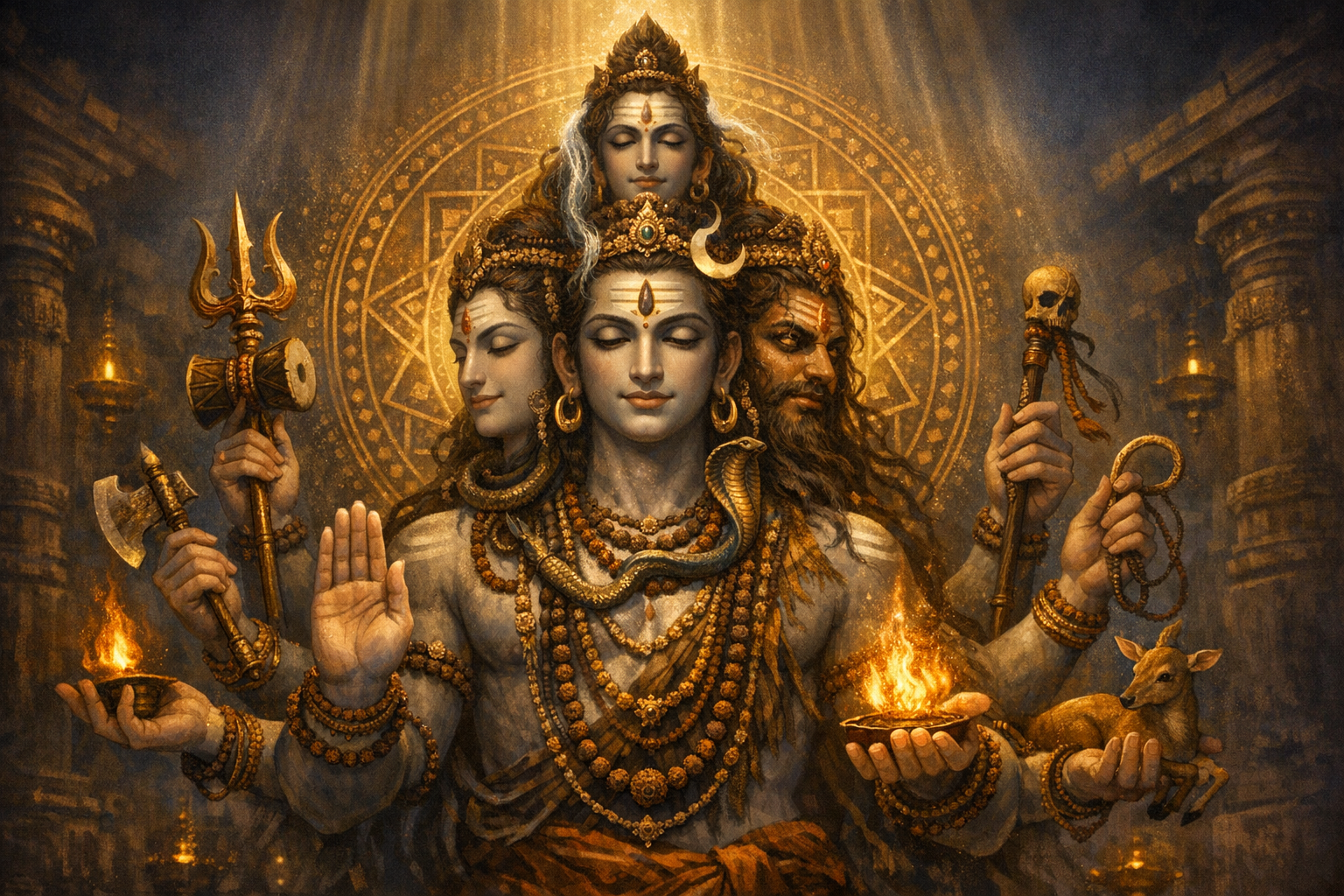
This in-depth guide decodes Sadashiva as Panchamukha (five-faced) and daśa-bāhu (ten-armed), uniting art history with Shaiva metaphysics for a complete, reader-friendly understanding. It clarifies the Pancha Brahma faces, their orientations, and the pañcakṛtya functions they embody. It details the attribute vocabulary (triśūla, ḍamaru, mṛga, pāśa, aṅkuśa, agni, kapāla, akṣamālā) and explains how variations across Agamic…
-
Angada Abharana Unveiled: The Divine Armlet’s Symbolism, Craft, and Cross‑Dharmic Legacy
Angada Abharana, the divine armlet worn on the upper arm at the bahu desha, is far more than ornament in Hindu iconographyit binds strength to service and sovereignty to compassion. This long-form exploration distinguishes the angada from the wrist-worn keyura, traces typologies like the vanki and sarpa-angada, and decodes motifs such as makara and kirtimukha.…
-
Mudgara Ayudha Unveiled: The Divine Hammer’s Power of Sacred Protection and Renewal
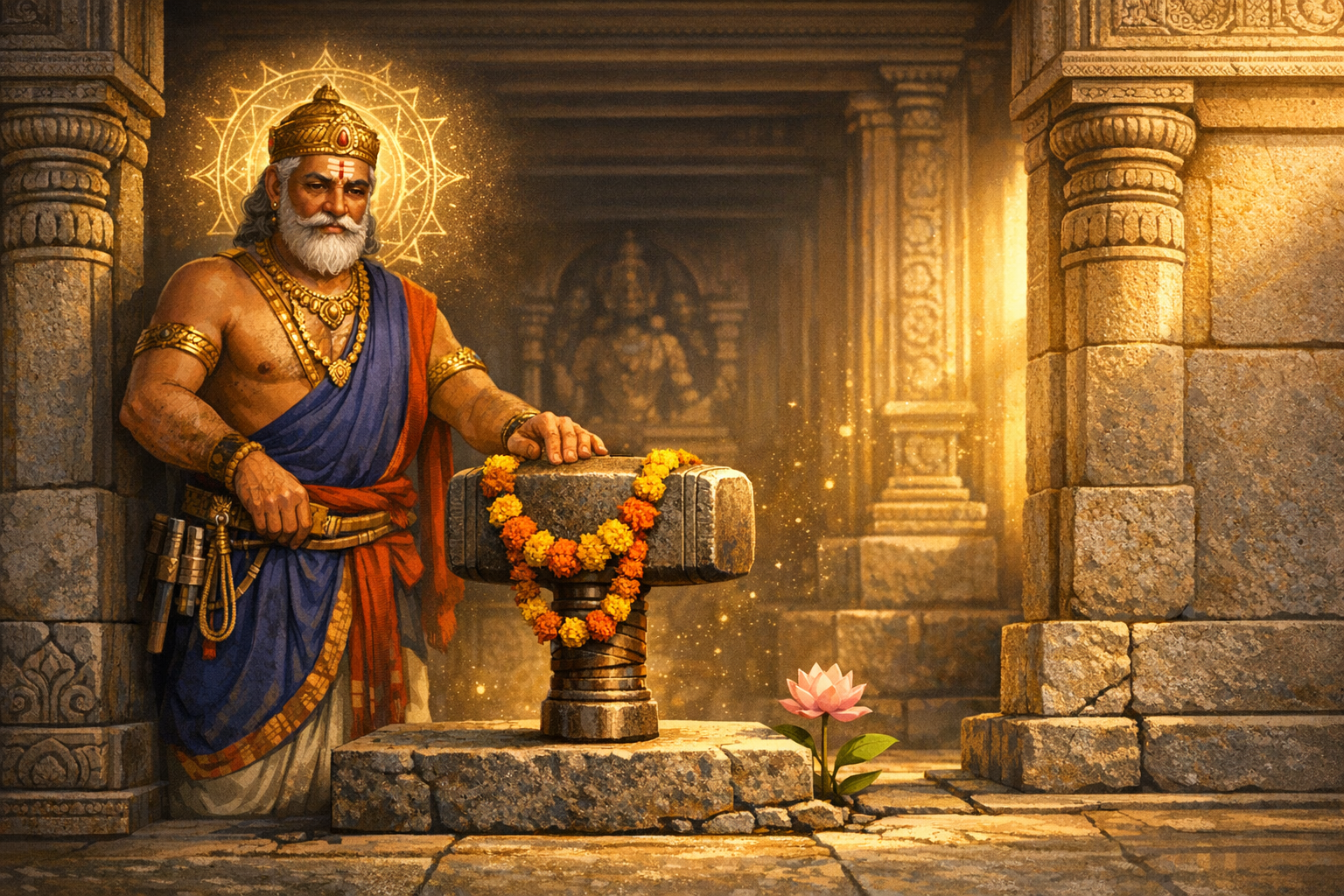
Mudgara Ayudha, the divine hammer or mallet in Hindu iconography, condenses a profound union of sacred destruction and protective guardianship. This long-form study explains how its blunt geometry, short reach, and workmanlike profile distinguish it from the gada, musala, vajra, and ankusa. Readers learn where and why the hammer appears in Hindu sculpturesespecially with Vishvakarma,…
-
Kiratamurti Unveiled: Shiva the Divine HunterIconography, Symbolism, and Temple Legacy
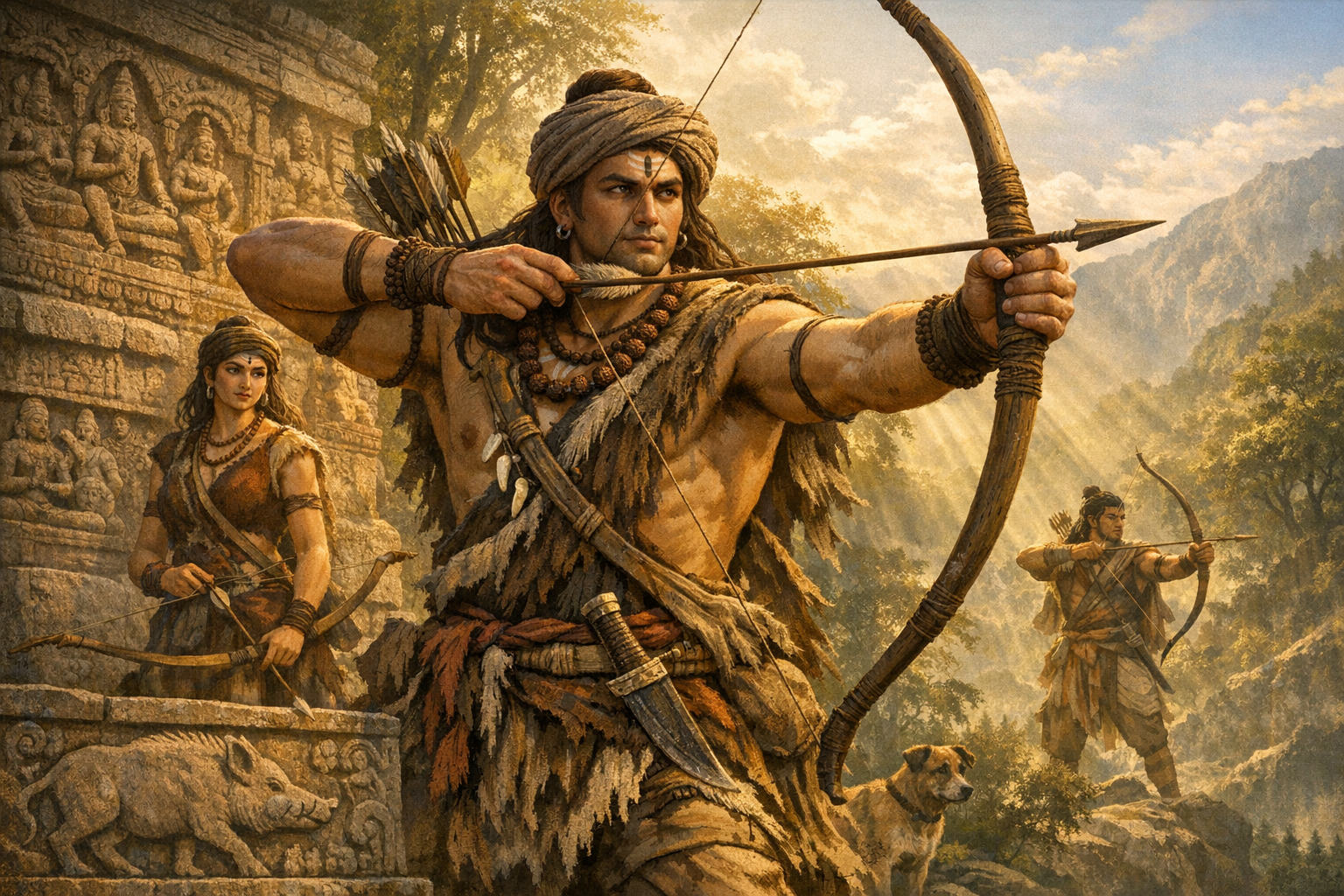
KiratamurtiShiva as the Divine Hunterunites textual authority, temple iconography, and living ritual into a single, resonant theology of focus and grace. This long-form study traces the Mahabharata’s Kiratarjuna episode, explains key iconographic features (hunter’s bow, forest attire, Kirāti companion, boar as symbol), and maps the motif across major sites from Kanchipuram and Ellora to Hoysala…
-
Lotus in Hand vs. Lotus Throne: Revealing Sacred Power and Meaning in Hindu Sculptures

The lotus in Hindu iconography carries two distinct messages: as a throne it signifies transcendence and cosmic sovereignty, while in the hand it becomes an active emblem of purity, abundance, and compassion. This guide decodes how pedestal, posture, color, and the lotus-as-attribute work together to form a visual grammar in sculptures of Lakshmi, Saraswati, Brahma,…
-
Prabhavali or Prabhamandala: The Sacred Arch of Light, Protection, and Cosmic Order in Temples
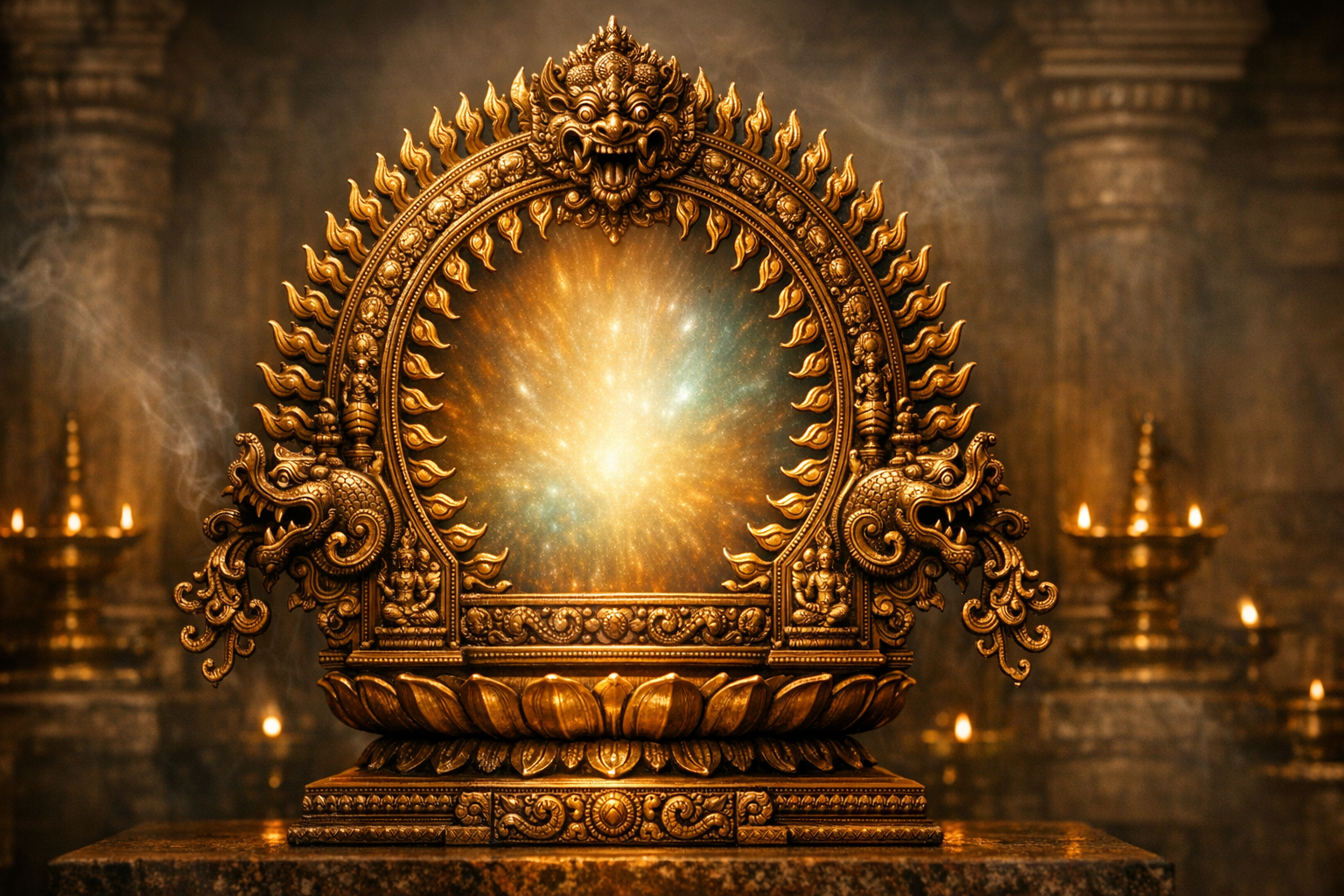
The prabhavali, or prabhamandala, is the luminous arch that frames deities in Hindu temple sanctums, uniting aesthetics, ritual function, and metaphysical meaning. Emerging prominently in classical and medieval India and perfected in traditions such as the Chola bronzes, it encodes protection, radiance, and cosmic order through motifs like kirtimukha, makara, and jvala flames. Stone, metal,…
-
Madanikas in Hindu Temples: Sacred Feminine in StoneSymbolism, History, and Devotional Aesthetics
Madanikasalso known as śālabhañjikāsare among the most evocative symbols in Hindu temple architecture, uniting beauty, devotion, and metaphysics. This comprehensive overview traces their origins in early yakṣī imagery at Bharhut and Sanchi, follows their classical flowering in Hoysala temples at Belur, Halebidu, and Somanathapura, and situates related figures at Khajuraho, Konark, and Warangal. It explains…
-
Child Kali on Maa Sarada’s Lap: Decoding Ramakrishna’s Vision of Fierce Grace and Love
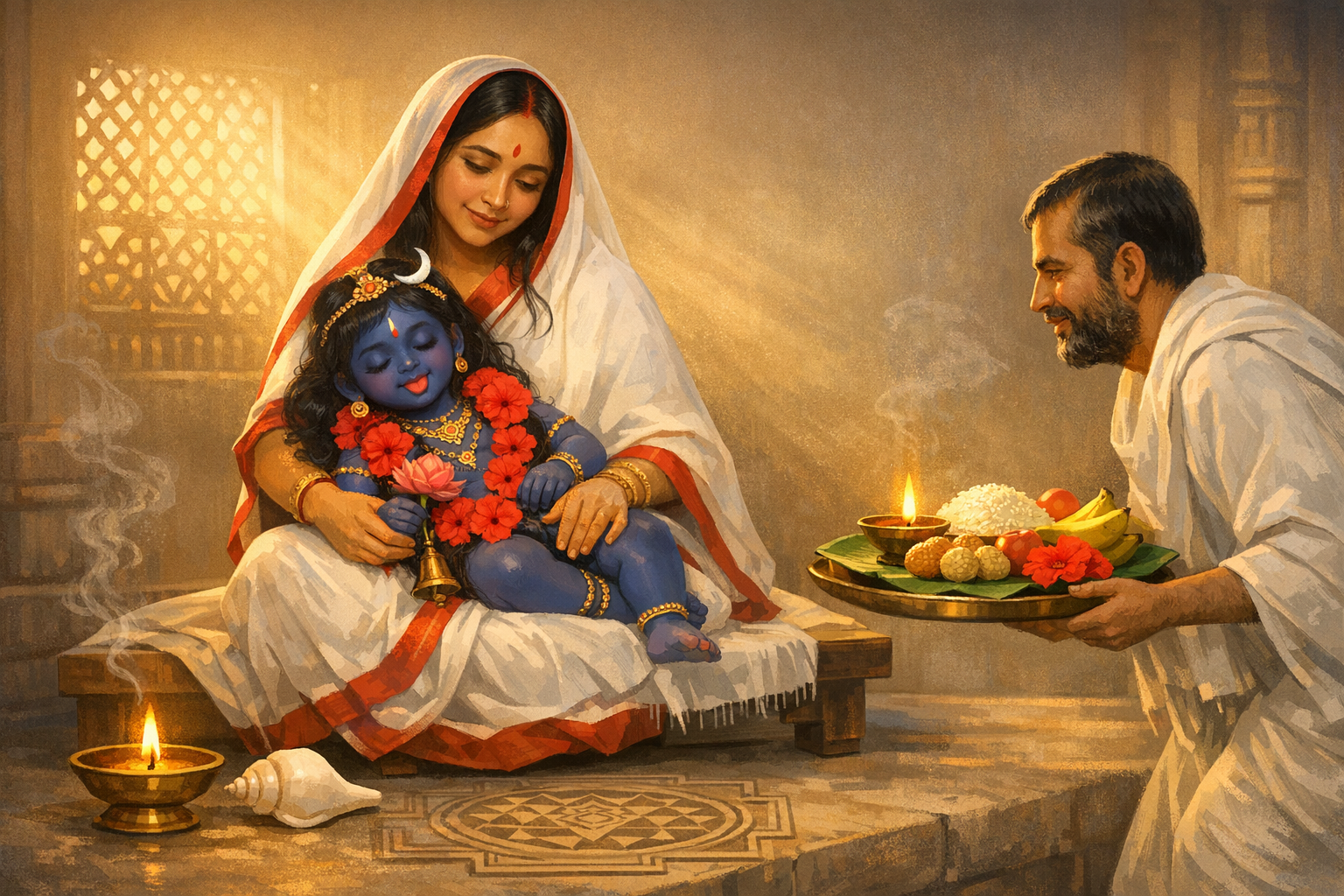
This essay decodes a powerful Hindu symbol: Child Goddess Kali seated on the lap of Maa Sharda as Sri Ramakrishna brings food. It situates the scene within Sanatana Dharma, Shakta Tantra, and Bengal’s devotional culture, showing how fierceness softens into maternal grace through seva. Drawing on Ramakrishna’s lifeespecially the Shodashi Puja to Sarada Deviit interprets…