
-
Rakta Chamundi: Blood-Red Shakti of Wrathful Compassion, Liberation, and Cosmic Balance
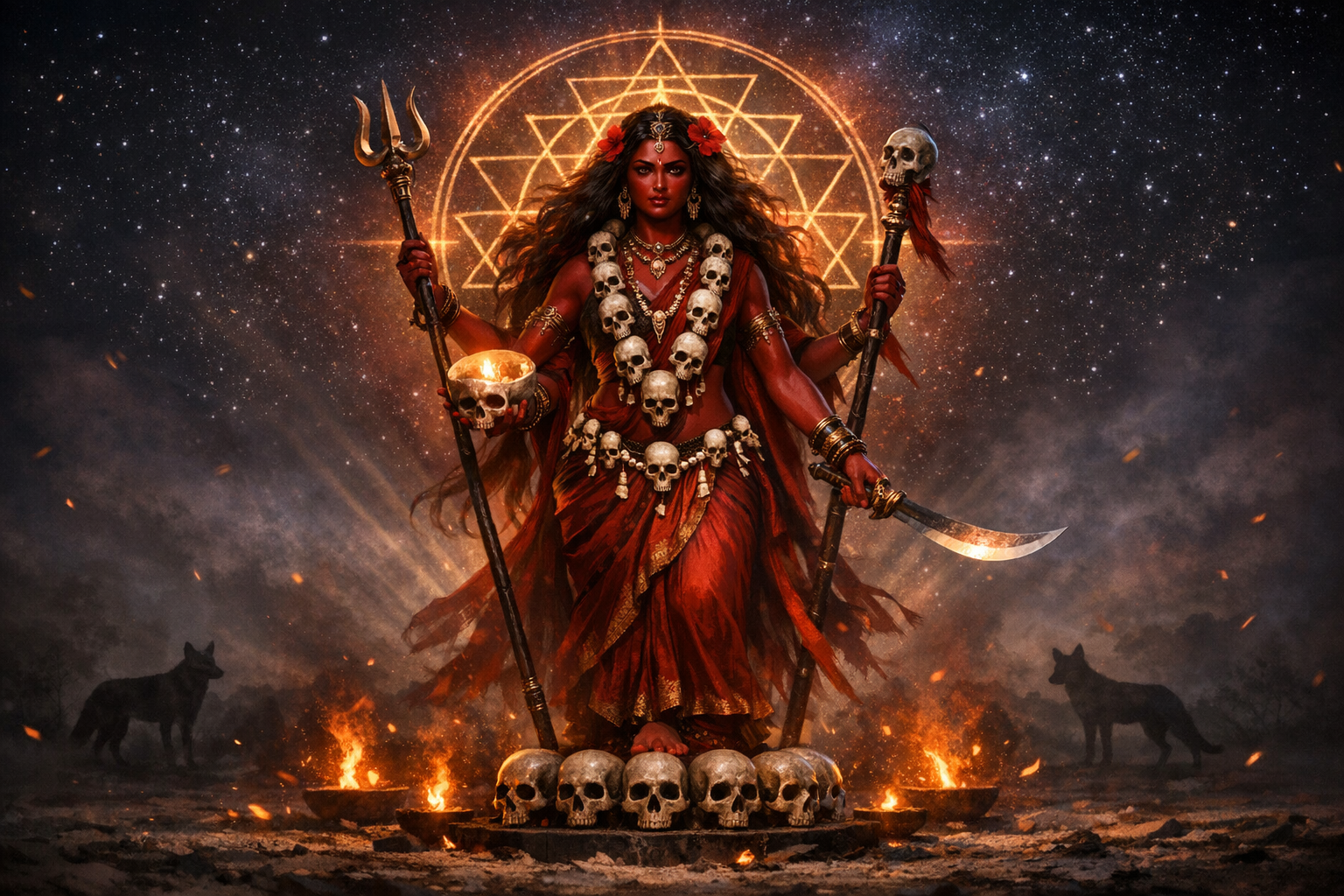
Rakta Chamundi, or Raktha Chamundi, embodies the Hindu Goddess as blood-red Shakti: fierce in aspect, compassionate in purpose, and liberative in effect. Grounded in the Devi Mahatmya’s episodes of Chanda, Munda, and Raktabija, she symbolizes a precise ethical force that ends the repetition of harm. Iconography—skull-garland, cremation-ground setting, and Panchamundi Asana—teaches impermanence, vigilance, and mastery…
-
Navratri Day 4 (22 March 2026): Complete Kushmanda Puja Vidhi, Mantras, Fasting & Seva Guide
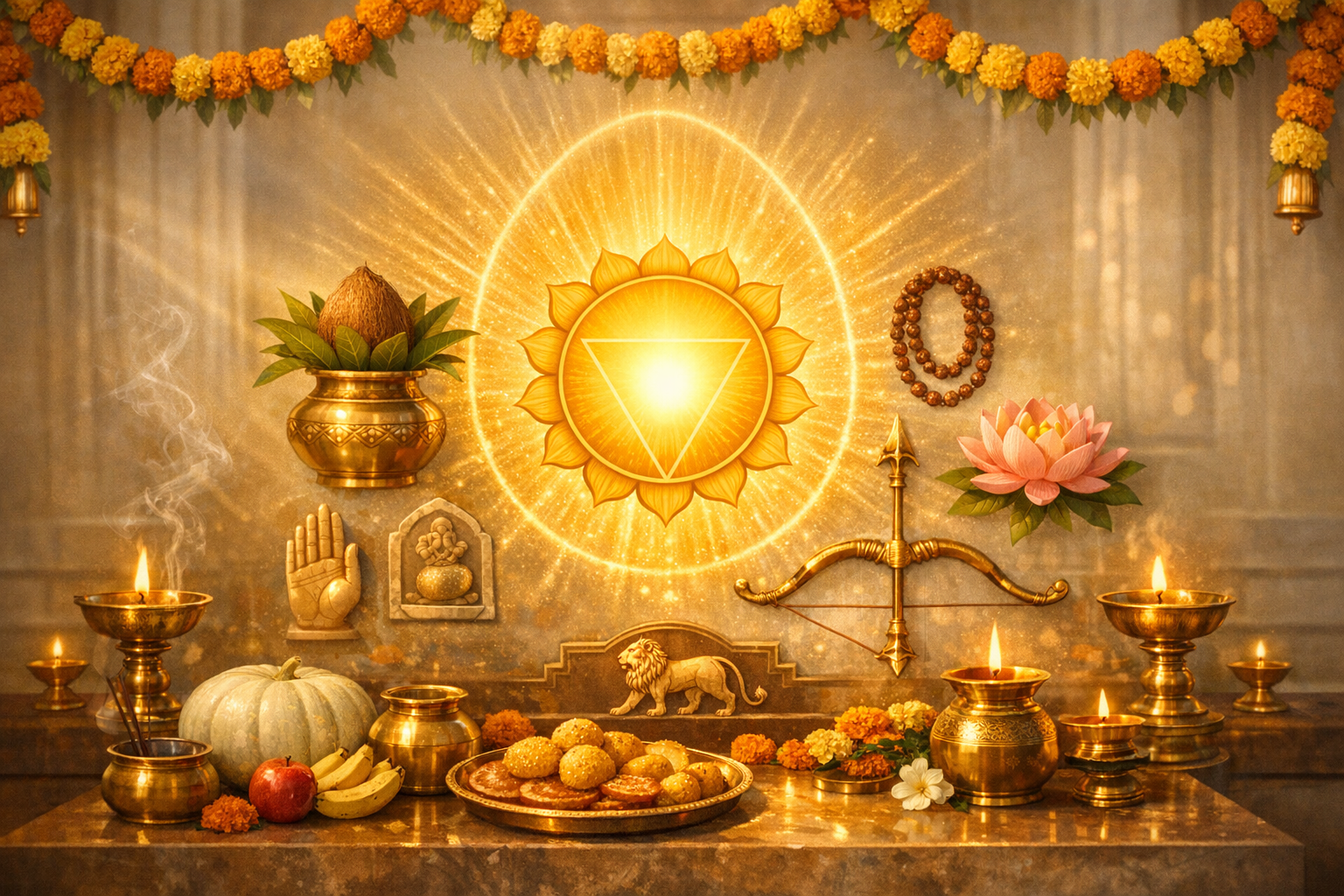
Navratri Day 4 on 22 March 2026 (Chaitra Shukla Chaturthi) honors Goddess Kushmanda, the radiant source linked to the cosmic egg. This comprehensive guide clarifies muhurat selection via local pañcāṅga, explains the symbolism of Kuṣhmāṇḍā and her solar association, and details a practical home puja-vidhi. It outlines ten essential practices: space purification, altar setup, clear…
-
Kanya Puja 2026: Ultimate Kumari Pooja on Ashtami/Navami—Dates, Vidhi, Meaning, Dharmic Unity
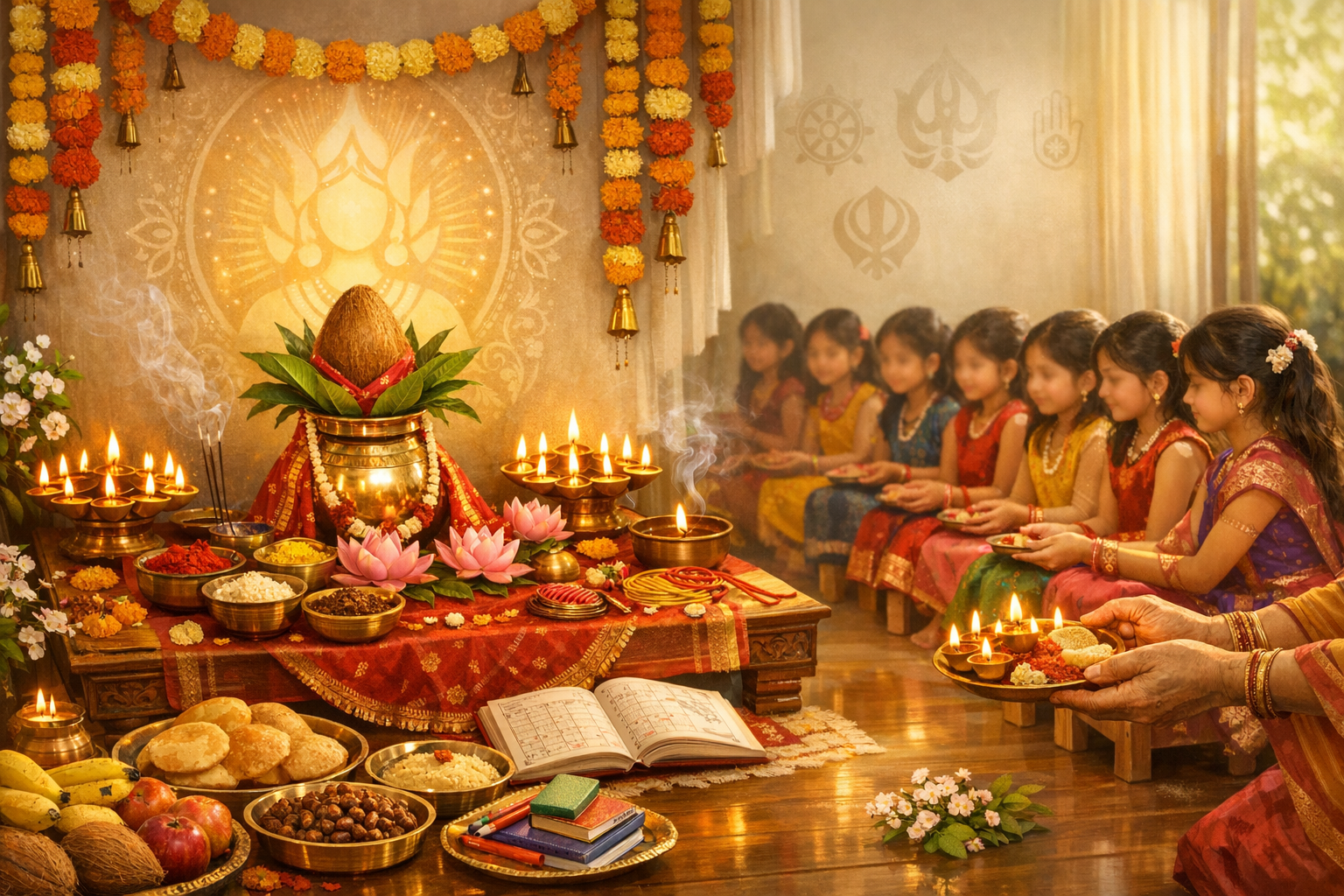
Kanya Puja (Kumari Pooja/Kanjak Puja) is a central Navratri rite that honors the living presence of Devi in young girls through hospitality, nourishment, and gifts. In 2026, the puja aligns with Durgashtami on October 18, with many also observing on Mahanavami, October 19; during Chaitra Navaratri it falls on March 26 (Thursday). This comprehensive guide…
-
When the Formless Takes Form: Skanda Purana on Parvati’s Awe‑Inspiring Union with Shiva
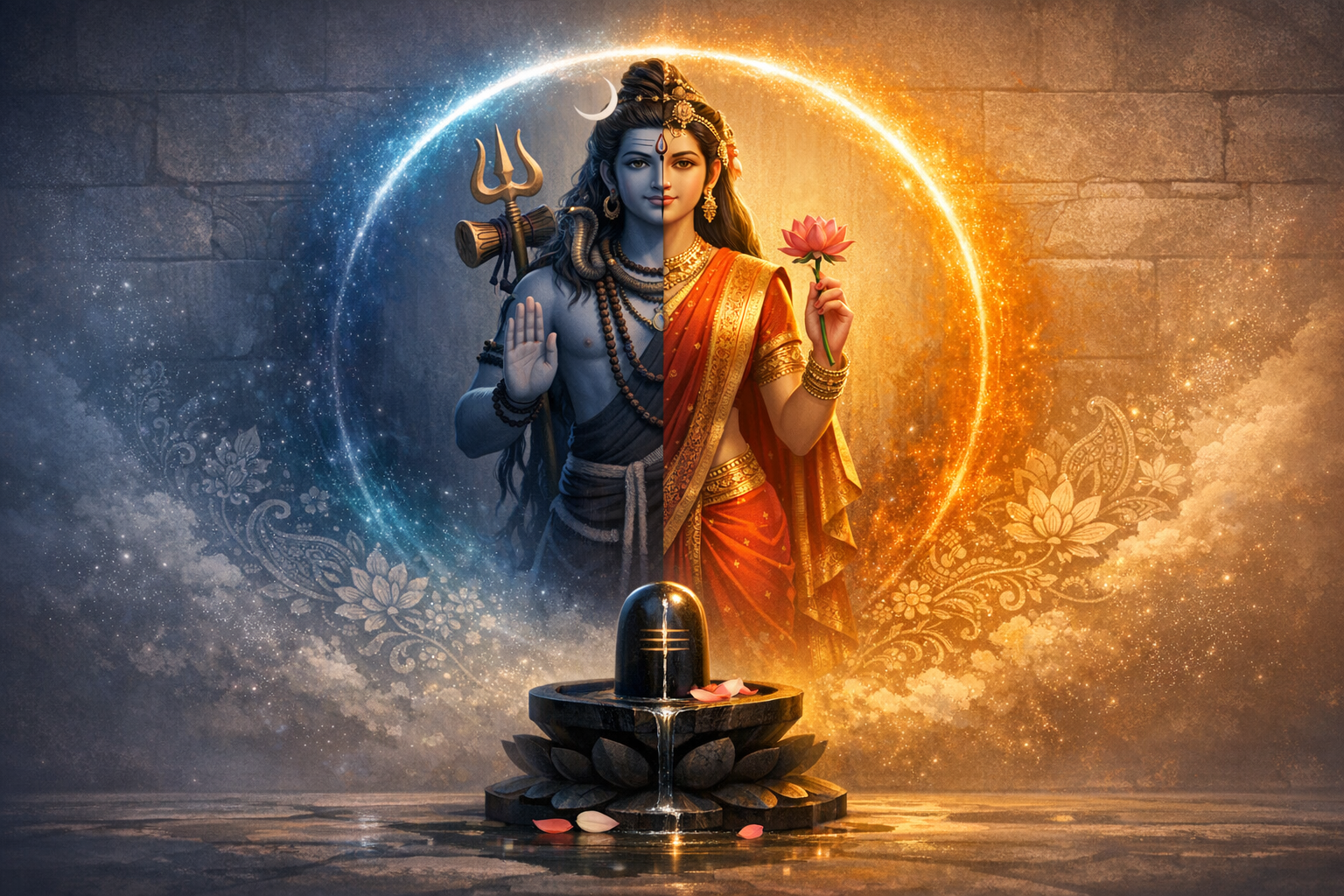
This in-depth exploration of the Skanda Purana’s teaching on Goddess Parvati and Lord Shiva presents their union as a precise account of how formless consciousness and living form are inseparably one. Readers will learn how the nirguna–saguna dialectic, familiar from the Upanishads, is rendered experiential through Shaiva iconography such as Ardhanarishvara, the Shivalinga, and Shiva…
-
Navratri 2026 Day 2: Brahmacharini Puja, Preethi Dwitiya, and Dashain Rituals (20 Mar & 12 Oct)
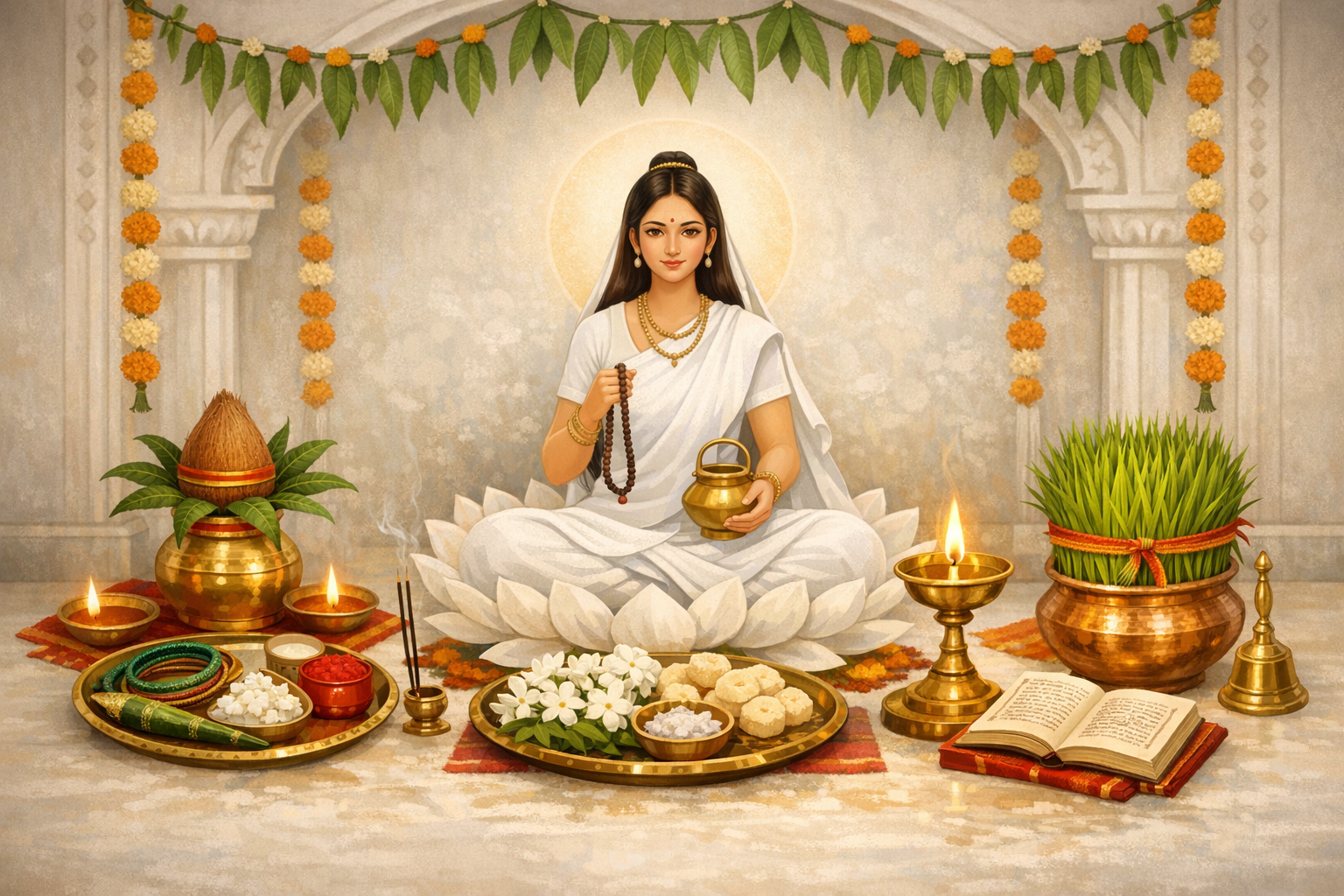
This guide clarifies that the 2nd day of Navratri 2026 occurs twice—on 20 March (Chaitra Shukla Dwitiya) and 12 October (Ashwin Shukla Dwitiya). It explains why the day is dedicated to Brahmacharini, including color symbolism, appropriate offerings, and the disciplines associated with tapas. Regional observances such as Preethi Dwitiya, Sthana Vriddhi Gauri Vrata, and Sindhara…
-
Kanya Puja 2026: Exact Dates, Ritual Steps, and Deep Significance for Navratri & Durga Puja
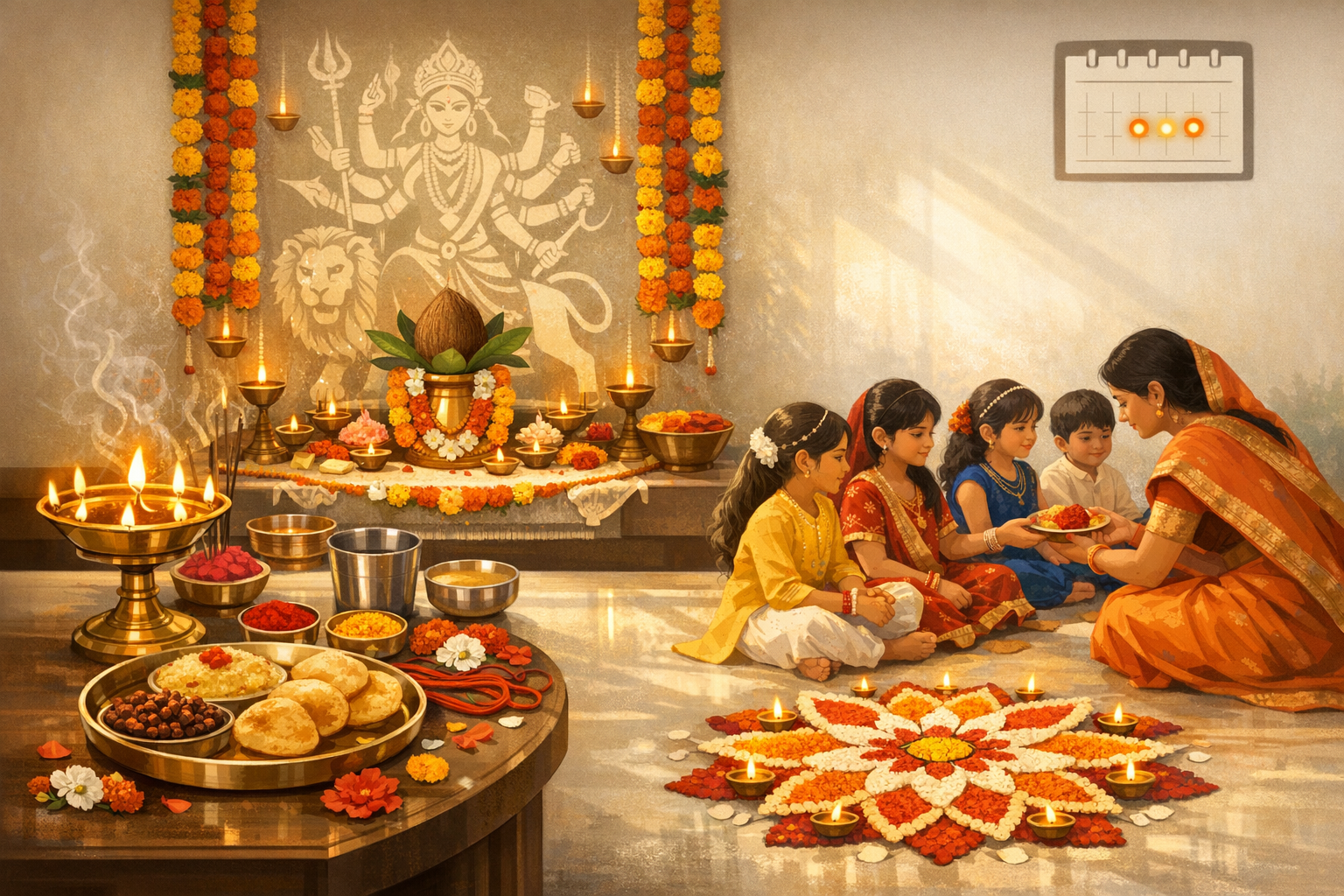
Kanya Puja, also called Kumari Pooja or Kanjak Pooja, is a central rite of Navratri Durga Puja in which prepubescent girls are honored as embodiments of Devi. In 2026, the principal date is October 18 (Durgashtami), with many traditions also observing it on October 19 (Mahanavami); during Chaitra Navaratri, it falls on Thursday, March 26.…
-
Navaratri Day 2, 20 March 2026: 10 Powerful Brahmacharini Puja Steps, Mantras, and Fasting Tips
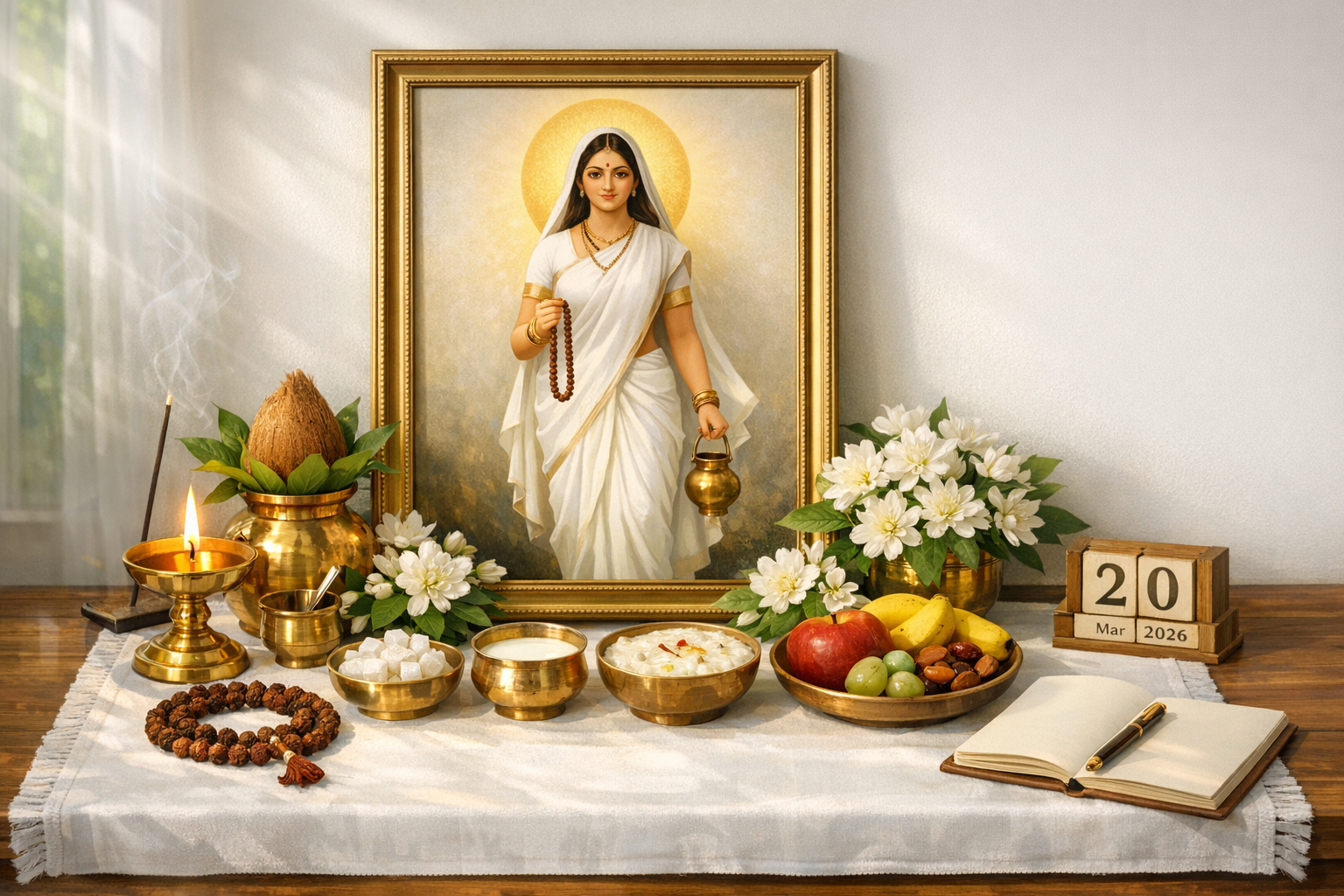
The second day of Chaitra Navaratri on 20 March 2026 honors Brahmacharini, the Navadurga form of tapas and steadfast devotion. This guide details a complete Brahmacharini Puja Vidhi with Panchopachara steps, core mantras, and a simple home sequence that balances accuracy and accessibility. It outlines mindful fasting rules, sattvic bhog options like mishri and milk-based…
-
Uma Shivagni Damana Puja 2026: Unlock Auspicious Shiva–Parvati Grace on Chaitra Tritiya

Uma Shivagni Damana Pooja is a sacred vrata honoring Shiva and Pārvatī on Chaitra Shukla Tritiya; in 2026 it falls on 21 March. The observance symbolically pacifies Śiva’s purifying fire through Uma’s compassionate grace, fostering marital harmony, household peace, and inner balance. A clear, step-by-step pūjā vidhi—kalasha sthāpana, abhiṣeka with cooling offerings, mantra japa, and…
-
Devi Damanotsav 2026: Damana Leaf Adornment, Durga Navami Rites, and Deeper Meanings
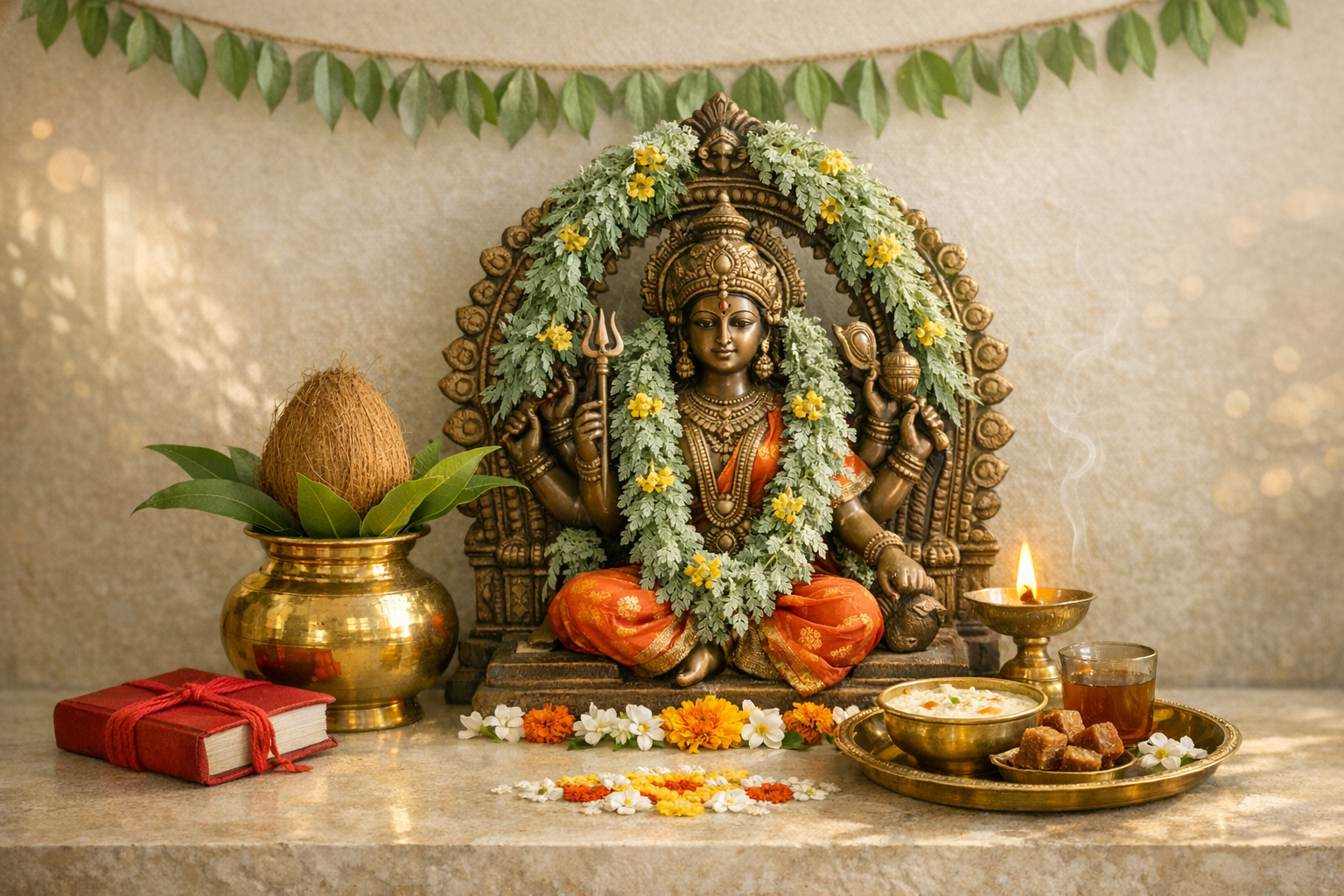
Devi Damanotsav (Durga Damanaropanam) is observed on Chaitra Shukla Navami and, in 2026, falls on March 27. The festival marks the culmination of Vasant Navratri by adorning the Goddess with fragrant damana (dhavanam) leaves, a practice that unites botanical symbolism with Shakta devotion. This long-form guide explains the festival’s names, dates, calendrical nuances, and regional…
-
Shiva Dolotsavam on Gauri Tritiya: Sacred Swing Ritual for Fertility, Harmony, and Hope (2026)

Shiva Dolotsavam on Gauri Tritiya (Chaitra Shukla Tritiya) is a refined Shaiva swing ritual integrated with the Sowbhagya Gauri Vrata, traditionally undertaken by childless women and families seeking harmony and progeny. In 2026, the observance falls on March 21, with timing anchored to the Tritiya tithi and adapted to local panchangam guidance. This comprehensive guide…
-
Soubhagya Gauri Vratam Vidhanam: Precise Puja Steps, Auspicious Timings, Meanings, and Benefits

Soubhagya Gauri Vratam (Sowbhagya Gouri Vratham) is a widely observed vrata dedicated to Devi Gauri for sowbhāgya, family well-being, and inner steadiness, with many traditions highlighting a principal date in the Chaitra Month. This academically structured guide explains the complete vidhanam—from muhurta selection via the Panchang to altar setup, kalasha-sthapana, Pasupu Gauri preparation, and either…
-
Date, Rituals, and Meaning of Sati Anasuya Jayanti 2026: A Devotional Guide to Vaishakh Chaturthi
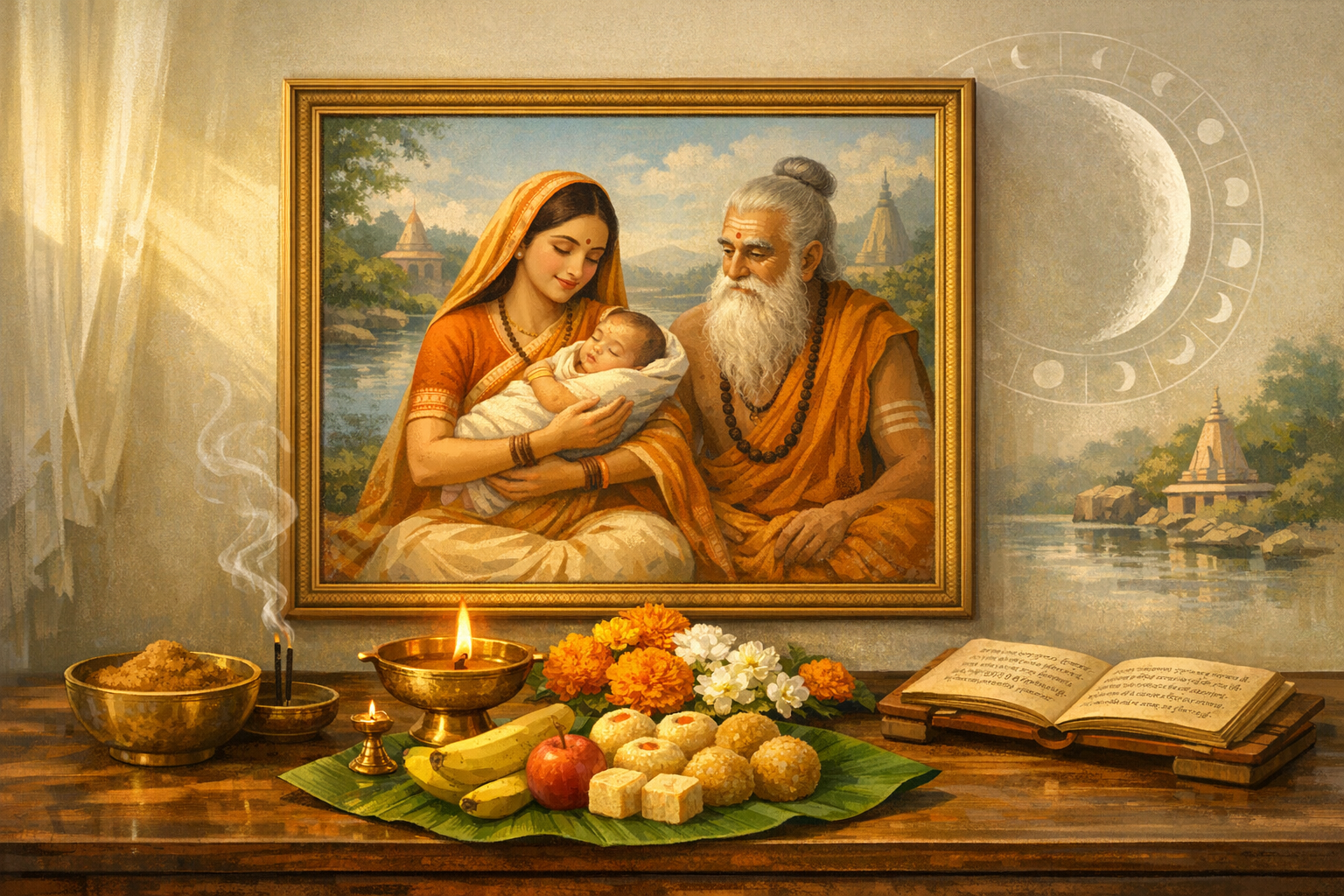
Sati Anasuya Jayanti 2026 falls on Monday, 6 April, aligned with Krishna Paksha Chaturthi—Vaishakh (Purnimant) and Chaitra (Amavasyant). This guide explains the date and tithi clearly, helping readers plan according to their local panchang. It outlines an accessible home puja-vidhi centered on panchopachara, dhyana, and Puranic reading, with practical fasting and charity recommendations. The article…
-
Chaitra Navratri 2026 Begins 19 March: Dates, Puja Vidhi, Muhurat, and Dharmic Significance
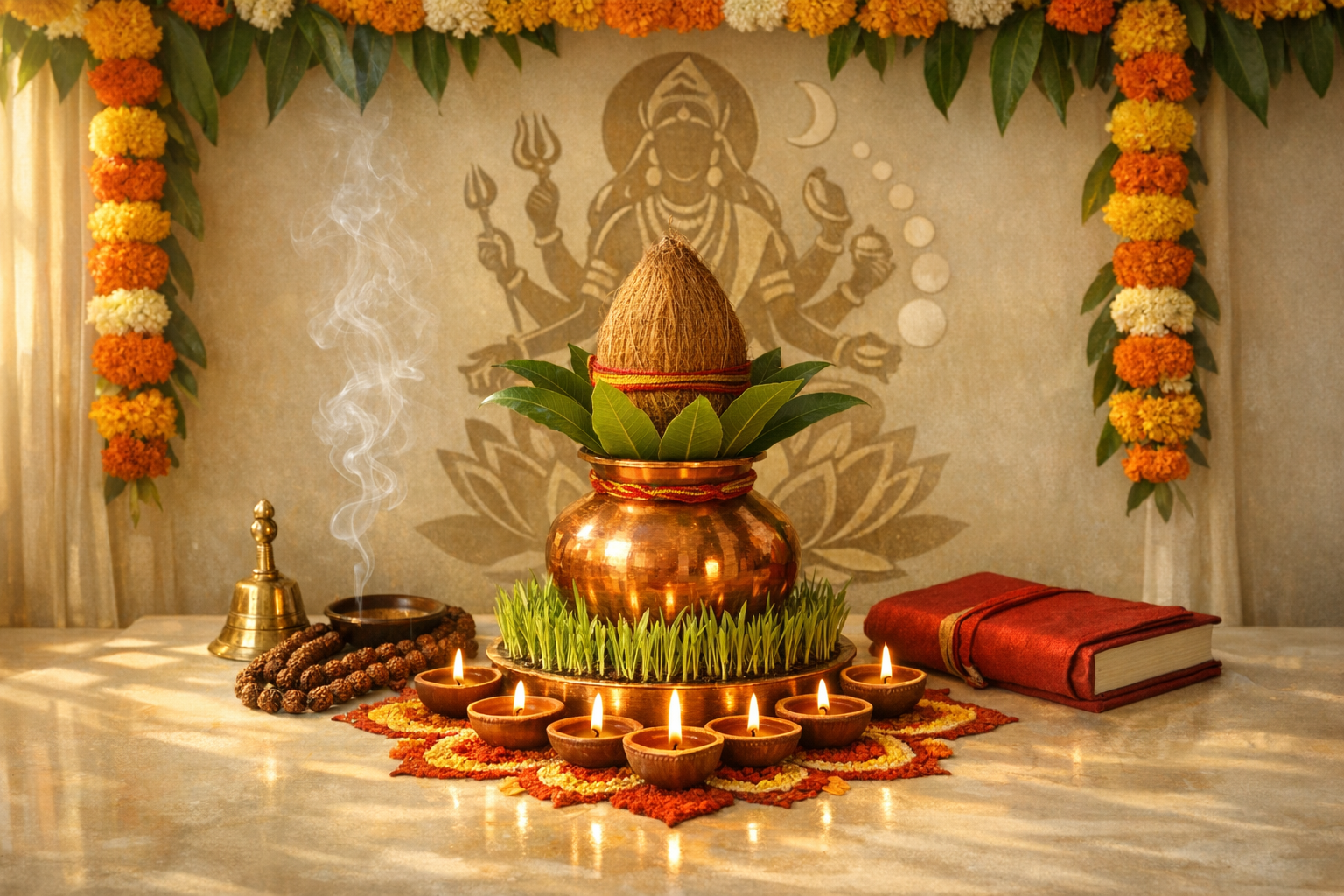
Chaitra Navratri 2026 begins on 19 March and concludes on 27 March, aligning with Shukla Paksha Pratipada in the lunar month of Chaitra. This guide explains dates, puja vidhi, and practical muhurat principles for Ghatasthapana, along with day-wise observances of the Navadurga. It highlights the significance of Durga Ashtami, Sandhi Puja, Kanya Puja, and the…
-
Gangaur 2026: Sacred Gauri–Shiva Vrat, Dates, Vidhi, and Rajasthan’s Grand Processions
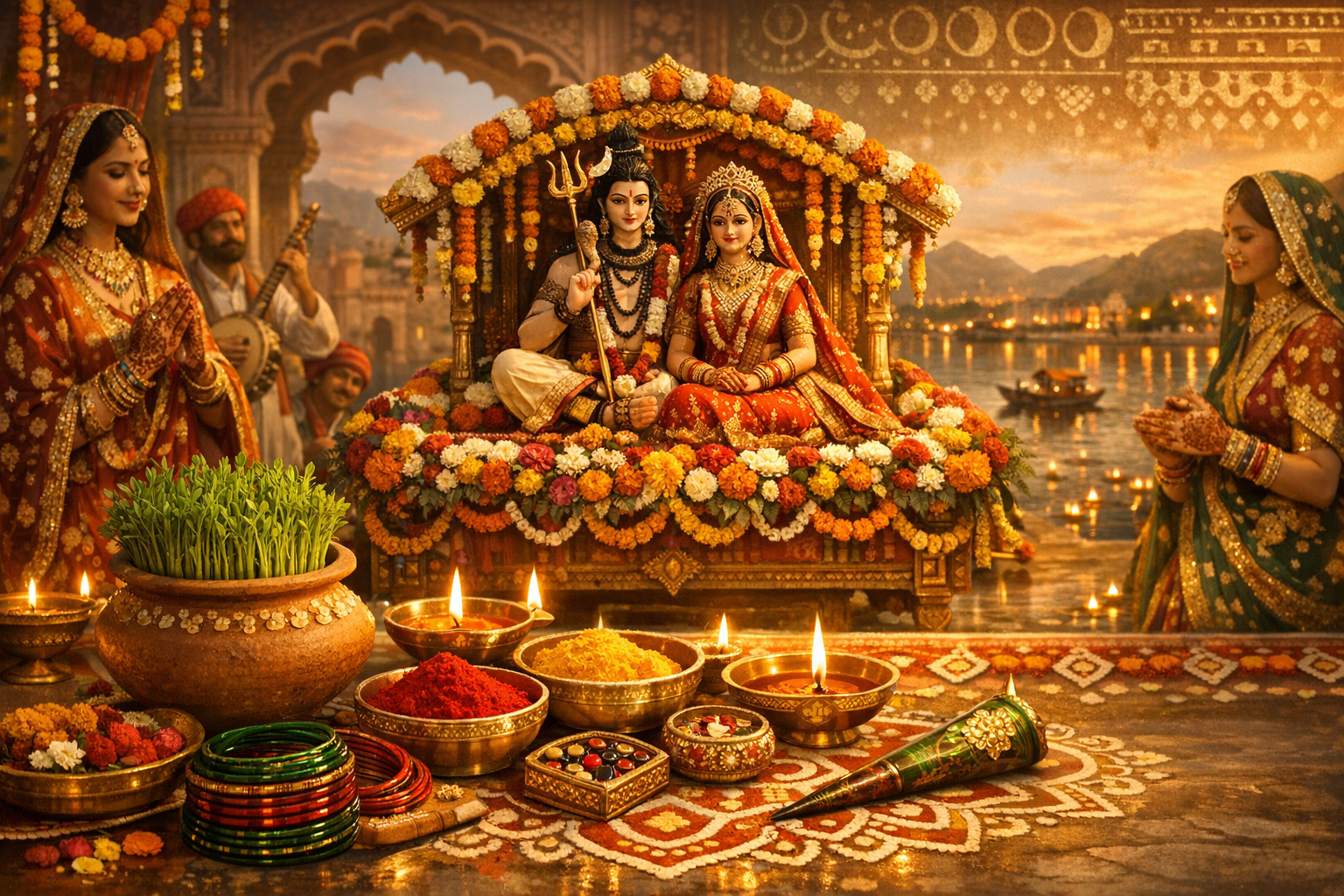
Gangaur 2026, Rajasthan’s iconic celebration of Gauri and Shiva, culminates on Chaitra Shukla Tritiya—21 March 2026 in most Indian Panchangs—after a sequence of springtime observances that often begins on Pratipada. This guide explains the festival’s meaning, the Ganagauri Vrat, and why Isar–Gaur worship symbolizes a balanced and auspicious household. Readers learn how Sinjara, khetri sprouting,…
-
Goddess Trikala: Uniting Trimurti and Tridevi as the Timeless, All-Seeing Power of Shakti
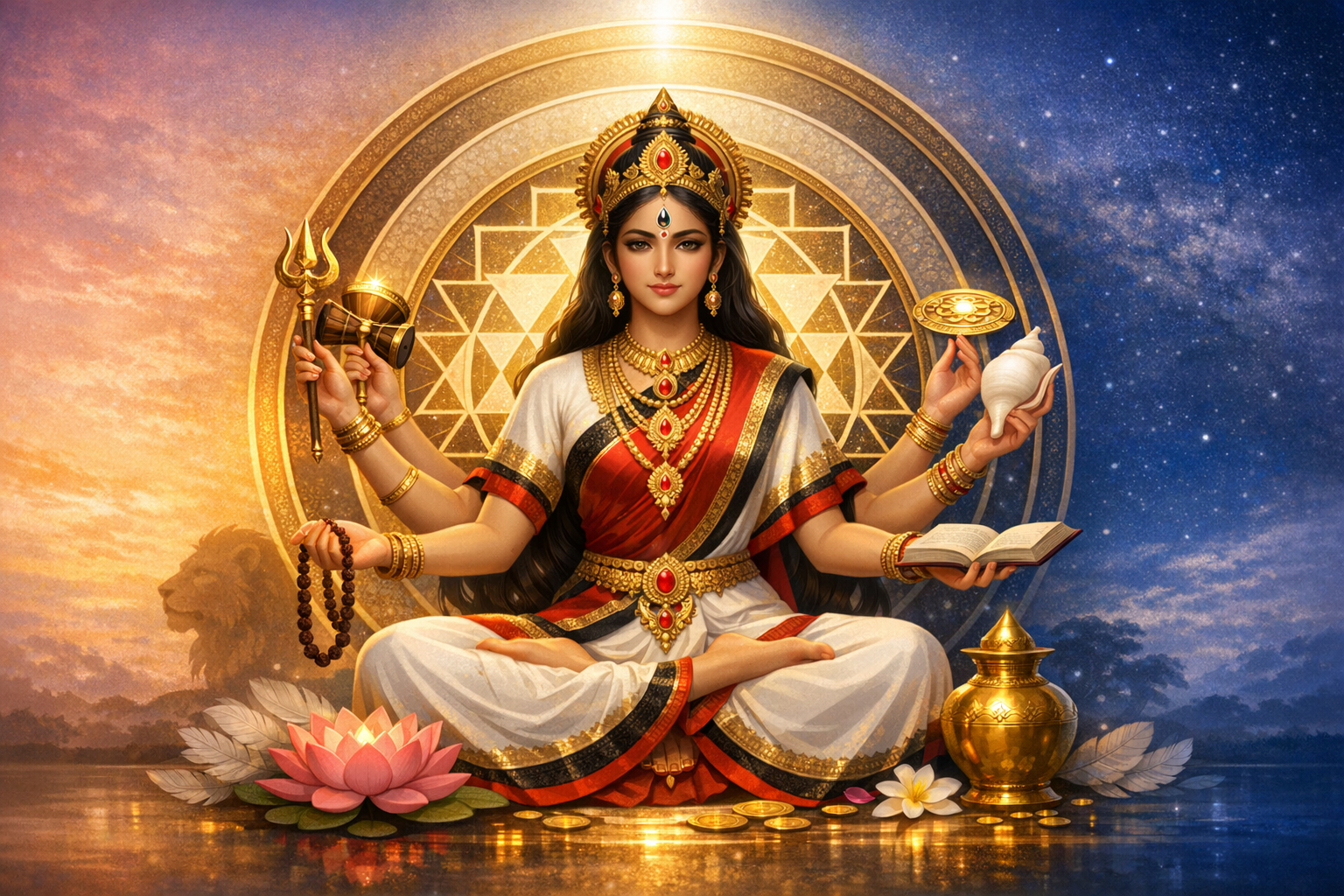
Goddess Trikala synthesizes Hinduism’s core triads—past, present, future and creation, preservation, dissolution—into a single, time-enfolding vision of Shakti. Drawing on Purāṇic patterns in which the Goddess emerges from aggregated divine energies, Trikala Devi is interpreted as arising from the unified gaze and essences of the Trimurti. The article analyzes iconographic analogies (tri-netra, color triads, composite…
-
Anang Trayodashi 2026: Auspicious Date, Lord Shiva Puja Vidhi, and Year‑Long Vrat Guide
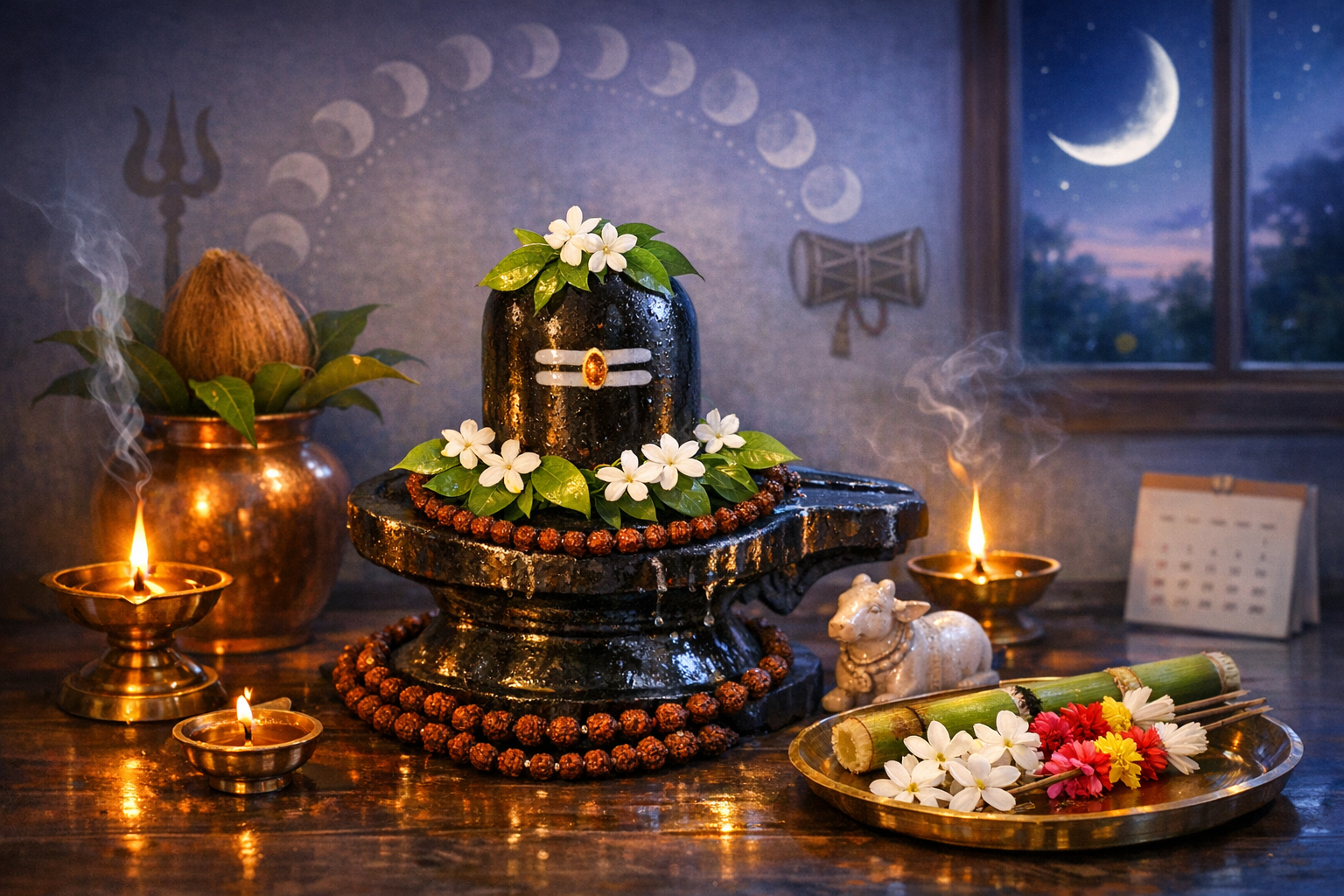
Anang Trayodashi 2026 falls on March 30, aligning with Chaitra Shukla Trayodashi and honoring Lord Shiva with complementary reverence to Rati and Kamadeva. The observance is especially noted in Maharashtra, Gujarat, and several South Indian regions, with puja often centered in Pradosha Kala. This guide explains the tithi logic, fasting options, and an adaptable puja…
-
Nagarkot Mata Mandir of Kangra: Shakti Peeth legacy, Pandava vision, Mahabharata ties
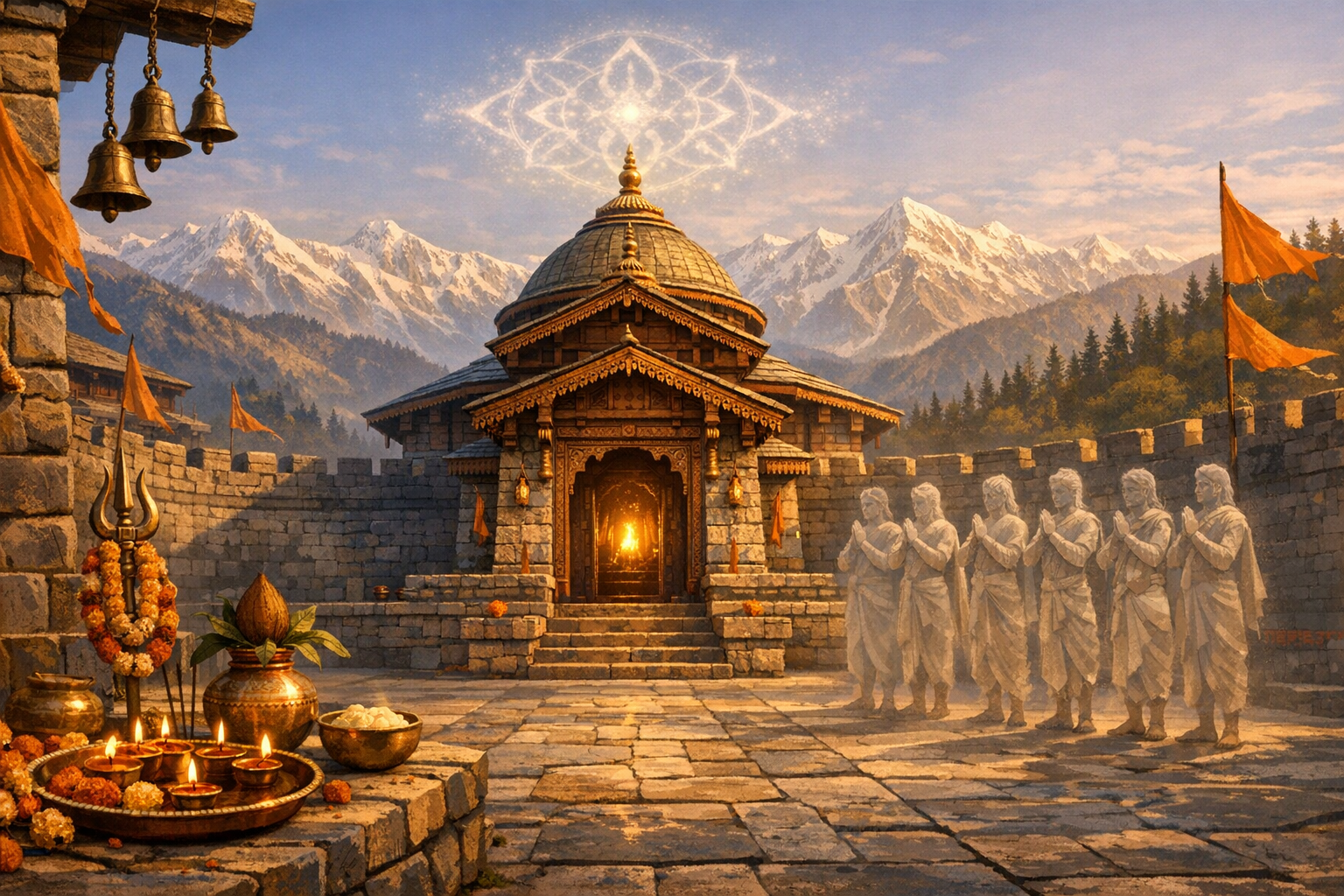
Nagarkot Mata Mandir (Brajeshwari/Vajreshwari) in Kangra, Himachal Pradesh, stands among the most revered Shakti Peeths, where Puranic cosmology and regional lore meet. Local tradition holds that the Pandavas established or restored the shrine at the Devi’s command, embedding Mahabharata memory within Himalayan sacred geography. The temple’s Nagara idiom, fortified precincts, and resilient reconstruction after the…
-
Kapalini: Shakti’s Terrifying Grace and the Awe-Filled Storm that Seeds Creation Cycles

Kapalini, the skull-bearing form of Goddess Shakti, stands at the threshold where dissolution gives birth to creation. Set against the awe-filled storm of pralaya, Kapalini carries the Brahma-substance—the causal seed from which new worlds emerge—offering a precise map of Hindu cosmology. The narrative clarifies the five cosmic acts, types of pralaya, and the role of…
-
Suchimukham Unveiled: The Chilling Karmic Price of Hoarded Wealth in Hindu Dharma
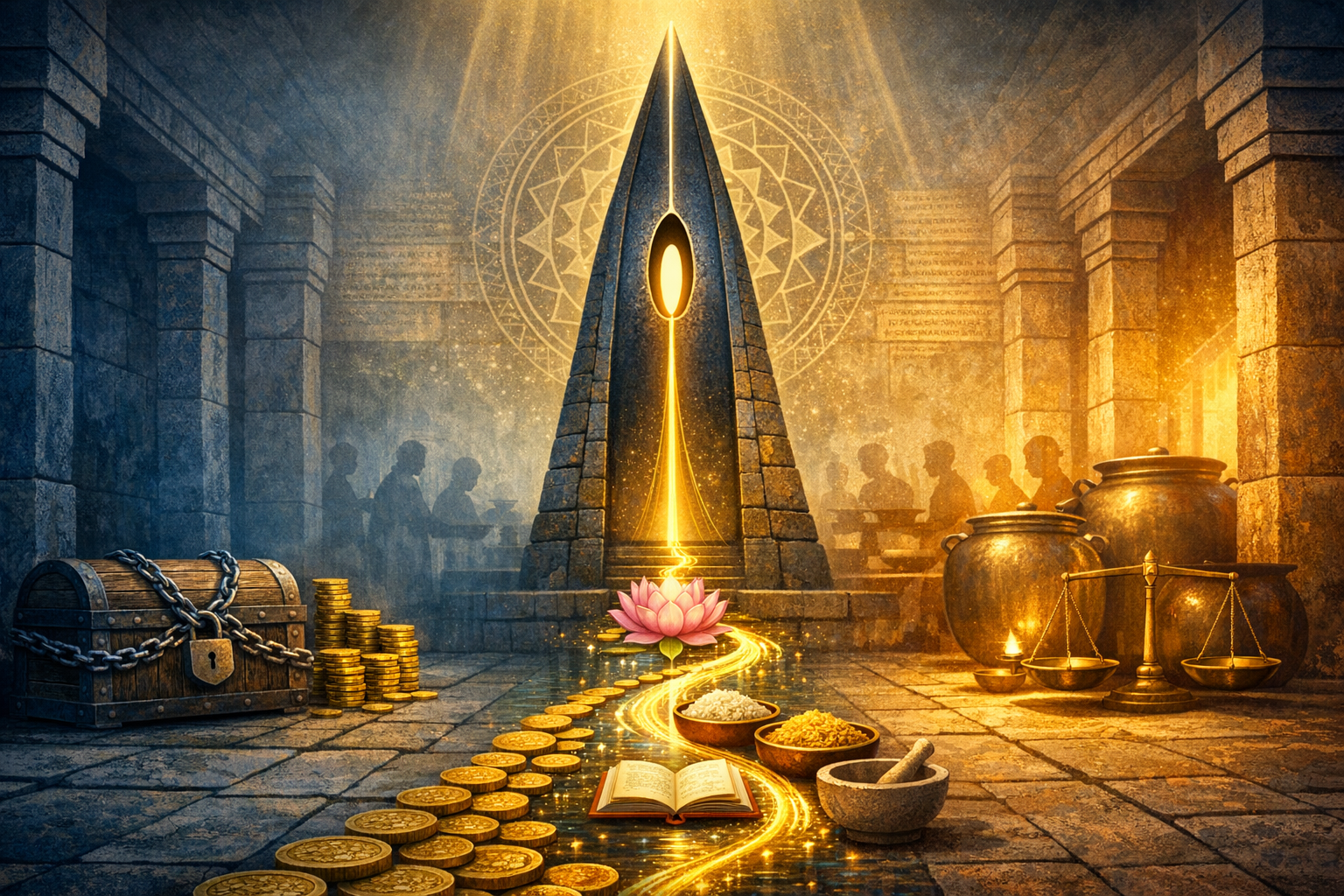
Suchimukham, the needle-mouthed hell in Hinduism, powerfully encodes the karmic consequences of hoarding wealth and neglecting compassion. Drawing on the Vishnu Purana, Devi Bhagavata Purana, and Garuda Purana, this analysis situates Suchimukham within a reformative, not eternal, Puranic model of Naraka. It clarifies the difference between prudent stewardship and miserliness, showing how dharma guides artha…
-
From Brahma’s Treasure to Ravana’s Gates: Lankini, Vijayalakshmi, and Dharma’s Fate
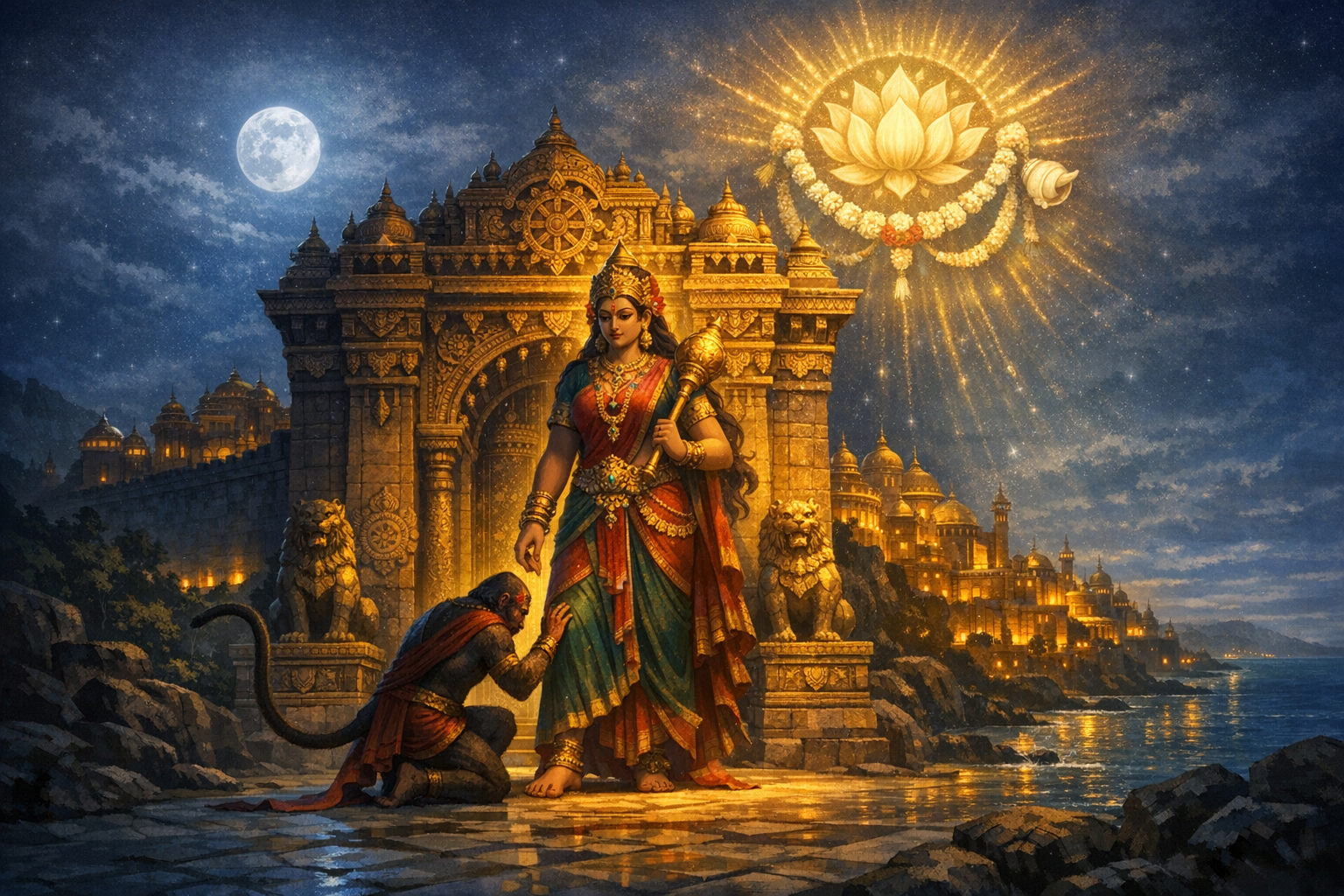
This article explores Lankini (Lankalakshmi) as Lanka’s guardian deity in the Ramayana and explains how her encounter with Hanuman marks the ethical turning point of the epic. It traces Lanka’s origins as a divine ‘treasure’ linked to Brahma, Kubera, and later Ravana, showing how prosperity (śrī) is ethically contingent. It clarifies Vijayalakshmi’s place among the…