-
Madhura Bhava in Bhakti Yoga: A Powerful Path to Experiencing Divine Love
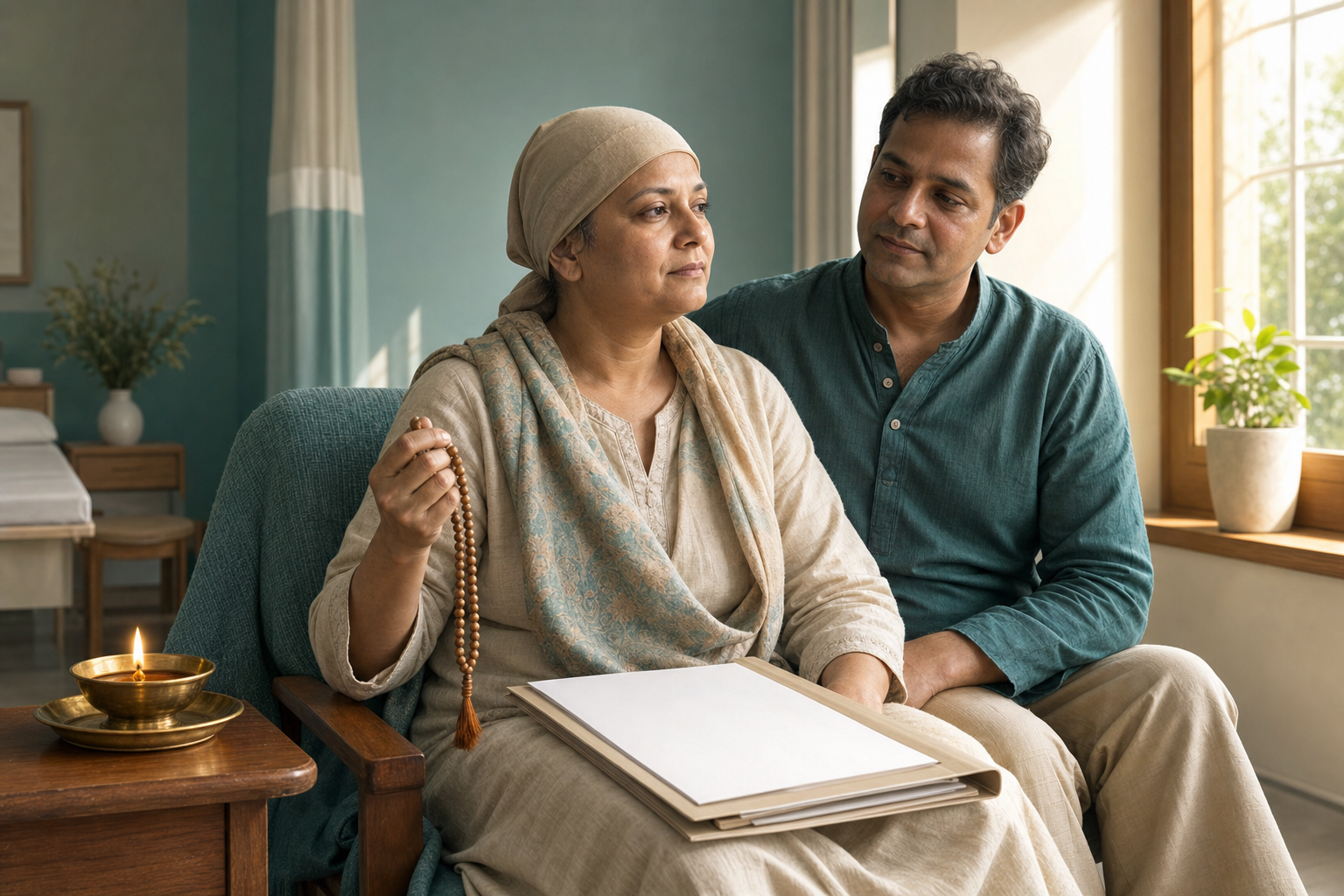
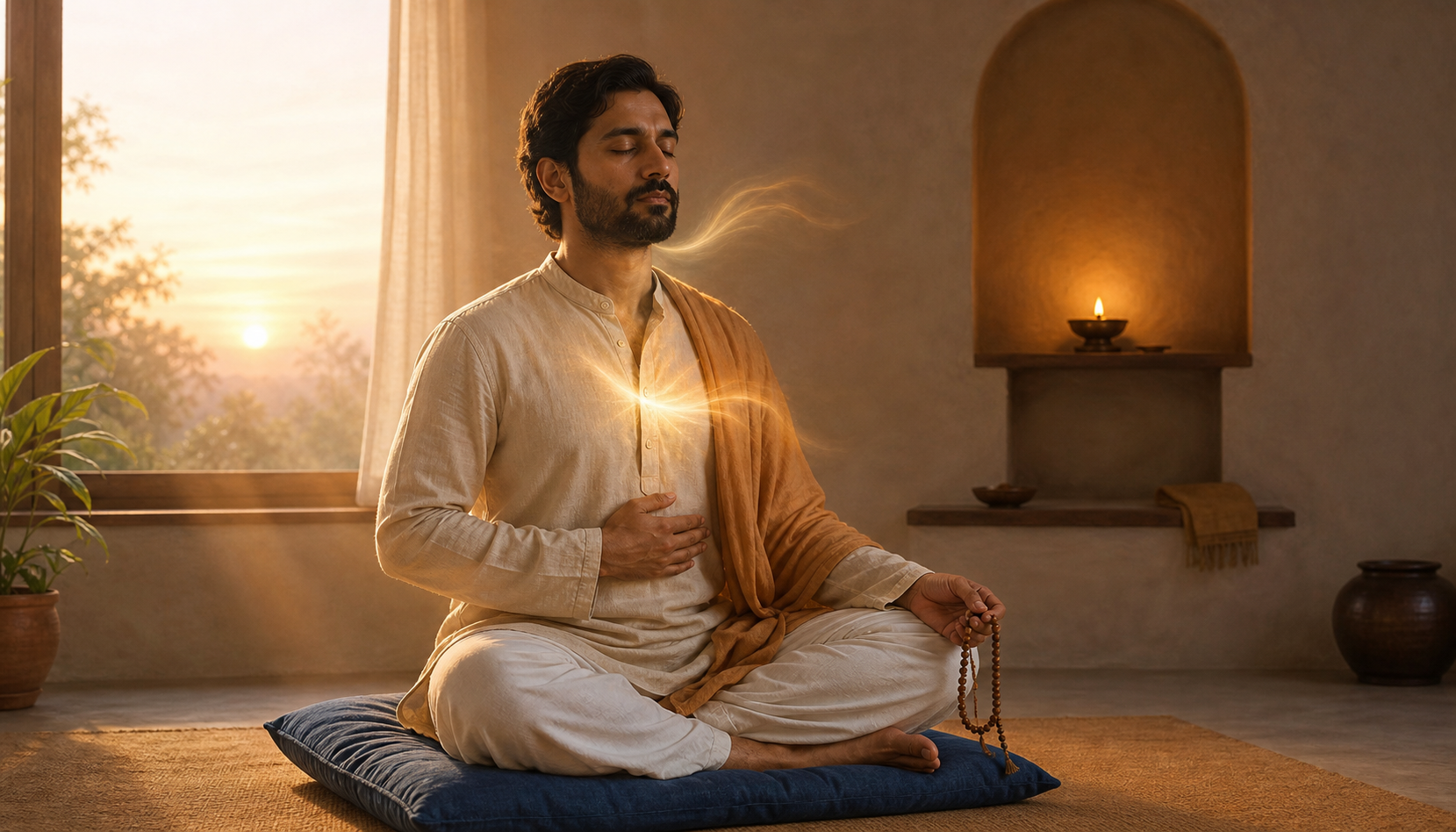
Madhura Bhava in Bhakti Yoga offers a practical, heart-centered path to experiencing divine love by approaching the Divine as a beloved. Grounded in the aesthetics of bhava and rasa, it refines emotion into spiritual insight through kirtan, japa, lila-smarana, and seva. Practitioners report greater inner steadiness, compassion, and humility as egoic rigidity softens and devotion…
-
Bhojavritti on Patanjali’s Yogasutra: A Brilliant Royal Exegesis Illuminating Yoga Philosophy

Bhojavritti (Rajamartandavritti) is a lucid and faithful Sanskrit commentary on Patanjali’s Yogasutra by Bhoja, the versatile king of Malava (1018–60 CE). It clarifies the internal meaning of the sutras while preserving their precision, making complex ideas accessible to careful readers. Drawing on Bhoja’s broad learning—from Ayurveda to governance—the work illuminates Yoga’s ethical, psychological, and contemplative…
-
Embodied Writing for Healing: A Dharma-Informed, Science-Backed Path from Trauma to Wholeness

Embodied writing offers a compassionate, trauma-aware path to healing by uniting reflective inquiry with somatic grounding. Informed by dharmic values—mindful attention, non-harm, and compassion—it helps transform painful memories into coherent, life-affirming narratives. Research on expressive writing suggests benefits for mood, sleep, and stress reduction when practices are paced and regulated. The method emphasizes titration, present-moment…
-
Beyond Willpower: How Breathwork and Yoga Rewire the Nervous System in Addiction Recovery

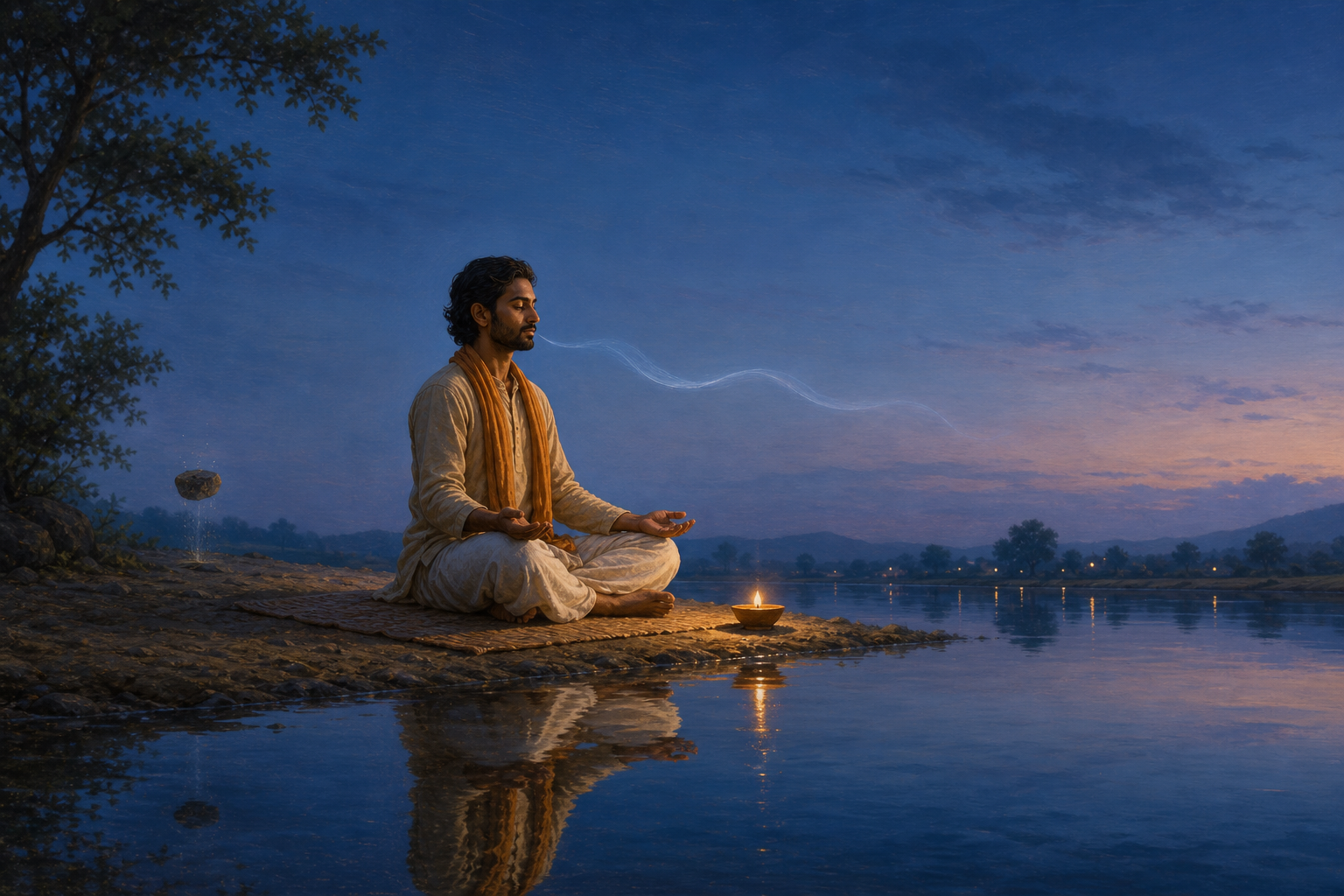
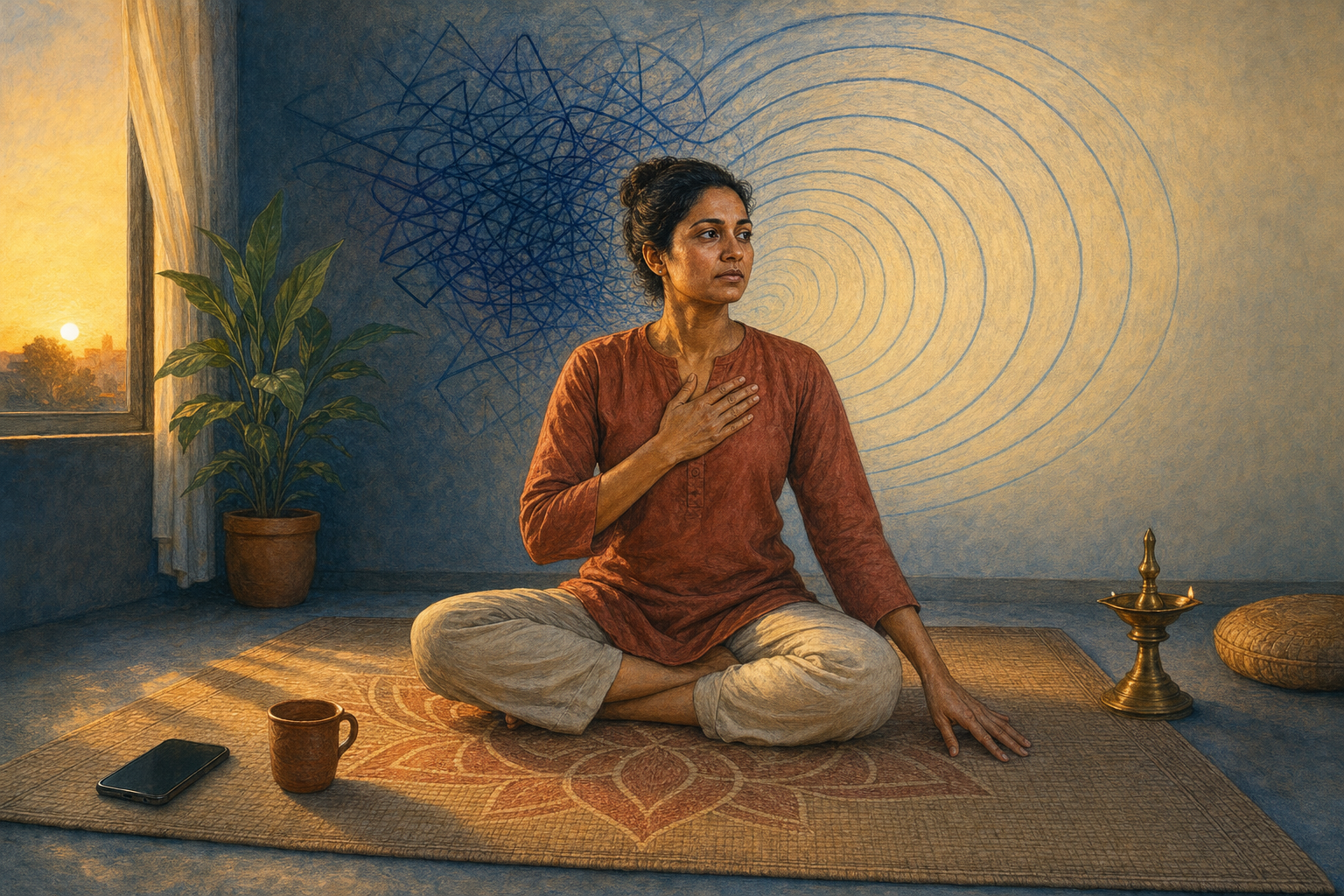
This analysis traces a journey from relapse to stability, showing how yoga and breathwork can regulate the nervous system during addiction recovery. It explains why rooting in the body must precede rising into lasting change, linking somatic healing with practical pranayama. It outlines three evidence-aligned breathing techniques—Anulom Vilom, Sama Vritti, and Dirgha Pranayama—that reduce anxiety,…
-
Antaraya in Hinduism: Overcoming Yoga’s Inner Obstacles with Steady, Devoted Practice

Antaraya in Hinduism explains why even sincere Yoga practice sometimes loses momentum and clarity. Classical guidance identifies nine common obstacles and shows how they undermine abhyasa, pratyahara, and dhyana. Recognizing these patterns helps practitioners diagnose distractions early rather than mistaking them for failure. Practical remedies—steady abhyasa with vairagya, ethical discipline, breath awareness, and nairantarya abhyase—restore…
-
Embodied Sri Chakra: A Profound Map of Shakti–Shiva Unity and the Five Elements Within

This article explores how the human body can be contemplated as Sri Chakra, an advanced symbol of Shakti–Shiva unity and an experiential map of yogic anatomy. It explains the five elements (pancha bhutas) as Shakti’s dynamic creativity and shows how this view grounds the senses, prana, and bodily tissues. Readers learn the core geometry of…
-
Cultivating an Unwavering Mind: Timeless Yogic Wisdom to Embrace the Whole of Life

Hindu philosophy teaches that a stable and unwavering mind is essential for perceiving the interconnected whole of life. Drawing on the Upanishads, the Bhagavad Gita, and Patanjali’s Yoga Sutras, this reflection explains how steady awareness emerges through disciplined practice and ethical living. It outlines practical steps—mindful breathing, mantra japa, and the yamas–niyamas—that reduce agitation and…
-
Sanyasa Yoga: A Powerful Path of Inner Renunciation toward Self‑Realization in Hinduism
Samnyasayoga in Hinduism emphasizes inner renunciation over external withdrawal, directing attention to self-realization and Brahman. Grounded in the Kaivalya Upanishad and Vedanta, it unites śraddhā, bhakti, and dhyāna to reveal Ātman as Brahman and guide seekers toward moksha. In contemporary life, Sanyasa Yoga appears as simplicity, mindful limits, and aparigraha rather than asceticism for its…
-
Start Devotional Yoga at Home: Transformative Bhakti Steps for Family Harmony and Inner Peace

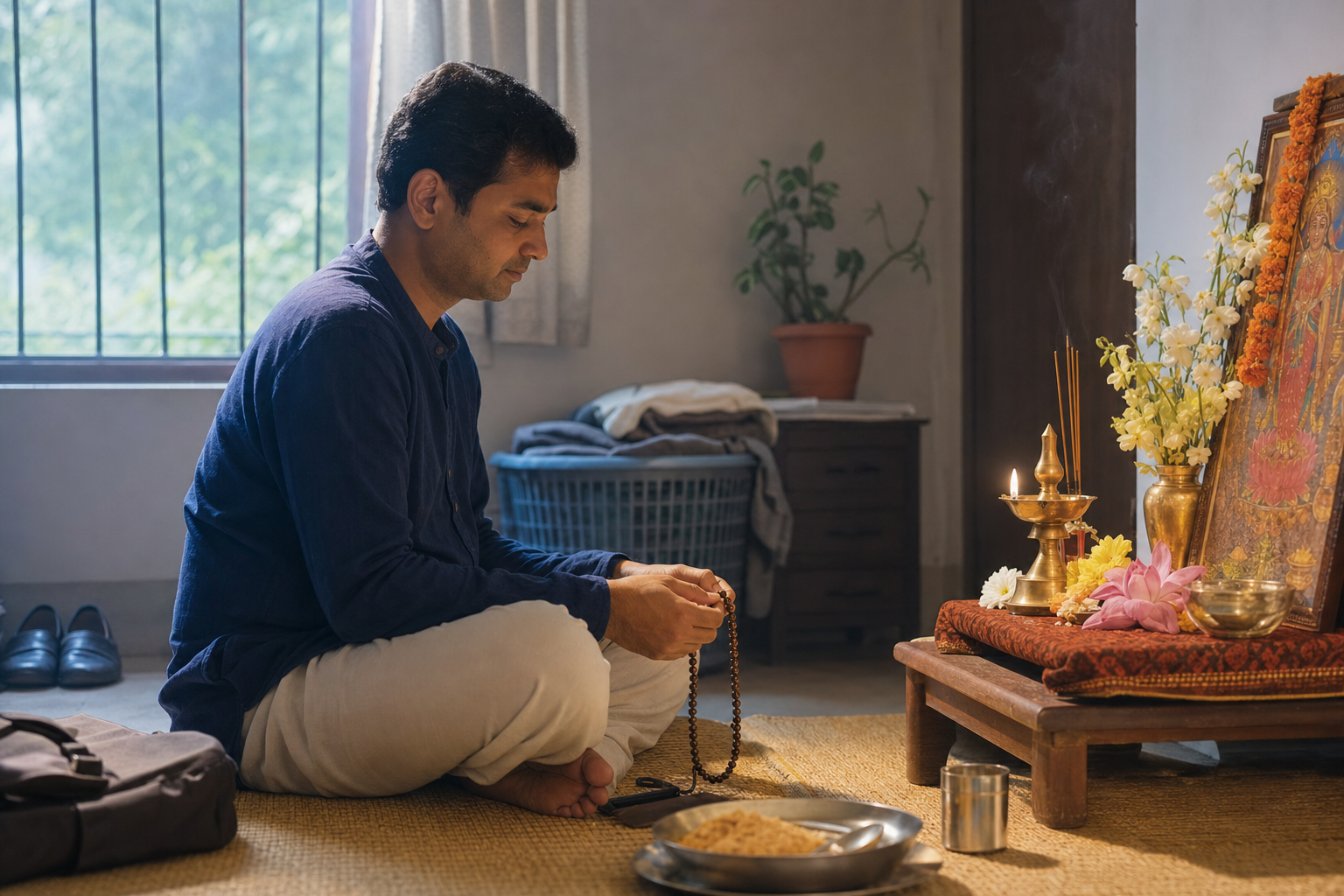
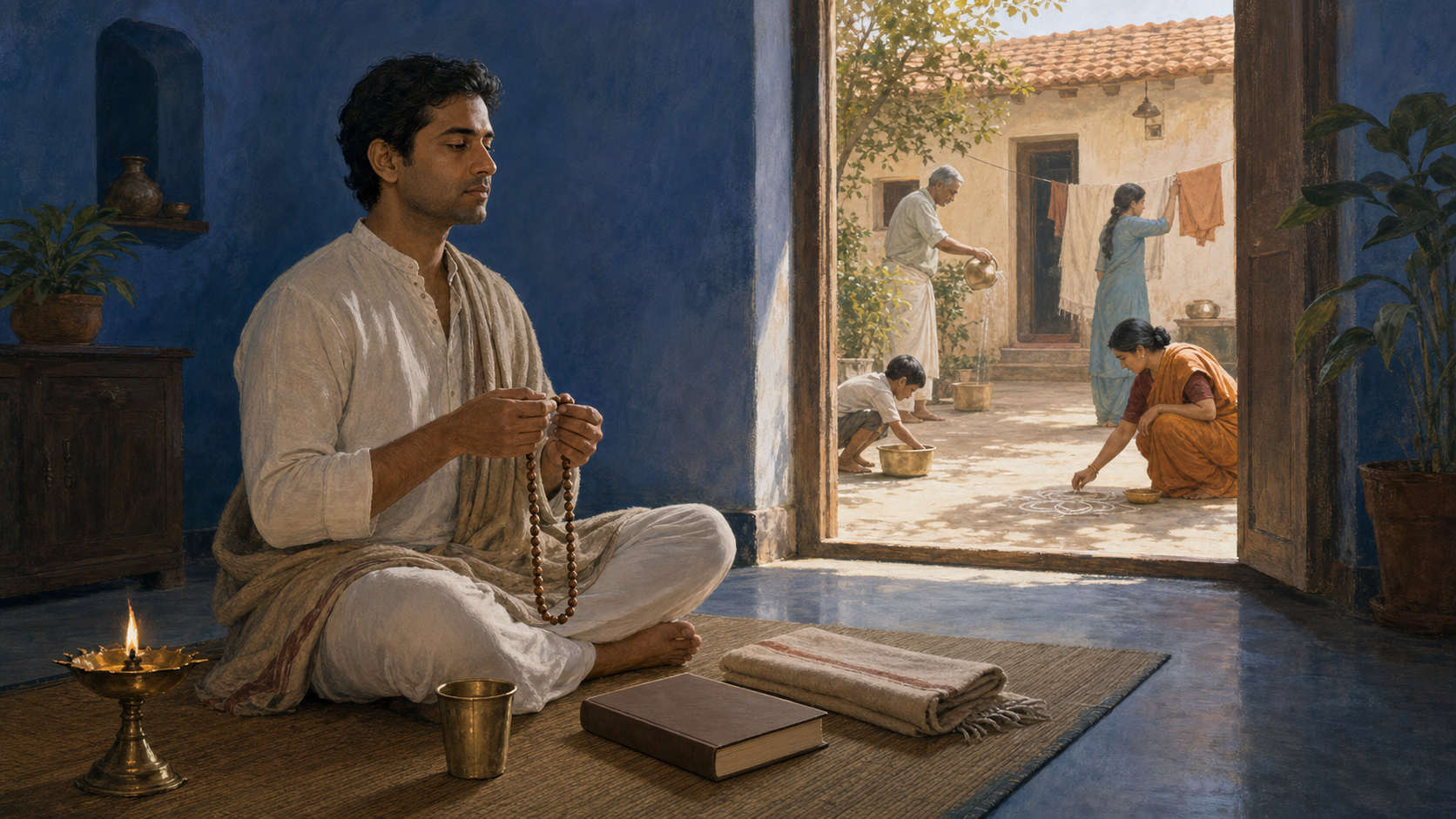
Devotional yoga provides a home-based, cost-free way to cultivate clarity, compassion, and inner peace. Grounded in Krsna consciousness and aligned with the wider dharmic heritage, it emphasizes mantra meditation (japa), kirtan, reflective study, and ethical living. Household life is not a barrier; shared family practice strengthens intergenerational bonds and fosters mutual support. A simple routine—brief…
-
Why Lack of Contentment Fuels Suffering: Santosha in the Yoga Sutras and Dharmic Wisdom

This article explains why the absence of contentment (santosha) intensifies suffering and how the Niyamas in Patanjali’s Yoga Sutras offer practical remedies. It connects Hindu insights with convergent teachings from Buddhism, Jainism, and Sikhism, highlighting a shared dharmic path toward inner peace and ethical action. Readers learn how karma yoga stabilizes effort without attachment to…
-
Dormant Human Energy in a Sedentary Age: Dharmic Ways to Awaken Vital Life Force

Modern life often traps people in mental overdrive and physical stagnation, leaving vital energy unused and unfocused. Drawing on complementary insights from Hinduism, Buddhism, Jainism, and Sikhism, this piece outlines a practical, inclusive path to awaken and channel Prana. It explains how movement, Pranayama, and mindfulness stabilize attention and reduce stress. It offers an evidence-aligned…
-
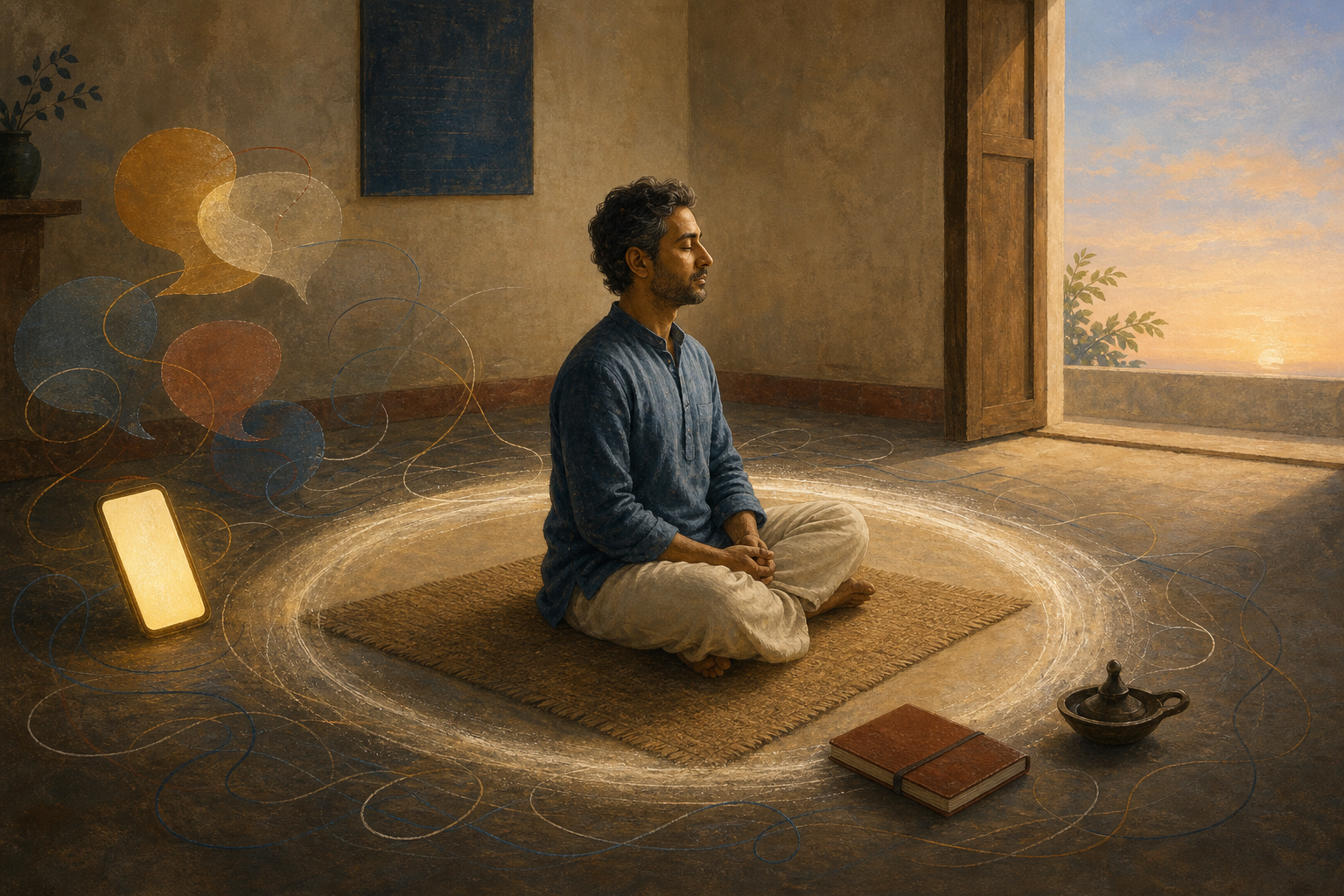
Modern Screens Numb the Sacred Tongue: Dharmic Wisdom to Reclaim Mindful Eating Today

Meals in the digital age often unfold under the glow of screens, numbing the tongue and dulling awareness. Dharmic traditions—Hinduism, Buddhism, Jainism, and Sikhism—offer a unifying path to reclaim mindful eating as a sacred practice. Ayurveda illuminates the effects of sattvic, rajasic, and tamasic foods, while Yoga’s pratyahara redirects attention from devices to the plate.…
-
Unlocking Kundalini: The Mad Sadhu on Purusha–Prakriti, Nirvikalpa, and Praṇava

This rigorous retelling of Babaji’s discourse on Kundalini Yoga clarifies how the mind’s restraint (nirodha) opens into laya and nirvikalpa samādhi, where stillness reflects Purusha and activity reflects Prakriti. It explains how icchā-śakti awakens near nirvikalpa, refining desire into a unitive will aligned with pure consciousness. The analysis of bhāva-ākāśa shows how feeling unfolds as…
-
Muruga (Kumara) as Kundalini Shakti Embodied: Awaken Inner Fire, Focus, and Fearlessness

This essay presents Muruga (Kartikeya, Subrahmanya, Kumara) as a contemplative symbol of Kundalini Shakti—inner power awakened through disciplined focus and ethical living. It explains how the Vel, peacock vahana, and Shanmukha iconography map to psychological integration and spiritual ascent through the sushumna nadi from muladhara upward. Drawing on textual memory from the Skanda Purana and…
-
Hrid Dhauti in Hatha Yoga: Powerful Throat Cleansing for Clarity, Balance, and Vital Health

Hrid Dhauti is an advanced Hatha Yoga cleansing practice aimed at purifying the throat and upper digestive tract to support breathwork, vocal clarity, and inner balance. Classical texts place it within the Shatkarma family, emphasizing shaucha and careful supervision. Practitioners often report easier pranayama, improved focus, and a sense of internal lightness when the practice…
-
Why Krishna Calls Yoga ‘Evenness of Mind’: Timeless Guidance for Inner Strength

Bhagavan Sri Krishna’s teaching in Bhagavad Gita 2.48 defines Yoga as evenness of mind, placing equanimity at the heart of ethical action. This balanced awareness steadies decision-making amid success and failure, transforming stress into resilience and clarity. Practically, brief breath awareness, mindful pause, and dharmic intention help train this steadiness in daily life. The approach…
-
Yoga and Inner Peace: How Breath, Mindfulness, and Movement Dissolve Daily Stress

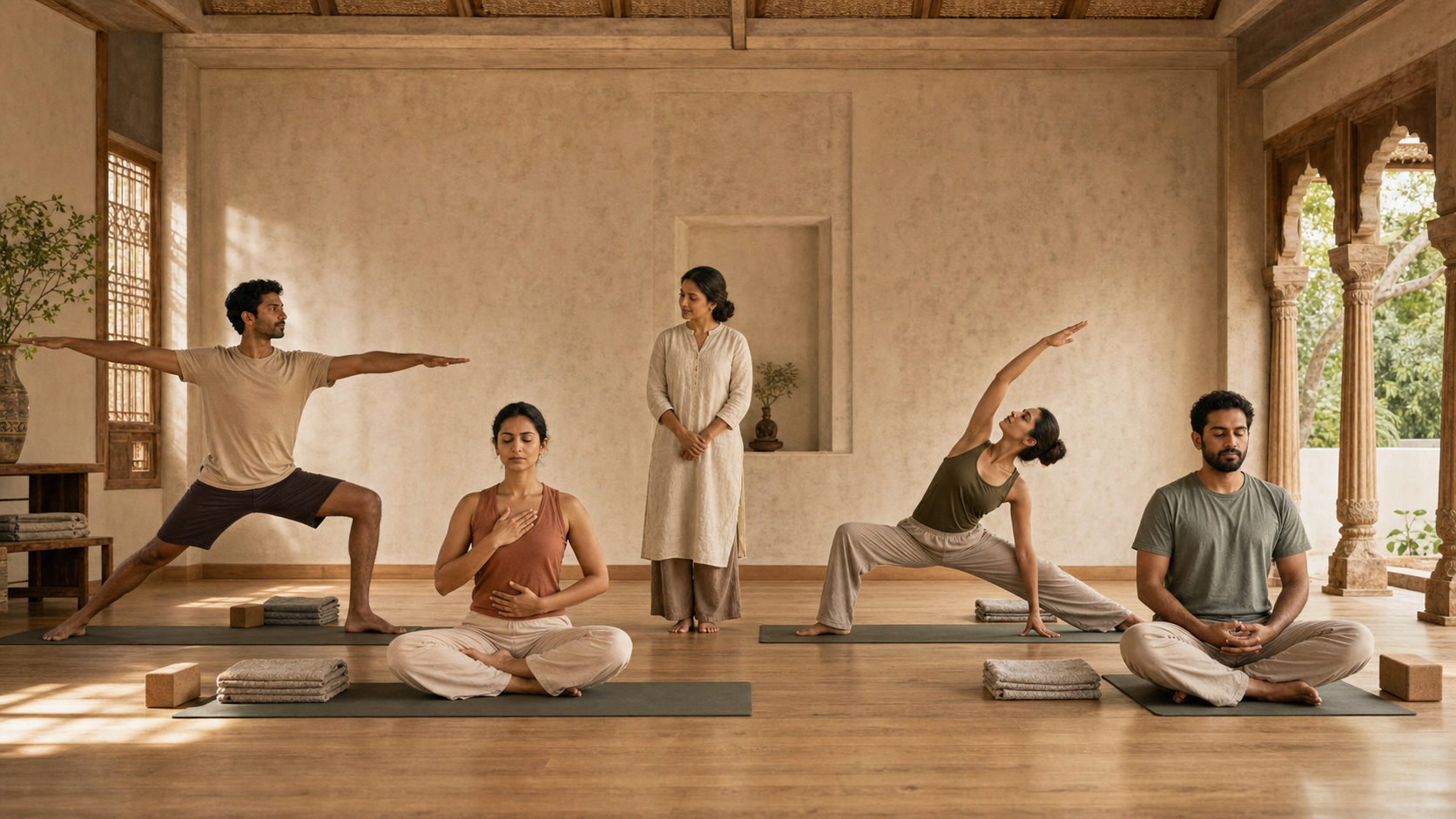
Yoga unites body, mind, and inner awareness to reduce stress and nurture peace. Through breath awareness (pranayama), mindful movement (asana), and meditation, practitioners experience fewer reactive emotions and greater clarity. Ethical principles such as ahimsa, truthfulness, and contentment stabilize relationships and reinforce lasting harmony. These foundations resonate across Hinduism, Buddhism, Jainism, and Sikhism, where mindfulness,…
-
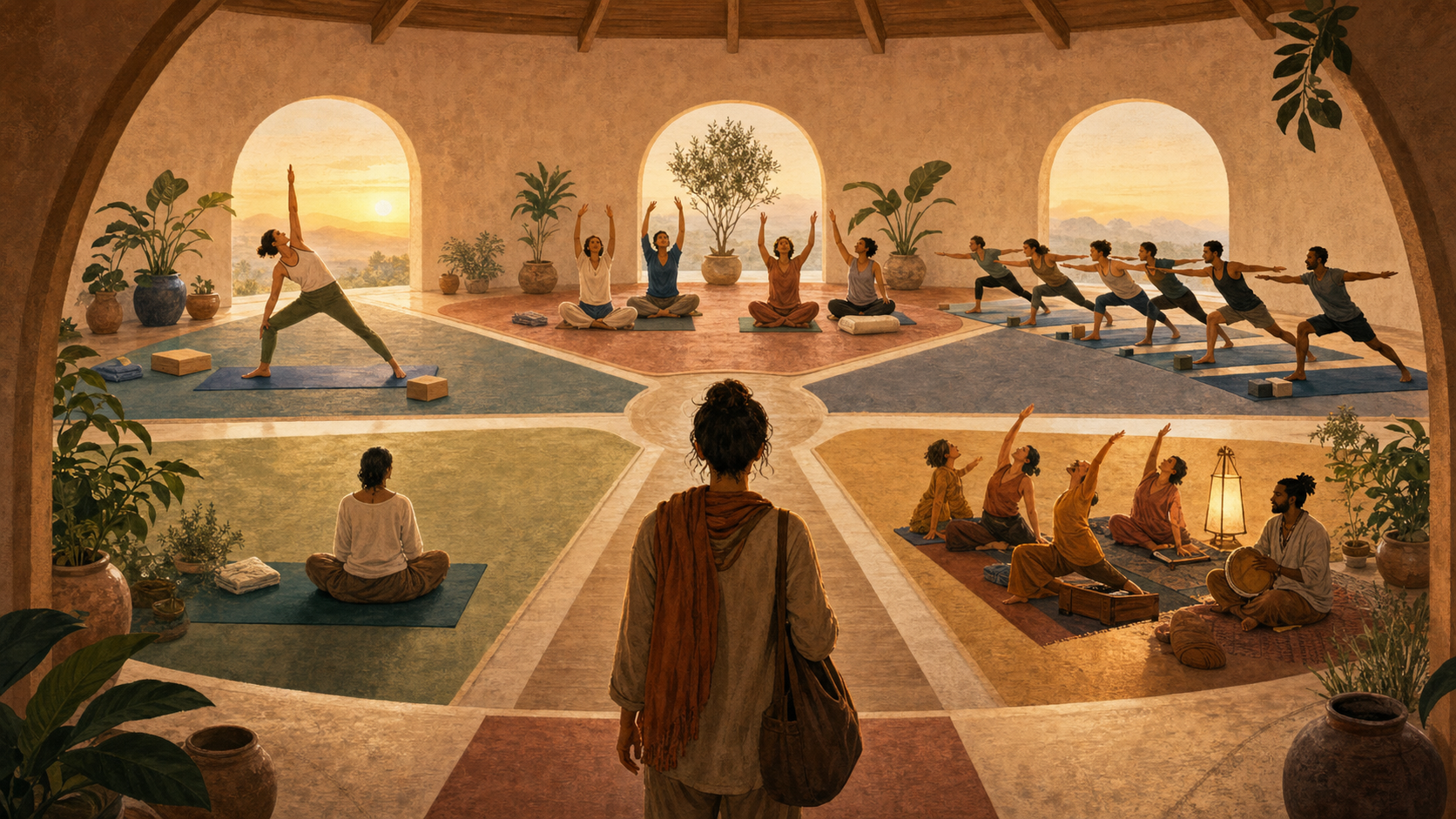
Yoga and Peace: How Breath, Movement, and Mindfulness Transform Stress into Calm

Yoga connects body, mind, and subtle awareness to cultivate inner peace and reduce stress. Through asana, pranayama, and meditation techniques, it modulates the autonomic nervous system and strengthens emotional regulation. Ethical principles such as ahimsa and satya translate inner calm into compassionate action. These values align with Buddhism’s metta, Jainism’s ahimsa, and Sikhism’s seva, fostering…