-
Ghata (Ghatavastha) in Hatha Yoga: Unlocking Breath, Balance, and the Jiva–Paramatman Union

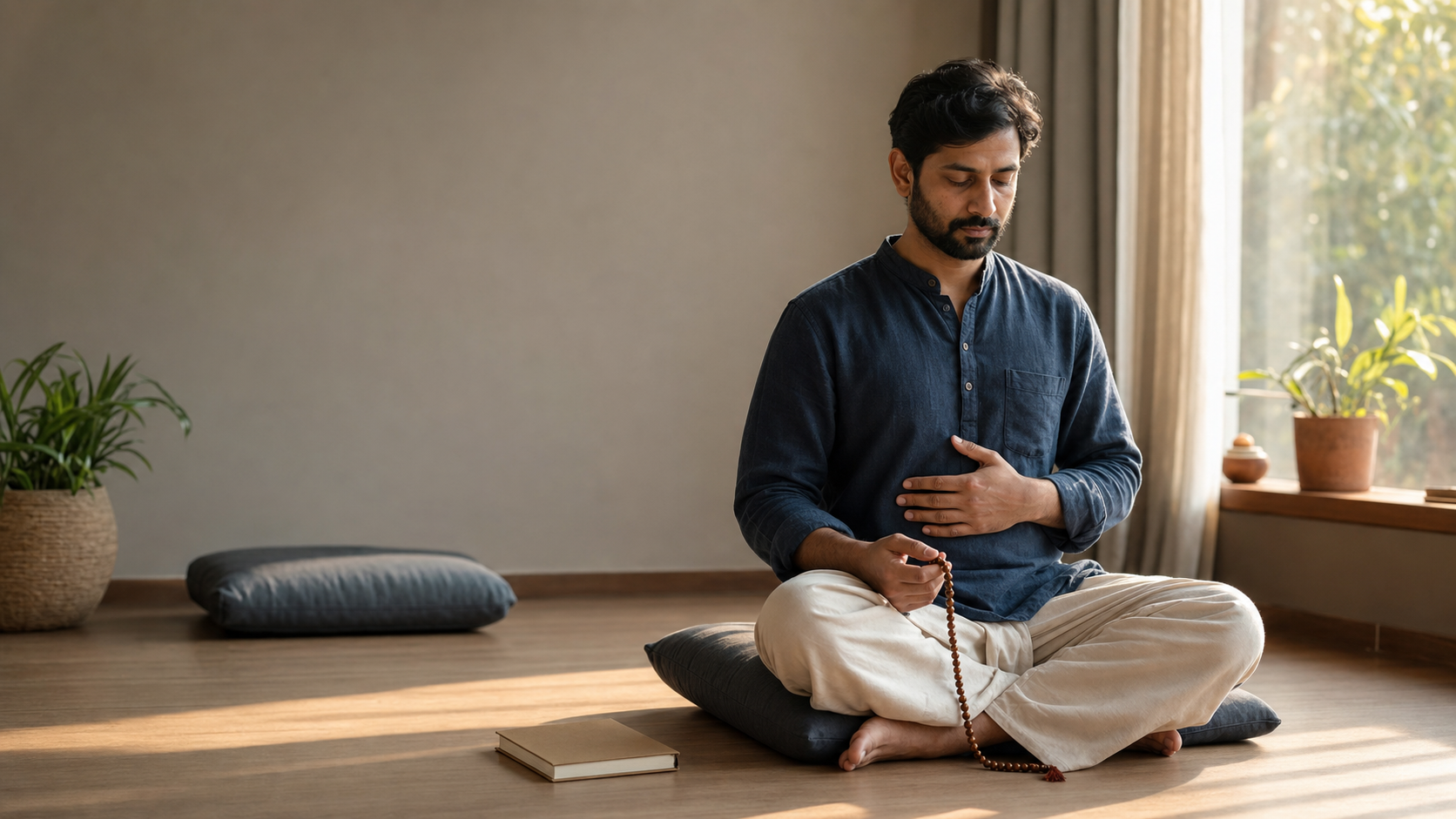
Ghata or ghatavastha is a pivotal Hatha Yoga stage where breath, mind, and subtle energy stabilize, aligning the jiva with Paramatman. Drawing on the Hatha Yoga Pradipika and Gheranda Samhita, it highlights pranayama as both physiological refinement and spiritual integration. Practitioners experience steadier kumbhaka, balanced prana and apana, and a calm, clear mind. Benefits include…
-
Jyotismati in Patanjali’s Yoga: Awaken the Inner Light for Clarity, Calm, and Focus
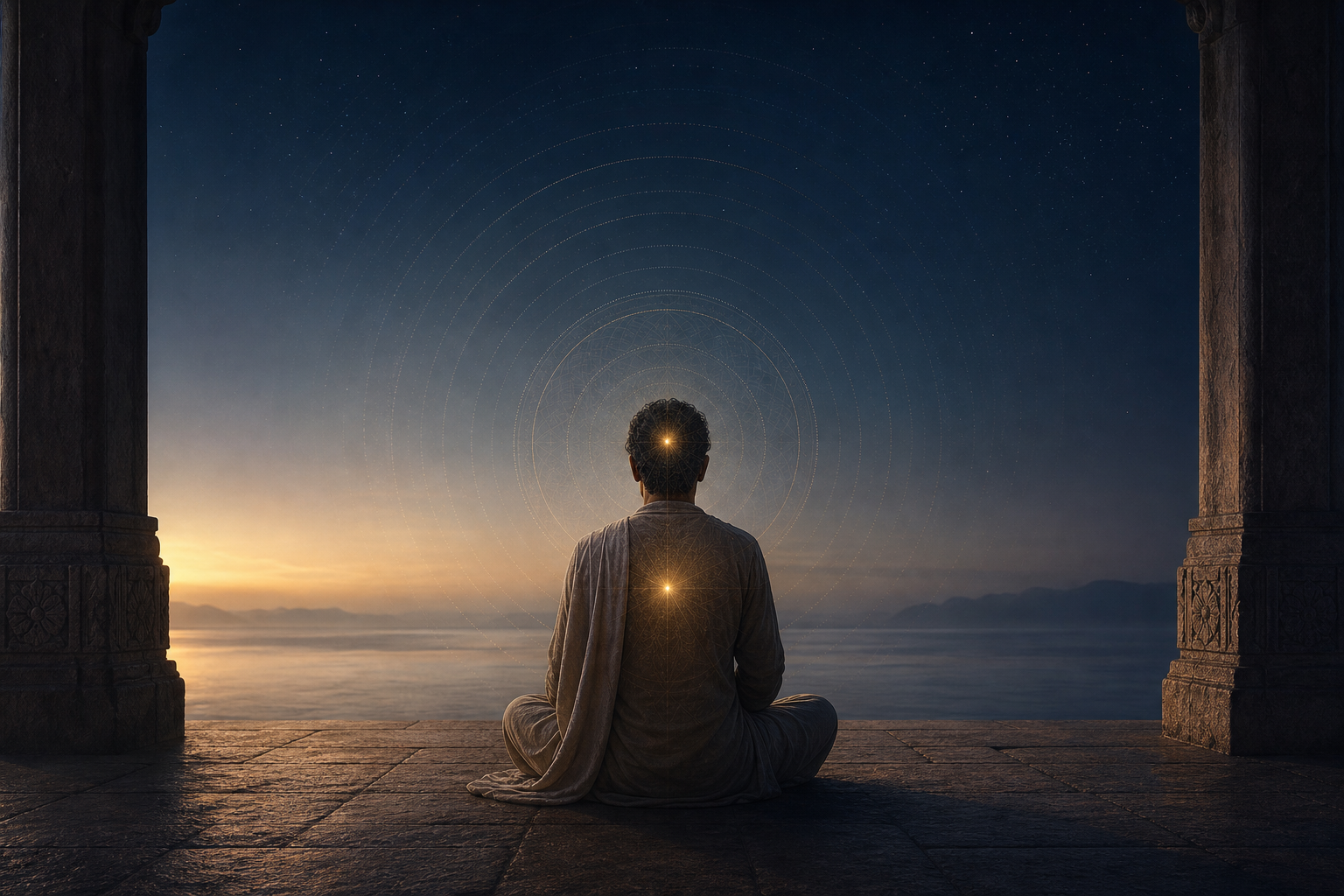
Jyotismati, from Patanjali’s Yogasutra 1.36, points to a sorrowless inner light that steadies the mind and clarifies thought. Situated within the sequence of practices in 1.33–1.39, it complements breath awareness, ethical attitudes, and focused attention. Practitioners find that resting awareness in this gentle radiance reduces reactivity and enhances concentration. The method pairs naturally with pranayama…
-
Discover the Sacred Map of the Body: How Each Limb Aligns with Devas in Vedic Practice

This article explains how Vedic practice maps specific Devas to the body’s limbs through mantras like ‘Prajanane Brahma tishtatu’, ‘Padayo Vishnu tishtatu’, and ‘Hastayo Hara tishtatu’. It clarifies the symbolism—creation, preservation, and transformation—and shows how this enhances the body-mind connection in Hindu spirituality. Readers learn how simple, daily contemplations support ethical action, emotional balance, and…
-
Enlightenment Through Balance: How Meditation, Music, and Reason Shape Altered Consciousness

This article presents a practical, cross-traditional pathway to enlightenment as an altered state of consciousness. It explains why integrating music (chanting, bhajan, kirtan) with reflective inquiry and silent dhyana stabilizes attention and deepens practice. The popular left–right brain framing is acknowledged as a helpful metaphor, while emphasizing evidence-informed mindfulness of breath and gentle pranayama. A…
-
From Overwhelm to Clarity: A Simple Pocket Object to Slow Down, Breathe, and Recenter

A quiet pause in a parked car demonstrates how a simple tactile object can interrupt mental overload and restore breath awareness. By using a small, familiar item as a grounding cue, attention shifts from rumination to embodied presence, enabling stress reduction and mental clarity. This micro-ritual aligns with dharmic wisdom—seen in japa, mindfulness of touch,…
-
Between Yoga and Catholic Classrooms: A Harmonious Journey into Dharmic Values

Raised in a vegetarian household rooted in yoga, the narrative highlights how ahimsa and disciplined living shaped early ethical sensibilities. An impersonal philosophical orientation within yoga coexisted with broader dharmic values, reinforcing compassion and self-restraint. Study in a Roman Catholic school introduced daily interfaith engagement, showing how yoga at home and Catholic education in the…
-
Sound as Medicine: Calm the Nervous System, Restore Balance, and Honor Dharmic Unity

Many people carry stress unconsciously, expressed as tight muscles, short breath, and a braced nervous system. A two-hour online session titled Sound as Medicine: A Healing Journey offers an accessible immersion in breathwork, mantra, and a crystal sound bath to support nervous system regulation. Grounding breathwork encourages parasympathetic activation and calmer focus. Gentle mantra cultivates…
-
Gheranda Samhita: Timeless Hatha Yoga Wisdom for Purification, Power, and Inner Calm

The Gheranda Samhita is a foundational Sanskrit scripture of Hatha Yoga that presents a precise seven-limbed path for inner steadiness. It emphasizes purification, postural stability, energetic refinement, breath regulation, meditation, and contemplative absorption. Readers benefit from a systematic roadmap that is both historically rooted and immediately applicable to modern Yoga practice. Clear explanations of śatkarma,…
-
Bhranti Darshana Explained: Unlock Clarity and Overcome False Perception in Patanjali’s Yoga

Bhranti Darshana—“false perception”—is one of Patanjali’s nine antarayas that quietly misleads practitioners by disguising error as insight. It distorts meditation by elevating appearances over essence and undermines steady progress toward kaivalya. Rooted in avidya and related to viparyaya, it is corrected through viveka, pramana, and sustained abhyasa-vairagya. Practical safeguards include yama-niyama, scripture-based validation, guidance from…
-
Abhagna Yoga in the Mahabharata: The Unbroken Flow of Dhyana for Inner Stability
Abhagna Yoga, articulated in the Mahabharata’s Shanti Parva, describes an unbroken flow of contemplative attention that steadies the mind and refines discernment. Rooted in the sense of a-bhagna (unbroken) union, it aligns with the classical principle of nairantarya abhyase—practice without interruption. The approach is both practical and profound, encouraging brief, linked moments of breath awareness,…
-
Proven Ways to Master Concentration in Meditation: Transform Attention with Gentle Action

Attention follows action. Just as a surprise play re-energizes a cricket audience, gentle, well-timed cues can renew focus in meditation. By increasing the salience of the breath, mantra, posture, or brief noting, concentration becomes steadier without agitating the mind. Breath counting, synchronized japa or simran, and light body scans provide constructive “micro-actions” that sustain one-pointedness.…
-
Discover the Vishuddha (Throat) Chakra: The Complete Guide to Pure Speech and Truth

The Vishuddha (Throat) Chakra is the fifth energy center associated with communication, self-expression, and truth. Rooted in the Sanskrit idea of “purification,” it refines thought into sound and cultivates ethical speech across dharmic traditions. Symbolized by a sixteen-petaled lotus and attuned through the mantra “ham,” it integrates heart insight with mental clarity. Balanced expression emerges…
-
Anahata Chakra Explained: The Complete Guide to Mastering Heart-Centered Balance

The Anahata Chakra, or Heart Chakra, is the fourth energy center and serves as a bridge between grounded living and higher insight. Its Sanskrit meaning, “unstruck,” points to a subtle inner resonance of peace and unity. This guide clarifies location, symbolism, and qualities—love, compassion, and forgiveness—while outlining signs of balance and imbalance. It presents practical…
-
Anahata (Heart Chakra) Explained: The Complete Guide to Discover Inner Balance and Compassion

Anahata Chakra, the fourth energy center in the traditional chakra system, bridges material concerns and spiritual insight through compassion, balance, and ethical clarity. Grounded in yogic anatomy, it is associated with air (vayu), the color green, and the bīja mantra “Yam,” framing a contemplative model for mind-body connection. Practitioners often report steadier breath, emotional regulation,…
-
Discover the Complete Sankhya–Yoga Creation Theory: A Transformative Guide to Hindu Cosmology

This article presents a clear, academic overview of the Sankhya–Yoga theory of creation within Hindu cosmology, explaining how Purusha and Prakriti account for the evolution of the universe. It outlines the ordered emergence of tattvas, clarifies the role of the gunas, and explains why misidentification leads to suffering. The Yoga perspective adds Ishvara and an…
-
Discover Chitishakti’s Power: A Complete Guide to Purusha in Patanjali’s Yoga Philosophy

Patanjali’s Yoga presents Purusha as pure consciousness—the steady witness distinct from Prakriti’s changing field. Clarifying chiti and chitishakti reveals how conscious power illumines experience when mental fluctuations settle. Grounded in abhyasa and vairagya, and supported by pratyahara, dhyana, and samadhi, this approach offers a practical route to Self-Realization. Readers gain benefits such as emotional balance,…
-
Master Svadhisthana: The Complete, Proven Guide to Balancing the Sacral Chakra for Creative Flow

Svadhisthana Chakra, the Sacral Chakra, is the subtle seat of creative flow, balanced emotion, and ethical pleasure. Located below the navel and linked with the water element, it influences hips, pelvis, and the reproductive system while shaping relational ease and artistry. This guide clarifies balanced and imbalanced signs, then offers proven practices: hip-opening asanas, Nadi…
-
Muladhara (Root) Chakra: The Complete, Proven Guide to Grounding, Security, and Stability

The Muladhara (Root) Chakra is the foundational energy center that supports stability, safety, and grounded presence. Located at the base of the spine, it relates to survival instincts, security, and belonging, and is associated with the earth element, the color red, and the seed sound Lam. Practical methods such as steady standing postures, diaphragmatic breathing,…
-
Muladhara (Root Chakra) Explained: The Essential Guide to Grounding, Security, and Growth

The Muladhara Chakra, or Root Chakra, is the foundational energy center in yogic anatomy, located at the base of the spine and associated with stability, survival, and the earth element. Its Sanskrit roots—“Mula” (root) and “Adhara” (support)—convey its role in grounding body and mind. Balanced Muladhara fosters safety, resilience, and practical clarity; imbalance may manifest…
-
The Complete Jain Guide to Yoga and Meditation: Discover Proven Paths to Inner Liberation

This article explains how daily Jain rituals already embody yoga and meditation through Samayik, Pratikraman, Kayotsarga, and the 12 bhavana. It clarifies Jain definitions of yoga (disciplined activity of mind, speech, and body) and dhyana (meditation), and outlines the four kinds of dhyana, highlighting dharma dhyana and shukla dhyana as liberating. Readers learn how posture,…