

You have been training consistently. Your clothes fit differently, the stairs feel easier, and you have more energy by late afternoon. Then you step on the scale, see almost no change, and wonder whether any of it counts.
It counts. If health is meant to support your dharma – your work, family, seva, sadhana, and responsibilities – body weight cannot be the only measure. You need a small dashboard that shows whether your body is becoming stronger, more capable, metabolically healthier, and easier to live in.
Decide what health must help you do
A bathroom scale answers one narrow question: what is your total mass at this moment? It does not tell you how much of that mass is muscle, fat, bone, water, stored carbohydrate, or digestive contents. It cannot measure cardiovascular fitness, balance, sleep, concentration, resilience, or confidence.
This distinction becomes obvious when strength training changes body composition. You may lose fat while gaining or preserving muscle. Because muscle occupies less space than the same mass of fat, your waist can become smaller and your clothing can fit better while your weight remains stable or rises slightly. That is not failed weight loss. It is a different kind of progress.
BMI has a similarly limited role. It can help screen risk across populations, but it does not distinguish lean mass from fat mass. It can misclassify muscular people, and its meaning can differ with age, sex, and ethnicity. Treat BMI as a prompt for further assessment, not a precise description of your body or your fitness.
Weight still matters in the right setting. Clinicians may use it when considering medication doses, fluid status in heart or kidney disease, childhood growth, or unintended weight loss. If a clinician is monitoring your weight for a medical reason, follow that plan. The problem begins when a useful clinical data point becomes a daily judgement about whether you deserve to eat, rest, feel confident, or enjoy your day.
Before choosing any metric, finish this sentence: I want my health to help me… Your answer may be to climb stairs without stopping, carry groceries comfortably, practise a familiar asana with greater stability, keep up with your children, improve a blood-pressure trend, recover from training, or remain independent as you age. A good measurement should help you make a decision about that goal. If it cannot, it is probably noise.
Build a dashboard that measures the whole person
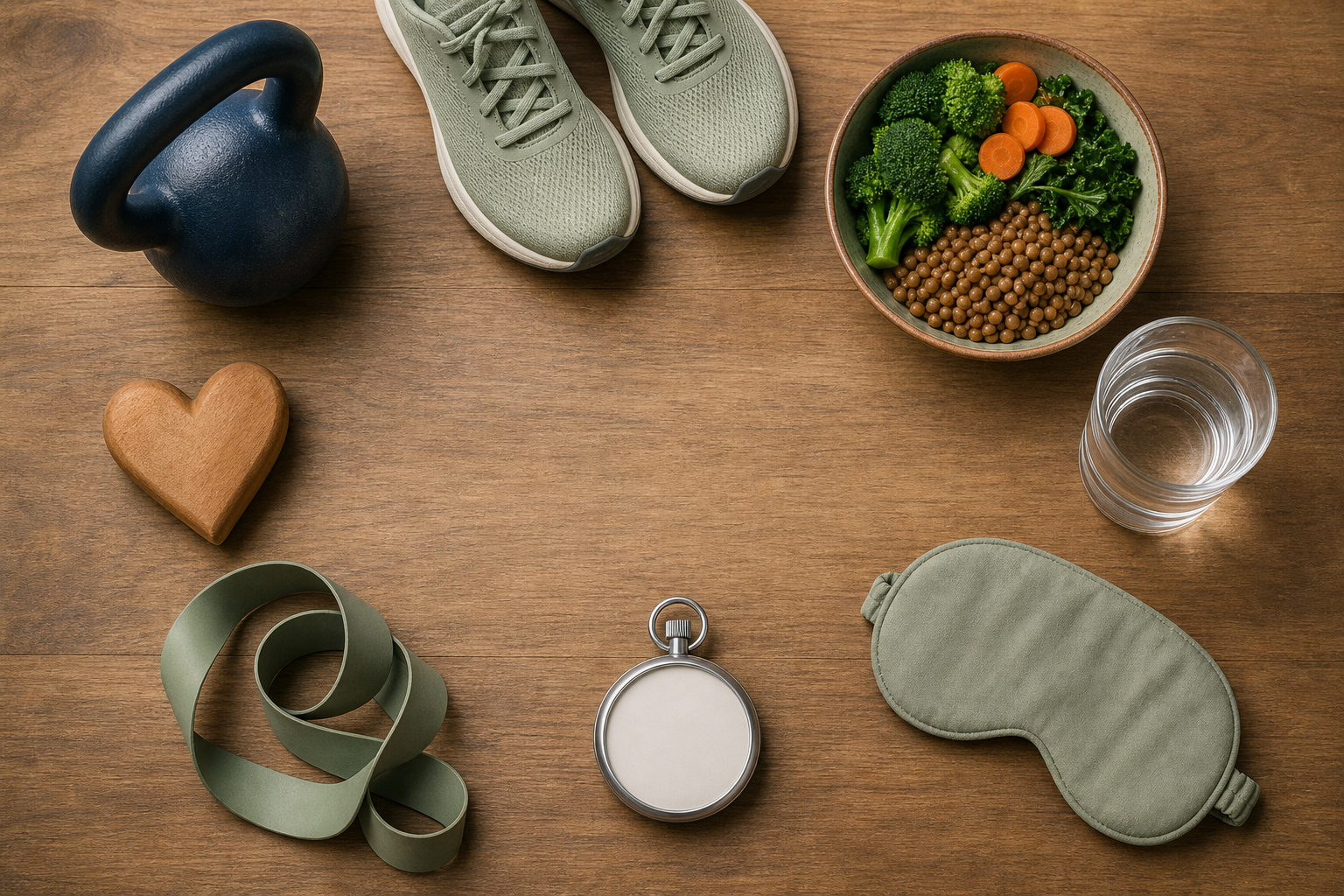
You do not need dozens of tests or an expensive wearable. Choose one or two indicators from each relevant domain, record them under comparable conditions, and look for a direction over time. The most useful dashboard combines capability, cardiometabolic health, body composition, recovery, and psychological well-being.
| Domain | Useful measures | What to notice |
|---|---|---|
| Strength and function | Repeatable lifting performance, stair climbing, loaded carries, rising from the floor | More load or repetitions with sound technique; ordinary tasks becoming easier |
| Cardiorespiratory and clinical health | Resting heart rate, blood pressure, a repeatable submaximal aerobic task, clinician-ordered glucose and lipid markers | A favourable trend interpreted in context, not one isolated reading |
| Body composition | Waist circumference, waist-to-height ratio, clothing fit, or a consistent composition method | Changes in abdominal size or fat and lean mass, even when weight is stable |
| Recovery and regulation | Sleep, daytime energy, appetite, digestion, menstrual regularity, soreness | Whether your plan leaves you able to function and recover rather than merely endure it |
| Mental and behavioural health | Mood, focus, stress tolerance, confidence, flexibility around food and exercise | Less all-or-nothing thinking and less emotional dependence on measurements |
For strength, use a test you can repeat safely. A five-repetition performance on a squat, hinge, press, or row variation can show progress without requiring frequent maximal attempts. Pull-ups, a farmer’s carry over a fixed distance, and the ability to rise from the floor without using your hands translate even more directly into daily life. Record the exercise variation, load, repetitions, range of motion, and technique standard so that you are comparing like with like.
Relative strength – the load lifted divided by body mass – can add context, especially when your weight changes. But do not let it become another demand to make yourself lighter. Improving the lift, improving technique, or completing the same task with less effort can all represent genuine progress.
For cardiopulmonary fitness, choose a repeatable submaximal task rather than exhausting yourself for a test. You might use the same staircase, walking route, or cardiovascular machine setting and note time, heart rate, and perceived effort under similar conditions. A task completed more comfortably is useful evidence even if your scale is unchanged. Resting heart rate and blood pressure also provide context, but medications, illness, hydration, stress, and training status can affect them. Use a validated method and ask a clinician to interpret concerning or persistent readings.
Clinical markers such as fasting glucose, HbA1c, a lipid profile, and high-sensitivity C-reactive protein can place your training progress within a wider cardiometabolic picture. They are not do-it-yourself diagnoses. Testing frequency and interpretation belong with a qualified clinician who knows your age, medical history, medication use, and life stage.
Waist measurement is a practical way to monitor abdominal fat. Measure at the same anatomical point – commonly the navel – with the same tape, posture, and general conditions. An adult waist-to-height ratio of 0.5 or less is a pragmatic screening target linked with lower visceral-fat risk, but it is not a diagnosis or a universal rule. It should not be applied mechanically during pregnancy or other circumstances that alter abdominal size, and a clinician may select a more appropriate measure for your age, ethnicity, or health situation.
If you want a formal body-composition estimate, choose the tool according to the decision you need to make. DEXA can estimate fat mass, lean mass, and bone mineral density and is better suited to occasional assessments than constant checking. Bioelectrical impedance is highly sensitive to hydration, so its trend is more useful than a single reading. Skinfold measurements depend heavily on the skill and consistency of the practitioner. Whichever method you choose, do not compare percentages produced by unrelated devices as though they were interchangeable.
Finally, record the measures that determine whether the plan is sustainable: sleep quality and duration, daytime energy, appetite regulation, digestive comfort, concentration, mood, and menstrual regularity where applicable. These are not consolation prizes. A programme that lowers weight while steadily damaging energy, sleep, mood, or normal physiological function is not producing well-rounded health.
Read scale changes without obeying them
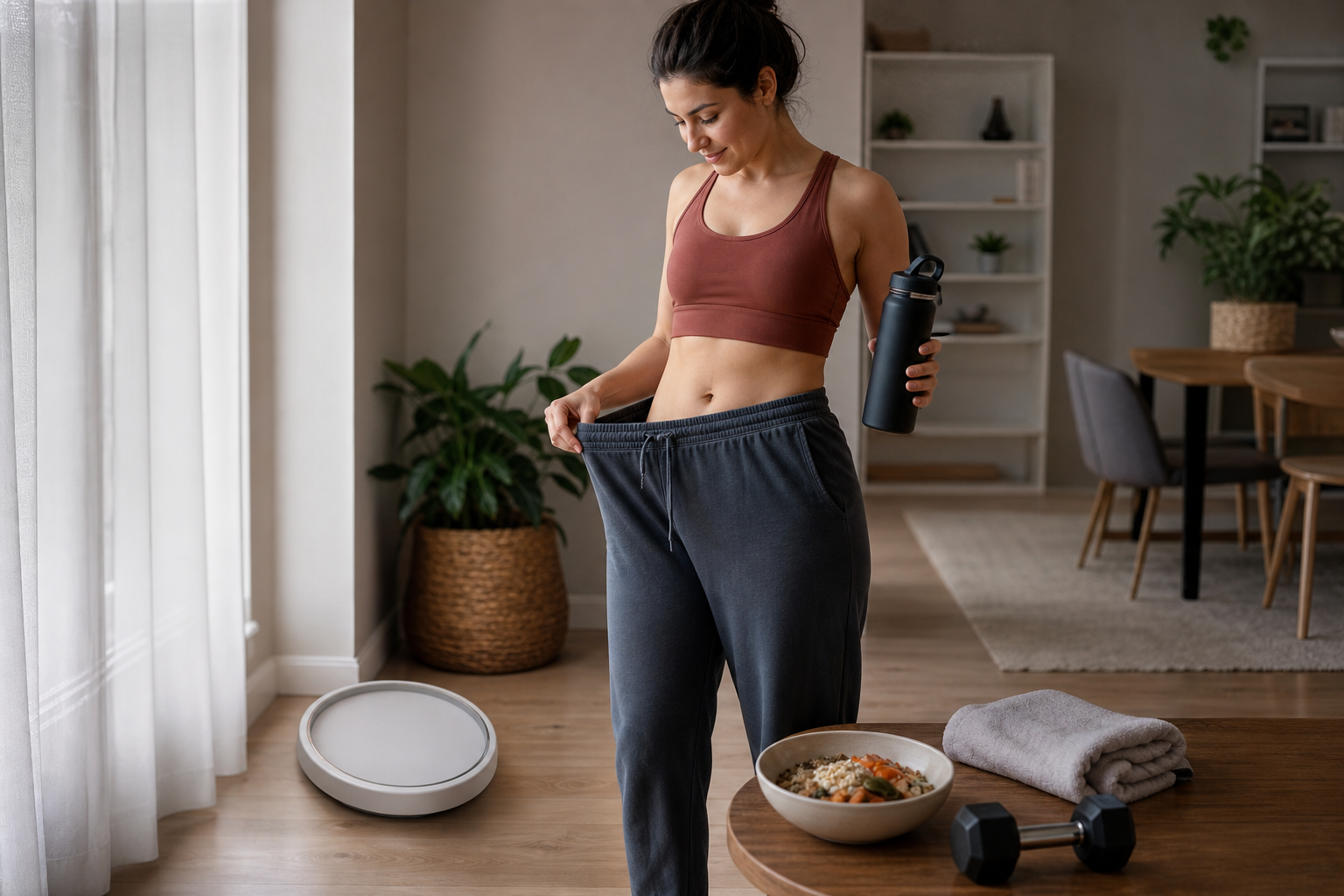
A sudden increase on the scale is often interpreted as fat gain even when the timing makes that explanation implausible. Body mass moves with fluid balance, glycogen, sodium, hormones, inflammation, gastrointestinal contents, training stress, sleep, and time of day.
Each gram of stored glycogen binds roughly three grams of water. A high-carbohydrate meal, rehydration, or replenishment after demanding activity can therefore produce an overnight increase of one to three pounds without an equivalent increase in body fat. Menstrual-cycle phases, a salty meal, hard training, poor sleep, and stress-related water retention can move the number again. Across several days, a fluctuation of 0.5 to 2.0 kilograms can be physiological.
This is why an isolated weigh-in should rarely trigger a change in food or training. If you use a scale, standardise the conditions as much as practical: the same device, similar time of day, similar clothing, and similar position on a firm floor. Compare a trend with your other measures rather than reacting to the highest or lowest number.
Use four questions before changing your plan:
- Has the change persisted, or is it one reading after different food, hydration, sleep, hormones, or training?
- What happened to waist measurement, clothing fit, and body-composition trends?
- Are strength, aerobic capacity, energy, sleep, and daily function improving or declining?
- Is there a medical reason for monitoring weight that makes this change clinically important?
There is also a point at which weighing is no longer a neutral measurement. If it repeatedly ruins your mood, leads you to restrict food, drives compulsive exercise, or determines your sense of worth, stop treating more data as the solution. A physician can assess physical symptoms, a registered dietitian can help with nutrition, and a licensed mental-health professional can address compulsive or disordered patterns. Unintended weight loss, persistent fatigue, menstrual disruption, or a clinically concerning change also deserves professional evaluation rather than a harder workout.
Train for capability, then recover enough to adapt

Once your goal is capability rather than punishment, programme design becomes clearer. Progressive strength training builds muscle and connective tissue, supports bone mineral density, improves insulin sensitivity, increases mitochondrial capacity, and develops balance and resistance to falls. Those changes make the body more durable for ordinary life.
A practical adult programme can use two to four strength sessions per week built around five movement patterns: squat, hinge, push, pull, and carry. Choose variations that suit your present mobility and experience. An old injury, new pain, cardiovascular condition, pregnancy, or long period of inactivity may require assessment and individual modification before you load these patterns.
For many adults, roughly eight to twelve hard sets per major muscle group each week at an effort of about seven to nine out of ten can produce meaningful adaptation. That is a programming range, not a quota you must earn at any cost. A novice can begin with less, practise technique, and progress gradually. More experienced trainees may need changes in volume and intensity to keep progressing without accumulating excessive fatigue.
Progressive overload also means more than adding weight to the bar. You can add a controlled repetition, improve range of motion, make technique more consistent, or complete the same work with better control. Change one variable at a time so you can tell what caused the improvement. Full range of motion and repeatable form are worth more than a nominal personal record achieved by changing the movement.
Intermediate trainees may benefit from an easier deload after four to eight weeks of demanding work, but the calendar is not sacred. Falling performance, persistent soreness, disrupted sleep, and unusual fatigue tell you more than pride does. Recovery is part of training because adaptation occurs after the stimulus, not during the hardest repetition.
Nutrition should support the work. For healthy adults pursuing strength and muscle retention, a practical protein range is approximately 1.6 to 2.2 grams per kilogram of body weight per day, spread through regular meals. This is not an instruction to force-feed protein or ignore medical circumstances. If you have kidney disease, a medically prescribed diet, pregnancy-related needs, digestive problems, or a history of disordered eating, get individual guidance before adopting a numerical target.
Adequate food, hydration, and sleep matter because a body cannot reliably build strength while being treated as an opponent. Ahimsa is useful here as a boundary, not a decorative slogan: discipline can be demanding without becoming self-punishment. If your method requires chronic hunger, exhaustion, or fear of rest, the method is undermining the health it claims to pursue.
Key takeaways
- Body weight measures total mass. It does not directly measure muscle, fat distribution, strength, fitness, recovery, or self-worth.
- A stable scale can accompany fat loss and muscle gain. Check waist, clothing fit, performance, and consistent body-composition trends before judging the result.
- Short-term changes often reflect water, glycogen, sodium, hormones, food contents, stress, or training inflammation. Do not redesign your plan around one reading.
- Track a small dashboard: one strength or function measure, one cardiovascular or clinical measure, one body-composition measure, and recovery and mood indicators.
- Build capability through progressive squat, hinge, push, pull, and carry patterns two to four times per week, adjusted for experience and health status.
- Seek qualified help when weight change is unintended, symptoms or clinical markers are concerning, or measurement is driving restriction, compulsive exercise, or serious distress.
At your next training session, write down one capability you want your body to retain or gain. Then choose the smallest set of measurements that can show whether you are moving toward it. If weight falls while strength, energy, sleep, and function deteriorate, do not call that success. If weight stays steady while your body becomes stronger and daily life becomes easier, do not discard a sound plan. Let the numbers serve your dharma; do not let them become its judge.