-
When Family Says You’re Always Wrong: Dharmic, Evidence-Based Strategies to Reclaim Inner Balance

Many individuals feel unfairly criticized by family despite sincere effort. A dharmic response begins by dropping absolutes like “always,” tracking real instances of criticism, and inviting specific feedback. Shared principles across Hinduism, Buddhism, Jainism, and Sikhism—ahimsa, mindfulness, non-attachment (nishkama karma), and seva—guide calm, constructive action. Practical steps include setting kind boundaries, using precise and solution-focused…
-
Bhakti and Swachchatha: How Devotion Cultivates Inner Purity, Clarity, and Everyday Discipline

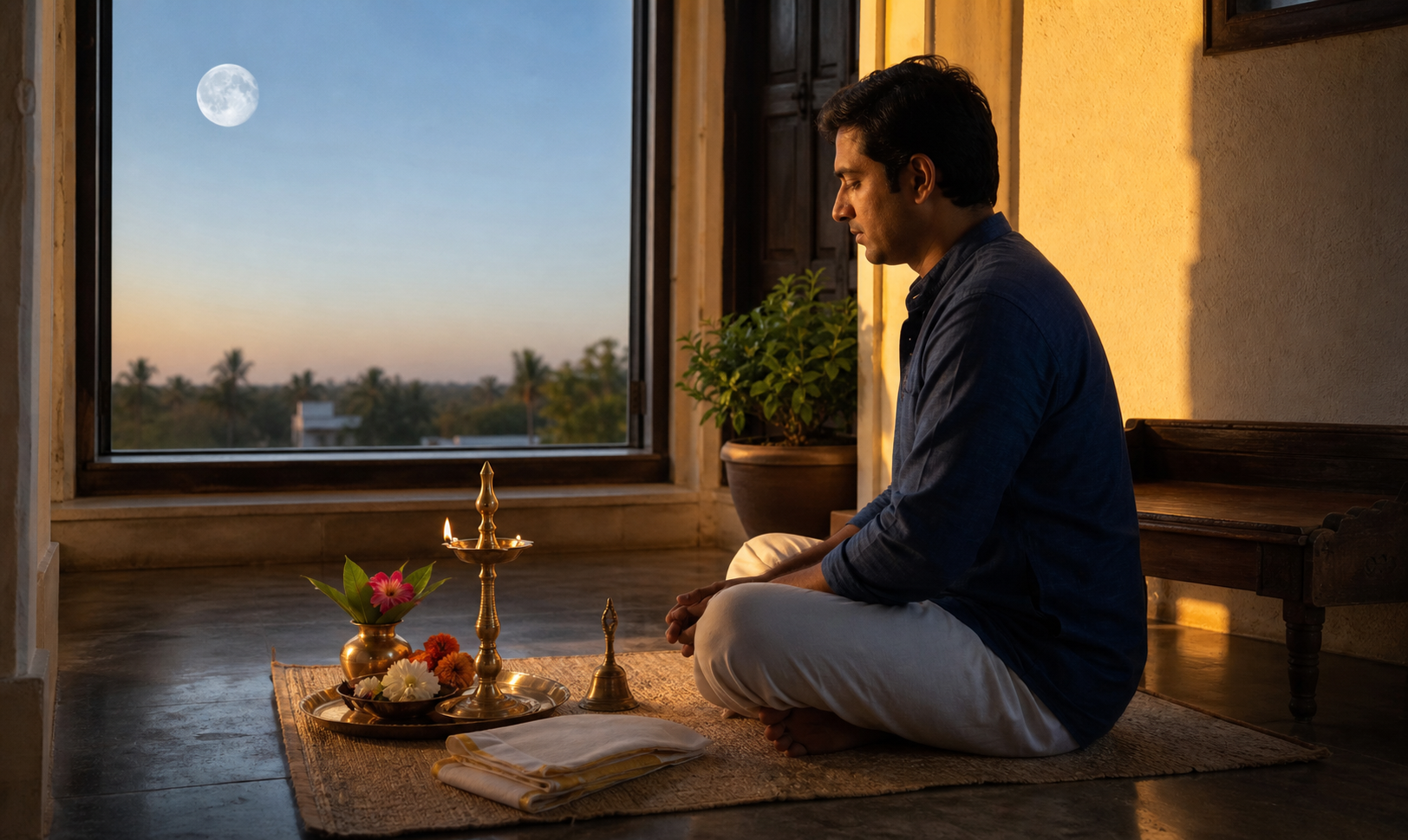
Bhakti and Swachchatha are presented as mutually reinforcing: sincere devotion naturally matures into inner purity and disciplined living. Multiple dharmic methods—temple worship, meditation, chanting, and honoring spiritual guidance—allow seekers to choose a path aligned with temperament without compromising the goal of ethical refinement. The perspective is inclusive, highlighting how Hinduism, Buddhism, Jainism, and Sikhism share…
-
Enthusiasm, Determination, and Patience in Japa: Transformative Insights from NJ, 12/19/2025

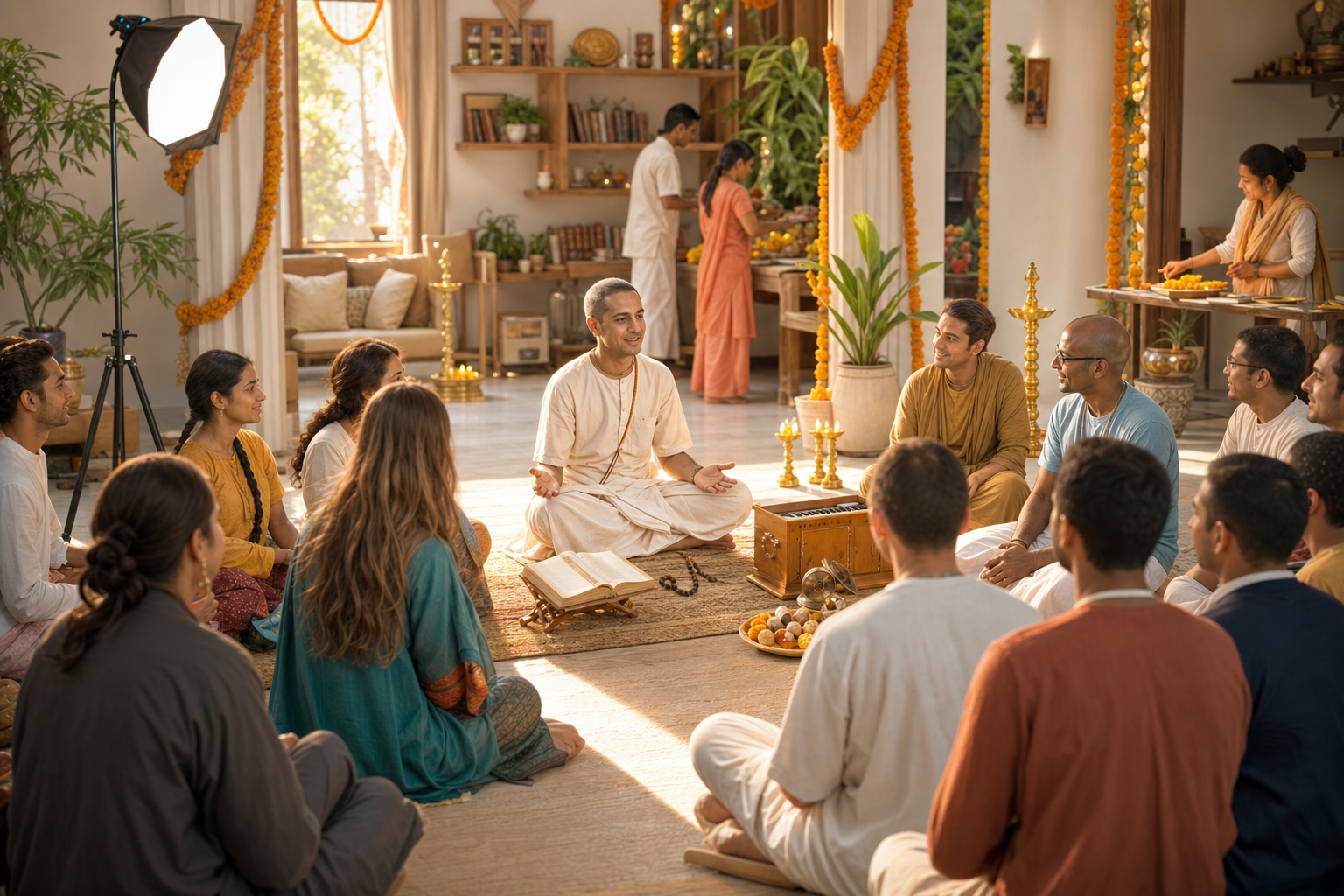
A New Jersey dialogue on 12/19/2025 examined how enthusiasm, determination, and patience cultivate sustainable japa. It clarified motives for chanting Krishna’s names, moving beyond habit or fear toward devotion and gratitude. The discussion offered a practical framework for aligning intention, choosing between silent japa and loud japa, and assessing qualitative outcomes like equanimity and compassion.…
-
Premanjali’s Kirtan: An Australian Bhakti Voice Bridging Global Faiths and Identity

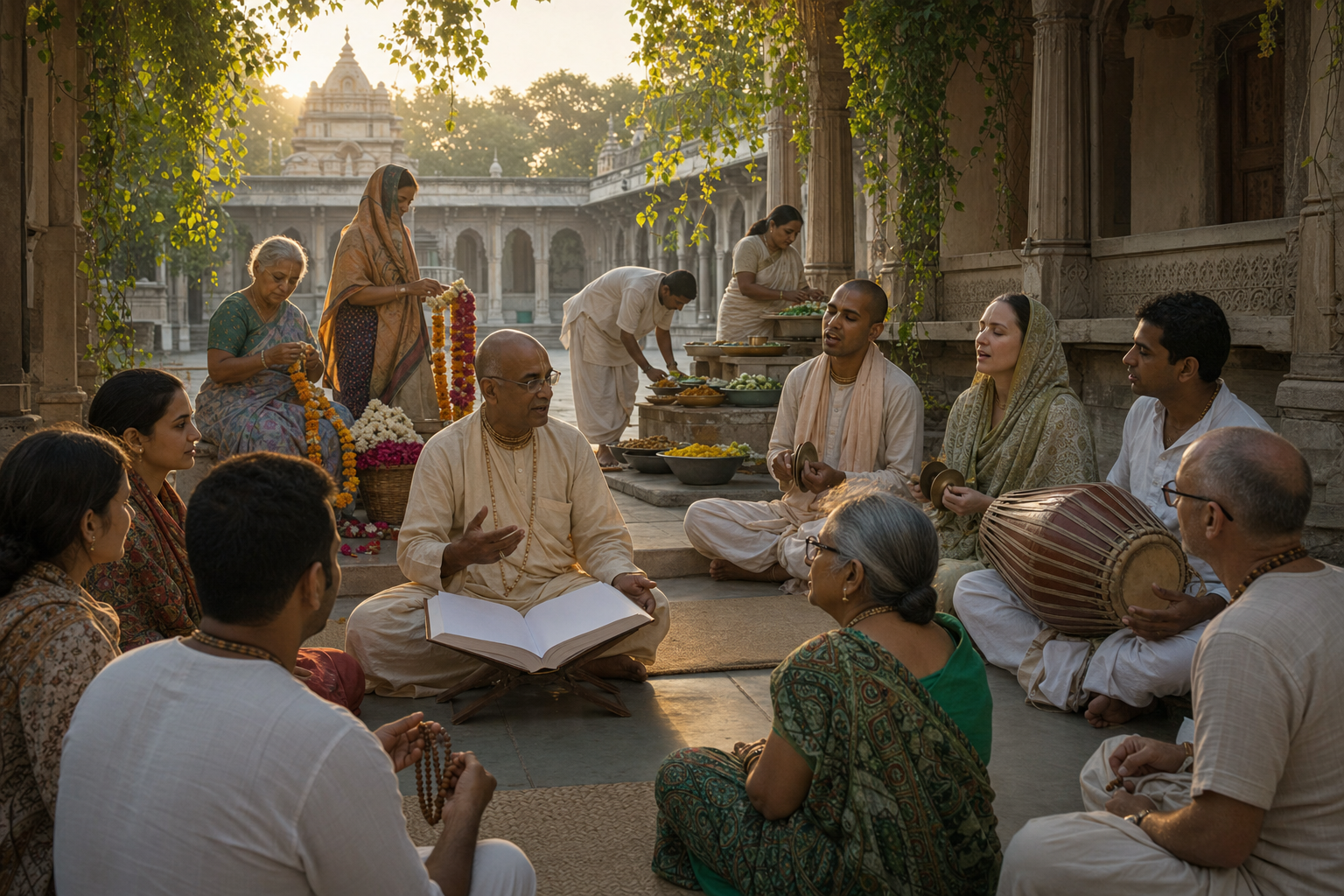
Premanjali, an Australian devotional singer, blends ancient bhakti traditions with a contemporary sound to reframe kirtan for a global audience. Her music functions as a shared, contemplative space that welcomes practitioners across Hinduism, Buddhism, Jainism, and Sikhism. Through call-and-response mantras, harmonium and mridanga, and meditative melodic cycles, the kirtans cultivate mindfulness, compassion, and inner balance.…
-
नक्षत्र के अनुसार राशि: Accurate, Insightful Guide to Rashi Mapping by Nakshatra Padas

This academically grounded guide explains how to determine one’s zodiac sign (Rashi) from the birth Nakshatra and its pada within the sidereal framework used in the Hindu calendar, Panchang, and Janam Kundali. It preserves key Hindi formulations for मेष and वृषभ while clarifying the general rule that each Rashi comprises complete and boundary padas of…
-
Pradosh Vrat 2026: Dates, Significance, and Evening Puja Guide for Pradosham Devotees

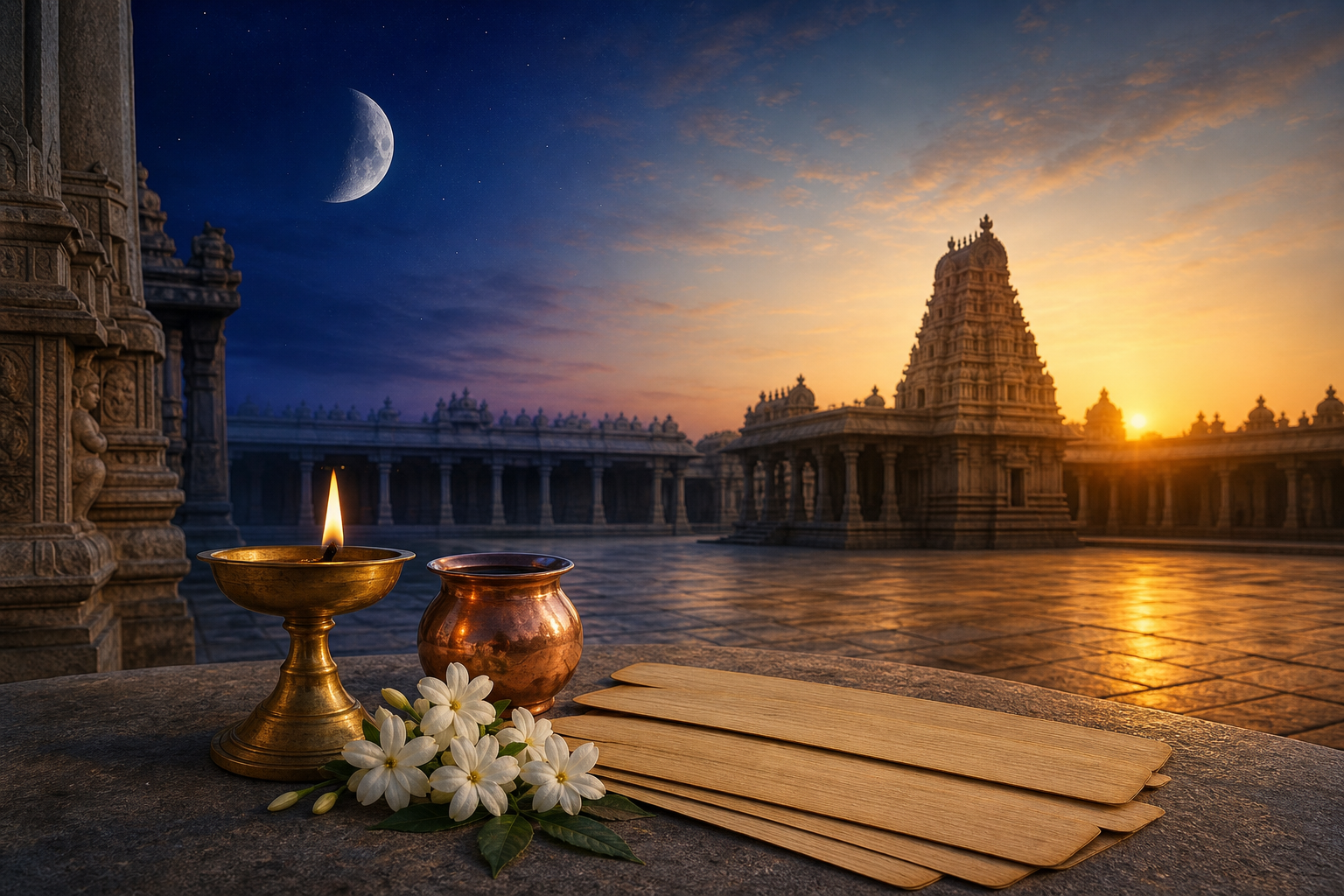
Pradosham (Pradosh vratham) is a twice-monthly Shaiva observance held on the Trayodashi of Shukla Paksha and Krishna Paksha. This guide explains the significance of Pradosha Kaala (the sacred evening window around sunset), the core rituals—Shivalinga puja, Bilva offerings, mantra japa—and mindful fasting options. It highlights the special potency of Shani Pradosha and Soma Pradosham and…
-
Lionel Messi’s Reverent Vantara Temple Visit in Jamnagar: ‘Jai Mata Di’ and a Call for Global Unity

Lionel Messi visited Vantara in Jamnagar, Gujarat, where he joined aarti and traditional Hindu rituals alongside Anant Ambani and Radhika Merchant. Visuals shared by ANI show Messi barefoot in a temple complex, bowing at the shrine and holding a thali during aarti, with companions Luis Suárez and Rodrigo De Paul also present. Vantara reported his…
-
Make 2026 Truly Different: A Dharmic, Research-Backed Path to Sustainable Joy and Purpose

The early optimism of a new year often fades because life demands outpace willpower. A dharmic, research-informed approach offers a sustainable alternative. By combining Dharma, mindfulness, Ahimsa, and Seva, change becomes practical, ethical, and compassionate. Short, focused learning (20–25 minutes) paired with daily application builds momentum without overwhelm. Key areas—vitality, emotional well-being, relationships, finances, habits,…
-
Ekadashi 2026: Auspicious Vrat Dates and Vishnu Puja Guide for Shukla & Krishna Paksha

Ekadashi Vrat, observed on the eleventh tithi of each lunar fortnight, is dedicated to Lord Vishnu and recurs in both Shukla Paksha and Krishna Paksha throughout 2026. This guide explains why Ekadashi dates can differ among Smartha, Vaishnava, and Gauna traditions, and how sunrise-based tithi rules and regional Panchang use shape observance. It offers practical…
-
Pushya Masam 2025–2026: Sacred dates and traditions in the Telugu calendar for AP & Telangana

Pushya Masam 2025–2026 runs from December 21, 2025 to January 18, 2026 in the Telugu calendar of Andhra Pradesh and Telangana. The month aligns with the amānta system also used in Karnataka, Maharashtra, Goa, and Gujarat, with minor regional variations best confirmed via local Panchang. Traditionally, it is considered less favorable for weddings and grand…
-
Janma Shani for Karka Rashi: Navigate the Middle Sade Sati with Clarity and Strength
Janma Shani—the second 2½-year phase of Shani Sade Sati for Karka Rashi—heightens responsibility, emotional maturity, and practical restructuring. Relationships may feel tested yet become manageable with patient communication. Career progress rewards diligence and process excellence, while conservative financial planning stabilizes outcomes. Gentle routines, mindfulness, and pranayama help regulate stress. Inclusive dharmic practices—seva, satya, ahimsa, meditation,…
-
Shani Sade Sati for Karka Rashi: Navigate the Final 2.5 Years (Paada Shani) with Clarity

Shani’s transit to Simha Rashi ushers in the final 2.5 years (Paada Shani) of Sade Sati for Karka Rashi, emphasizing stability, disciplined effort, and responsible communication. This second-house focus supports careful budgeting, family stewardship, and conservative planning that lead to durable gains. Careers benefit from routine, accountability, and policy alignment, while relationships improve through respectful…
-
Pradosh 2026 Dates and Ritual Guide: Sacred Twilight Vrat for Blessings and Peace

Pradosham (Pradosh vratham) in 2026 falls on the Trayodashi of both Shukla Paksha and Krishna Paksha, centering devotion on the auspicious Pradosha Kaala at twilight. This guide outlines core practices—Shivalinga puja, fasting, meditation, and chanting—while emphasizing health-conscious and family-friendly observance. It highlights the distinct focus of Shani Pradosha, Soma Pradosham, and Bhaum Pradosh, and explains…
-
Shani Sade Sati for Karka Rashi: Master the First 2½ Years of Viraya Shani Wisely

Shani Sade Sati for Karka Rashi begins with Viraya Shani, the 12th-house phase emphasizing outflow, reflection, and disciplined restructuring. Readers learn how to identify typical patterns—rising expenses, solitude, travel, and logistical duties—and respond with budgeting, process discipline, and ethical steadiness. The piece highlights inward growth through dhyana, seva, daana, and aparigraha, resonating across Hindu, Buddhist,…
-
Janma Shani in Karka Rashi: Navigate the Intense Middle Sade Sati with Clarity and Grace

Janma Shani—the middle phase of Shani Sade Sati in Karka Rashi—traditionally signals a period of sober self-reflection and patient restructuring. Relationships may feel tested, yet honest communication and steady empathy can deepen trust. Career progress favors discipline and consolidation over speed, turning consistent effort into durable results. Emotional steadiness improves through simple routines and contemplative…
-
Shani Sade Sati for Karka Rashi: Navigate the Powerful Paada Shani Final 2½ Years

As Shani enters Simha Rashi, Karka Rashi reaches the final 2½ years of Shani Sade Sati—known as Paada Shani, Pata Shani, or Foot Shani. This concluding phase emphasizes discipline, responsibility, and emotional steadiness rather than fear. Practical focus areas include simplifying routines, honoring duties, prudent decisions, and consistent spiritual practice. Shared dharmic values across Hinduism,…
-
Chant Shiva’s Eight Sacred Names for Inner Peace, Focused Mind, and Spiritual Awakening

Chanting the eight sacred names of Shiva (Ashtanama Shiva) offers a concise, effective practice for inner peace, focused attention, and spiritual clarity. Each name—Bhava, Sharva, Rudra, Pashupati, Ugra, Mahadeva, Bhima, and Ishana—embodies a distinct contemplative quality that strengthens resilience and compassion. Practiced as mindful nama-japa with calm breathing and clear pronunciation, it enhances attentional stability…
-
Viral Hanuman Chalisa Rap Meets Hip-Hop: A Powerful Fusion Echoing Sanatana Dharma’s Unity

A viral Hanuman Chalisa rap demonstrates how Sanatana Dharma adapts across time, place, and genre without losing sacred intent. By melding bhajans and mantras with hip-hop, the piece offers an accessible entry point for youth and diaspora audiences. Listeners often describe renewed devotion, cultural pride, and a sense of global belonging. Concerns about commercialization underscore…
-
Why We Hoard What We Can’t Use: Behavioral Science Meets the Dharmic Atyāhāra Warning

Recent behavioral studies reveal a persistent bias to accumulate more than can be used—even when boundaries are explicit. Dharmic traditions have long warned against this tendency through the principle of atyāhāra and the virtues of Aparigraha and Asteya. By integrating consumer behavior insights with Hindu, Buddhist, Jain, and Sikh teachings on contentment and sharing, the…