
If you are arranging puja, a vrata, travel, or an important beginning on Friday, May 22, the date needs to be read in two parts. Shukla Paksha Sashti prevails until 11:46 AM IST, after which Shukla Paksha Saptami begins.
That change gives you a clear plan: keep explicitly Sashti-based worship in the earlier part of the day, turn toward Saptami and Surya after the transition, and calculate every muhurta from the sunrise and sunset of your own location. The 11:46 AM time is stated in Indian Standard Time; if you are outside India, convert that instant into your local time before planning.
Read May 22 as two ritual periods, not one fixed tithi
A civil date changes at midnight, but a tithi does not. It is determined by the changing angular separation of the Sun and Moon. Each tithi covers 12 degrees of Sun-Moon elongation and averages about 23 hours and 37 minutes, although its actual duration can be shorter or longer. That is why one Friday can contain both Sashti and Saptami.
For observers in India, sunrise on May 22 occurs while Sashti is still present. Under the commonly used udaya-tithi principle, Sashti therefore identifies the day at sunrise. This does not make the later Saptami irrelevant. A practice that must be performed during Saptami should begin only after the transition, while a vrata governed by sunrise tithi may continue to be treated according to its inherited rule.
| Period on May 22 | Prevailing factor | Natural devotional emphasis | Planning rule |
|---|---|---|---|
| From local sunrise until 11:46 AM IST | Shukla Paksha Sashti | Skanda or Subrahmanya; Shashthi Devi; protection, courage, discipline, and family welfare | Complete any explicitly Sashti-timed sankalpa before the transition |
| After 11:46 AM IST | Shukla Paksha Saptami | Surya; vitality, clarity, study, right action, and service | Begin explicitly Saptami-based observance only after the transition |
| Throughout the civil date | Friday or Shukravar | Harmony, beauty, concord, and prosperity | Treat the weekday as an added devotional tone, not a replacement for tithi rules |
Key takeaways for May 22
- Use 11:46 AM IST as the dividing line between Sashti and Saptami, converting it if you live in another time zone.
- For an India-based sunrise observance, the day begins under Sashti.
- Do not treat the sunrise Surya arghya as a post-transition Saptami act; sunrise occurs before Saptami begins.
- Calculate Brahma Muhurta, Abhijit Muhurta, Rahu Kalam, Yamagandam, Gulika, and Choghadiya for your city rather than copying another city’s clock times.
- For marriage, griha-pravesh, a samskara, or another consequential ceremony, check the complete local Panchang rather than relying on tithi alone.
Use the Sashti morning for focused, lineage-consistent worship
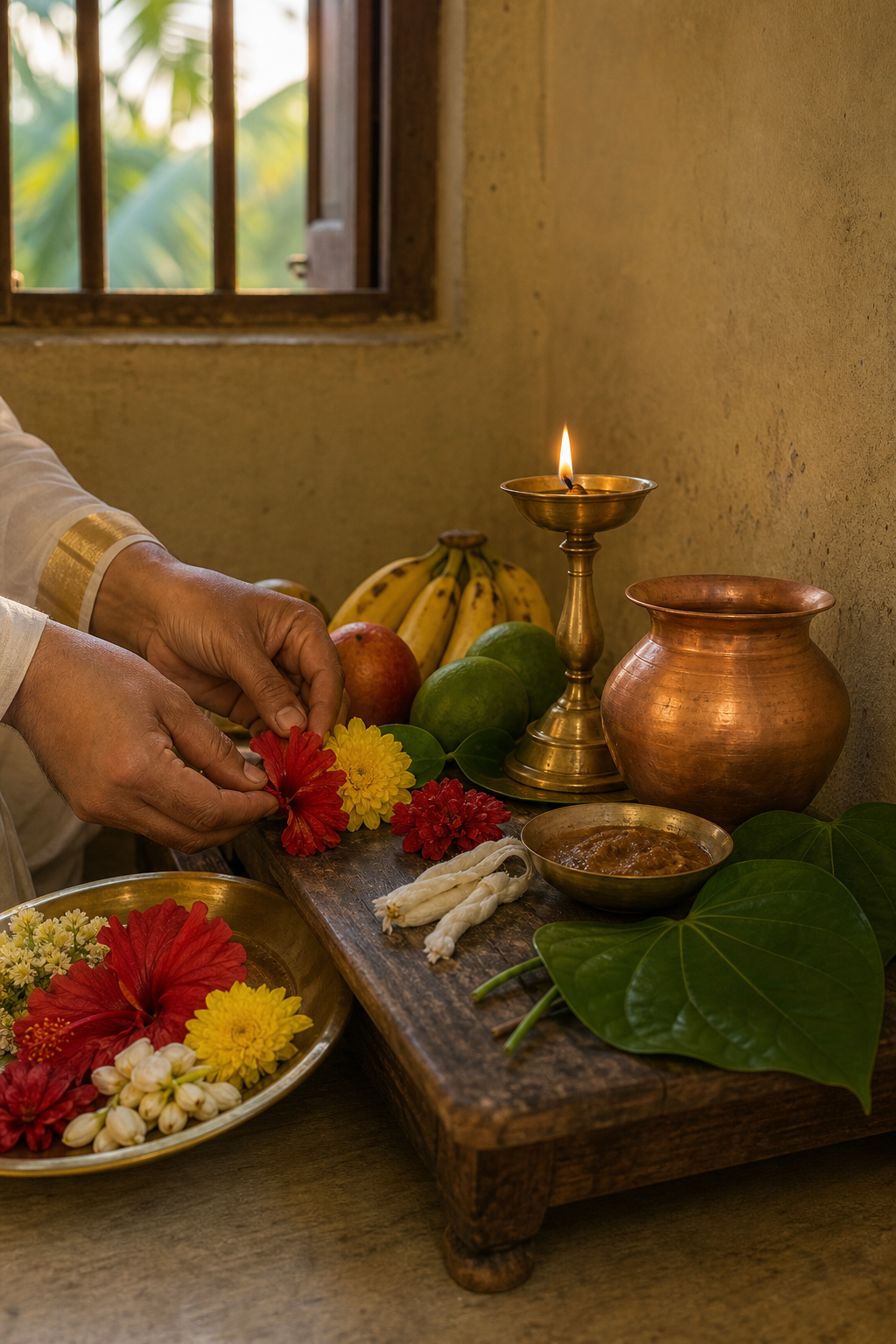
Shukla Paksha Sashti is traditionally associated with Skanda or Subrahmanya and with Shashthi Devi. The two associations give households more than one legitimate devotional emphasis. Skanda worship may centre courage, disciplined effort, protection, and the wise use of strength. Shashthi Devi worship may centre children, family welfare, and protective care.
You do not need to combine both forms of worship or create an elaborate ceremony. Follow the devata, mantra, and procedure received through your family, temple, guru, or sampradaya. Where no detailed observance has been inherited, a restrained home practice is preferable to borrowing fragments from unrelated traditions.
- Prepare the worship space before beginning. Keep the sankalpa specific: protection of the family, courage in a present duty, steadiness of mind, or the welfare of children.
- Light a lamp and invoke the form honoured in your tradition: Skanda or Subrahmanya, Shashthi Devi, or your customary ishta-devata.
- Recite a brief stotra or perform japa that you already know. If home abhishekam is part of your established practice, it can be performed during the Sashti period.
- Close with prayer for disciplined action rather than asking only for the removal of difficulty. Sashti’s protective quality is most useful when it strengthens your capacity to meet dharma.
- Finish the portion that you specifically intend as Sashti worship before 11:46 AM IST.
Sashti does not impose one universal fasting rule on every Hindu household. If your vrata has rules about fasting, food, breaking the fast, sunrise tithi, or the presence of Sashti during a particular part of the day, follow that vrata’s own procedure. The transition time alone cannot settle a rule that depends on a prescribed ritual span.
After 11:46 AM, shift from protection toward Surya’s clarity

Once Saptami begins, the day’s devotional centre can turn toward Surya. Routine Saptami observance honours vitality, insight, clarity, study, right action, and service. This is an ordinary Shukla Paksha Saptami; it should not be confused with Ratha Saptami, which occurs in a different month.
The timing creates an important distinction. A regular Surya arghya at sunrise may still be performed as your daily practice, but in India that sunrise occurs while Sashti prevails. If your intention is to undertake something specifically under Saptami, wait until after 11:46 AM IST. Do not relabel a pre-transition act merely because the civil date later contains Saptami.
After the transition, choose an observance that fits both Saptami and the practical hour:
- Offer a short Surya prayer or contemplate the qualities of illumination, constancy, and responsible action.
- Resume scriptural study or begin a period of concentrated learning with a clear sankalpa.
- Take up a neglected duty that requires honesty, order, or decisiveness.
- Dedicate time or resources to seva or charity, joining insight with useful action.
- If your tradition permits a water offering at another suitable daytime hour, follow its method. If it prescribes arghya only at sunrise, retain that discipline rather than improvising a new procedure.
Friday adds a Shukra-associated tone of harmony, beauty, and prosperity. You can express that influence without turning the day into a wish list: repair discord, bring order and cleanliness to a shared space, support family concord, or make prosperity serve a dharmic purpose. The weekday colours the observance, while the tithi determines its changing lunar frame.
Calculate the day’s good and restricted periods locally
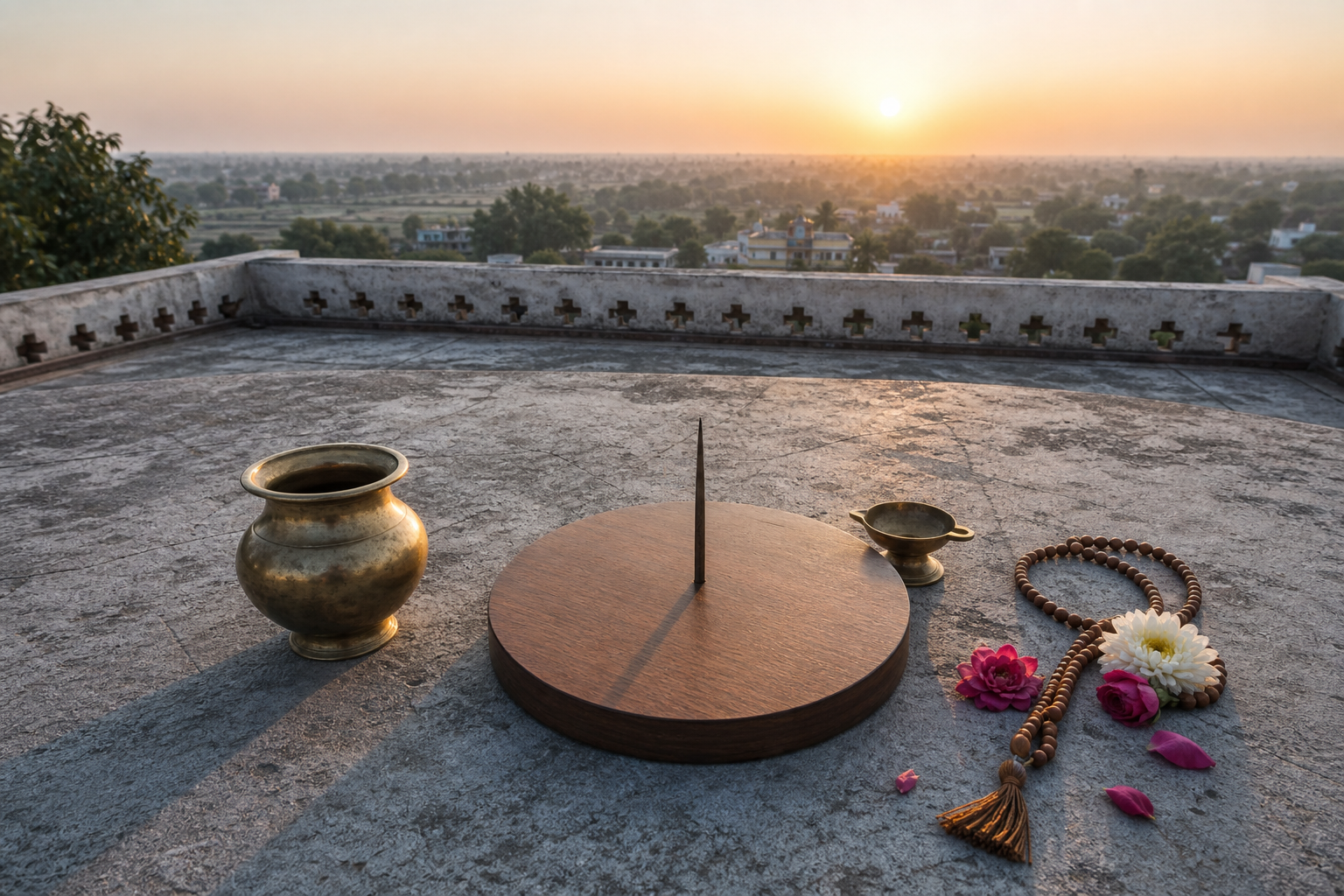
No single set of muhurta clock times is reliable for every reader. Sunrise, sunset, and local solar noon vary with latitude and longitude. Even within the same time zone, copying timings from a distant city can shift a short window enough to make the recommendation unusable.
Brahma Muhurta for japa and study
Brahma Muhurta runs approximately from 1 hour and 36 minutes before local sunrise until 48 minutes before sunrise. First obtain the May 22 sunrise time for your location. Subtract 1 hour and 36 minutes to find the approximate beginning, then subtract 48 minutes to find the end.
This is the natural window for meditation, japa, quiet scriptural reading, and preparing the mind before household demands begin. Because it falls well before the 11:46 AM transition in India, any tithi-aware practice performed then belongs to the Sashti portion of the day.
Abhijit Muhurta for an ordinary important start
Abhijit Muhurta is centred on local solar noon and extends roughly 24 minutes on either side. Find the midpoint between your local sunrise and sunset rather than assuming that clock noon is solar noon. The resulting interval is a useful foundational option for work that seeks a balanced and stable beginning.
On May 22 in India, this window will fall after the 11:46 AM tithi change, so it belongs to the Saptami portion of the date. That can suit study, administrative work, a constructive meeting, or another ordinary undertaking aligned with clarity. It is not, by itself, sufficient authority for marriage, griha-pravesh, or a samskara.
Friday Rahu Kalam and the other avoidance periods
Daytime is divided into eight equal parts, and Friday Rahu Kalam occupies the fourth part after sunrise. Calculate it in three steps:
- Find the exact interval from local sunrise to local sunset.
- Divide that interval by eight. Do not assume that each part is always 90 minutes; seasonal daylight changes its length.
- Add three segment lengths to sunrise for the beginning of Friday Rahu Kalam. Add a fourth segment length for its end.
Use the same sunrise-to-sunset basis when obtaining Yamagandam and Gulika or Kuligai from a competent local Panchang. Rahu Kalam is traditionally avoided for initiating a significant undertaking; it is not a command to suspend regular prayer, existing duties, or an activity already in progress.
If you use Choghadiya, favourable periods such as Amrit, Shubh, or Labh can help refine an ordinary start. Those periods also need local calculation. A familiar label is not enough if the displayed timings belong to another city.
Resolve Panchang disagreements before choosing a major time
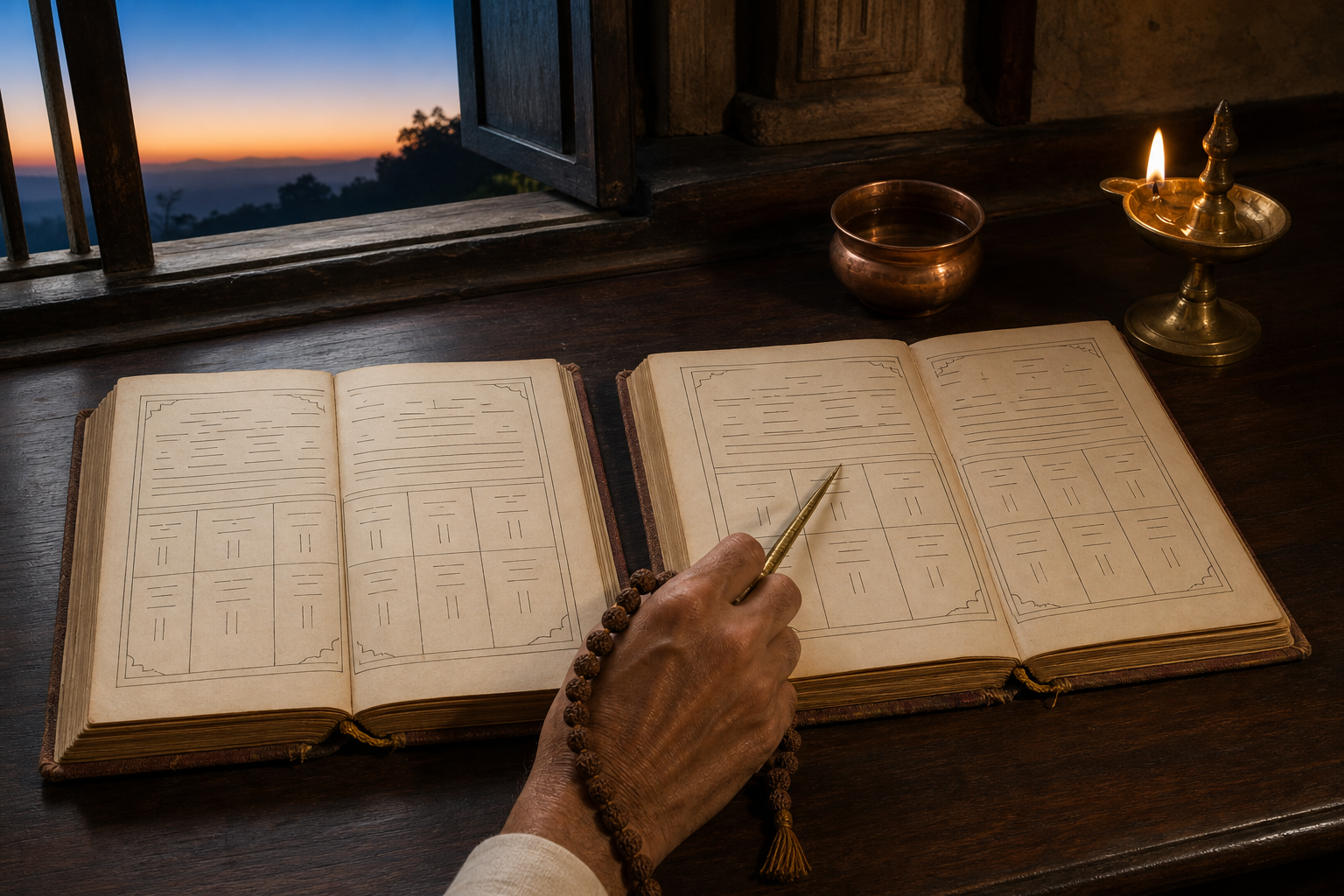
Two calendars can display different answers without the underlying astronomy being entirely different. The disagreement may come from the selected city, time zone, sunrise convention, calculation tradition, or rule used to assign an observance to a civil date. Work through the difference in a fixed order:
- Confirm that the calendar is set to your actual city and the correct time zone for May 22.
- Check whether 11:46 AM is being shown in IST or has already been converted into local time.
- Identify the rule governing your observance: tithi at sunrise, tithi present during a prescribed ritual period, or the actual interval in which the tithi prevails.
- Check the calendar system. Purnimanta and Amanta traditions can use different month names while referring to the same astronomical tithi.
- Give priority to the rule received through your lineage or community when more than one accepted convention exists.
Do not guess the Nakshatra or Chandra Rashi from the date alone. Their displayed transitions require a properly calculated local Panchang or ephemeris, especially when the answer will affect a naming ceremony, travel decision, remedial observance, Tarabalam, or Chandrabalam. A generic all-India entry may not preserve the boundary correctly for your place and intended hour.
A consequential muhurta also requires more than tithi, weekday, and an attractive Choghadiya label. Nakshatra, Chandra Rashi, Karana, Yoga, Tarabalam, and Chandrabalam can all affect the final choice. Karana divides a tithi into half-tithi portions, while Yoga is calculated from the combined ecliptic longitudes of the Sun and Moon. If a marriage, griha-pravesh, or samskara cannot easily be repeated, have the full combination checked for the exact location, participants, and proposed time.
Before retiring on May 21, record your local sunrise, sunset, and converted tithi-change time. On May 22, complete your chosen Sashti sankalpa before the boundary and begin any explicitly Saptami-based practice after it. That small preparation lets the Panchang guide action instead of becoming a last-minute search for a supposedly universal good hour.