-
An Unlikely Devotee in 1971 Brooklyn: Usika Das and Srila Prabhupada’s Generational Grace

In 1971 at ISKCON’s Henry Street temple in Brooklyn, a late-in-life seeker named Ezekiel—initiated as Usika Das when Srila Prabhupada visited that July—stood out in a largely youthful community. Remembered as crotchety and blunt with “you young people,” he nevertheless demonstrated unwavering devotion, illustrating how sincerity in the bhakti tradition transcends personality and age. The…
-
Forgiveness Without Self‑Abandonment: A Research‑Backed Path to Somatic Safety, Truth, and Release

Forgiveness is often rushed and performed while the nervous system is still in survival mode, turning a virtue into self-abandonment. A dharmic, research-aligned approach restores sequence: create somatic safety first, then honor anger in contained ways, and only then speak truth without re-injury. Distinguishing forgiveness from reconciliation and trust prevents pressure to resume unsafe closeness.…
-
Why Sanskrit Calls Humans “Nara”: Deep Origins, Dharma, and the Power of Karma

The Sanskrit term “nara” does more than denote a human being; it encodes a civilizational understanding of agency, ethics, and liberation. Its deep Indo-European etymology, rich scriptural presence, and philosophical nuance explain why Hinduism treats human life as uniquely suited to dharma and karma. Classical distinctions—sañcita, prārabdha, and kriyamāṇa karma—show how present choices reshape experience.…
-
Before Surdas: Periyalvar’s South Indian Bhakti that First Envisioned Child Krishna’s Play

This long-form study maps how Tamil Āḻvar poetry—especially Periyāḻvār’s Tiruppallāṇḍu and Periyāḻvār Tirumoḻi—pioneered an intimate, vernacular devotion to Krishna as a child centuries before Surdas. It explains the theological innovation of blessing the Lord, the poetic craft that domesticates the divine, and the temple-liturgy networks that diffused these moods northward. The analysis situates Periyāḻvār within…
-
Disarming the Ego: A Cross-Dharmic, Science-Backed Guide to Self-Realization and Freedom

Ego is the single greatest barrier to self-realization because it fuses awareness with passing roles and narratives, a pattern Dharmic traditions diagnose with remarkable agreement. This essay integrates Vedanta, Buddhism, Jainism, and Sikhism with cognitive science to explain how Avidya and identity habits form—and how to unwind them. Readers gain a precise map of the…
-
Bali’s Mercy Toward Ravana: A Ramayana Lesson on Dharma, Restraint, and Modern Leadership

The Bali–Ravana encounter in the Ramayana tradition yields a precise ethic for modern life: power must be governed by restraint. Later tellings and purāṇic echoes preserve the episode of Bali subduing yet sparing Ravana, illustrating kṣātra-dharma, proportionality, and the protection owed to a suppliant. The narrative anticipates principles of international humanitarian law while aligning with…
-
Satyakama Jabala: A Timeless Upanishadic Tale of Truth, Inclusion, and Vedic Learning

Satyakama Jabala, celebrated in the Chandogya Upanishad, embodies the Upanishadic conviction that truthfulness, not lineage, determines eligibility for the highest learning. His candid admission of uncertain ancestry and his acceptance by the sage Haridrumata Gautama have long been read as a scriptural affirmation of inclusion grounded in dharma. Through years of disciplined service in the…
-
Guru Aditya Yoga Unveiled: Jupiter–Sun Conjunction Effects Across All 12 Houses

This comprehensive Vedic guide explains the Jupiter–Sun conjunction—Brihaspati and Ravi in the same bhava—across all twelve houses with clear, research-based nuance. It details how dignity, combustion, nakshatra, aspects, divisional charts, and dasha–transit timing shape outcomes in real life. Readers gain house-by-house insights on education, leadership, wealth, relationships, and spiritual growth, with practical cautions when the…
-
Agastya as Asura Samhara Moorthy: Outwitting Ilvala–Vatapi with Spiritual Fire

Rishi Agastya’s epithet Asura Samhara Moorthy comes alive in the famed Ilvala–Vatapi episode, where deception is neutralized by yogic insight rather than spectacle. The story upholds Dharma by safeguarding hospitality, demonstrating how spiritual fire (tapas) transmutes harm without amplifying violence. Yogic and Ayurvedic lenses deepen the teaching: jatharagni and disciplined breath digest not only food…
-
Nava Narasimha Kshetra of Ahobilam: The Ultimate Guide to Nine Sacred Temples and Yatra

This guide presents a clear, research-grounded overview of the Nava Narasimha Kshetra at Ahobilam, where nine distinct shrines of Narasimha are venerated in a forested, cave-studded landscape. It explains how Narasimha’s awe-inspiring form ultimately signifies compassionate protection, supported by scriptural narratives from the Bhagavata Purana and Vishnu Purana. Each of the nine temples is described…
-
Reclaiming the Rababi Voice: Rai Balwand, Bhai Satta, and the Living Heart of Sikh Kirtan

Reclaiming the Rababi voice through the legacy of Rai Balwand and Bhai Satta reconnects Sikh kirtan to its string-led, raga-based heart while affirming a deep history of interfaith harmony. Their Ramkali ki Vaar, preserved in the Guru Granth Sahib, models humility, repentance, and the continuous light of the Guru across generations. The article maps the…
-
March 4, 2026 Panchang: Pratipada to Dwitiya Timings, Shubh Muhurat, Rituals, Guidance

Wednesday, March 4, 2026 features Krishna Paksha Pratipada until 4:15 PM in most regions, after which the day moves to Krishna Paksha Dwitiya. The analysis explains tithi in astronomical terms, outlines how regional Panchang conventions and local sunrise/sunset shape muhurta windows, and clarifies why timings vary by location. Practical guidance highlights Abhijit Muhurat for auspicious…
-
HJS seeks ban on ‘Engaged 2’: safeguarding women’s dignity and media ethics on OTT platforms

Hindu Janajagruti Samiti (HJS) has urged a ban on the reality show ‘Engaged 2’ (Roka Ya Dhoka), alleging vulgarity and the degradation of women on the ‘Jio Hotstar’ OTT platform. The development spotlights India’s IT Rules, 2021, which emphasize age ratings, content descriptors, and a three-tier grievance system for online curated content. A proportionate, evidence-based…
-
ASI survey reveals temple-era spolia at Bhojshala–Kamal Maula, renewing shared heritage

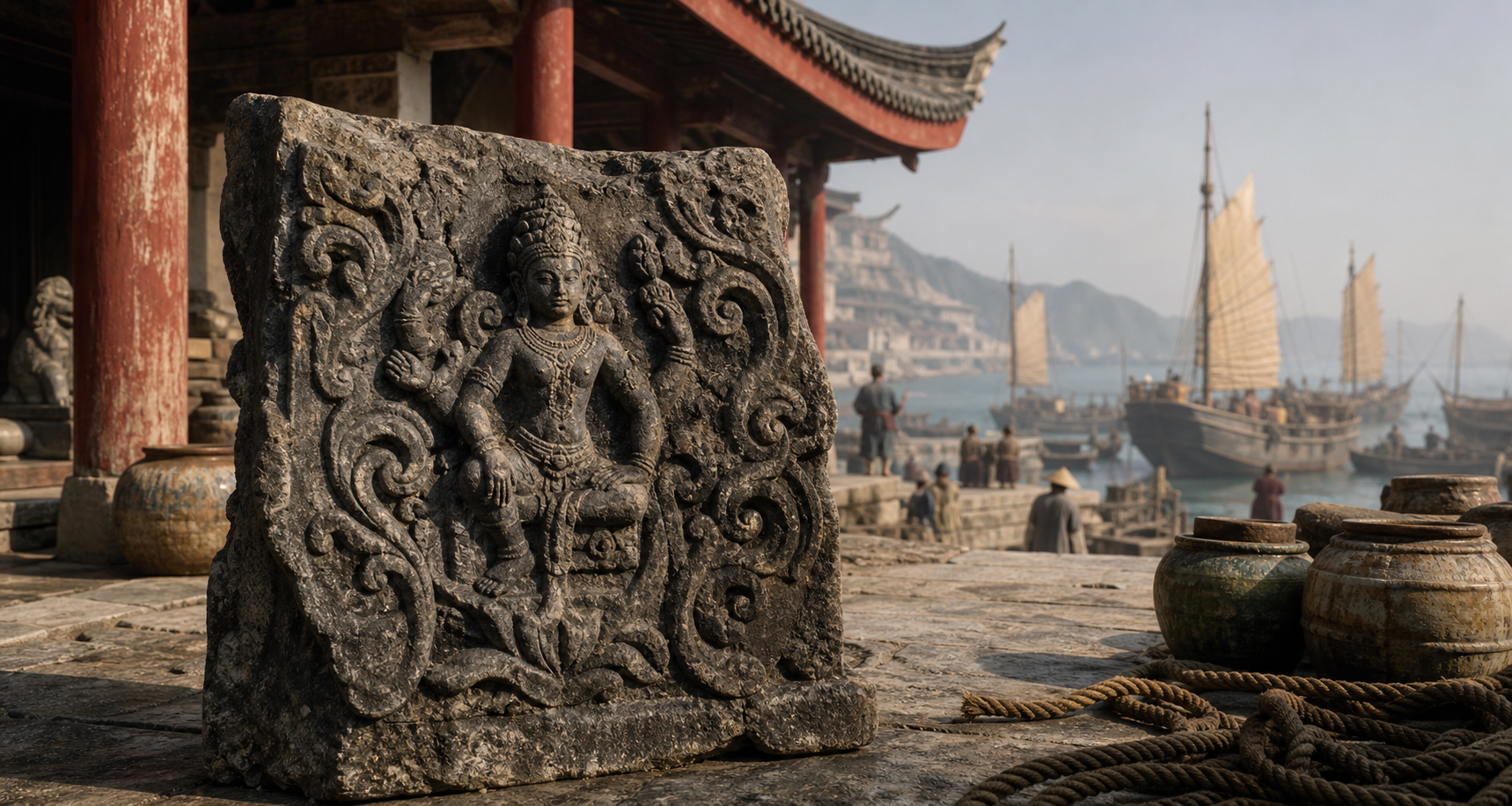
An ASI survey at the protected Bhojshala–Kamal Maula monument in Dhar, Madhya Pradesh, has renewed attention to the site’s layered history by documenting temple-era spolia reused within the present complex. This analysis explains, in clear archaeological terms, what ‘pre-existing structure’ and ‘spolia’ mean and why such findings are common across India’s syncretic monuments. It situates…
-
30 Science-Backed Reminders to Empower Highly Sensitive People and Restore Energy

This in-depth guide reframes high sensitivity as a normal, heritable temperament—sensory processing sensitivity—present in 15–20% of people. It distills current research on deep processing, empathy, and overstimulation, and explains how mindfulness, meditation, breathwork, yoga, and vagus nerve regulation foster emotional resilience. It integrates a dharmic perspective shared by Hinduism, Buddhism, Jainism, and Sikhism, affirming karuṇā…
-
Behind the Spectacle: S.L. Bhyrappa’s Eyewitness to an Indira Gandhi Rally and the Ethics of Power

Mass rallies shaped India’s political history, and eyewitness observations attributed to S.L. Bhyrappa from an Indira Gandhi event reveal how spectacle, symbolism, and strategy converged to influence voters. This analysis situates the rally within a rigorous timeline—from the 1969 Congress split and the 1971 “Garibi Hatao” landslide to the Emergency and the 1980 return—while unpacking…
-
Hanuman and the Five Elements in Kamba Ramayanam: Transformative Symbolism and Yogic Science

The Kamba Ramayanam presents Hanuman as an embodied map of the five great elements—Vayu, Jala, Akasha, Agni, and Bhoomi—transforming epic episodes into a precise guide for ethical action and inner balance. Vayu becomes pranic mastery and courage, Jala becomes adaptable resolve, Akasha becomes the clarity of spacious awareness, Agni becomes purifying discernment, and Bhoomi becomes…
-
When Krishna Lifts Govardhan: Tribhanga Beauty, Bhakti-Rasa, and the Ease Found in Surrender

This essay offers a close reading of Krsna’s tribhanga posture amid the Govardhana-dhara-lila, highlighting how visual detail, poetic mood, and theology interlock to transform crisis into joy. It explains how the left foot ‘kissing’ the earth and the effortlessly raised arm express immanence and transcendence in one gesture. Drawing from Srimad-Bhagavatam and Sanskrit aesthetics, it…