-
Veenadhara Dakshinamurthy: Shiva’s Musician-Guru in Pallava and Chola Temple Art

Veenadhara Dakshinamurthy portrays Shiva as the musician-guru, where wisdom becomes audible as sacred sound. Distinguishing aasana (seated) and sthanaka (standing) variants—linked respectively with Chola refinement and early Pallava dynamism—clarifies how form encodes function in South Indian temple architecture. The veena symbolizes disciplined harmony of senses and breath, turning listening into a pathway of learning. Practical…
-
Why Madhya-līlā Reveals Antya-līlā: Hidden Logic of Chaitanya’s Transformative Final Years

This analysis explores why the Second Chapter of the Madhya-līlā previews pastimes from the Lord’s final twelve years, conventionally associated with the antya-līlā. It shows how this narrative choice aligns with classical Indian aesthetics and Gauḍīya theology to prepare readers for the culmination of bhakti-rasa. The piece highlights how early glimpses of the antya-līlā function…
-
Profound Prophecy and Transformative Vision: SB 3.14.50 at Bhaktivedanta Manor (20.02.26)

A scripture class at Bhaktivedanta Manor (20.02.26) explored Srimad-Bhagavatam 3.14.50—a prophecy that Prahlāda Mahārāja would perceive the Supreme within and without. The verse integrates ontology and practice, depicting the Lord as simultaneously indwelling (Paramatma) and personally relational (Bhagavan), inseparable from the goddess of fortune. It affirms that the Lord reveals Himself in forms desired by…
-
Srimad-Bhagavatam 11.2.50: Conquer Desire and Ego—Insights from H.G. Dinabandhu Prabhu

This analysis of Srimad-Bhagavatam 11.2.50 distills H.G. Dinabandhu Prabhu’s core insight: material desire and ego trap the mind in self-centric pursuit and conflict. It charts how deep vāsanā and samskāra patterns create chronic reactivity, then presents bhakti as the structured remedy that reorients consciousness toward service. Readers gain a practical blueprint—sravana, kirtana, japa, mindful regulation,…
-
Rakta Chamunda Unveiled: Iconography of the Red Warrior Goddess, Tantric Power, and Ritual Meaning

Rakta Chamunda—The Red Warrior Goddess—embodies a rigorous tantric grammar of protection and transformation rooted in the Devi Mahatmya. This long-form guide decodes her iconography: the red complexion, skull-garlands, cremation-ground setting, jackals, and martial postures that together announce the subjugation of ego and fear. Readers will learn how to identify Rakta Chamunda in temple and museum…
-
Anirvacanīya-khyāti in Advaita Vedanta: Decoding Illusion, Truth, and Liberation

Anirvacanīya-khyāti, often popularized as “Anirvachaniya Akhyati,” is Advaita Vedānta’s nuanced account of illusion: what appears in error is neither absolutely real nor absolutely unreal, but indeterminable until corrected. This theory situates everyday misrecognition—like mistaking nacre for silver or a rope for a snake—within Advaita’s three levels of reality and its method of sublation (bādha). It…
-
Why Devotees Offer 21 Durva Blades to Ganesha: Analasura Legend, Ayurveda, and Ritual Science

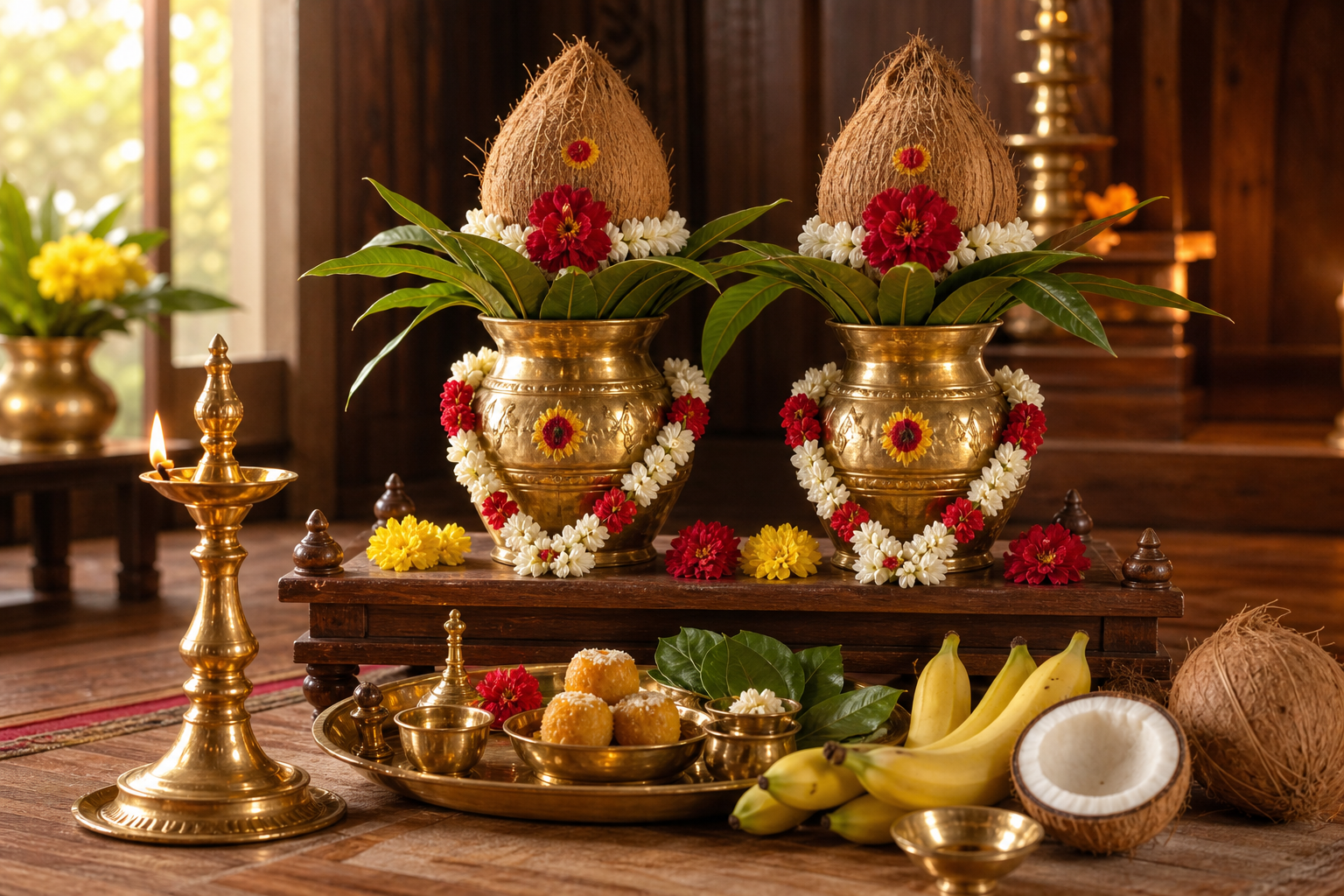
Offering 21 durva blades to Ganesha unites Puranic legend, Vedic symbolism, and Ayurvedic wisdom into a single, elegant practice. Rooted in the Analasura episode, the ritual uses the cooling properties of durva to signify pacifying inner heat and restoring balance. The number 21 encodes a yogic vow to harmonize the 10 senses, the 10 pranas,…
-
Atma Shraddha at Gaya Janardan Temple: Definitive Guide to Self Pind Daan for Ancestral Peace

Gaya Janardan Temple in Gaya, Bihar is widely cited as the only temple where Atma Shraddha—self Shradh and Pinda Daan performed while living—can be undertaken with full ritual authority. This guide explains what Atma Shraddha is, why Gaya holds unparalleled standing for ancestral rites, and how the temple’s location on Bhasma Koot Mountain near Mangala…
-
Bhagavad Gita on Inescapable Action: Krishna on Nature’s Gunas and Dharmic Responsibility

The Bhagavad Gita teaches that action is inescapable because Nature (Prakriti) operates through the gunas, compelling continuous activity. Krishna reframes the human challenge from “whether to act” to “how to act” through Karma Yoga—duty aligned with dharma and freedom from anxious attachment to results. Key verses (3.5, 3.27, 18.60, 2.47–48) establish a compatibilist vision in…
-
March 2, 2026 Panchang Guide: Shukla Chaturdashi to Purnima, Auspicious Times, Nakshatra & Rashi

Monday, March 2, 2026 features Shukla Paksha Chaturdashi until 17:18 (5:18 PM), followed by Purnima tithi beginning that evening and continuing until 04:33 (often into March 3, depending on location). This Panchang guide clarifies how tithis work, why timings vary by city, and how to align practice with auspicious windows like Brahma Muhurta and Abhijit…
-
Telangana on Edge: Police detain T. Raja Singh en route to Banswada to prevent unrest

On 22 February 2026, Telangana Police detained former BJP MLA T. Raja Singh en route to Banswada after reports of a communal clash. This in-depth analysis explains the legal basis for such preventive action (CrPC §§149, 151, 144, 129), how Security Forces calibrate de-escalation, and why swift, proportionate steps can avert wider violence. It clarifies…
-
Haunting Wisdom of Guhya Kali: Decoding the Corpse Earrings in Tantric Iconography

Guhya Kali’s corpse earrings are a deliberate Tantric teaching, not a sensational detail. They place mortality at the gate of listening, turning fear into insight through śravaṇa and mantra. Read as memento mori in a Dharmic register, the earrings signify impermanence, the conquest of fear, and the transmutation of impurity into wisdom. Their paired symmetry…
-
Kishkinda to Vijayanagara: Sacred Geography, Imperial Brilliance, and a Breach of Sanctity

This essay situates Hampi within the Ramayana’s sacred geography and the Vijayanagara Empire’s statecraft, tracing how Kishkinda’s mythic landscape informed an imperial capital of dazzling scale. Drawing on Valmiki’s lyrical account of Pampa, historical records of Vijayanagara’s global magnetism, and the catastrophe of Talikota, it examines why the material loss was matched by an erosion…
-
Madanikas in Hindu Temples: Sacred Feminine in Stone—Symbolism, History, and Devotional Aesthetics
Madanikas—also known as śālabhañjikās—are among the most evocative symbols in Hindu temple architecture, uniting beauty, devotion, and metaphysics. This comprehensive overview traces their origins in early yakṣī imagery at Bharhut and Sanchi, follows their classical flowering in Hoysala temples at Belur, Halebidu, and Somanathapura, and situates related figures at Khajuraho, Konark, and Warangal. It explains…
-
Darwin and the Vedas: Reconciling Evolution with Dharmic Wisdom for a Unified Path

This article examines how Darwinian evolution and dharmic wisdom can enrich each other without conflation. It maps three major differences—teleology, consciousness, and ethics—showing why evolution’s non-teleological mechanisms complement rather than contradict dharmic metaphysics. It highlights ancient Indian reflections on change (Sāṃkhya, Nyāya–Vaiśeṣika, Ayurveda, Purāṇic cosmology), alongside Buddhist dependent origination, Jain classifications of life, and Sikh…
-
China’s Hidden Hindu Shrines: Maritime Silk Roads, Shared Gods, and a Living Memory

A quiet village shrine in Chedian, Fujian, preserves a living link to Hindu worship in China and opens a window onto the Maritime Silk Road. Archaeological finds in Quanzhou—reused temple columns at Kaiyuan Temple and sculptures in maritime collections—reveal the depth of Hindu presence during the Song–Yuan era. This long-form analysis traces how Indian Ocean…
-
Beyond Chanting Alone: How Pancaratrika-vidhi Powers Bhagavad-vidhi in Kali-yuga

Many devotees wonder whether chanting alone suffices in Kali-yuga or whether the formal Pancharatra tradition remains essential. This analysis clarifies the complementary roles of Pancaratrika-vidhi (regulated Deity worship) and Bhagavad-vidhi (the Bhagavata’s path of hearing and chanting) as taught in ISKCON and Gaudiya Vaishnavism. It explains how Pancharatra codes purify and qualify the practitioner so…
-
Why Sri Krishna Is Called Murari: Puranic Sources, Ekadashi Origins, and Inner Triumph

Murari—literally “foe of Mura”—is a precise Sanskrit epithet of Sri Krishna grounded in the Puranas. The Bhagavata Purana narrates Krishna’s defeat of the asura’s general Mura at Pragjyotisha, while allied strands in the Vishnu Purana and Harivamsha confirm the theme. The Padma Purana adds a complementary arc by linking Mura’s fall to the origin of…
-
Shattering the Myth: Why Valmiki’s Ramayana Has No Maya Sita—Evidence and Dharma

The Maya Sita motif—an illusory duplicate of Sita—does not appear in Valmiki’s Ramayana. Textual criticism across northern and southern manuscript families confirms its absence, especially in the Yuddha Kanda where Sita’s Agni-praveśa serves as public vindication. Later Puranic and bhakti-era tellings, such as the Adhyātma Rāmāyaṇa, introduce Maya Sita to offer a theologically protective reading…